Miami Children’s Museum: Complete Visitor Guide for 2026
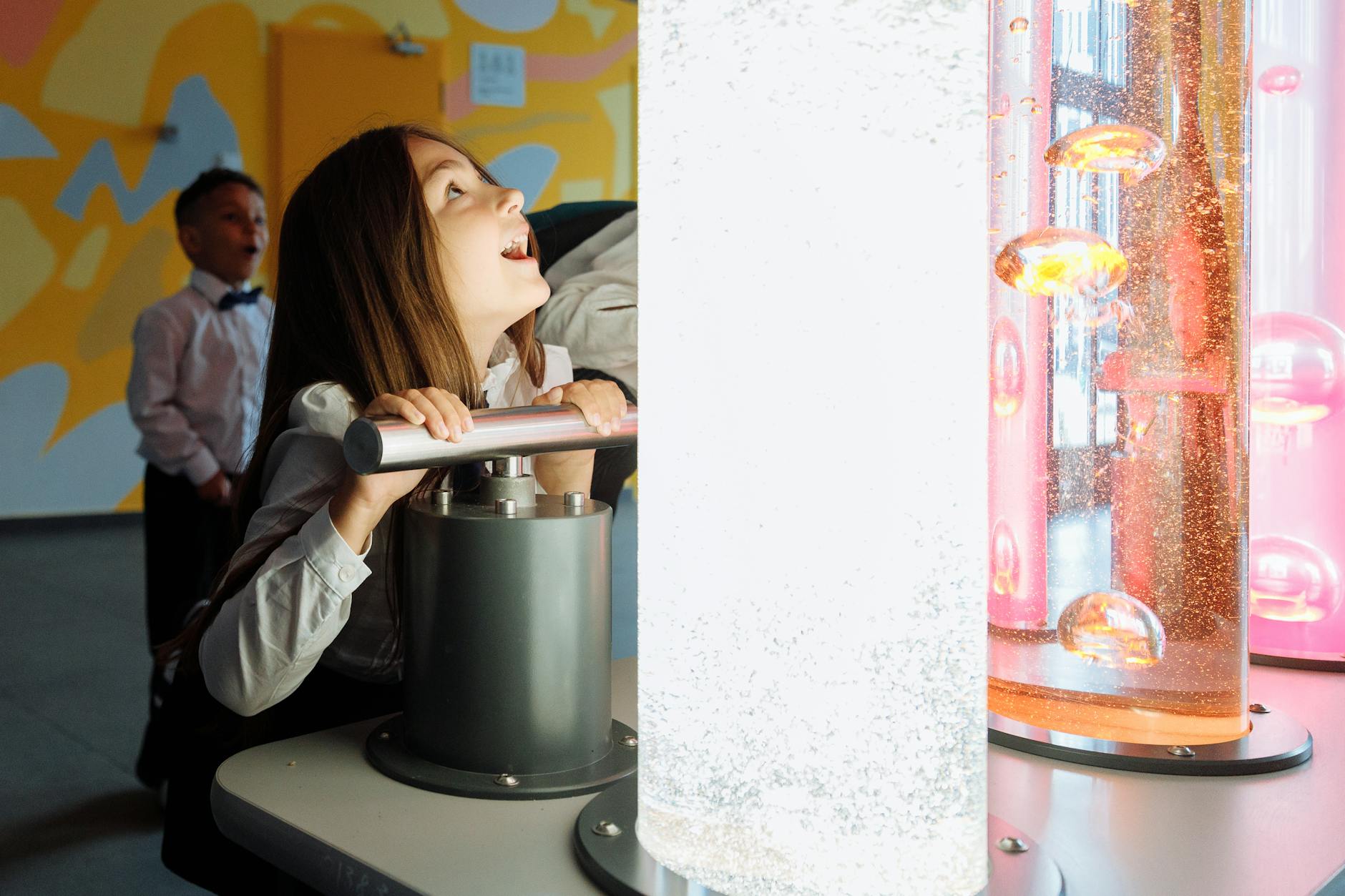
There is a stretch of the MacArthur Causeway where the skyline is behind you, the cruise terminals are off to the right, and a low white building with a starfish-tiled walkway appears on your left. That is the Miami Children’s Museum, a 56,500-square-foot play-and-learn factory on Watson Island, midway between Downtown Miami and South Beach. It opened in autumn 2003 in a building by Arquitectonica, and it has since welcomed more than five million visitors, running at roughly 445,000 a year. This guide covers what is actually in the galleries, what it costs, how long to stay, how to get there, whether a membership pays back on a holiday, and how honestly it stacks up against Frost Science for a family with older kids.
What This Place Actually Is
Think of it less as a museum and more as a two-story pretend-play town. There is nothing behind glass. Children walk into a life-sized Publix supermarket and fill a trolley, put on a firefighter’s coat in the Safety Zone, take an X-ray of a stuffed dog in Pet Central, climb a two-story sand castle, and steer a Carnival cruise ship’s navigation console. The museum describes its galleries as built to NAEYC early-childhood standards, and it shows: almost every station has something a two-year-old can do and something a seven-year-old can do, side by side.
Signage and staff work bilingually in English and Spanish, which reflects the city and is genuinely useful if you are visiting from Latin America or want your kids soaking up a second language for an afternoon. The museum counts seventeen galleries in its own event copy, though the number moves as spaces are rebuilt — older listings, including a previous version of this guide, said fourteen. It also houses a licensed preschool, the Early Childhood Institute, and a charter school, which is why parts of the building are roped off on weekday mornings.
It is not a science center and it does not pretend to be. There is no planetarium, no aquarium tank you can stand under, no dinosaur hall. What it does have is the highest density of things a small child is allowed to touch of anywhere in Miami-Dade County.
Where It Is and How to Get There
The address is 980 MacArthur Causeway, Miami, FL 33132. Watson Island is a man-made island in Biscayne Bay, sitting directly between Downtown Miami and Miami Beach, and the causeway runs straight through it. From most Downtown or Brickell hotels you are looking at five to ten minutes in the car; from Ocean Drive or Lincoln Road, ten to fifteen outside rush hour. Coming from South Beach you exit right off the causeway; coming from Downtown you cross the bridge and take the first exit. Both approaches are signposted, and the museum shares its turn-off with Jungle Island.
Parking is the museum’s quiet advantage. The Miami Parking Authority runs a 343-space surface lot on the east side of the building, with two automated pay stations, at $2 per hour, seven days a week. A three-hour visit therefore costs six dollars — a rounding error next to the $20 flat-rate garage at Jungle Island next door or Downtown garages that start north of that. Eight accessible bays sit closest to the entrance. Older guides, including the previous version of this page, quoted $1 per hour; that rate is out of date.
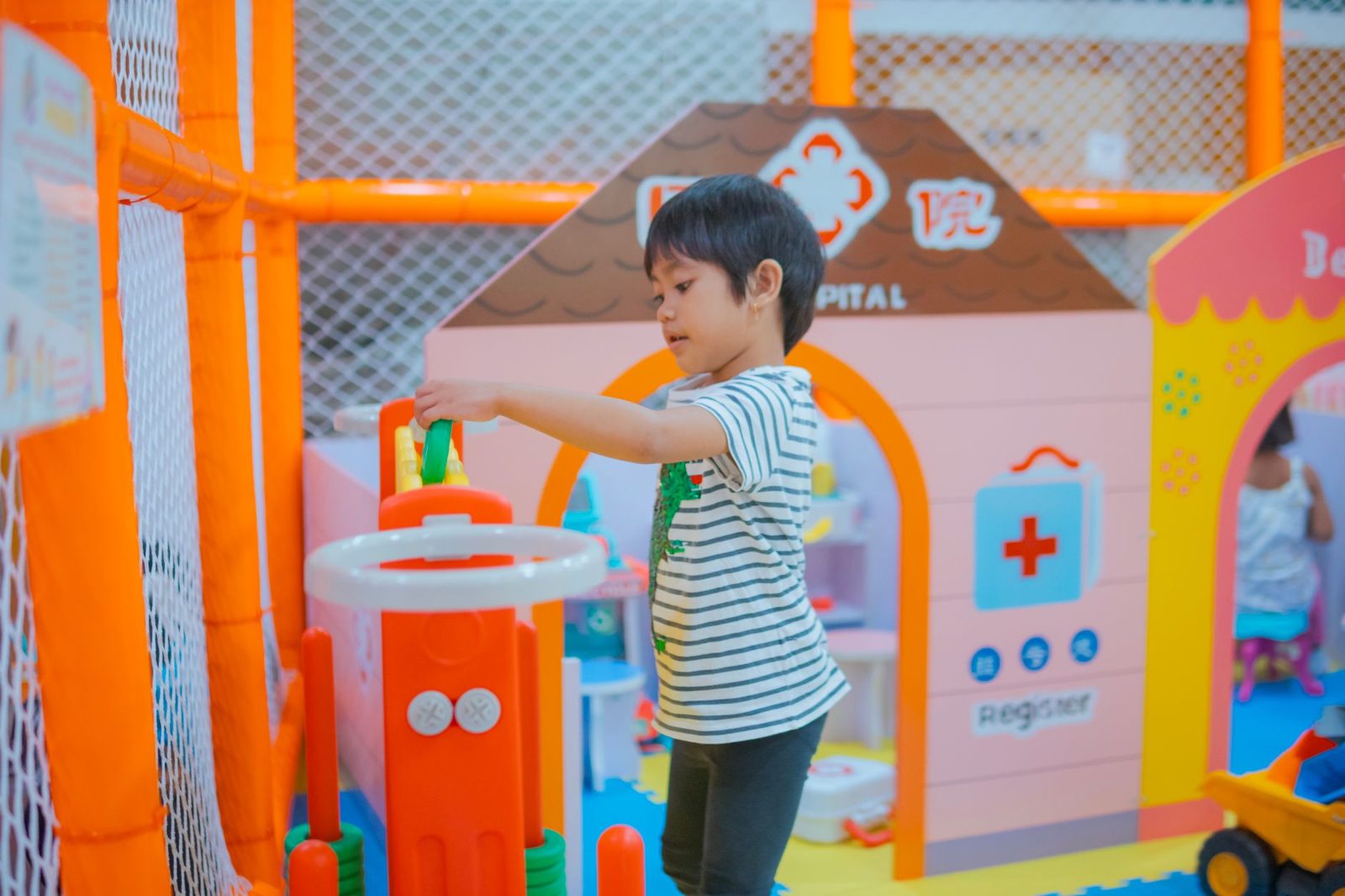
Public transport is possible but not lovely. The museum lists Metrobus routes C, K, M and S as serving the stop on the causeway, all of which link Downtown Miami with Miami Beach. The catch is that you are dropped at a bus stop on a six-lane causeway and walk the last few hundred meters, which is fine with a stroller and a sun hat and less fine with a toddler who has just discovered independence. There is a shared pedestrian and cycle path along the causeway — Bayside Marketplace is roughly a mile and a half away — so cycling from Downtown is a real option for families with older kids and rented bikes. Walking it in August heat with a pushchair is not something I would recommend to anyone. Rideshare works and is usually the least stressful choice if you are not driving; just tell the driver “Miami Children’s Museum, Watson Island” rather than giving the causeway number, which confuses navigation apps.
Tickets, Hours and the Discounts Worth Asking About

General admission is $26 per person. Florida residents pay $20 on presentation of a valid State of Florida ID. Children under twelve months old go free, and members go free. Everyone else pays the same price whether they are three or forty-three, so a family of four with two school-age children is looking at $104 before parking — worth knowing, because plenty of visitors assume adults get in cheap as chaperones. That figure is the single most important number in this guide, and it is materially higher than the $20 and $15 rates that circulated in older listings.
Hours are 10am to 6pm daily. The museum closes on Thanksgiving and Christmas Day, shuts at 4pm on Christmas Eve and New Year’s Eve, and opens at 1pm on New Year’s Day. Two standing exceptions are worth scheduling: on the second Saturday of the month the building is open only to pre-registered Sensory Friendly Saturday families from 9am to 11am before opening to the public, and on the second Sunday it is members-only from 9am to 11am for Member Mornings. The museum also occasionally closes for private events and reopens mid-afternoon, which is announced on the site rather than anywhere else, so it is worth a glance at the homepage the night before you go.
On discounts: buy online in advance, particularly for weekends, holidays and event weekends. Bank of America and Merrill cardholders get one free admission on the first weekend of every month through the Museums on Us program — you still book a ticket through the museum’s system, and you show the card at the door. The museum also states that it offers discounted or supported admission for City of Miami residents, military families, veterans and qualifying community programs, but it does not publish the individual rates, so ring 305-373-KIDS (5437) ahead if one applies to you rather than turning up hopeful. I could not verify from the museum’s own pages whether it participates in the Museums for All EBT/SNAP scheme or Blue Star Museums, so treat those as an ask-at-the-desk question. One firm rule: adults are not admitted without a child, and children are not admitted without an adult.
The Ground-Floor Galleries

Publix Super Market
The best-known gallery in the building and, for children between two and six, the one that swallows the most time. It is a genuine miniature Publix with a seafood counter, dairy case, produce, bakery, small trolleys and working digital checkouts. Kids shop, scan and pay. Built into it are nutrition panels, a walk-through of how orange juice is made, and a “My Recipe” interactive. Expect to spend twenty minutes here and expect resistance when you leave.
Safety Zone
Police, fire and EMS role-play, with a fire truck to steer, a police motorcycle to sit on, an EMT truck, dressing-up costumes and a life-size game of Operation. It leans into how emergency services work together rather than just handing out helmets, and it is a reliable hit with four- to eight-year-olds who have opinions about sirens.
Pet Central
A veterinary surgery in miniature: grooming stations, pet X-rays, a vet’s office, an “ask the vet” interactive and climbable pet habitats. The gallery pushes an adopt-don’t-shop message and asks children to think about which pet actually suits their household. Good for animal-obsessed five-year-olds who will not sit still for anything else.
Castle of Dreams
The two-story sand castle at the heart of the museum, built from luminous sand set with colored glass, with a winding slide, ambient sound and stair treads made from tiles decorated by local children. You reach the top from the second floor and come down the fast way. This is the closest thing the building has to a landmark and the answer to “where do I take a photo”.

Construction Zone, Bank and My Green Home
Three smaller galleries that cluster near the Kidscape Village entrance. Construction Zone gives children building stations modelled on a real site. The Bank of America gallery is a walk-through six-foot piggy bank teaching earning, saving, making change and the anatomy of a dollar bill, with touchscreen number-recognition games for the youngest visitors. My Green Home is a model South Florida house with rooftop solar panels and a wind turbine, aimed at getting children to connect household habits with energy use — it plays better with seven-year-olds than with three-year-olds.
Upstairs: Ships, Music and Art

Cruise Ship and Port of Miami
The Carnival-branded cruise ship is the museum’s nod to the city that hosts the world’s busiest cruise port, and the upper deck was renovated relatively recently. Children get a realistic Navigational Control Station, a Lego table for building their own ship against a model, a destination wall covering the ports Carnival sails to, a Dr. Seuss Bookville reading corner, real cruise-ship artefacts and a 32-foot interactive wall that opens up different areas of a ship. The lower deck has a puppet theater and facts about life at sea. Next door, Port of Miami lets kids operate a gantry crane at the C&C Crane Company station and navigate remote-control boats through a port. If your family is in Miami for a cruise, doing this the day before you sail is a genuinely nice piece of theater. Some older write-ups describe the ship as a quarter-scale replica; the museum does not publish a scale, so treat that figure with caution.
Music Makers Studio

On the second floor, and loud in the best way. Eight distinct interactive components let children handle instruments, work out how sound is produced, meet the idea of musical notation, play together and compose short pieces. Light and sound respond to what they do. It is one of the few galleries where a nine-year-old and a two-year-old can be busy at the same time without either one being patronised.
All About Art, the Art Studio and Glass Lab

The art gallery is organized around the six elements of art — space, form, color, texture, line and shape — with a Maker’s Space where children’s finished work is displayed on the walls. The Art Studio runs a medium of the month that both children and adults can work with; check the events calendar for session times rather than assuming it is staffed all day. Inside the same gallery sits the Glass Lab, modelled on the Corning Museum of Glass, where visitors sandblast their own glass keepsake. That one carries an extra charge: pieces run roughly $9 to $20 depending on what you choose, with a 10% member discount. It is the only add-on cost inside the building worth budgeting for, and it produces the best souvenir in the museum.
South Florida and Me, Ocean Odyssey and the Sketch Aquarium
South Florida and Me is the local-ecology gallery: board a fishing boat, watch projected whales, play an Octo-pipe and a manta ray xylophone, and explore an Everglades area with an alligator light table, a large nest with eggs and a wooden boardwalk playing river-of-grass sounds. The Virtual Sketch Aquarium, made with teamLab, has children color in a fish on paper, feed it into a scanner and watch it swim off into a wall-sized projected reef — the single most reliable “wow” in the building and one that works for tweens who have decided they are too old for the supermarket. Ocean Odyssey and the Baptist Children’s Hospital Health & Wellness Center round out the floor, the latter with virtual sports, jump-testing stations, an agility obstacle course and a Gear Up station introducing the kit used by Miami’s professional teams. It also has areas designed specifically for toddlers.
A note on ghost exhibits. Some third-party guides still list a “Pura Vida Cooking Club”, a standalone “Glass Studio” with hot-glass demonstrations, or a “Music Studio”. The museum’s current gallery list has no cooking club, and the glass offering is the sandblasting Glass Lab rather than a glass-blowing demonstration. Do not build a visit around any of them.
Outdoor Play and What Rotates Through

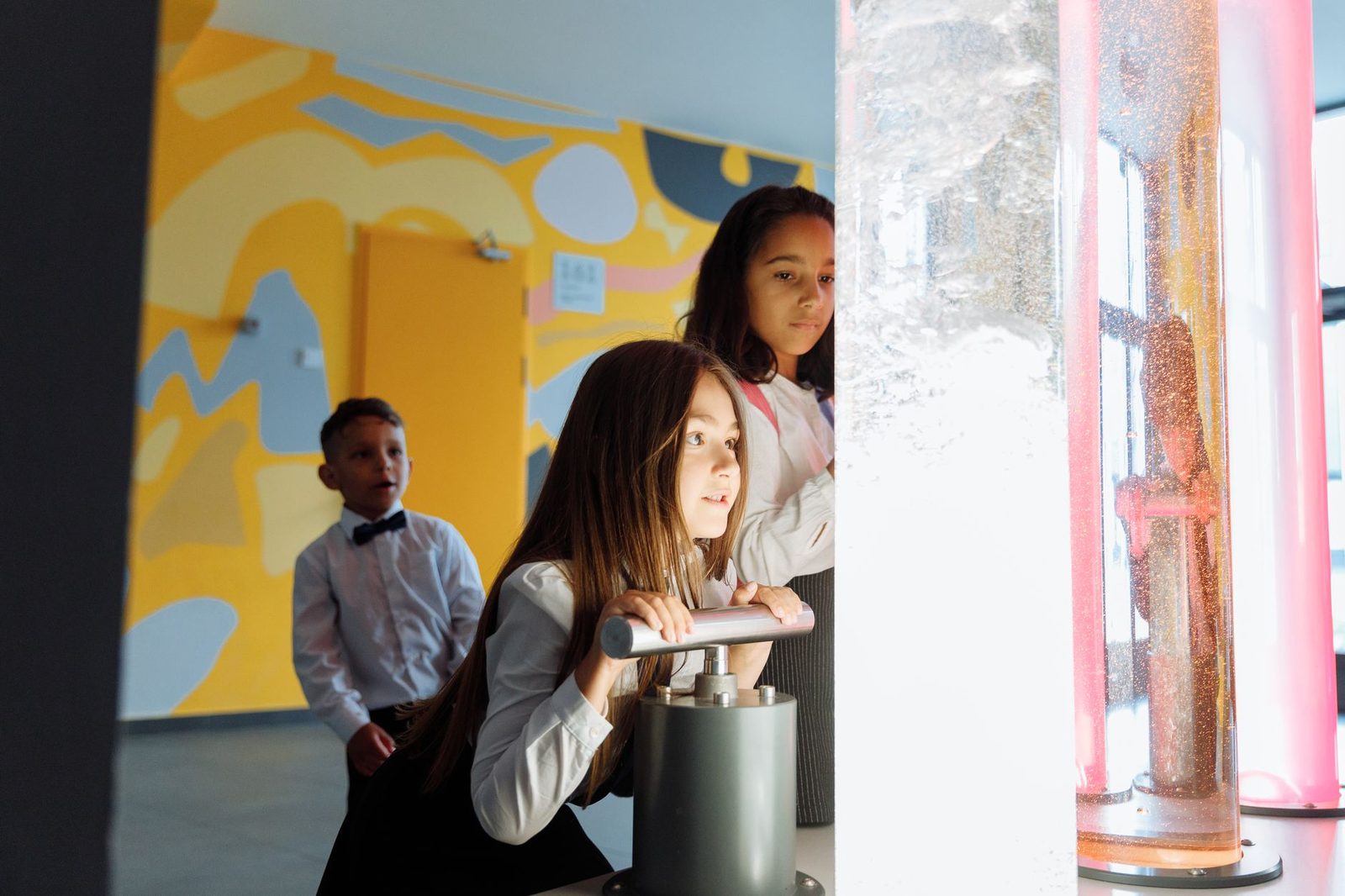
The newest thing here is Planet Soccer, a space-themed outdoor play environment for ages two to twelve, funded by Michael Block and the Hassenfeld Family Foundation in honor of Alan Hassenfeld. It opens weather permitting, which in a Miami summer means it may be shut for an afternoon thunderstorm or simply too hot to be fun by two o’clock. Go straight out there when you arrive rather than saving it for later.
- Blast Off! Rocket Launcher — an air-pressure rocket launcher at the entrance that lights up and announces “Welcome to Planet Soccer” when a rocket reaches the top.
- Exploration Station — a toddler zone reserved for children 36 inches and under, with a climbing wall, slide, rocket ship, telescope, tunnel and activity panels.
- Kick Canyon and Soccer Putt — hoop-shaped goals and three interactive target goals for kicking practice.
- Planetary Plinko — a giant Plinko board where balls are lifted by vertical conveyors and dropped into nine planet-themed bins.
- Matrix Maze Climber — a crawl-and-climb structure for balance and coordination.
Alongside it is the KABOOM! Peace Park playground, plus a musical garden and an Everglades garden marked on the facility map. There is also an outdoor picnic area, which school groups use for packed lunches. The museum has been building out its outdoor play space, so expect some hoarding and a slightly scruffy edge to the grounds while that continues.
Traveling Exhibitions and Seasonal Weekends
The museum brings in a traveling exhibition alongside the permanent galleries and rotates it roughly two or three times a year. The current one is Playful Putters: The History of Miniature Golf, produced by The Strong National Museum of Play — a nine-hole indoor mini-golf course threaded with the story of how the American pastime evolved. It is included with admission and is one of the few things in the building squarely aimed at eight- to twelve-year-olds, which makes it a useful equaliser if you are bringing a mixed-age group.
Seasonal programming is heavier than most visitors expect. Weekend themes run almost continuously: Arts Alive! on the second weekend of each month with in-house artists, messy-play weekends, a Hispanic Heritage Month celebration with dominoes tournaments and salsa lessons, a World Wide Day of Play in partnership with Nickelodeon, an anniversary Glow Party under blacklights, a winter Wonderland build-out and an annual Not So Scary Halloween Bash in early October with trick-or-treating through the galleries and a haunted house. There is also a weekly Baby STEAM session for ages one to three. None of this costs extra beyond admission except the Halloween fundraiser, which is separately ticketed. Check the events calendar before you pick your day — landing on a themed weekend genuinely improves the visit.
How Long to Stay, Which Ages It Suits, and Rainy Days
The museum says most families spend two to four hours. That matches what I would tell a friend. With one child aged three to six, budget two and a half hours and you will leave before the meltdown. With two children spanning, say, three and eight, three and a half hours is realistic because they will want different galleries. Beyond four hours you are paying for fatigue.
The sweet spot is eighteen months to about eight years. Toddlers under two do well in the Exploration Station toddler zone, the Snoezelen room and the softer corners, though they will not get the role-play. Three to six is the golden age — the supermarket, Safety Zone, Pet Central and Castle of Dreams are pitched exactly at them. Seven and eight still find plenty, particularly the Sketch Aquarium, Music Makers Studio, the mini-golf and Planet Soccer. From about nine or ten upwards, most kids will do a fast circuit and then loiter, and you will feel the ticket price. The museum’s own line is that children up to fourteen can enjoy it; that is optimistic for anyone with a phone.
As a wet-weather plan it is close to unbeatable, which is why locals default to it in hurricane-season downpours and again in August when the beach is unbearable by eleven. The trade-off is that everyone else has the same idea. Weekday mornings are the calmest slot, and Mondays are calmer still because no school groups are booked — the museum leans into that with Mini Monday, a birth-to-five program running 10am to 6pm every Monday with play-based activities and a quieter building. Saturday and Sunday afternoons are the worst time to arrive.
Food, Strollers and the Practical Details
Food on site is a Subway restaurant inside the building — marked on the facility map, functional, and about what you would expect. There is no café with proper coffee and no table-service option, so if lunch matters to you, plan to eat before or after. School groups eat packed lunches at the outdoor picnic area, and there is no refrigeration or microwave available. The museum does not publish a general outside-food policy for individual visitors, so I would carry snacks and a water bottle as normal and check at the front desk if you are bringing a full meal; note that outside food is explicitly banned at birthday parties, cake excepted. Drinking fountains are marked throughout the building.
The building is stroller-friendly on both levels and served by two elevators, so you can park a pushchair beside most galleries rather than hauling it upstairs. Baby-changing facilities are marked on the November 2025 facility map, as are first aid, lost and found and both sets of restrooms. What the museum does not publish is a dedicated nursing room, so if you need somewhere quiet to feed, ask at the desk; the Snoezelen room and the auditorium are the calmest corners of the building. Wheelchairs are available to borrow — two adult-sized chairs, plus two lightweight folding stools for anyone who needs to sit often, first come first served and requiring ID. Contrary to some older listings, the museum does not advertise stroller rental, so bring your own. The Kid Smart gift shop sits by the main entrance and is unavoidable on the way out; there is also a Kid Smart Educational Gift Shop area and a 200-seat auditorium used for theater performances and story times.
Accessibility and Sensory-Friendly Visits
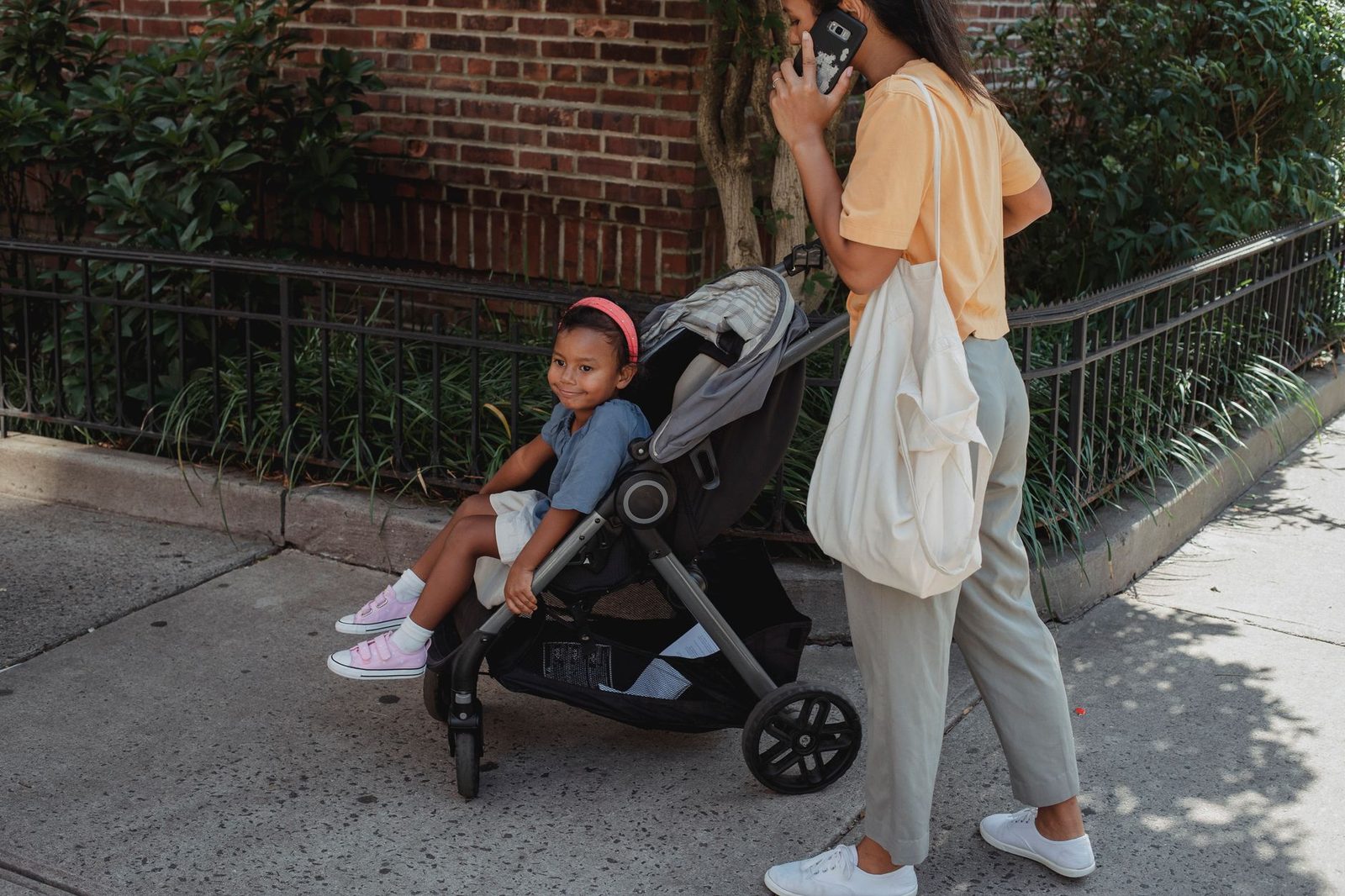
This is the area where the Miami Children’s Museum genuinely outperforms most attractions in the city. It is a Certified Autism Center through IBCCES, meaning staff have completed autism-specific training. The whole building is ADA compliant and wheelchair accessible, including restrooms, water fountains and the exhibits themselves, which are ramp-accessible. Signage carries Braille and large print, exhibit descriptions and maps are available in Braille or large print on request, and staff trained by Miami Lighthouse for the Blind can give sighted-guide tours. The auditorium has assistive listening devices, available at the front desk. Sign-language interpretation can be arranged with two weeks’ notice; other accommodations need about a week. Service animals are welcome; emotional support animals and pets are not.
For sensory-sensitive children the provision goes further than a quiet room. Free sensory bags — plain drawstring backpacks with headphones, fidgets and tactile items — can be borrowed with ID. The museum publishes a downloadable sound map grading each gallery quiet, moderate or loud, plus a social story to prepare a child for the visit and a therapeutic play guide for families working on therapy goals during the trip. The Multi-Sensory/Snoezelen Room, developed with Beit Issie Shapiro and sitting within the South Florida and Me gallery, is an adaptable low-light environment built specifically for children with autism, sensory processing differences and developmental delays.
Sensory Friendly Saturdays run on the second Saturday of every month, with limited numbers, lowered sound and lighting, a sensory-friendly stage performance, activities and service providers on hand. Admission is free with a required RSVP, and registration closes at 5pm on the Friday before. Separately, one caregiver or therapist accompanying a family with a disabled child is admitted free — email [email protected] in advance with their name and company. That policy alone is worth knowing about.
Memberships, Parties and Camps
Memberships run twelve months from purchase. Family is $200 for two designated adults and up to four children under eighteen in the same household; Family Plus is $225 and adds one undesignated guest per visit; Caregiver is $250 and adds an undesignated cardholder, which suits households with a nanny or grandparents who do the museum runs. Add-ons cost $25 for an extra named adult or two extra children, and upgrades between tiers cost $25 to $50. The museum’s own signage says three visits pays for a family membership based on a family of four; run the numbers at $26 a head and it is closer to two visits, or two and a half at the Florida resident rate.
For a visiting family the honest answer is that a membership only pays off in two situations. The first is a long stay — if you are in Miami for two weeks with young children and expect to return on a rainy day, $200 beats two rounds of $104. The second is the reciprocity: members get 50% off admission at other Association of Children’s Museums venues across the country, plus guest passes, early registration and discounts on camps and parties. If you are the kind of family that hits a children’s museum in every city you visit, that changes the maths considerably. For a one-off three-day trip, buy the ticket.
Birthday parties run Saturdays and Sundays in two slots, 11am to 1pm or 3pm to 5pm. Standard packages start at $650 for Classroom 1 or 2 and $700 for Classroom 3, covering admission for up to 60 guests plus the birthday child and parents, a private decorated room for two hours, a dedicated host, a make-and-take art project and museum playtime. A double package combining two classrooms starts at $1,200 for up to 120 guests, and deluxe auditorium packages run $1,950 for a Showtime celebration with a private theater performance or $2,100 for a Glow Up party with a DJ and glow-in-the-dark slime. Themed craft upgrades are $60 to $80 and gift bags $8. Food must come from the museum’s pizza or Subway catering menus, with cake and dietary-requirement items the only permitted exceptions.
Camps are worth a line for visiting families because you can buy a single day. The one-day camps run 9am to 3pm with before and after care available, covering arts and crafts, music and dance, language and literacy, geography, and games and sports — useful if you have one child who would love a day of it and another who would not. The eight-week summer Explorers Camp, plus spring, winter and Campsgiving sessions, are aimed at residents. School groups pay by the group rather than the head: $275 for a Classic Guided Exploration of eight galleries, $325 for a themed version, $350 with a theater performance, based on 25 students and five chaperones, running Tuesday to Friday.
Miami Children’s Museum or Frost Science? An Honest Answer
These two get compared constantly and they are not really rivals. The Frost Science Museum at 1101 Biscayne Boulevard, ten minutes away in Museum Park, is a full science center with an aquarium including a conical Gulf Stream tank, a planetarium, a live raptor center and rotating major exhibitions. It prices tickets dynamically by date rather than at a flat rate, so check the calendar, but it costs meaningfully more per head than the children’s museum and takes a solid half day.
If your children are eight and above, go to Frost. The exhibits reward reading and curiosity, the planetarium is a genuine event, and older kids will not feel they have been taken somewhere for babies. If your children are six and under, go to the children’s museum without hesitating — Frost’s best material sails over their heads and you will spend the visit stopping them from touching things. The awkward case is a family with, say, a four-year-old and a ten-year-old. If you can only do one, Frost handles the split better because the aquarium and planetarium work at any age, whereas the ten-year-old will be bored in the supermarket by the second lap. If you can do both, put the children’s museum in a morning and Frost on a separate day — do not try to run them back to back.
Both are different again from Zoo Miami, which is far larger, entirely outdoors, an hour south, and a full day in its own right. A three-day family trip that takes in the children’s museum, Frost Science and Zoo Miami covers every age in most families without repetition.
Building a Day Around Watson Island
Watson Island is small and there is not much on it, which is both the problem and the opportunity. The obvious pairing is Jungle Island, a two-minute drive away at 1111 Parrot Jungle Trail. It opens daily 9.30am to 5pm with last admission at 4pm, general admission starts around $22.95, and parking is a flat $20 in the covered garage. Because it closes an hour earlier than the museum, the sequence that works is Jungle Island first thing while it is cooler — the wildlife exhibits, Treewalk Village and the Guardians of the Jungle show are outdoors — then the air-conditioned museum from lunchtime. Doing both in one day with under-sixes is ambitious; with seven-and-ups it is a full, good day. Aside from those two, the island is marinas, boat clubs, a seaplane base and a lot of parked cars, so there is nowhere to wander for lunch.
Off the island, Bayside Marketplace is about five minutes back toward Downtown and is the easiest place to feed everybody, with waterfront restaurants, sightseeing boat trips around Biscayne Bay and the Skyviews Miami observation wheel on the same site. Museum Park on the same stretch of Biscayne Boulevard holds both Frost Science and the Pérez Art Museum Miami (PAMM), whose waterfront terrace and hanging gardens are a pleasant, free-to-walk-through place to decompress even if you skip the galleries. In the other direction, South Beach and South Pointe Park are ten minutes across the causeway if you want to finish on sand. For more on the surrounding area, our guide to Downtown Miami covers what else is within reach.
Frequently Asked Questions
How much does the Miami Children’s Museum cost?
General admission is $26 per person and Florida residents pay $20 with a valid state ID. Children under twelve months are free and members are free. Adults pay the same as children, so a family of four with two older children pays $104. Parking adds $2 an hour. Buy online in advance, particularly for weekends and school holidays, when walk-up availability can be tight.
What are the opening hours?
Daily, 10am to 6pm. The museum closes on Thanksgiving and Christmas Day, closes early at 4pm on Christmas Eve and New Year’s Eve, and opens at 1pm on New Year’s Day. On the second Saturday of each month it opens to the public at 11am after a pre-registered sensory-friendly session, and on the second Sunday it opens to the public at 11am after Member Mornings.
Is it worth it for a two-year-old?
Yes, with realistic expectations. A two-year-old will love the Exploration Station toddler zone in Planet Soccer, the supermarket trolleys, the softer play areas and the Snoezelen room, but will not engage with the role-play in the way a five-year-old does. Come on a Monday for the Mini Monday program, which is designed for birth to five and runs on the quietest day of the week because no school groups are booked.
How long should we allow?
Two to four hours covers almost everyone. One preschooler, two and a half hours. Two children of different ages, three and a half. Arriving at opening and leaving by early afternoon gets you the quietest galleries and the outdoor play before the heat peaks. If your children are still going strong at the four-hour mark, you have unusual children.
Can you get there without a car?
Yes, though not elegantly. The museum lists Metrobus routes C, K, M and S as serving Watson Island on the causeway run between Downtown and Miami Beach. Rideshare is the simplest option and takes five to fifteen minutes from most tourist hotels. There is a cycle and pedestrian path along the causeway from Downtown, roughly a mile and a half, which is fine on bikes and hard work on foot in summer.
Is there anywhere to eat, and can we bring our own food?
There is a Subway inside the building and an outdoor picnic area; there is no café or restaurant beyond that. The museum has no published outside-food policy for general visitors, though snacks and water bottles are normal — ask at the front desk if you plan to bring a full meal. Bayside Marketplace, five minutes away, is the nearest cluster of proper restaurants.
Do you need to book tickets in advance?
It is recommended rather than required. Advance booking matters most on weekends, public holidays and themed event weekends, and on second Saturdays and Sundays when the museum opens to the public later than usual. It also protects you against the occasional private-hire closure, which the museum announces on its homepage at short notice.
Is the museum accessible for a child with autism?
It is one of the strongest options in Miami. The museum is a Certified Autism Center, offers free sensory bags with headphones and fidgets, publishes a sound map grading every gallery by noise level and a social story to prepare children beforehand, and has a dedicated Snoezelen multi-sensory room. Sensory Friendly Saturdays on the second Saturday of each month are free with advance registration, and one caregiver or therapist can be admitted free by arranging it in advance.
Is a membership worth buying as a tourist?
Only if you will visit twice. A $200 family membership breaks even against two visits for a family of four at $26 a head, so it makes sense for extended stays or for families who use Association of Children’s Museums venues at home — members get 50% off admission at other ACM museums nationally. For a short trip with one visit planned, buy the standard ticket and put the difference toward the Glass Lab.
Can adults visit without children?
No. For safeguarding reasons the museum does not admit adults without an accompanying child, or children without an accompanying adult. This applies at the door, so do not buy a ticket for a solo visit expecting to talk your way in.
What is there for older children, aged nine to twelve?
Less than for younger ones, but not nothing. Planet Soccer runs to age twelve, the traveling mini-golf exhibition is aimed squarely at that bracket, the Sketch Aquarium and Music Makers Studio hold attention, and the Glass Lab gives them something to make and take home. Even so, a nine-year-old will usually finish the building in ninety minutes. If they are your only child, Frost Science is the better ticket.
Plan Your Family Miami Trip
For more, browse our complete Miami Family Vacation Guide, plus deep dives on things to do in Miami with kids, Zoo Miami, family beaches in Miami, family hotels, and Jungle Island.
Prices, hours and gallery line-ups change, and this museum rebuilds spaces more often than most. For current hours, ticket prices, the events calendar and the accessibility downloads, check miamichildrensmuseum.org before you set out.