Miami Neighborhoods Guide
Why Miami’s Neighborhoods Matter for Your Trip
Miami is not one city — it is a mosaic of distinct neighborhoods, each with its own personality, architecture, cuisine, and rhythm. Visitors who stay only on the beach miss the Cuban coffee rituals of Little Havana, the gallery walks of Wynwood, and the tree-canopied lanes of Coral Gables. Understanding Miami’s neighborhoods is the single best way to plan a trip (alongside our guide to the best things to do in Miami) that feels authentic rather than generic.
This guide covers 15 miami neighborhoods that every visitor should know about — from the world-famous strips of South Beach to up-and-coming enclaves like Allapattah that most tourists never discover. For each area, you will find what makes it special, the top things to do, where to eat and drink, and practical tips on getting around. Whether you are visiting for a weekend or planning a longer stay, this neighborhood-by-neighborhood breakdown will help you find exactly the Miami that suits your travel style.
South Beach — The Iconic Playground
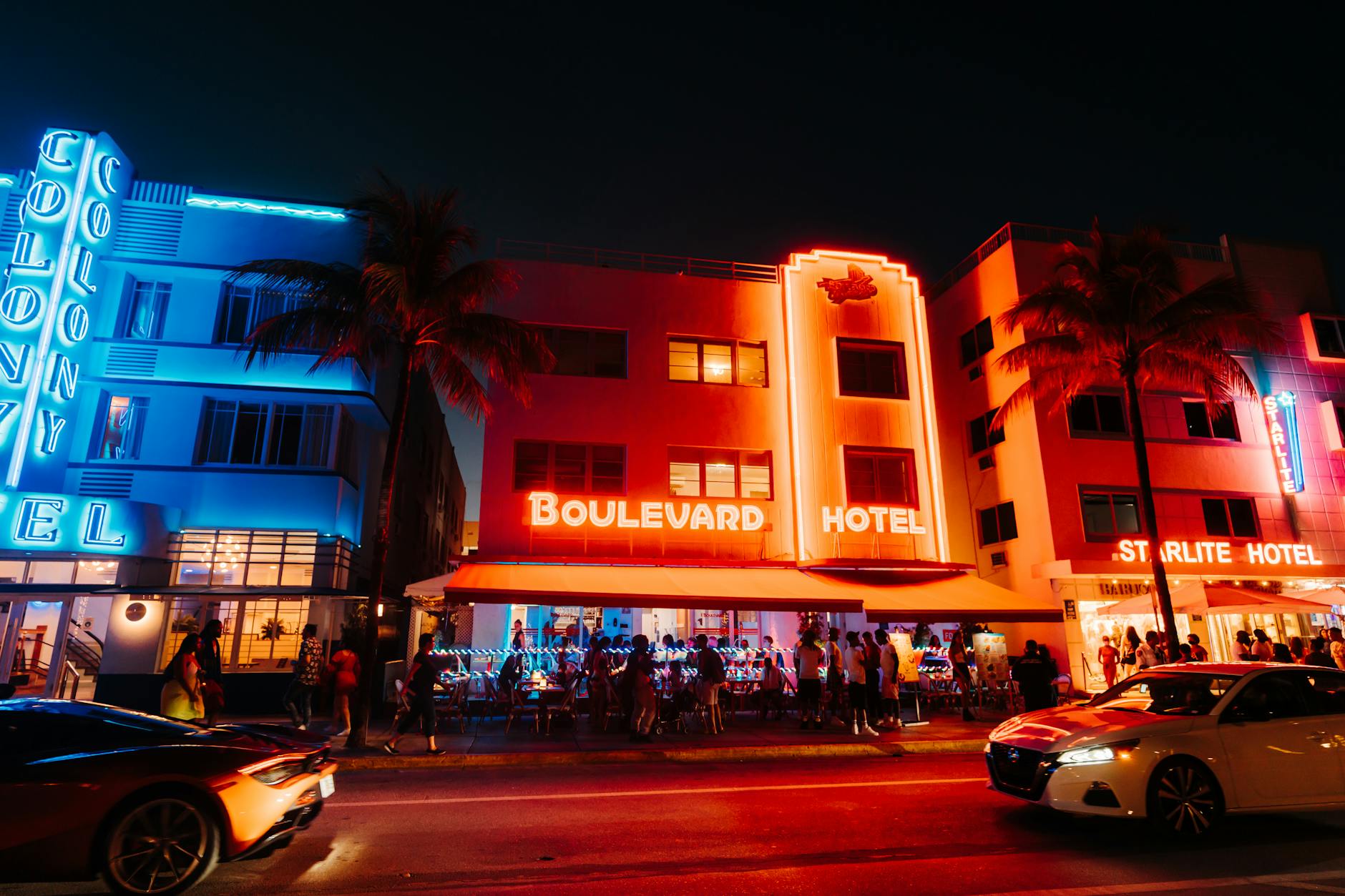
South Beach is where most visitors begin their Miami experience, and for good reason. The neighborhood stretches along the southern tip of Miami Beach’s barrier island, bordered by the Atlantic Ocean to the east and Biscayne Bay to the west. Its Art Deco Historic District holds about 800 historic buildings in Art Deco, Mediterranean Revival, and MiMo styles, and the largest concentration of Art Deco architecture in the country.
Ocean Drive is the postcard image of Miami: neon-lit hotel facades, outdoor cafes spilling onto the sidewalk, and a constant parade of people. But South Beach has layers beyond the party scene. Lincoln Road Mall is a pedestrian-only promenade with galleries, independent boutiques, and some of the best people-watching in Florida. Espanola Way, a narrow Mediterranean-style street, hosts weekend art markets and intimate restaurants that feel more European village than American beach town.
What to Do in South Beach
Start your morning with a walk along the Miami Beach Boardwalk, a paved path that runs from 5th Street to 46th Street — perfect for jogging, cycling, or a leisurely stroll past the iconic lifeguard stands. The Art Deco Welcome Center on Ocean Drive (artdecomuseum.org) offers guided walking tours that reveal the stories behind the architecture. For a quieter beach experience, head south to South Pointe Park, where you can watch cruise ships navigate Government Cut while lounging on manicured lawns.
Culture seekers should visit the Wolfsonian-FIU Museum on Washington Avenue, home to an extraordinary collection of design and propaganda art from the late 19th and early 20th centuries. At night, the energy shifts — world-class clubs like LIV at the Fontainebleau and intimate cocktail bars along Collins Avenue keep South Beach vibrant until dawn.
Where to Eat in South Beach
Skip the tourist traps on Ocean Drive and head one block west. Joe’s Stone Crab has been a Miami institution since 1913. Budget-conscious visitors should try Puerto Sagua, a no-frills Cuban diner on Collins Avenue that has served generous plates since 1962.
Little Havana — The Soul of Cuban Miami
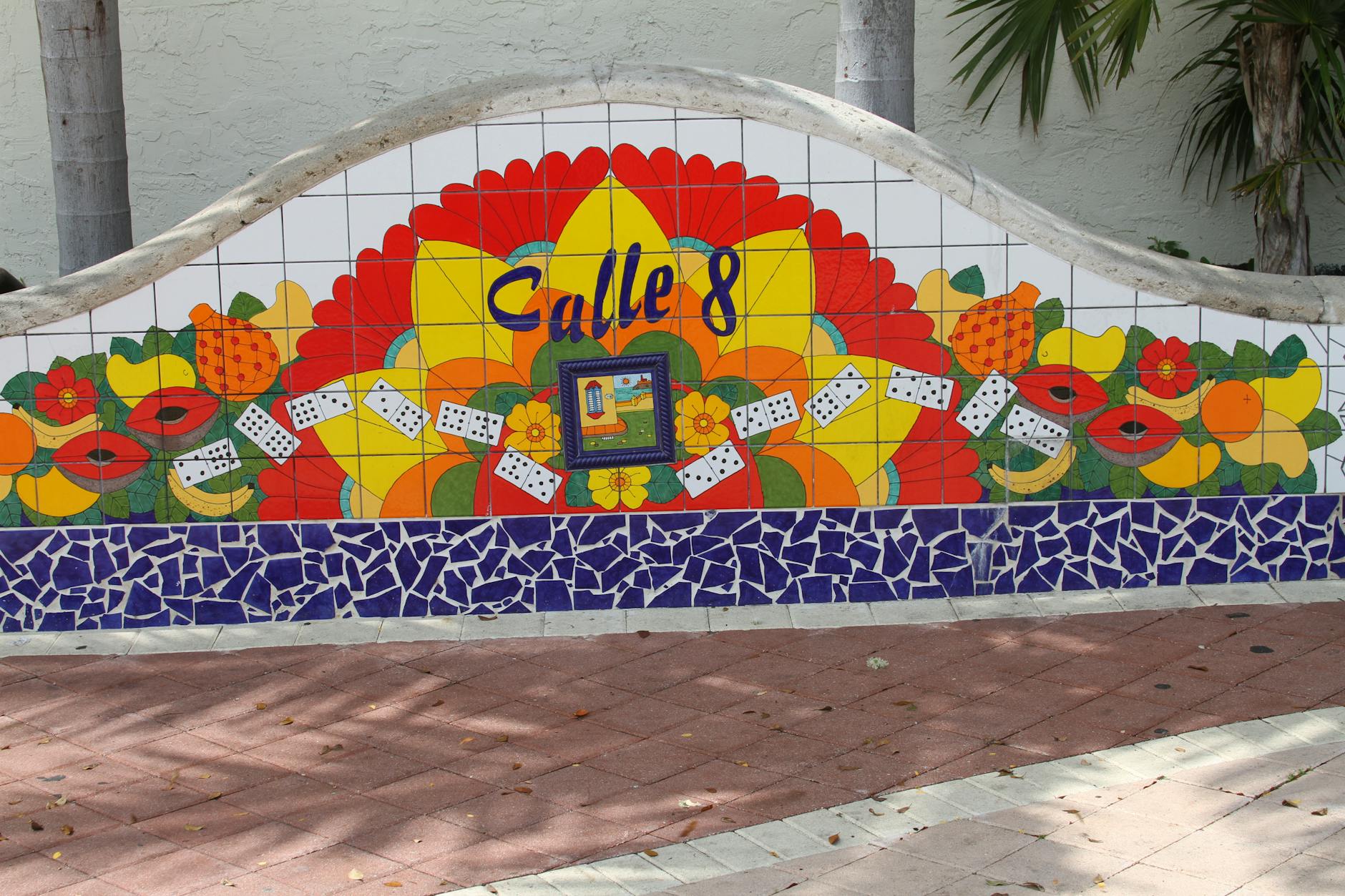
Little Havana is where Miami’s Cuban heritage pulses most strongly. Centered along Calle Ocho (SW 8th Street), this neighborhood has been the cultural heart of the Cuban-American community since the first wave of exiles arrived in the 1960s. Today, it is one of the most vibrant and culturally rich neighborhoods in the United States, drawing visitors from around the world who come to experience its music, food, art, and unmistakable energy.
Walking down Calle Ocho between SW 12th Avenue and SW 27th Avenue is a sensory experience. The aroma of roasting coffee beans drifts from ventanitas — small walk-up windows where locals order cafecito, the potent, sweet Cuban espresso that fuels the neighborhood. Cigar rollers work in open storefronts, hand-rolling tobacco with practiced precision. At Máximo Gómez Park (also called Domino Park), elderly men play fierce games of dominoes under a shaded pavilion — a tradition that has continued here for decades.
What to Do in Little Havana
The best way to experience Little Havana is on foot. The Calle Ocho Walk of Fame honors Latin music legends with star-studded sidewalk plaques, similar to Hollywood’s Walk of Fame. Tower Theater, a beautifully restored 1926 cinema and a cultural anchor for the neighborhood, comes back under Miami Dade College management from November 1, 2026, with daily programming planned from January 2027. Every March, the Calle Ocho Festival turns the street into a free, all-day Latin street fair that has traditionally drawn around one million people, with live music, dancing, and street food.
For a deeper cultural experience, the Cuban Memorial Boulevard along SW 13th Avenue features monuments and memorials honoring the Cuban exile experience. Gallery-hoppers will enjoy Futurama 1637 and the many small art spaces that showcase local Cuban-American artists.
Where to Eat in Little Havana
Versailles Restaurant is the undisputed landmark — a mirrored, chandeliered dining room that has served as the gathering place for Miami’s Cuban community since 1971. Try the ropa vieja, lechón asado, or a classic Cuban sandwich. For a more casual experience, Azucar Ice Cream Company serves inventive tropical flavors like Abuela María (vanilla, guava, and cream cheese) that draw long lines. Los Pinareños Frutería is a colorful fruit stand where you can sip fresh sugarcane juice and mango smoothies while watching Calle Ocho’s daily theater unfold.
Wynwood — Miami’s Open-Air Art Gallery
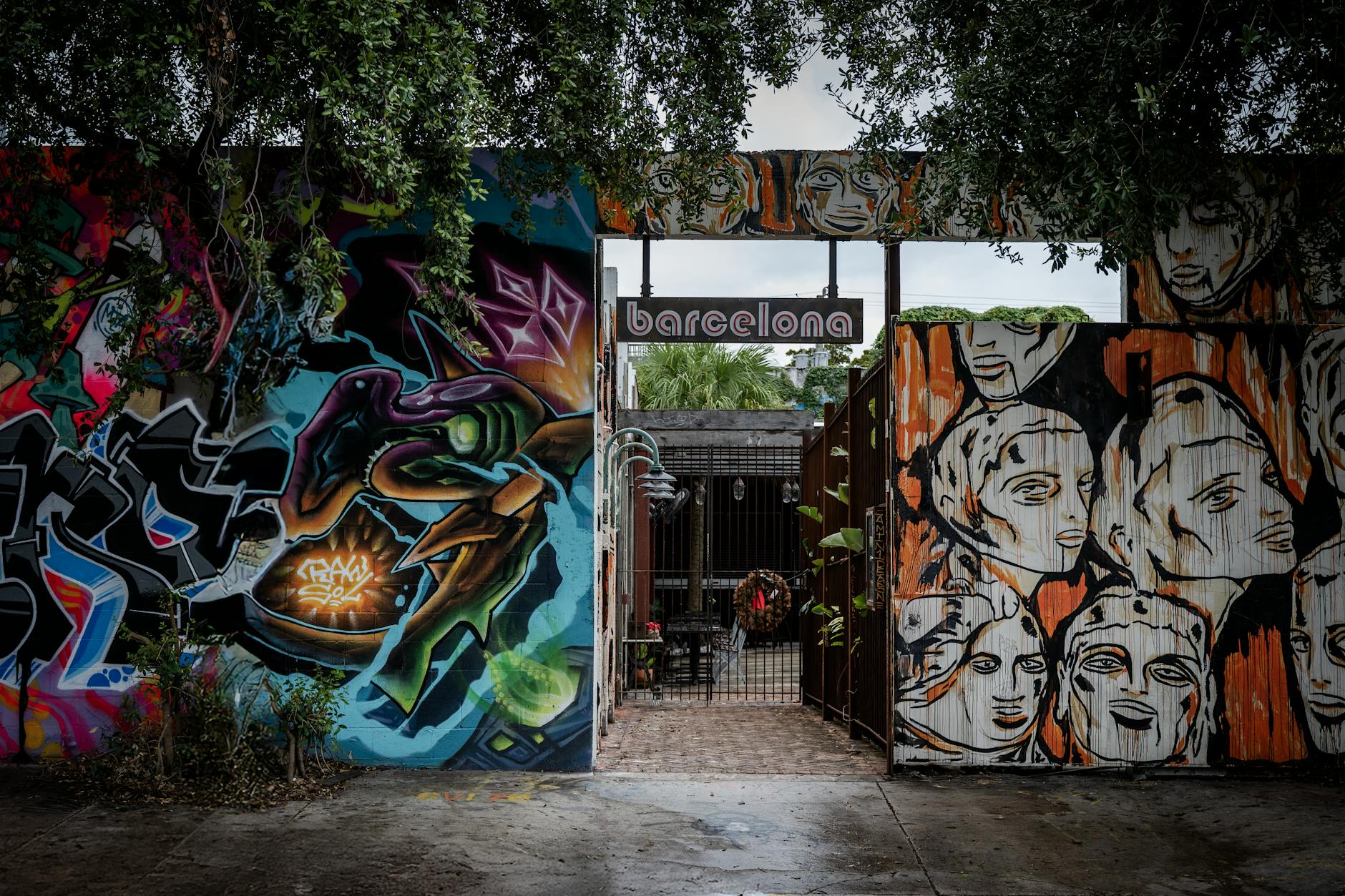
Wynwood’s transformation is one of the most remarkable neighborhood reinventions in American urban history. Two decades ago, this was a neglected warehouse district. Today, it is an internationally recognized arts destination where every wall, alleyway, and parking lot has become a canvas for world-class street art. The neighborhood attracts millions of visitors annually and has become synonymous with Miami’s creative renaissance.
The centerpiece is Wynwood Walls (thewynwoodwalls.com), a curated outdoor museum featuring large-scale murals by artists such as Shepard Fairey, RETNA, and Os Gemeos. But the street art extends far beyond the Walls — virtually every building in the neighborhood’s core (roughly between NW 20th and NW 29th Streets) is covered in murals that are regularly refreshed and replaced, meaning the neighborhood looks different every few months.
What to Do in Wynwood
Beyond the murals, Wynwood has evolved into a full-day destination. The Rubell Museum houses one of the world’s most significant contemporary art collections in a 100,000-square-foot former warehouse. Wynwood Marketplace is an open-air venue hosting food trucks, live music, and artisan vendors on weekends.
The best time to explore is on the second Saturday of each month, when galleries host openings during Wynwood Art Walk, and the streets fill with a festival-like atmosphere. During Art Basel Miami Beach each December, Wynwood becomes ground zero for the international art world, with pop-up exhibitions and performances throughout the neighborhood.
Where to Eat in Wynwood
KYU is a wood-fired Asian restaurant that earned a Michelin Bib Gourmand — the roasted cauliflower with shishito peppers is legendary. Salty Donut serves artisanal doughnuts with creative flavors that draw weekend lines. For a sit-down meal, Wynwood Kitchen & Bar offers Latin-inspired dishes surrounded by murals from prominent street artists, so even your dining experience is an immersive art encounter.
Brickell — Miami’s Manhattan
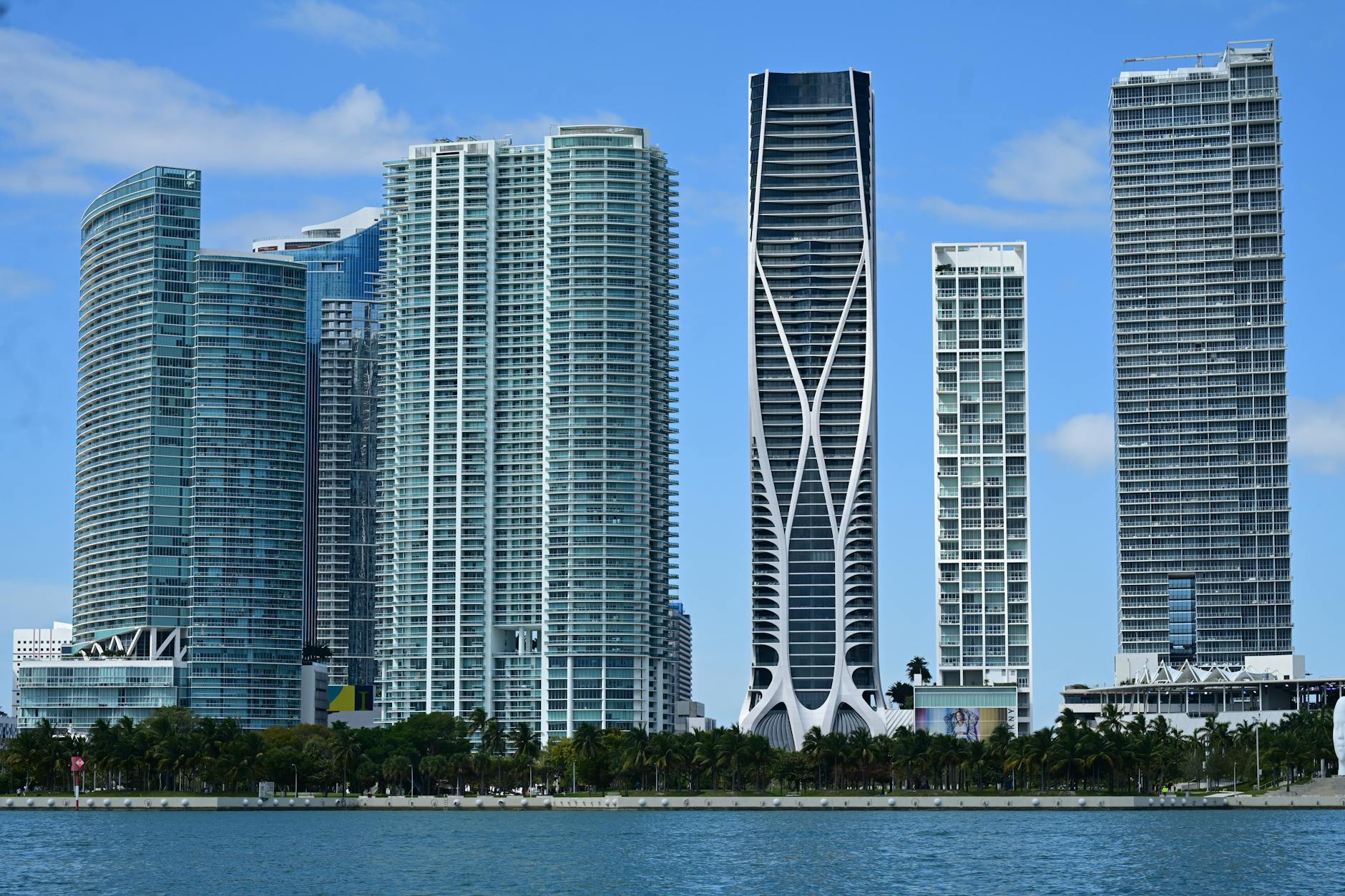
Brickell is Miami’s financial and urban core, a neighborhood of gleaming skyscrapers, luxury condominiums, and a walkable energy that feels more like Manhattan or Hong Kong than tropical Florida. Over the past decade, Brickell has transformed from a strictly business district into one of Miami’s most desirable neighborhoods for dining, nightlife, and urban living.
The centerpiece of the neighborhood’s transformation is Brickell City Centre, a massive mixed-use development with open-air shopping, upscale restaurants, and a climate-controlled design featuring a dramatic elevated trellis system called the Climate Ribbon that provides shade and channels breezes. Brickell Avenue itself is lined with international banks, consulates, and corporate headquarters, earning it the nickname “Millionaire’s Row.”
What to Do in Brickell
The free Metromover is a great way to explore — this elevated people-mover connects Brickell to Downtown Miami with stops at major attractions. For green space, Simpson Park Hammock is a hidden nature preserve right in the heart of the concrete jungle, protecting one of the last remnants of the old Brickell Hammock. The Brickell Key promenade offers a quiet waterfront walk with stunning skyline views, especially at sunset.
Brickell’s dining and nightlife scene rivals South Beach without the tourist markup. Rooftop bars like Sugar at EAST Miami hotel serve craft cocktails with sweeping bay views, while the ground-floor restaurants along Brickell Avenue offer everything from Peruvian ceviche to Japanese omakase.
Downtown Miami — Culture and Commerce Converge
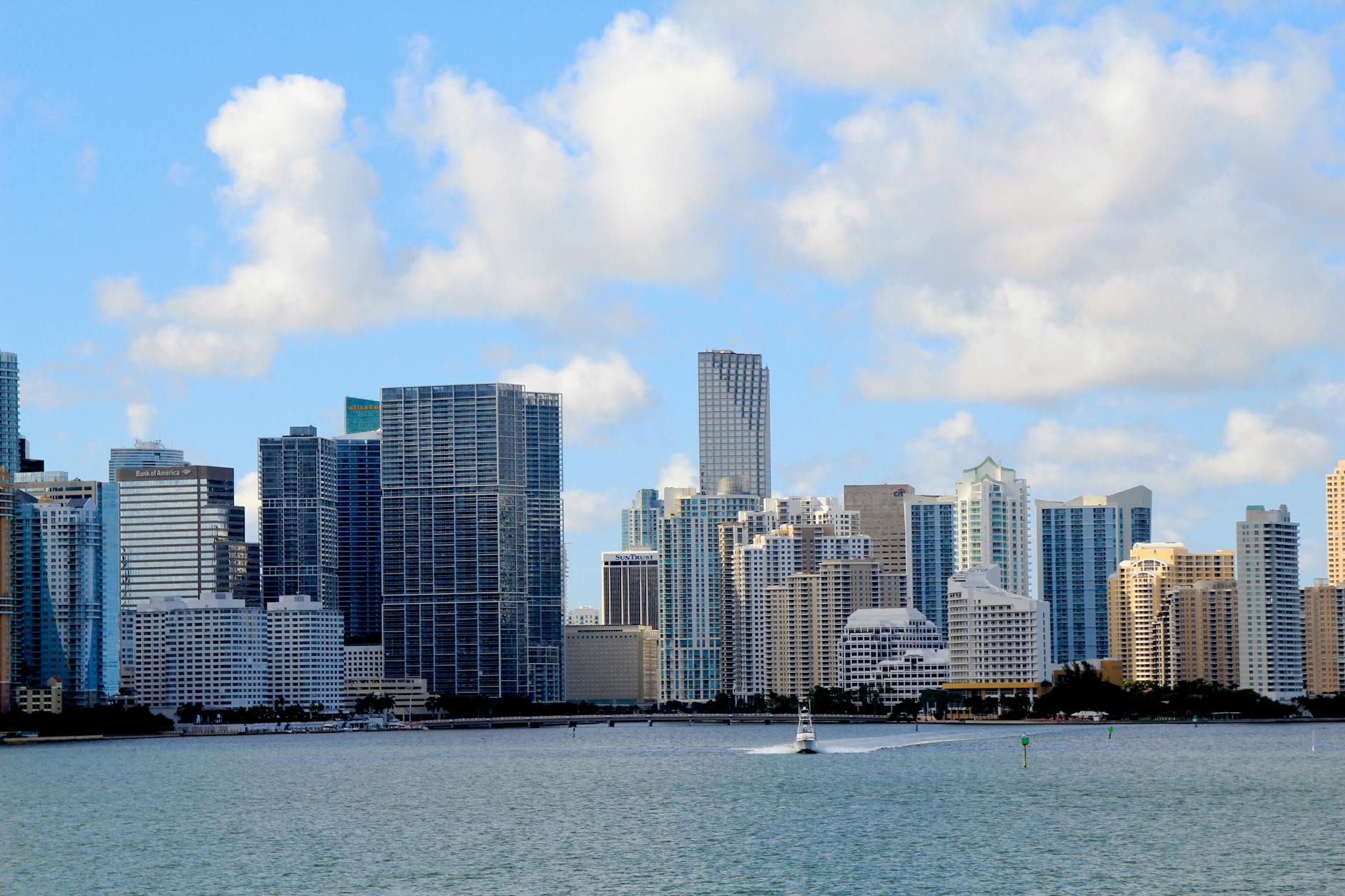
Downtown Miami has undergone a renaissance that has turned it from a 9-to-5 business district into a vibrant cultural hub. The transformation is anchored by the Pérez Art Museum Miami (PAMM) (pamm.org) and the Phillip and Patricia Frost Museum of Science (frostscience.org), both located in Museum Park on Biscayne Bay. These world-class institutions sit alongside Bayfront Park, a 32-acre waterfront green space that hosts concerts, festivals, and outdoor fitness classes.
The Adrienne Arsht Center for the Performing Arts (arshtcenter.org) presents touring Broadway shows and is a home stage for the Miami City Ballet, the New World Symphony, and the Florida Grand Opera. For shopping, Bayside Marketplace is an open-air waterfront mall where you can also catch boat tours of Biscayne Bay and celebrity-home-spotting cruises along Star Island.
Getting Around Downtown
Downtown is the most connected neighborhood in Miami. The free Metromover loops through the area with stops at major destinations. The Brightline high-speed rail station connects Miami to Fort Lauderdale and West Palm Beach, making Downtown an ideal base for day trips along the Gold Coast. The neighborhood is also the departure point for the Rickenbacker Causeway to Key Biscayne and the MacArthur Causeway to Miami Beach.
Coconut Grove — Miami’s Bohemian Village
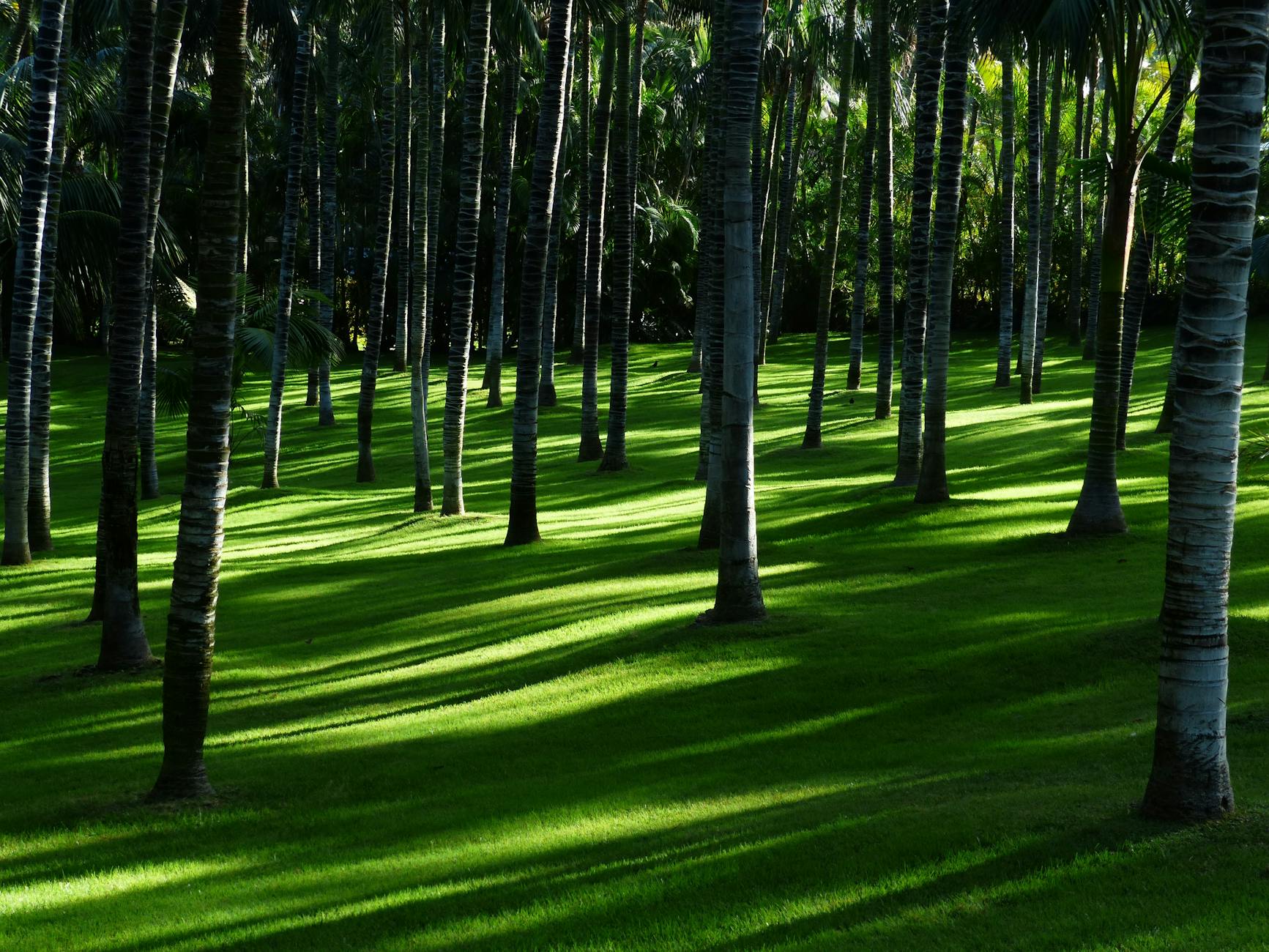
Coconut Grove is Miami’s oldest continuously inhabited neighborhood, and it wears that history with a graceful, leafy charm that feels worlds apart from the high-rises of Brickell just a few miles north. Founded in 1873, “the Grove” has long attracted artists, intellectuals, and free spirits, and that bohemian DNA still infuses the neighborhood today, even as upscale restaurants and boutiques have moved in.
The neighborhood’s crown jewel is Vizcaya Museum and Gardens (vizcaya.org), a stunning Italian Renaissance-style villa built between 1914 and 1916 as James Deering’s winter home, with 10 acres of formal gardens overlooking Biscayne Bay. It is one of the most photographed locations in Florida and a must-visit for anyone interested in history, architecture, or landscape design.
What to Do in Coconut Grove
CocoWalk is the neighborhood’s central gathering place, redesigned and reopened in 2021 as an open-air lifestyle center with restaurants, shops, a cinema, and frequent community events. The Barnacle Historic State Park preserves a house built in 1891, the oldest in Miami-Dade County still standing in its original location. For nature lovers, David T. Kennedy Park along the bayfront offers kayaking, paddleboarding, and some of the most serene waterfront views in the city.
The annual Coconut Grove Arts Festival takes over the Grove every Presidents’ Day weekend. The 2027 edition runs February 13–15, with work from 285 artists picked by the festival’s jury.
Coral Gables — The City Beautiful
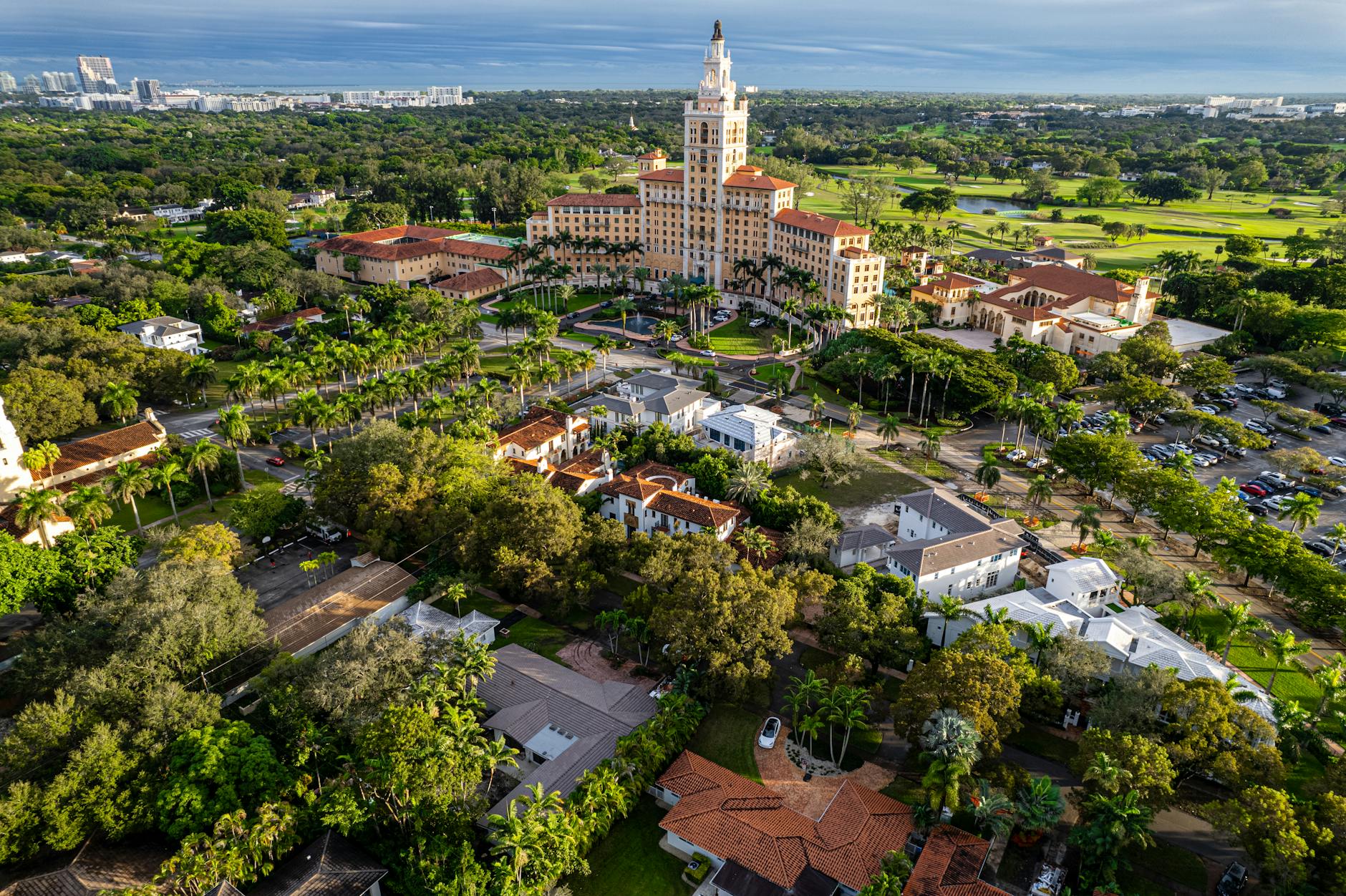
Coral Gables is one of America’s first planned communities, developed in the 1920s by George Merrick with a unified vision of Mediterranean Revival architecture, tree-lined boulevards, lush landscaping, and an overall sense of beauty and order that persists a century later. The city has its own government and maintains strict architectural standards — you will not find neon signs or strip malls here.
The grandest symbol of Coral Gables is the Biltmore Hotel (biltmorehotel.com), a 1926 luxury resort with a 315-foot tower modeled after the Giralda in Seville, Spain. Its legendary pool — one of the largest hotel pools in the continental United States — is where Johnny Weissmuller once worked as a swimming instructor and Esther Williams performed. Even if you are not a guest, you can take a free guided tour on Sundays.
What to Do in Coral Gables
The Venetian Pool is unlike any public swimming pool in the world. Carved from a coral rock quarry in 1923, it features waterfalls, caves, and a Venetian-style loggia, and is fed by spring water from an underground aquifer. Miracle Mile (officially Coral Way) is the city’s main commercial street, lined with bridal shops, art galleries, restaurants, and boutiques housed in Mediterranean-style buildings.
The Fairchild Tropical Botanic Garden (fairchildgarden.org), located at the southern edge of Coral Gables, is an 83-acre paradise of rare tropical plants, butterflies, and rainforest exhibits. It regularly hosts outdoor art installations from major contemporary artists. The Lowe Art Museum at the University of Miami has an impressive collection spanning 5,000 years of art from around the world.
Miami Design District — Luxury Meets Creativity
The Miami Design District has evolved from a furniture showroom neighborhood into one of the world’s most exciting luxury retail and art destinations. Over just 18 blocks, you will find flagship stores from Louis Vuitton, Prada, Dior, Gucci, and dozens of other high-end brands, but what sets the Design District apart from a typical luxury mall is its commitment to public art and architectural innovation.
Sculptures, murals, and architectural showpieces such as Zaha Hadid’s Elastika and the Museum Garage turn up all over the district, and you can see them from the street for free. The Institute of Contemporary Art (ICA) Miami (icamiami.org) anchors the neighborhood’s cultural credentials with a free permanent collection and rotating exhibitions in a stunning building by the Spanish firm Aranguren + Gallegos.
What to Do in the Design District
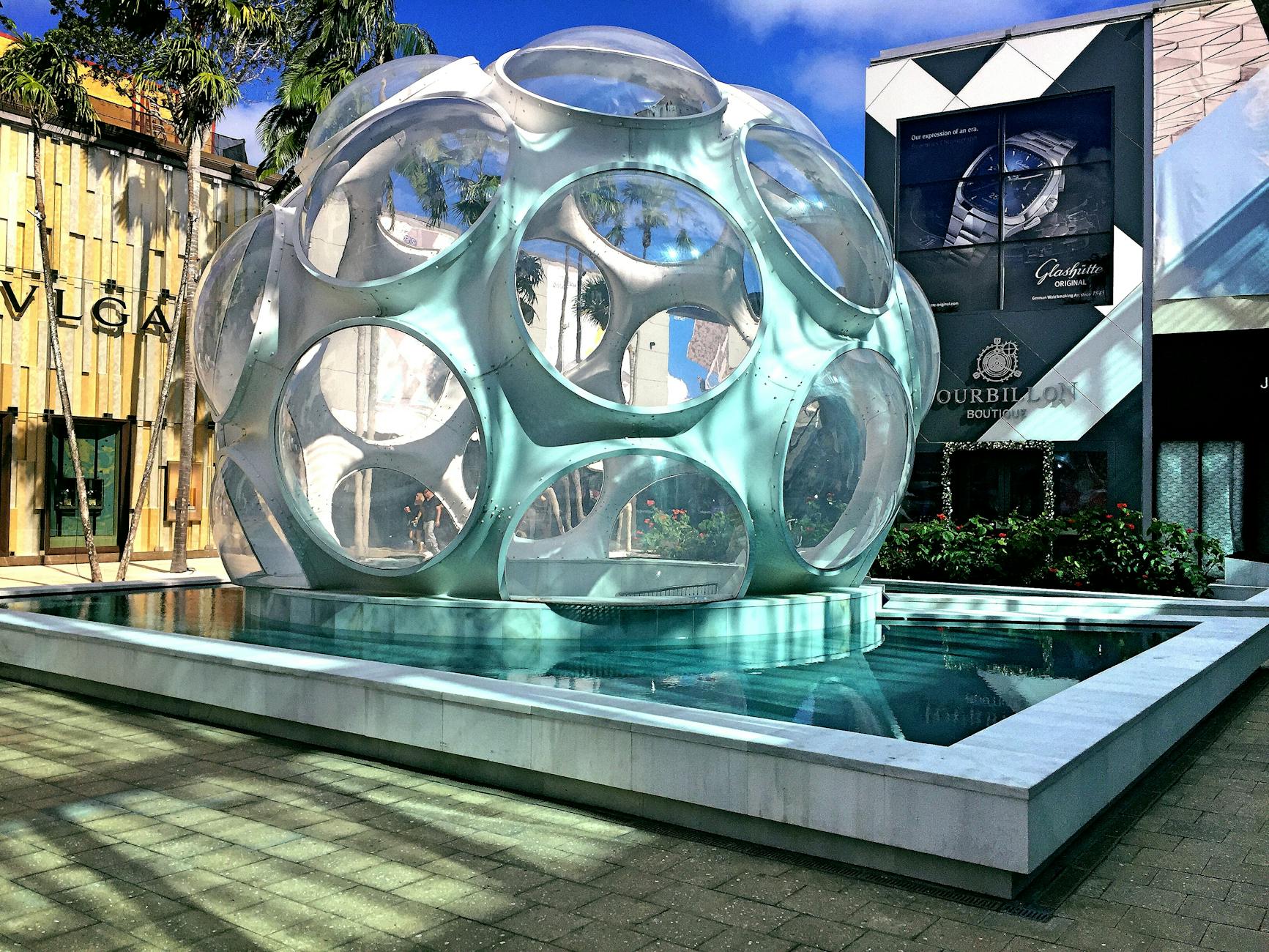
Even if luxury shopping is not your thing, the Design District is worth visiting purely for its public art and architecture. The Fly’s Eye Dome by Buckminster Fuller sits in the Palm Court plaza, surrounded by works from Jeff Koons, Marc Newson, and other contemporary art world figures. Paradise Plaza and Jungle Plaza host rotating installations and community events throughout the year.
For dining, the Design District punches well above its weight. Michael’s Genuine Food & Drink is a neighborhood institution known for farm-to-table cuisine. Mandolin Aegean Bistro transports you to a Greek island with its garden courtyard setting and Mediterranean menu.
Key Biscayne — The Island Escape
Connected to the mainland by the Rickenbacker Causeway, Key Biscayne is a barrier island that feels like a tropical resort community despite sitting just across the bay from Downtown Miami. With about 14,800 residents, it offers an unhurried pace and some of the most beautiful natural landscapes in the entire Miami area.
Crandon Park Beach consistently ranks among the top beaches in the United States, with two miles of soft white sand, calm turquoise waters, and a coconut palm-lined shoreline. At the island’s southern tip, Bill Baggs Cape Florida State Park (floridastateparks.org) is home to the Cape Florida Lighthouse, the oldest standing structure in Miami-Dade County (built in 1825), and offers excellent cycling, kayaking, and snorkeling.
What to Do on Key Biscayne
The island is a paradise for outdoor enthusiasts. Rent a bike or kayak, explore the mangrove trails, or kitesurf in the steady Atlantic breezes. The Village Green hosts community events and farmers markets. For dining, Rusty Pelican offers waterfront dining with one of the most spectacular skyline views in Miami — the Downtown skyline reflected across Biscayne Bay at sunset is unforgettable.
Edgewater and Midtown — The Rising Stars
Edgewater and Midtown are two adjacent neighborhoods that have emerged as some of the most exciting areas in Miami for residents and increasingly for visitors. Located between Downtown and the Design District, they offer a more local, less touristy experience while remaining walkable to major attractions.
Edgewater lines the western shore of Biscayne Bay, and its main draw is Margaret Pace Park — a bayfront green space with volleyball courts, a dog park, and stunning water views. The neighborhood is filled with sleek condo towers and an increasing number of independent restaurants and cafes.
Midtown is a master-planned neighborhood centered around the Shops at Midtown Miami, an open-air retail and dining complex. It is one of the most walkable neighborhoods in the city and serves as a convenient base for exploring both Wynwood and the Design District on foot. The dining scene here skews young and diverse, with everything from ramen to arepas within a few blocks.
Overtown — Historic Black Miami
Overtown holds a unique and important place in Miami history. In the early 20th century, it was known as “Little Broadway” — a thriving entertainment district where legends like Ella Fitzgerald, Count Basie, and Billie Holiday performed during the Jim Crow era, when Black performers were barred from staying in Miami Beach hotels. The Lyric Theater, built in 1913 and beautifully restored, was the cultural anchor of this era and continues to host live performances today.
The neighborhood was devastated by the construction of Interstate 95 in the 1960s, which displaced thousands of residents and bisected the community. Today, Overtown is experiencing a thoughtful revival. Celebrity chef Marcus Samuelsson’s Red Rooster Overtown has become a culinary destination, serving soul food and comfort dishes in a lively setting that celebrates the neighborhood’s heritage. The Black Police Precinct and Courthouse Museum preserves the history of one of the few places where Black officers could serve during segregation.
Allapattah — Miami’s Next Creative Frontier
Just west of Wynwood, Allapattah (derived from a Seminole word meaning “alligator”) is a working-class, predominantly Dominican and Central American neighborhood that is rapidly gaining attention for its art and food scenes. The arrival of the Rubell Museum on Allapattah’s eastern edge was the catalyst, and since then, new galleries, restaurants, and creative spaces have been steadily opening.
The neighborhood’s Produce Market along NW 12th Avenue is one of Miami’s great hidden gems — a sprawling outdoor market where you can buy tropical fruits, fresh vegetables, and Latin American ingredients at a fraction of supermarket prices. For dining, restaurants like Hometown BBQ and emerging spots along NW 36th Street offer outstanding food without the Wynwood price tag.
Bal Harbour and Surfside — Upscale Oceanfront Living
Bal Harbour is a tiny, immaculate village on the northern tip of Miami Beach’s barrier island, known primarily for Bal Harbour Shops, one of the most exclusive open-air shopping centers in the world. Anchored by Neiman Marcus and Saks Fifth Avenue, the mall features flagship stores from every major luxury brand, set among tropical gardens, koi ponds, and open-air walkways.
Beyond shopping, Bal Harbour Beach is one of the most pristine and least crowded stretches of sand in the Miami area, backed by upscale resort hotels like the St. Regis and The Ritz-Carlton.
Surfside, just south of Bal Harbour, has a charming small-town atmosphere with a walkable main street (Harding Avenue), independent shops, and excellent restaurants. The beach here is quieter and more family-friendly than South Beach, and a paved oceanfront path connects Surfside to Bal Harbour for scenic walks and bike rides.
North Beach and Mid-Beach — The Quieter Side of Miami Beach
While South Beach gets all the attention, the neighborhoods of North Beach and Mid-Beach offer a more relaxed, residential, and authentic Miami Beach experience. Mid-Beach (roughly between 23rd and 63rd Streets) is home to some of Miami’s best hotels, including the legendary Fontainebleau and Eden Roc, and has become a dining destination in its own right, with spots like Cecconi’s.
North Beach (above 63rd Street) has a distinctly local feel, with a large Orthodox Jewish community, family-owned restaurants, and a beautiful stretch of uncrowded beach. The North Beach Bandshell hosts free and low-cost concerts, film screenings, and cultural events throughout the year. North Shore Open Space Park is a peaceful coastal park with native vegetation, walking trails, and some of the best sunrise views on the island.
Aventura — Shopping and Nature Combined
Up in north Miami-Dade, just north of Miami Beach, Aventura is best known for Aventura Mall, the largest mall in Florida. With over 300 stores including Nordstrom, Bloomingdale’s, and a wide range of luxury and mid-range brands, plus a dedicated Arts Aventura Mall program featuring large-scale installations, it is a full-day destination for shoppers.
But Aventura is more than retail. Oleta River State Park (floridastateparks.org), the largest urban park in Florida, sits right on the neighborhood’s edge. The park offers mountain biking trails through mangrove forests, kayaking on the Oleta River, a sandy beach on Biscayne Bay, and rustic cabins for overnight stays — a surprising slice of wilderness just minutes from suburban shopping centers.
How to Get Around Miami’s Neighborhoods
Miami is a car-centric city, but getting between neighborhoods without a vehicle is increasingly practical. The free Metromover connects Downtown, Brickell, and the Omni district. The Miami Trolley system operates free routes through many neighborhoods including Brickell, Wynwood, Little Havana, Coconut Grove, and Coral Gables — they are air-conditioned and surprisingly reliable.
Rideshare apps are widely available and affordable for trips between neighborhoods. For beach-to-mainland trips, allow extra time during peak hours for causeway traffic. Citi Bike Miami has stations across the urban core and is a great way to explore flat, close-together neighborhoods like Wynwood, Edgewater, and Midtown. For day trips to Key Biscayne, a car or rideshare is the simplest way across the Rickenbacker Causeway; the toll, charged heading onto the islands, is $3.25 for a car with SunPass or $6.50 by license plate.
Which Miami Neighborhood Is Right for You?
Choosing where to base yourself depends on what you want from your trip. Here is a quick guide:
For first-time visitors: South Beach gives you the classic Miami experience with easy access to the beach, dining, and nightlife. Brickell or Downtown are great alternatives if you prefer an urban base.
For art and culture lovers: Wynwood and the Design District put you at the center of Miami’s creative scene, with easy access to galleries, murals, and museums.
For foodies: Little Havana for authentic Cuban cuisine, Wynwood for trendy restaurants, or Coral Gables and Coconut Grove for upscale dining in beautiful settings.
For families: Key Biscayne offers calm beaches and outdoor activities. Surfside and North Beach provide a quieter, more residential beach experience.
For luxury travelers: Bal Harbour and the Design District cater to high-end tastes, while Mid-Beach hotels combine luxury with a more relaxed atmosphere than South Beach.
For budget-conscious travelers: Midtown and Edgewater offer good value accommodations with walkable access to Wynwood and the Design District. Little Havana has some of the best affordable food in the city.
Frequently Asked Questions About Miami Neighborhoods
What are the safest neighborhoods in Miami for tourists?
The major tourist areas — South Beach, Wynwood (during the day), Brickell, Coral Gables, Coconut Grove, Key Biscayne, Bal Harbour, and the Design District — are generally safe for visitors. As with any major city, use common sense, stay aware of your surroundings, and keep valuables secure. Wynwood is best visited during daylight hours when the streets are busy with visitors.
How many days do I need to explore Miami’s neighborhoods?
To get a meaningful taste of Miami’s diversity, plan for at least four to five days. This allows you to spend a full day on the beach (South Beach or Key Biscayne), a day exploring cultural neighborhoods (Little Havana and Wynwood), a day in Coral Gables and Coconut Grove, and a day in Downtown and Brickell. A week or more lets you venture into emerging neighborhoods and take day trips.
Can I explore Miami neighborhoods without a car?
Yes, especially if you focus on the urban core. The free Metromover and Miami Trolley connect many popular neighborhoods. Rideshare apps fill the gaps affordably. However, a car is helpful for reaching Key Biscayne, Aventura, and areas beyond the central city. Citi Bike stations are widespread in Wynwood, Midtown, the Design District, and along the beach.
What is the best neighborhood for nightlife?
South Beach remains the epicenter of Miami nightlife, with world-famous clubs and late-night dining. Brickell has emerged as a strong second option with sophisticated rooftop bars and lounges. Wynwood’s nightlife leans more casual and creative, with brewery taprooms and DJ-driven art spaces.
Which neighborhood has the best food scene?
Miami’s food scene is distributed across neighborhoods, each with its own specialty. Little Havana is essential for Cuban cuisine. Wynwood and the Design District lead for trendy, chef-driven restaurants. Coral Gables has excellent upscale dining. Brickell offers the widest international variety in a concentrated area, with everything from Peruvian to Japanese to Italian within a few blocks.
Are Miami neighborhoods walkable?
Walkability varies significantly. South Beach, Wynwood, the Design District, Brickell, and Downtown are highly walkable. Coconut Grove’s village center is walkable, though the wider neighborhood is spread out. Coral Gables has a walkable core along Miracle Mile but requires a car for attractions like Fairchild Garden. Little Havana’s Calle Ocho stretch is very walkable, but the broader neighborhood is better explored by car or trolley.
Explore More Miami Neighborhoods
Choosing the right base is the most important trip decision — and the best Miami neighborhoods for your stay depend on what you want to do every day. Couples will love different Miami neighborhoods than families. Use the linked guides below to compare each area in detail.
For more miami neighborhoods resources from official sources, visit Miami & Miami Beach official neighborhoods directory.
Explore Our Miami Neighborhood Guides
Each neighborhood has its own rhythm. Dig into the ones that fit your trip.
- Little Havana — Calle Ocho, café cubano, and the heartbeat of Cuban Miami.
- Wynwood — warehouse murals, galleries, and the city’s most photographed walls.
- Brickell — Miami’s gleaming financial district and its rooftop nightlife.
- Coconut Grove — leafy, bohemian, and the city’s oldest neighborhood.
- Design District — luxury flagships, public art, and high-end dining.
- Key Biscayne — island calm, lighthouses, and family beaches minutes from downtown.
- Coral Gables — Mediterranean architecture, the Biltmore, and the Venetian Pool.
- Downtown Miami — the urban core, from museums to the waterfront.
- Miami Beach vs South Beach — what the names really mean and where to stay.
- North Beach & Surfside — the quieter, more local end of the sand.