Cheap Eats Miami: Best Budget Food Under $15 (2026)

This article contains advertising. Our booking links are routed through a partner that adds commission tracking automatically, so if you book through one we earn a commission from the provider, at no extra cost to you. It never affects what we recommend. Affiliate disclosure
You don’t need a $200 tasting menu to eat brilliantly here. The best value in this city comes out of Cuban diners, Haitian steam tables, Nicaraguan fritangas, Venezuelan arepa windows and the trucks that feed working Miami every day. The honest news is that cheap eats in Miami are getting harder to keep under $15 — a full Haitian griot plate has drifted from around $12 to $17 in a few short years, and a fritanga carne asada that guidebooks priced at $15 now starts nearer $17. The ceiling still holds in plenty of places, especially away from the water. What follows is organized by neighborhood, by dish and by meal, with real prices, real hours, and a warning about the service charges that catch visitors out.
What “Under $15” Really Buys in Miami Now
Be clear-eyed about the number. Fifteen dollars is no longer the average price of an immigrant-kitchen main course here — it is the ceiling, and in several cuisines it has already been breached. Chef Creole’s griot is $15 flat at the counter and $18 through a delivery app. Chez Le Bebe charges $17. Fritanga Caña Brava lists carne asada “from $17.00” with two sides on its own current menu. Any blog still promising a $10 Haitian plate is quoting a decade-old memory.
Where the ceiling absolutely still holds is in three categories, and that is where the reliable cheap eats in Miami now cluster. Handheld food is the first: baleadas, patties, empanadas, arepas and pastelitos all sit between $2 and $12 across the city. Vegetable-forward plates are the second — Haitian legim runs $14 at Naomi’s Garden against $18 for goat tassot at the same tables. Lunch is the third: several kitchens price a midday two-course menu at a flat $15 that would cost $30 after dark. Build your day around those three and $15 is comfortable. Order a protein-heavy dinner plate with table service and you will clear it every time.
Two other costs bite. Florida taxes prepared food but not unprepared groceries, so a hot deli sub is taxable and a cold loaf is not. And delivery apps mark counter prices up by roughly 15 to 25 percent — Bodega’s $4.50 taco appears at $5.18 to $7.48 on third-party platforms. Walk in and pay at the register wherever you can.
The Ventanita: Miami’s Cheapest Ritual
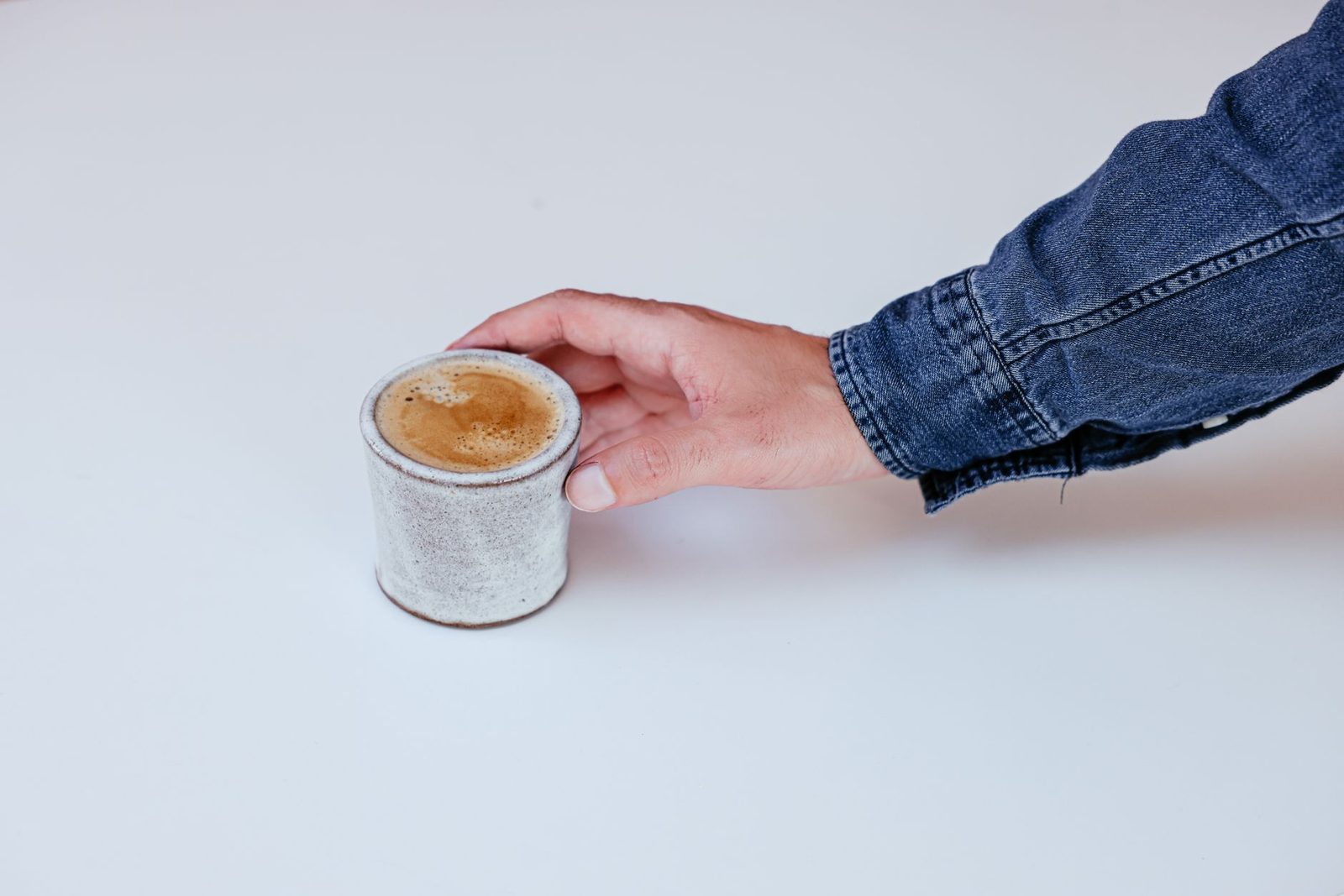
The ventanita — the walk-up window cut into the side of a Cuban restaurant — is the cheapest genuinely Miamian thing you can do. No tables, no server, no service charge, ninety seconds. At Sanguich on Calle Ocho a cafecito is $1.75, a cortadito $3.49, a colada $3.75 and a café con leche $4.75. The Versailles ventanita at 3555 SW 8th Street is the famous one, open 8am to midnight most nights and to 1am on Fridays and Saturdays, and it works on the same maths: a guava pastelito for about $2 and a cortadito for a couple of dollars more.
The etiquette matters more than the money. A colada is not a drink for one person — it is a stack of thimble cups and a four-ounce shot of sugared espresso meant to be split among whoever is standing there. Ask for a cortadito if you want a single cup with milk, a cafecito if you want it black. Pay cash where you can; the older windows prefer it and the line moves faster.
A pastry alongside turns it into breakfast. Guava-and-cheese pastelitos run about $2 at traditional windows and $4.75 at Zak the Baker’s version in Wynwood. Croquetas — dense béchamel-and-ham fingers, fried — are $3.59 apiece at Sanguich and $1.50 to $3 at a supermarket counter. Two croquetas, a cortadito and a pastelito is a real Cuban breakfast for under $10, and it is what half of Little Havana eats at 8am.
Little Havana and Calle Ocho on a Budget
Calle Ocho rewards you if you walk past the first three places with a menu board in English. El Pub at 1548 SW 8th Street has been family-run since 1996 and still anchors the block with live music and a lechón asado regulars order without looking; its weekday lunch specials have historically landed around $10, so check the board on the day. A few doors along, Sanguich holds a Michelin Bib Gourmand and prices its Cubano at $13.99, its media noche at $12.29 and its pan con lechón at $12.79, all on bread it bakes itself. Open daily 10am to 6pm at 2057 SW 8th Street — a lunch plan, not a dinner one.
The Cuban Diner Standards
La Carreta is the everyday Cuban kitchen most locals grew up on, with branches across Miami-Dade and a menu of “abuela style” plates — entrées with rice, beans and plantains that have long occupied the $12 to $15 band and now sit at its upper end. Sergio’s serves Cuban-American comfort food with breakfast until 11am and an unusually good croqueta. Versailles is worth one visit for the room and the argument at the window, but the dining room is not where the value is — eat at the ventanita and spend the difference elsewhere. Ball & Chain at 1513 SW 8th Street has excellent live music but publishes no prices and notes “a suggested 18% gratuity” on its own site: go for the band, not the budget.
The genuinely cheap move is the fruit stand and the supermarket counter. Los Pinareños Frutería at 1334 SW 8th Street pours batidos from an open-air shed; El Nuevo Siglo at 1305 SW 8th Street is a supermarket with a lunch counter along one wall where you eat a full criollo plate on a stool beside people doing their shopping. Neither is designed for tourists, which is why the prices have not moved much. Our Cuban food guide goes deeper on the dishes themselves.
Slightly west, El Palacio de los Jugos is the best-value Cuban operation in the city and has been since 1977. Thirteen branches now trade under the red-and-yellow awnings — the original at 5721 W Flagler Street and the SW 8th and 87th Avenue site are easiest for visitors — and every one opens 6am to 9pm daily. You line at one window for chicharrón, masitas de puerco, congrí and maduros by the container, and at another for juices pressed to order from mamey, guanábana and mango. Two people eat generously for under $30.
Little Haiti, Little River and the Haitian Plate
Haitian food is the most underrated value in Miami and the most fragile — several names in older guides have gone. Chef Creole remains the anchor. The Little Haiti flagship at 200 NW 54th Street has a drive-thru and a tiki hut out back, opening 11am to 9pm Monday to Wednesday and to 10pm Thursday to Saturday, closed Sundays. Griot — fried pork shoulder with pikliz, that fiercely vinegary cabbage relish — is $15, with plantains $4 and rice and beans $5 on the side. There are branches in North Miami, Miami Gardens and at the airport; the Little River site on NE 2nd Avenue is closed for renovation, so don’t go looking for it.
Chez Le Bebe, Le Jardin and Naomi’s Garden
Chez Le Bebe at 114 NE 54th Street runs 8am to 11pm daily, making it one of very few Haitian kitchens serving breakfast and late dinner alike. Griot is $17 with rice, plantains, pikliz and salad; legim, the slow-collapsed vegetable stew, is $16; plantain et morue with salt cod is $10, the cheapest full plate on the board. It is widely reported as cash only. Le Jardin at 195 NE 78th Street in Little River is the best-value kitchen of the group and the latest-opening, running to around 11:30pm. Soup joumou, the pumpkin soup Haitians eat to mark independence, is $14 on Sundays only; the $15 barbecue chicken appears Monday to Saturday from 5 to 10pm.
Naomi’s Garden at 650 NW 71st Street is the vegan-friendly outlier and genuinely cheap: legume $14, okra stew $14, jerk jackfruit $15, jerk chicken $15, with baked macaroni $5, plantains $2 and pikliz $1. The kitchen serves no pork, so turkey tassot at $15 stands in for griot. Seating is entirely in a garden with no air conditioning and chickens wandering between tables — charming in January, punishing in August. A second branch sits at 1755 Alton Road on Miami Beach.
For the cheapest bites, go to the bakeries. Piman Bouk Bakery at 46 NE 62nd Street keeps Haitian patés — flaky beef or cod pastries, typically $2 to $4 — warm all day, cash only, with a line to the door. Pack Supermarket at 8235 NE 2nd Avenue does ten cornstarch-dusted fried drumsticks with rice, beans and pikliz for under $15, the best poundage-per-dollar in this article.
Clive’s Cafe covers the Jamaican side from 5890 NW 2nd Avenue in Little Haiti, plus a North Miami branch — it is not in Brickell, whatever the listings say. Mains run roughly $13 to $18 at the counter, jerk chicken is the order, and the underused angle is Jamaican breakfast: ackee and saltfish from 8am, Monday to Saturday, closed Sundays. Juici Patties at 1401 NW 119th Street has the clearest prices in the category, $3.99 a patty or $9.49 with coco bread and a drink, while Jamaica Kitchen at 8736 SW 72nd Street in Kendall has held the same room since 1976 and marks its spicy patty with a red dot on the crust.
Time a visit around the Caribbean Marketplace at 5925 NE 2nd Avenue, a replica of Port-au-Prince’s iron market that doubles as a visitor center, with vendors selling sugarcane juice, patés and Haitian coffee. Published hours contradict each other across the city’s own pages, so call 305-960-2969 first. Better still, aim for Sounds of Little Haiti at the Cultural Complex on the third Friday of the month, when the konpa bands and the griyo vendors both turn out — it is ticketed, not a free drop-in.
Sweetwater, Flagler and the Fritanga Belt
Nicaraguan Miami runs west along Flagler Street into Sweetwater, and the fritanga is its format: a steam table behind fogged glass, trays of grilled meat, gallo pinto and sweet plantains, and you point at what you want. It is priced by protein with sides included, not by weight, whatever you may have read. Expect around $17 for a full carne asada plate — Fritanga Caña Brava at 2795 NW 7th Street lists exactly that, with cerdo asado from $12 and pollo asado from $13 as cheaper routes in, plus tajadas or maduros con queso frito at $7 and quesillo at $7. It opens 6am to 9pm Monday to Saturday, to 8pm Sundays.
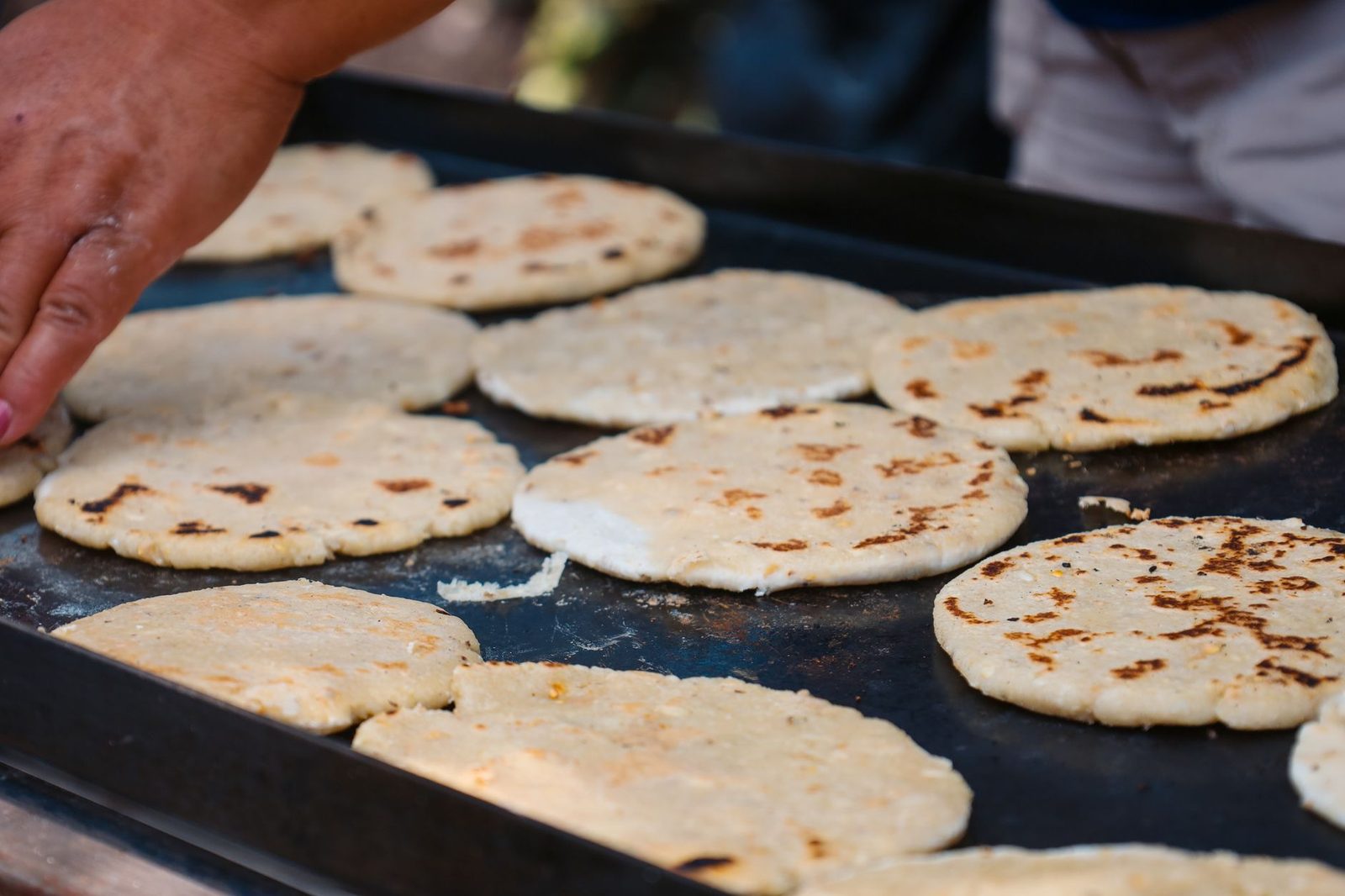
The Sweetwater cluster at 10404 W Flagler Street justifies the drive on its own. Carne Asada Tortillería Nica presses thick Nicaraguan tortillas and sells them two for a dollar; Fritanga La Chavala next door lays a slab of queso frito over the carne like a duvet; and Raspados Loly’s in the same plaza has shaved ice over dulce de leche, nancite and tamarind since 1987. Up the road, Nicaraguita’s at 10310 W Flagler Street has made tortillas since the early nineties. For late nights, Pinolandia at 119 NW 12th Avenue and Yambo at 1643 SW 1st Street both trade 24 hours; Yambo’s yard of painted roosters and cows is a landmark in its own right.
Honduran Baleadas, the Cheapest Meal in the City
The lowest price point in Miami is the baleada: a thick flour tortilla folded over refried beans, crema and crumbled cheese. Los Catrachos at 755 W Flagler Street sells them at $2 each with a rack of house salsas and stays open 6am to 11pm. Paseo Catracho at 824 SW 8th Street charges $4.99 for a baleada sencilla and is the only place that adds an avocado wedge unasked. Islas del Caribe at 4239 W Flagler Street does a baleada con carne for $5. In Allapattah, Típico Hondureño at 3002 NW 7th Avenue is a three-chair takeaway window many rate the county’s best — about $10 with a housemade tropical juice. For maximalists, the supermega baleada at La Casa de las Baleadas, 100 SW 17th Avenue, folds chicken, carne asada, beans, crema, cheese and egg into one for $11.
Doral, Kendall and the Arepa Trail
Venezuelan food has drifted out of the budget bracket faster than any other cuisine here, so choose carefully. The standout is Frank Cachapas, a Doral food truck at 8645 NW 61st Street that only trades in the evening — 7pm to midnight Sunday to Thursday, to 1am Friday and Saturday. A patacón is $12: a football-sized sandwich built between two fried plantain discs with shredded beef or chicken, ham, queso de mano and garlic-avocado sauce. Stuffed arepas are also $12 and every cachapa comes in under $15.
Sabor Venezolano, with branches at 13762 SW 88th Street in Kendall, on SW 8th Street in Tamiami and on Calle Ocho, publishes prices openly: a large empanada $4.25, pastelitos from $1.99, five tequeños $8.99, an arepa with carne mechada and cheese $10.99, and a comida por libra counter from $4.99 — the one genuine by-the-pound operation in this guide. Doggi’s Arepa Bar at 1246 SW 22nd Street and 7281 Biscayne Boulevard keeps a plain arepa viuda near $3.50 and empanadas near $4.50, though its patacones and pabellón have climbed past $15. La Latina at 3509 NE 2nd Avenue serves arepas and cachapas until 4am on Friday and Saturday nights, and Budare Bistro at 1830 SW 3rd Avenue, on Brickell’s edge, doubles as a Venezuelan grocery.
Colombian and Peruvian Plates That Still Clear the Bar
Colombian food gives the most calories per dollar of anything in Miami. Mi Colombia at 702 71st Street in North Beach has been family-run for over thirty years and plates a bandeja paisa — steak, rice, beans, chicharrón, plantain and a fried egg on one platter — at around $12.50, with daily specials sometimes under $10, open 7:30am to 7pm daily. It is the rare genuine bargain on Miami Beach. In Hialeah, Mi Fondita at 16786 NW 67th Avenue stuffs an arepa rellena with steak, chicken and chicharrón and buries it in fries for about $13, with empanadas at $1.75. Mondongo’s at 3500 NW 87th Avenue in Doral makes the city’s best Colombian empanadas and serves them hot rather than under a lamp, and Macita’s at 14685 SW 104th Street is the budget Colombian bakery pick, with arepas de choclo, buñuelos and its own ventanita.
Peruvian lunch remains a great bargain, but you have to go at lunchtime. Locura 305 at 7122 Collins Avenue runs a flat $15 two-course menú with lomo saltado, arroz con pollo, chaufa and chicharrón de pescado among the second courses — the best verified budget Peruvian deal in the county. El Rinconcito Peruano at 4644 Palm Avenue in Hialeah has been family-run for fifteen years and does the criollo standards; its arroz chaufa has sat around $13.50, though its published menu is several years old, so treat that as indicative. It opens 11am to roughly 9pm Tuesday to Sunday, closed Mondays. Note that CVI.CHE 105 downtown, a fixture of older budget lists, now runs $20 to $28 a dish and no longer belongs in one.
Tacos, Burgers and the Cuban Frita
The dish to seek out is the frita: a Cuban hamburger, paprika-seasoned, griddled thin and crowned with a nest of shoestring potatoes. El Mago de las Fritas at 5828 SW 8th Street in West Miami is the shrine, open 10:30am to 8pm Monday to Saturday. The traditional frita has run around $6.50 with the loaded “Big Magic” nearer $12 and a batido about $6.50; the shop’s last published list is a few years old, so expect a dollar or two of drift. It is still the cheapest famous meal on this page.
For tacos, Coyo Taco at 2300 NW 2nd Avenue in Wynwood and 1111 SW 1st Avenue in Brickell sells them two to an order: cauliflower or plantain $9, al pastor or pollo al carbón $10, carne asada $11.50, birria $12, with a $5 margarita and a speakeasy behind an unmarked door at the back. Skip the burritos, which break $15. The Taco Stand now has three Miami rooms — Wynwood, Calle Ocho and South Beach — and has stopped publishing prices online; a basic taco that used to sit at $3.75 should be budgeted nearer $4 to $5. Bakan at 2801 NW 2nd Avenue handles the sit-down mezcal end of Mexican, and Bodega Taqueria y Tequila is the cheapest of the group at $4.50 a taco, $6.50 for birria — but there is no Brickell or Wynwood branch despite older listings; South Beach and 3419 Main Highway in Coconut Grove are the two, both open past 1am.
On the burger side, one name has changed. The Grail in Wynwood now trades as Grails Miami at 2800 N Miami Avenue, and its burgers have climbed to $16 to $23 — the value is now the $7 to $8 tacos, $14 quesadillas and wings, and a Monday-to-Friday happy hour until 7pm with bar bites at $5 to $9. Big Pink at 157 Collins Avenue is very much alive; the confusion comes from a dropped web domain, not a closure. It serves huge diner plates from 8am to midnight midweek and to 5:30am Thursday to Saturday, and portions genuinely feed two, which is the real budget play. Shake Shack covers the dependable chain option when nothing else is open.
A Dish-by-Dish Cheat Sheet
If you would rather chase dishes than neighborhoods, this is the shortest route to each. These are counter prices, not delivery prices.
- Cubano — roast pork, ham, Swiss, pickle and mustard, pressed flat. Sanguich, $13.99; the in-house bread is the whole difference.
- Medianoche — the same filling on sweet egg bread, softer and smaller. Sanguich, $12.29. Traditionally eaten after midnight, hence the name.
- Croqueta — ham béchamel, breaded and fried. $3.59 at Sanguich, $1.50 to $3 at a supermarket counter. A croqueta preparada folds them into a Cubano.
- Pastelito — flaky guava-and-cheese pastry. About $2 at a traditional ventanita, $4.75 at Zak the Baker.
- Batido — tropical milkshake, usually mamey, guanábana or trigo. Los Pinareños or El Palacio de los Jugos, roughly $6.
- Frita — Cuban burger with shoestring potatoes. El Mago de las Fritas, from around $6.50.
- Arepa — split corn cake stuffed to order. Sabor Venezolano, $10.99 with carne mechada; Frank Cachapas, $12.
- Patacón — sandwich built between two fried plantain discs. Frank Cachapas in Doral, $12.
- Empanada — Colombian at Mi Fondita, $1.75; Venezuelan at Sabor Venezolano, $4.25; Uruguayan at Medialunas Calentitas in Brickell, around $3.
- Baleada — Honduran folded tortilla. Los Catrachos, $2, the cheapest hot meal in Miami.
- Griot — Haitian fried pork with pikliz. Chef Creole, $15; Chez Le Bebe, $17.
- Jamaican patty — Juici Patties, $3.99; Jamaica Kitchen in Kendall, where the red dot means spicy.
Eating Cheaply in South Beach and Brickell
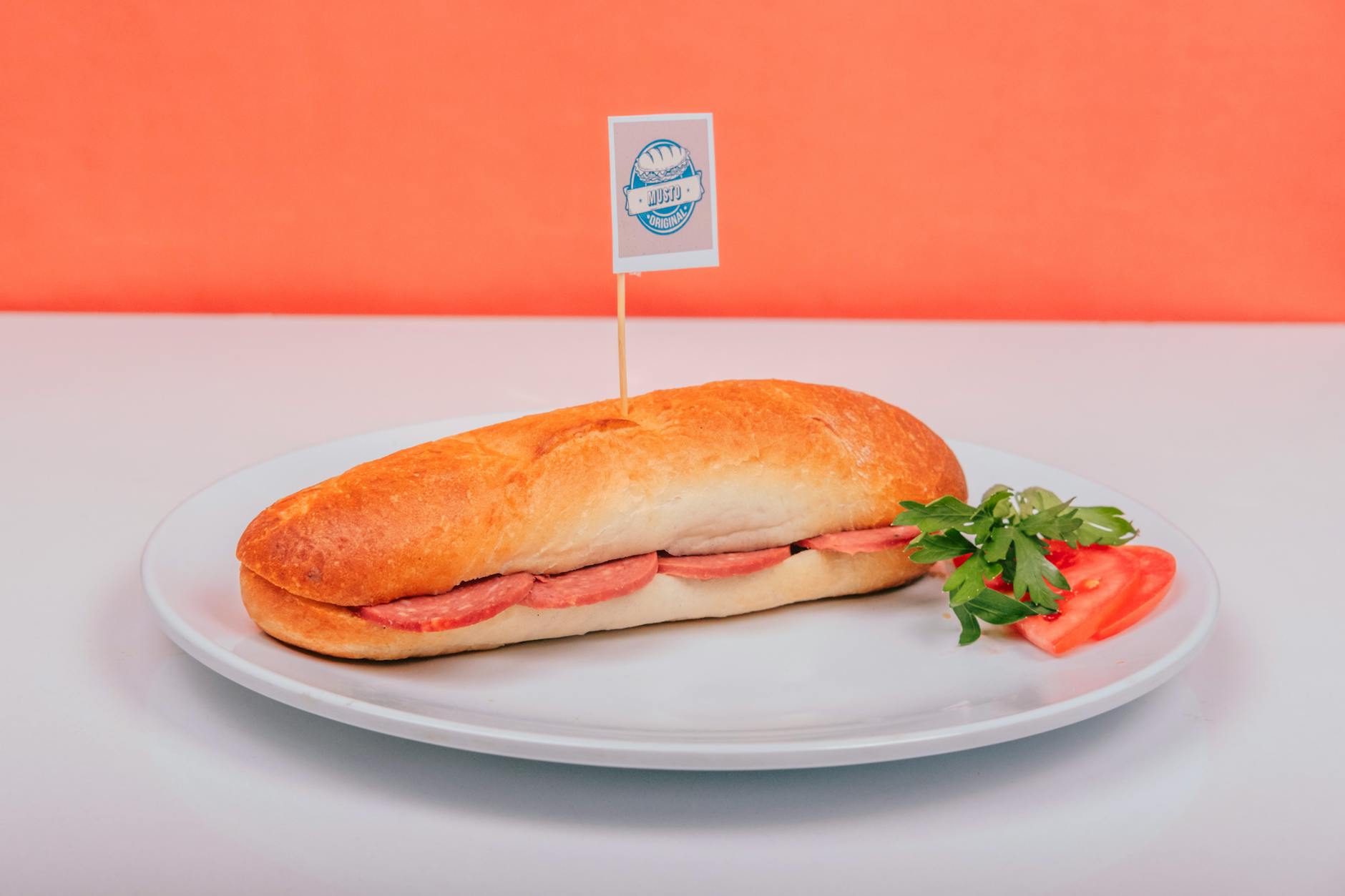
These are the two neighborhoods where visitors get hurt, and both have escape routes. On South Beach, La Sandwicherie is the most reliable cheap meal in the city: a French baguette counter in the alley at 229 14th Street, open 7am to 5am, where turkey is $9.65, the SOBE Club $12.30 and the Italian $13.75, with a $12 breakfast combo including a drink from 7 to 11am. There is a 10 percent surcharge after 10pm, and branches at 60 SW 10th Street in Brickell — note it has moved from its old address — and 169 NW 23rd Street in Wynwood. Pizza Rustica at 863 Washington Avenue sells a margherita slice at $5.95, specialty slices at $8.95 and a slice-salad-drink combo at $10.95 until 2:30am.
For a sit-down plate, Puerto Sagua at 700 Collins Avenue has traded since 1962 and runs 7am to 11pm daily. It is genuinely old-school and genuinely still there, but its pricing is not published reliably and typical spend is quoted at $20 to $30 a head — order at the counter, a Cuban sandwich and a café con leche, rather than a full dinner. Further north, Sazón Cubano sits at 7305 Collins Avenue in Miami Beach rather than Surfside, as it is often listed. It is the neighborhood Cuban kitchen North Beach actually eats at: order the ropa vieja, which arrives with rice, beans and a side of tostones or maduros, and use the ventanita out front if all you want is a cafecito and an empanada. Prices are not posted online, but a main lands nearer the Little Havana diner range than the Ocean Drive one, and it takes Resy reservations, which are worth booking on weekends. Be wary of Ocean Drive generally: Front Porch Cafe at 918 Ocean Drive is still open and still charming, but omelettes now run $19 to $24 and diners repeatedly report an automatic 20 percent service charge that pushes even its $12 grilled cheese over budget.
Brickell is the worst-value neighborhood in Miami for food. Its bars discount drinks and hold food at full price, and its regular menus are the highest in the city. Eat elsewhere and drink there: La Sandwicherie on SW 10th Street, Coyo Taco on SW 1st Avenue, or a ten-minute walk to Budare Bistro. Downtown, one free Metromover stop away, has better baseline prices even without a discount.
Supermarkets, Food Halls and Truck Nights
The supermarket is Miami’s most underrated cheap lunch. The Publix deli sub — universally called a Pub Sub — has a rotating “sub of the week” running between $8.99 and $9.99, with the ad week changing on a Wednesday or Thursday depending on the store. Publix also lists its own Cuban sandwich at $3.99, a whole hot rotisserie chicken at $7.49, a ten-piece boneless wing meal with two sides and a roll at $9.49, and fountain drinks at $1. Cuban supermarkets do the same trick with a hot counter — Sedano’s and Presidente both run steam tables, though neither publishes prices, so read the board.
Whole Foods has three Miami stores with hot bars and café seating: 1020 Alton Road on Miami Beach, 299 SE 3rd Avenue downtown — the one people mistakenly call the Brickell branch — and 6701 Red Road in Coral Gables. It is priced by weight, so watch the scale. Trader Joe’s is at 1683 West Avenue in Sunset Harbour. And a warning about the internet’s favorite budget tip: the Costco food court still sells a hot dog and a refillable drink for $1.50, but access was restricted to members in 2024 and the churro was discontinued, so it only works if you already carry a card.
Food Halls and the Tuesday Trucks
1-800-Lucky at 143 NW 23rd Street in Wynwood is still going, with six Asian vendors under one roof, a record shop and a daily happy hour from 4 to 7pm. Wynwood Marketplace is also still trading but is now an event venue rather than a daily food hall — closed Monday to Thursday, opening around weekend programming with $5 to $12 plates and live music. Check the calendar before you walk over. The Lincoln Eatery, which housed fourteen stalls just off Lincoln Road, has gone; its website is now a hosting placeholder.
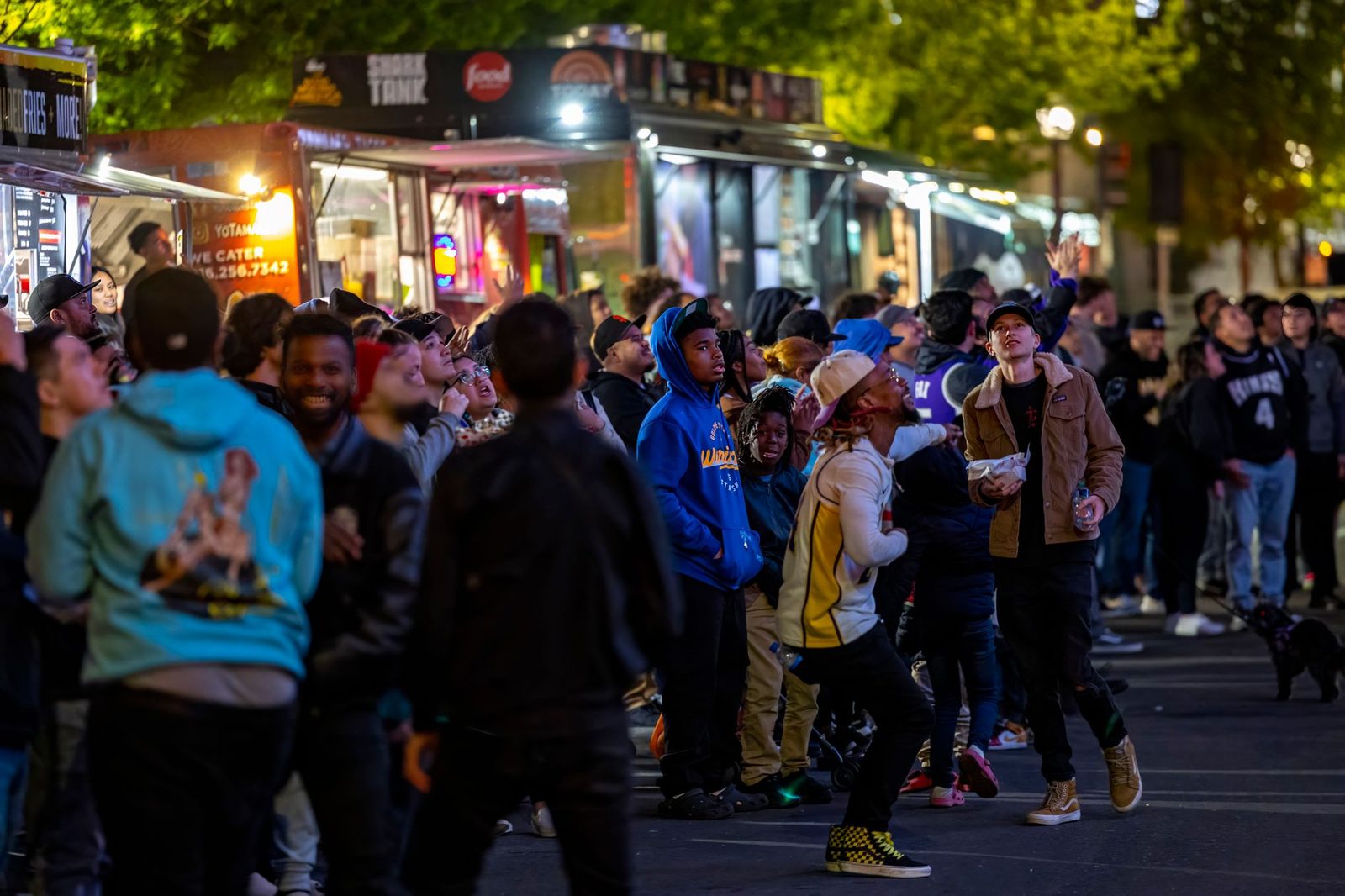
The best regular outdoor option is Haulover Food Truck Tuesdays, every Tuesday from 5pm to 10pm at the Bill Bird Marina inside Haulover Park, between Bal Harbour and Sunny Isles. Parking is free for the event — a real saving, since Haulover normally charges $7 on weekdays and $10 at weekends — and there is music and family programming alongside the trucks. Glass containers are prohibited and pets other than service animals are not allowed. Our food halls and markets guide covers the rest of the scene.
Happy Hour Food, and Where It Becomes a Trap
Miami’s happy hour has settled into a shape: not half-price appetisers, but a short list of bites at one flat low price, plus loss-leader oysters and wings. R House at 2727 NW 2nd Avenue in Wynwood runs $1 wings and $1 oysters Wednesday to Saturday, 4 to 7pm. Semilla at 1330 Alton Road does $1 oysters all night on Wednesdays. Michael’s Genuine at 130 NE 40th Street offers $6 snacks Sunday to Friday, 4 to 7pm — deviled eggs, shrimp toast bánh mì, chips with onion dip — the most straightforwardly good deal in the city. The Sylvester at 3456 N Miami Avenue runs all day Tuesday and 5 to 8pm Wednesday to Saturday, with $3 Voodoo Chips and a $9 grilled cheese, and Kaori in Brickell does $1.50 oysters Monday to Saturday, 5 to 7pm.
The trap is the venue that halves drink prices and leaves food at full price; a $9 cocktail attached to a $22 burger is not a cheap night. The second trap is stacking: happy-hour pricing does not exempt you from a house service charge, and several bars add 18 percent to every check regardless. Budget 20 to 25 percent over the menu price and you will not be surprised.
Tipping, Service Charges and the Bill You Didn’t Expect
This catches more visitors out in Miami than anywhere else in the country, and the rules recently changed in your favor. Florida rewrote its restaurant-fee statute, section 509.214, with a new version taking effect on 1 July 2026. It creates a defined term, the “operations charge,” expressly covering service charges, automatic gratuities, credit card surcharges and delivery fees, and separates that from a gratuity, which the law now defines as voluntary and at the customer’s discretion.
In practice that gives you three checkpoints. The charge must be disclosed on the menu and on the restaurant’s website or app, stating both amount and purpose, in type no smaller than the menu item descriptions. It must appear on the face of the bill. And the receipt must carry separate lines for gratuity, operations charge and sales tax, so you can see whether a tip has already been taken. The blank tip line is where people lose money — if 18 or 20 percent is already in the subtotal, that line is asking for a second one.
Miami-Dade adds its own rule on top: county code requires tipping notices in English, Spanish and Creole, and states plainly that notice on the check alone is not acceptable because you receive the check after the fact. Complaints go to Consumer Protection on 786-469-2333. Miami Beach goes further for sidewalk cafés, which must disclose included gratuities as a permit condition; the city fined ten restaurants around $20,000 in early 2020 and stripped thirteen establishments of sidewalk-dining rights in November 2021, nine of them on Ocean Drive.
Be realistic about two things. Florida does not cap or ban these charges, only requires disclosure, and the statute creates no right to sue — so if it was printed on the menu, you owe it. Complain to the state’s DBPR, which can fine up to $1,000 per offense, rather than arguing at the table. And the federal “junk fees” rule that came into force in 2025 covers live-event tickets and short-term lodging only, not restaurants: a hotel’s resort fee is regulated, the restaurant inside that hotel is not. Twenty percent is the figure that appears most often in Miami; assume it until the menu tells you otherwise.
Vegan and Vegetarian Without Paying More
Plant-based eating is often the cheapest way through a Miami menu rather than the most expensive, because the vegetable dishes in Caribbean and Latin kitchens are the traditional ones. Naomi’s Garden is the obvious anchor — legume, okra stew and jerk jackfruit at $14 to $15 with the same rice, macaroni and plantains as everyone else. Haitian legim generally, Colombian arepas de choclo, Venezuelan cachapas with queso, Nicaraguan gallo pinto with queso frito and tajadas, and the bean-and-cheese burrito at The Taco Stand all land under $15 without special ordering.
Wynwood is the neighborhood for dedicated vegan cafés, and it is where Della Bowls built its reputation for açaí and grain bowls, with Dr. Smood covering the organic health-café angle. Both sit in a category with high turnover here, so check they are trading before you build a plan around either. The same goes for Pasión del Cielo, the Colombian coffee chain, which has contracted sharply to a handful of branches in Midtown, Coral Gables and on Brickell Avenue. And the much-loved Last Carrot in Coconut Grove, which poured smoothies and served veggie bowls for around fifty years, closed in February 2026 and the building was demolished that April — it appears in almost every older Miami list and it is no longer there.
Planning a Cheap Eating Day in Miami
Here is what a real day costs. Breakfast at a ventanita — cortadito, pastelito, croqueta — runs $7 to $9. Lunch is where you spend properly: a Cuban lunch special, a fritanga plate or a $15 Peruvian menú, so $12 to $17 including tax. Mid-afternoon a batido or raspado is $5 to $7. Dinner from a truck, a bakery or a happy-hour bites menu is $8 to $14. That is roughly $32 to $47 a day per person, eating well and eating locally, and it is how the cheap eats in Miami actually add up over a trip. Add a sit-down dinner with table service and a service charge and you add $30 or more, which is why the ventanita-and-truck rhythm is the one locals actually keep.
Timing does most of the work. Latin and Cuban kitchens run their cheapest specials between roughly 11am and 3pm, and the same kitchen charging $12 at noon will charge $19 at eight. Happy hours cluster at 4 to 7pm and increasingly run Wednesday to Saturday rather than Monday to Friday, because Miami’s quiet nights fall early in the week. Haitian legim and soup joumou sell out, so go at lunch and on the right day. And a surprising number of the best Haitian and Jamaican kitchens close on Sundays — plan your Sunday around Cuban food, which does not.
Getting between them is the other cost. The Metromover loop through Downtown and Brickell is free, as are the municipal trolley routes in Miami, Miami Beach and Coral Gables, and between them they reach more of this list than people expect. Metrobus and Metrorail charge a modest flat fare — check the current rate before you travel. But Little Haiti, Sweetwater, Doral and Hialeah are car territory; if you are chasing fritangas and Haitian plates, group several into one loop by car or rideshare. Parking at the neighborhood places is free and plentiful, which is not something you can say about South Beach.
A last note on what has vanished, because this genre of article rots fast. Tap Tap, the mural-covered Haitian restaurant on South Beach, has permanently closed, as have the Lincoln Eatery, the Time Out Market on Drexel Avenue, Sultan after 38 years on Collins, and the Last Carrot. Smorgasburg, once the reliable source of a $6 arepa, and Buena Park in Doral could not be confirmed as trading, and the same applies to Lolo’s Surf Cantina, La Nueva Fe and Cevichería Bahía — all appear in older roundups without a current, verifiable presence. Call ahead. Websites in this city outlive the restaurants attached to them by years. When you would rather not spend anything at all, our free things to do guide covers the rest of the day.
Frequently Asked Questions
What are the genuinely cheapest eats in Miami?
Honduran baleadas at Los Catrachos on West Flagler, at $2 each, are the cheapest hot meal in the city. Behind them come Nicaraguan tortillas at two for a dollar in Sweetwater, Colombian empanadas at $1.75 at Mi Fondita, ventanita pastelitos at about $2, croquetas at $3.59, Jamaican patties at $3.99 and Publix’s own Cuban sandwich at $3.99.
Is it still possible to eat for under $15 in Miami?
Yes, but less easily than a few years ago and not everywhere. Handheld food, vegetable-based plates and lunchtime set menus all still clear $15 comfortably. Protein-heavy dinner plates in sit-down Haitian, Nicaraguan and Colombian rooms have mostly crossed it — expect $16 to $18. Add tax and any service charge before you decide whether somewhere fits, because a $14 plate can bill at $18.
Where do locals actually eat cheaply?
El Pub and Sanguich on Calle Ocho, El Palacio de los Jugos for takeaway criollo, Chef Creole and Chez Le Bebe in Little Haiti, the fritangas along West Flagler in Sweetwater, Típico Hondureño in Allapattah, Mi Fondita in Hialeah, Frank Cachapas in Doral, and any ventanita with a line outside it. Allapattah, Little Haiti, Sweetwater, Doral and Hialeah hold most of the best cheap eats in Miami, and almost none of them advertise.
What is a Cuban frita?
A thin, paprika-seasoned beef patty griddled hard and topped with a tangle of shoestring potatoes, usually on a soft roll with raw onion — closer to a Cuban street snack than an American hamburger. El Mago de las Fritas at 5828 SW 8th Street serves the version everyone else is measured against, from around $6.50, and its batidos are worth ordering alongside.
How do I order at a ventanita without embarrassing myself?
Ask for a cafecito if you want a small black espresso with sugar, a cortadito if you want it cut with steamed milk, or a café con leche for a full cup. Order a colada only if you are with other people — it is a shared four-ounce shot with a stack of tiny cups, meant to be poured out for the group. Cash is faster and some older windows still prefer it.
Why is there a service charge on my Miami restaurant bill?
Many Miami restaurants add an automatic charge, typically 18 or 20 percent, in place of a discretionary tip. Since July 2026, Florida law requires it to be disclosed on the menu, on the face of the bill and on the restaurant’s website, in type no smaller than the menu descriptions, and itemised separately on the receipt. If it was disclosed, you owe it; if not, complain to Florida’s DBPR or Miami-Dade Consumer Protection on 786-469-2333.
Should I tip on top of an automatic service charge?
Not usually. Check whether the subtotal already includes 18 to 20 percent before writing anything on the blank tip line, because that line appears whether or not a charge has been applied. If service was genuinely excellent, a small cash top-up goes to the server directly, which is worth more to them than the same money collected as a mandatory charge by the house.
Is street food safe in Miami?
Yes. Food trucks and mobile vendors are licensed and inspected under Florida and Miami-Dade County rules, and the established operators at Haulover on Tuesdays and at Wynwood weekend events meet the same standards as bricks-and-mortar kitchens. The practical tests are the same as anywhere: a busy line, high turnover, and hot food coming off heat rather than sitting in it.
Where can I eat cheaply on South Beach?
La Sandwicherie at 229 14th Street for baguette sandwiches from about $8.35 to $13.75, open until 5am. Pizza Rustica on Washington Avenue for $5.95 slices until 2:30am. Puerto Sagua’s counter at 700 Collins for Cuban standards. Mi Colombia at 702 71st Street for a bandeja paisa around $12.50. Avoid the Ocean Drive terraces with hosts calling you over — that is where the service charges concentrate.
What time do Miami’s cheap lunch specials run?
Roughly 11am to 3pm at Cuban, Peruvian and Colombian restaurants, and the discount is real — often a third off the same dish at dinner. Locura 305 on Collins Avenue runs a flat $15 two-course menu at lunch. Fritangas open early, from 6am at Caña Brava, and are busiest at midday. Haitian kitchens serve their best-value dishes at lunch and frequently sell out of legim before evening.
Do I need a car to eat cheaply in Miami?
For Downtown, Brickell, Wynwood and Miami Beach, no — the Metromover and the municipal trolleys are free and cover a lot of this guide. For Little Haiti, Sweetwater, Doral and Hialeah, effectively yes. Those trips hold the real bargains, so group several into one afternoon by car or rideshare rather than making separate journeys. Parking at neighborhood restaurants is free.