Cruise Embarkation Day at PortMiami
There is a moment on the Port Boulevard bridge, somewhere around the middle, when the whole of Dodge Island opens up in front of you — terminal after terminal, and ships the size of apartment blocks lined along the quay. It is the best part of the drive, and it is also where many people realize they are not quite sure which of those buildings they are meant to go to. A good Miami cruise embarkation is a string of small, boring decisions made in the right order: the right terminal, the right time, the right bag in your hand. Get them right and you are on the pool deck with a drink before lunch. Get one wrong and the first afternoon of your vacation disappears into a queue.
This guide walks through embarkation day at PortMiami from the hotel checkout to the sailaway: getting there, the curb and the porters, security and check-in, what you can and cannot carry on, the first few hours aboard, and the mistakes that trip people up most often. Details were checked in September 2026. Cruise line policies change, so treat anything line-specific as a starting point and confirm it against your own booking. For the port as a whole, see our Port of Miami cruise port guide.
At a Glance: Embarkation Day Timeline
| When | What happens | What to do |
|---|---|---|
| Days before | Online check-in, arrival time, luggage tags | Finish check-in in the app; print tags; note your terminal letter |
| Morning | Hotel checkout | Breakfast, pack a carry-on for the afternoon, keep documents on you |
| About 30–60 minutes before your arrival time | Travel to the port | Allow extra on weekends; give your driver the terminal letter |
| At the curb | Porters take checked bags | Tip $2–$5 per bag; keep medication and documents |
| Inside the terminal | Security, then check-in and photo | Documents out; follow the line’s queues |
| Late morning to early afternoon | Boarding | Lunch, safety briefing, bookings |
| Early afternoon | Cabins open | Carry-on into the cabin; checked bags arrive through the afternoon |
| Around an hour before departure | All aboard | The ship will not wait |
| Late afternoon | Sailaway | Upper deck, port side, for South Beach |
Before You Leave: The Jobs That Matter
Almost every embarkation-day problem is caused by something that could have been sorted out at home. A few days before you sail, do these.
Finish online check-in
Every major line now expects you to check in online through its app or website, upload a photo, enter your document details and payment card, and choose an arrival time. Do it early, as soon as it opens. The popular late-morning arrival slots go first, and some lines will not let you board without finishing check-in. Download the line’s app and log in before you leave home, because the ship’s Wi-Fi on day one is busy and the app is how you will book dinners and see the daily schedule.
Know your arrival time and terminal
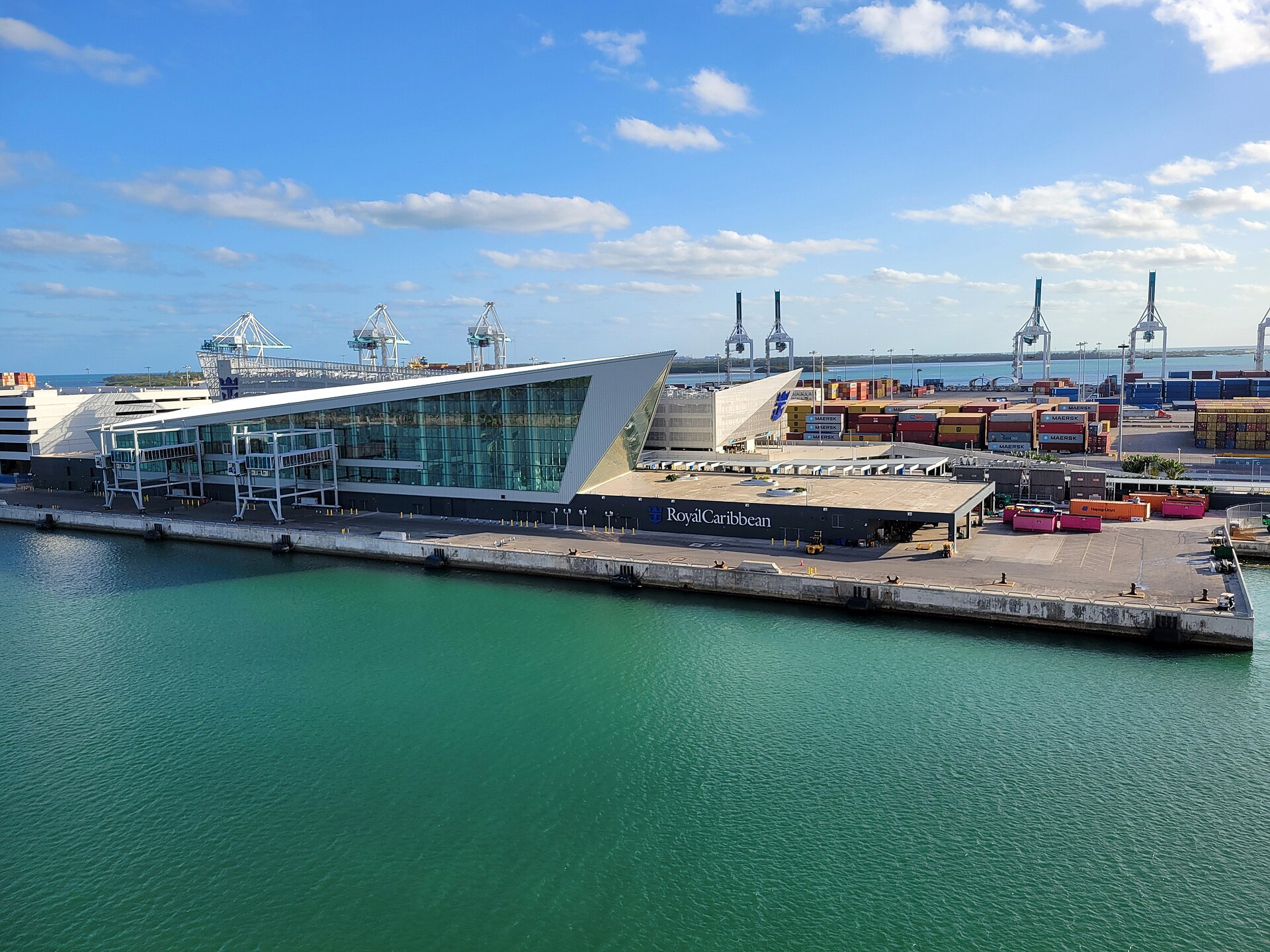
Your boarding documents will show an arrival window and a terminal. Both matter. PortMiami has a long line of terminals — Royal Caribbean at Terminal A, Norwegian at B, Carnival at D, E and F, MSC at its own vast building, Virgin Voyages at V, and smaller luxury lines at J — and while a new Royal Caribbean terminal is being built, some sailings have been moved to different buildings. Do not rely on what a forum said last year. Our PortMiami terminals guide explains the layout.
Print and attach luggage tags
Your line will provide luggage tags to print at home, showing your name, ship, deck and cabin. Print them, fold them into the plastic sleeves or attach them with staples or tape, and put them on the bags before you leave the hotel. Porters can print missing tags at the terminal, but it is one more small delay you do not need.
Check your documents
For closed-loop cruises that start and end at PortMiami, US citizens can usually sail with a certified birth certificate and government-issued photo ID, though a passport is strongly recommended in case you need to fly home from abroad. Non-US citizens need a passport and the appropriate visa or authorization. Children’s documents, name mismatches after a marriage and expired IDs cause more held-up check-ins than anything else. Check them all, and keep them in your hand luggage, never in a checked bag.
The Morning of Embarkation
If you followed the most important piece of cruise advice — arrive in Miami the day before — the morning should be calm. Our guide to what to do in Miami before a cruise covers that day, and our guide to hotels near the Port of Miami covers where to stay.
Eat breakfast
Have a proper breakfast. The ship’s buffet on embarkation day is packed with thousands of hungry new arrivals, and if you wait in a terminal queue on an empty stomach in the Miami heat you will not enjoy the first afternoon. Most hotel checkouts are 11am or noon, which gives you plenty of time.
Pack a day bag
Your checked bags may not reach your cabin until late afternoon or even early evening. Everything you need until then should be in a carry-on you keep with you. Include:
- Passports or birth certificates, photo ID and boarding documents
- Prescription medication for at least a couple of days
- Phone, charger and any small electronics
- Swimwear, sunscreen, sunglasses and a hat
- A change of clothes for dinner
- Jewelry, cash and anything valuable or fragile
- Wine you plan to bring aboard, if your line allows it (more on that below)

Getting to the Terminal
PortMiami is reached by two routes. The Port Boulevard bridge leaves Biscayne Boulevard in downtown Miami, and the PortMiami Tunnel runs under the shipping channel from the MacArthur Causeway and I-395. Rideshare drivers and shuttles will choose; if you are driving, follow the signs for your terminal letter, and give your GPS the terminal rather than a general “PortMiami” address.
By rideshare or taxi
This is how most passengers staying downtown or in Brickell arrive. Enter your terminal as the destination and confirm it with the driver. Every terminal has a curb drop-off zone, and at Virgin’s Terminal V rideshares and taxis use a dedicated drop-off zone in front of the building. From downtown the fare is modest; from Miami Beach or the airport it is more, and it surges on busy weekend mornings.
By hotel shuttle
Many airport-area hotels run port shuttles for a per-person fee, and a few include it. Book or confirm your seat when you check in the night before, and ask what time the last shuttle leaves — they are often timed for the popular late-morning arrivals, which may not match yours.
By cruise line transfer from MIA
If you are flying in on the day, the cruise line transfer from Miami International is the safest option, because the line knows you are coming. It is rarely the cheapest option. Our Miami airport to cruise port guide compares them all.
Driving and parking
If you are leaving a car for the cruise, the most efficient method is for the driver to drop passengers and bags at the terminal curb first, then go and park. Official garages are close to each terminal and run roughly $22 to $35 a day in 2026. You pay on exit at the end of the cruise, and the booths take credit cards and cash but not debit cards — a surprise that still catches people every week. Off-site lots with free shuttles are cheaper. Our cruise port parking guide has the details.
Weekend traffic
Saturdays and Sundays are the busiest days at PortMiami, when several of the world’s largest ships can turn around at once. On those mornings the approach along Biscayne Boulevard and through the tunnel can back up for a long time. Leave a generous margin if you are sailing at the weekend. Midweek sailings are noticeably calmer from start to finish.
At the Curb: Porters and Checked Bags
When you pull up, uniformed porters will come to take your checked luggage. They work for port service contractors, not the cruise line, and tipping is customary: $2 to $5 per bag is normal. Have small bills ready.
Before you let the bags go:
- Make sure each bag has its tag attached.
- Take out anything you will need before evening, and anything valuable or breakable.
- Remove prohibited items. Checked luggage is scanned, and a bag with a banned item will be held until you go and open it, which may not be until evening. The most common culprits are clothes irons and steamers, extension cords and surge protectors, candles, and alcohol beyond the allowance.
From the moment the porter takes your bag, it is out of your hands until it appears outside your cabin door. Most arrive in the afternoon. A few take until early evening, especially on big ships and busy days.
What You Can Carry On
Each line sets its own rules, and they change. Always check your line’s current policy before packing, but here is the general picture in 2026.
| Line | Wine and champagne | Non-alcoholic drinks |
|---|---|---|
| Carnival | One 750ml bottle per adult 21+, in carry-on; $15 corkage in public venues | Up to 12 sealed cans or cartons of 12oz or less per person |
| Royal Caribbean | Limited wine allowed on embarkation day; corkage in public venues — check the current allowance | Limited quantity; check current rules |
| Norwegian | Allowed, but $15 corkage per 750ml bottle wherever you drink it, including your cabin | Not permitted |
| MSC | Not permitted | Not permitted |
Spirits and beer are not allowed in carry-on luggage on the big lines. Anything confiscated at security is either thrown away or held until the end of the cruise.
Beyond drinks, the list of commonly prohibited items is similar across lines: weapons, clothes irons and steamers, surge protectors, candles and incense, hoverboards, and — whatever the rules in your home state — marijuana and marijuana-derived products. Many lines also restrict drones. Medical equipment such as CPAP machines is fine, and you can request distilled water for it in advance.
Security and Check-In
Inside the terminal the process is similar at every line.
Security screening
First comes an airport-style security check. Your carry-on bags go through an X-ray machine and you walk through a metal detector. Liquids rules are generally less strict than at an airport, but have wine and anything unusual easy to reach. Keep your documents out.
Check-in
Next, check-in staff confirm your identity against your documents, check your online check-in, and may take a photo if you did not upload one. You receive your cruise card, a medallion or a digital key in the app, depending on the line. This is when a missing document or a mismatched name will stop you, so if anything is unusual — a recent name change, a child traveling with one parent — bring supporting paperwork.
Waiting to board
If you arrive at your assigned time, you will often walk straight through. If you arrive earlier than your window, expect to wait. Some terminals have seating areas; at busy terminals, including Virgin’s Terminal V, early arrivals may be held outside in shaded queues until their window opens. Arriving hours early does not get you on the ship sooner, it just moves your wait somewhere hotter.
Accessibility
If you need wheelchair assistance, request it through your cruise line before you sail. Porters and terminal staff can help, and passengers with mobility needs are usually boarded with priority. Our guide to cruises from Miami has more on choosing the right line and ship.
The First Few Hours Aboard
You have made it. The next few hours set up the rest of the cruise, so a little organization pays off.
Lunch
Everyone heads for the main buffet. It will be busy. Look instead for the smaller venues that open for embarkation lunch on most ships — a pub, a grill, a pizza counter or a main dining room lunch — which are usually calmer. Your line’s app will list what is open.
The safety briefing
The big lines have replaced the old mass muster drill with an electronic version. You watch a safety video on the app or cabin TV and then check in at your assigned muster station, where crew scan your card. It takes a few minutes, but it is mandatory and must be done before the ship sails. Do it early rather than leaving it until the last minute.
Book what matters
If you have not pre-booked specialty dining, spa treatments, shows or shore excursions, the first afternoon is the time to do it. The best times fill fast on embarkation day.
Cabins
Cabins usually open in the early afternoon, and the crew will announce it. Drop your carry-on, check the room, and change into something cooler. If a checked bag has not arrived by dinner, go to guest services rather than assuming it will come. If it was held at security, you may have to go and open it.
All aboard
The all-aboard time — usually about an hour before departure — is printed on your documents. It is a firm deadline. If you are running late because of a traffic jam or a delayed flight, call your cruise line immediately; it is the only way the ship knows you are on the way.
The Sailaway
Leaving Miami is one of the great departures in cruising, and far too many people miss it because they are unpacking. Go up on deck.
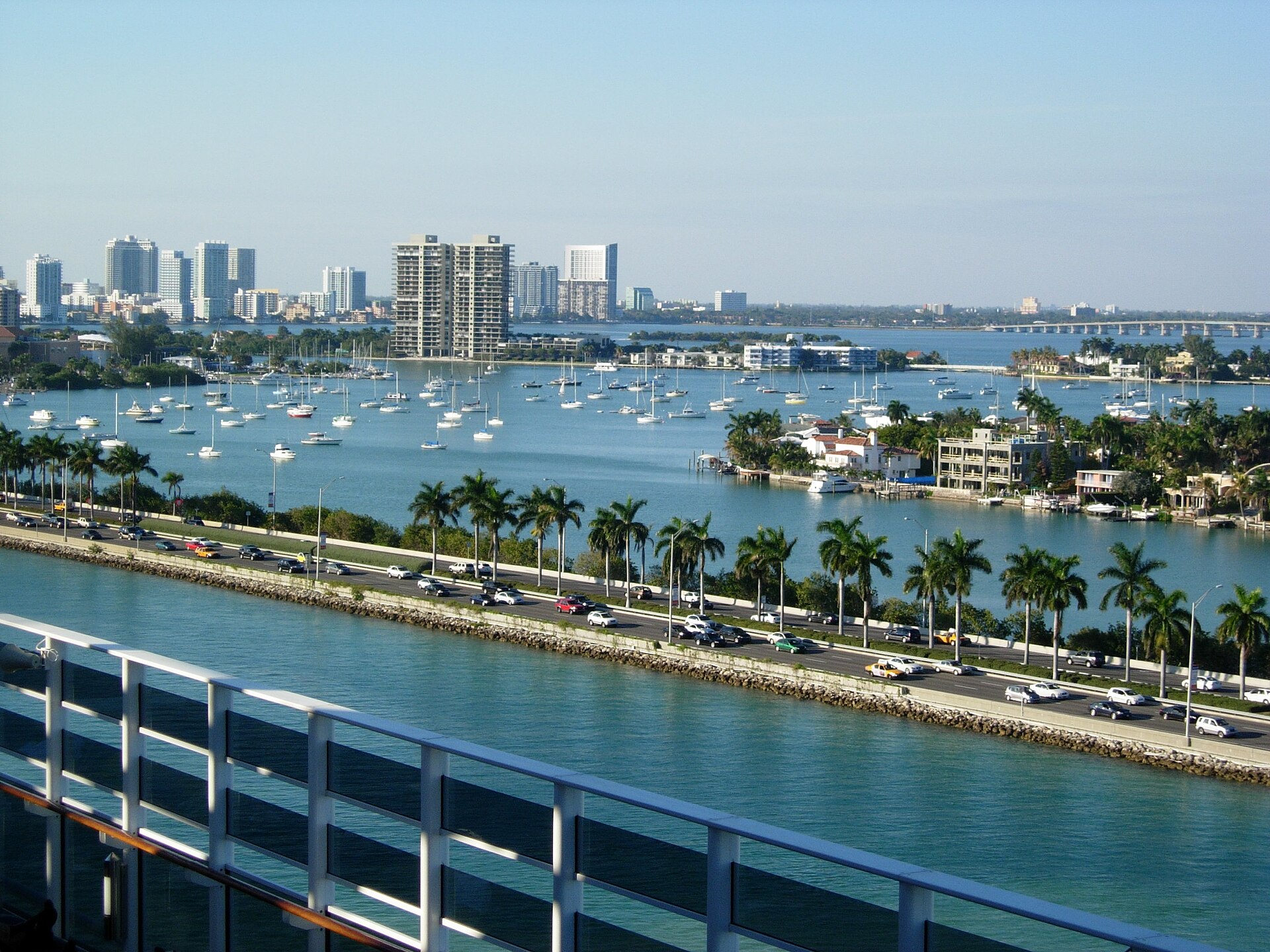
The ship heads east along the channel beside Dodge Island, passing downtown and the MacArthur Causeway, and then out through Government Cut, the narrow cut between South Beach and Fisher Island. Stand on the port side — the left, facing forward — for South Beach, South Pointe Park and the crowds waving from the jetty. The starboard side looks across at Fisher Island. The rear decks give the best view back to the downtown skyline as it turns gold in the late afternoon light.
Embarkation With Children
Families have a few extra things to think about, and a little preparation makes the terminal much easier.
- Bring every child’s documents. A birth certificate for each child on a closed-loop cruise, or a passport. If one parent is traveling without the other, carry a signed and notarized consent letter; lines and authorities can ask for it.
- Feed them before the queue. A hungry toddler in a security line is nobody’s idea of a vacation start. Bring snacks in your carry-on, within your line’s rules.
- Keep the stroller. You can usually keep a folding stroller with you through security and aboard, which is invaluable on long terminal walks.
- Register for the kids’ club early. Most lines open registration on embarkation afternoon, and the first-night sessions are a good chance for children to settle in while you unpack.
- Pack swimwear in the day bag. The pools are the first thing children want, and checked bags can take hours.
Heat, Rain and Hurricane Season
Miami’s weather plays a part in embarkation day more often than people expect. From late spring to early fall, the late-morning heat on the curb and in any outdoor queue is intense. Wear light clothes, bring a hat and sunscreen, and carry a water bottle — you can buy water in the terminal areas and refill aboard. Afternoon thunderstorms are common in summer; they are usually short, but they can pause outdoor boarding bridges and slow the flow of luggage.
Hurricane season runs from 1 June to 30 November, with the peak from mid-August to mid-October. When a storm threatens, the port can close and ships can delay their arrival or departure, sometimes at short notice. Turn on notifications in your line’s app, watch your email, and follow the line’s instructions rather than turning up at the terminal on a hunch. Travel insurance that covers missed and delayed departures is well worth having for a sailing in those months.
The Mistakes That Ruin Embarkation Day
| Mistake | What happens | The fix |
|---|---|---|
| Flying in on the morning of sailing | One delay and you miss the ship | Arrive the day before |
| Going to the wrong terminal | A long, stressful walk or drive around the island | Check the letter on your boarding pass |
| Arriving hours early | Waiting outside in the heat | Stick to your assigned arrival time |
| Medication in checked bags | No access until evening | Pack it in your carry-on |
| An iron or surge protector in a checked bag | The bag is held until you open it | Leave them at home |
| Paying for parking with a debit card | Refused at the exit booth | Bring a credit card or cash |
| Missing the safety briefing | Chased by crew before departure | Do it right after lunch |
| Unpacking during the sailaway | You miss Miami’s best view | Unpack after the ship clears Government Cut |
A Note on Friends and Family
Visitors cannot come into the terminals or aboard the ships to see you off, and the curb drop-off zones are for unloading only. Say your goodbyes at the car. If your friends want to wave you off, send them to South Pointe Park on Miami Beach, where every departing ship passes close to the jetty. With a phone call as you pass, they will find you on the rail.
FAQ
What time should I arrive at PortMiami for my cruise?
At the arrival time you chose during online check-in. Arriving much earlier usually means waiting outside, and arriving much later can mean longer queues and the risk of missing the all-aboard deadline.
How much should I tip the porters at PortMiami?
$2 to $5 per bag is customary. Porters are not cruise line employees, so the tip is not included in your cruise gratuities.
Can I bring water onto a cruise ship from Miami?
It depends on the line. Carnival allows a limited number of sealed non-alcoholic drinks; Norwegian and MSC do not allow them. Check your line’s current rules before you pack.
How long does check-in take at PortMiami?
If you completed online check-in and arrive on time, security and check-in often take 15 to 30 minutes. On busy weekends or if you arrive early, expect longer.
When will my luggage arrive in my cabin?
Usually during the afternoon, though some bags arrive in the early evening. Keep what you need until dinner in your carry-on.
Which side of the ship is best for the Miami sailaway?
The port side (left, facing forward) for South Beach and South Pointe Park; the rear decks for the downtown skyline.
Whoever drops you at the terminal cannot come aboard, but they can still see you off. Every ship leaving PortMiami passes South Pointe Park, at the southern tip of Miami Beach, on its way out through Government Cut, and the pier there puts them a few hundred feet from your balcony. Our South Pointe Park guide explains where to stand, when ships usually sail and where to park.
Related Miami Guides
- Port of Miami Cruise Port Guide — the full picture of sailing from Miami.
- PortMiami Cruise Terminals — which line sails from which terminal.
- Port of Miami Cruise Parking — garages, off-site lots and the debit card rule.
- Miami Airport to Cruise Port — every transfer option compared.
- Hotels Near the Port of Miami — where to sleep the night before.
- One Day in Miami Before Your Cruise — making the most of the day before.
- Short Cruises From Miami — three-, four- and five-night sailings.
- Miami vs Fort Lauderdale Cruise Port — which South Florida port suits you.
Photo Credits
Royal Caribbean’s Terminal A at PortMiami: Royal caribbean Terminal A at PortMiami (March 11, 2024) by Kiran891, CC BY-SA 4.0, via Wikimedia Commons.
The MacArthur Causeway and Biscayne Bay from a docked cruise ship: 16 Miami bay from docked cruise ship (5681250670) by Hugh Millward from Dartmouth, Canada, CC BY 2.0, via Wikimedia Commons.
Remaining photographs from the miamitourism.org library.