Miami Airport to the Cruise Port
Nine miles, twenty-five minutes, and somewhere between nothing and $200 depending on choices you make before you land. The Miami airport to cruise port transfer is short, simple and almost impossible to get badly wrong — but the price spread between the sensible option and the one the cruise line sells you is wide enough to be worth ten minutes of reading.
This page covers every way of making that trip: rideshare, taxi, cruise line coach, shared shuttle, private car, public transport and the rental car you should not book. It also covers the timing question that matters more than any of them, which is what time your flight should land. Prices were checked in September 2026 and rideshare fares in particular move by the hour. The full picture of sailing from here is in our Port of Miami cruise port guide.
At a Glance: Every Option Compared
| Option | Cost | Door to door | Best for |
|---|---|---|---|
| Rideshare | $25–$45, more with surge | 35–45 minutes | One to four people — the default answer |
| Taxi | Posted flat rate | 35–45 minutes | Anyone who wants a fixed price at the curb |
| Cruise line transfer | $20–$35 per person | 60–90 minutes | Nervous first-timers; large groups |
| Shared shuttle | $12–$18 per person | 60–90 minutes | Solo travelers |
| Private car or SUV | $90–$160 | 35 minutes | Five-plus people with a lot of luggage |
| Metrorail plus a short ride | Around $12 total | 60–75 minutes | Light packers who enjoy this sort of thing |
| Rental car | $60+ plus port parking | 50 minutes | Almost nobody |
The Route
Miami International sits about nine miles west of PortMiami and the drive is genuinely straightforward. Almost every route uses either the Dolphin Expressway east to I-95, or SR-112 and I-395 across to the MacArthur Causeway, and then either the PortMiami tunnel from Watson Island or the Port Boulevard bridge from downtown. Your driver will pick; the tunnel is usually the faster of the two because it skips the downtown grid entirely.
The distance never changes and the time always does:
- 07:00–09:00: 35–50 minutes. Rush hour into the city.
- 09:00–11:00: 25–35 minutes. The good window.
- 11:00–13:30: 40–60 minutes on a turnaround Saturday. This is when every cruise passenger in Miami is making the same journey, and the Port Boulevard bridge shows it.
- 13:30–16:00: 25–35 minutes. Traffic eases as boarding windows close.
- 16:00–19:00: 40–55 minutes. Evening rush, mostly relevant on the way back.
None of this is a reason to panic. It is a reason to leave forty-five minutes of slack rather than fifteen.
Rideshare
The default answer for one to four people, and cheaper than everything except public transport.
The thing that catches everyone out: rideshare pickup at MIA is not at the curb outside baggage claim. It is on level 4 of the parking garages, reached by the elevators or escalators from the arrivals level. Follow the signs for ride app pickup rather than the ones for ground transportation, and allow ten minutes to get there with luggage. People who go outside, order a car and then spend fifteen minutes trying to explain where they are standing account for a large share of bad reviews of this journey.
- Cost: $25 to $45 for a standard car. Surge on a Saturday between 10:00 and 12:00 is real and can push it toward $60.
- Luggage: a standard car takes two large cases and two carry-ons comfortably. Four people with four large suitcases need the larger vehicle class, which costs roughly double — still cheaper than four cruise line transfers.
- Drop-off: give the driver the terminal letter, not “the cruise port.” They will otherwise take you to the first terminal they reach.
- Timing trick: if you land into the 11:00 crush, waiting twenty minutes with a coffee often costs less than the surge you would have paid.

Taxi
Miami-Dade operates a posted flat-rate system from MIA to fixed zones, including the port, which removes any argument about the meter. Taxis load from the arrivals-level curb with a dispatcher on duty.
Ask the dispatcher for the flat rate to your terminal before you get in, and confirm it covers the whole journey. It is typically a little more than an unsurged rideshare and considerably less than a surged one, which makes taxis the better bet precisely when everyone else is trying to leave at once. Tips are extra and expected at the usual American rate.
Cruise Line Transfers
Every line sells an airport transfer as a pre-cruise add-on, usually $20 to $35 per person each way. You are met in the baggage claim area by a representative with a sign, walked to a coach, and taken to your terminal.
What you are buying is reassurance, not speed. The coach waits until it is full, so the door-to-door time is sixty to ninety minutes rather than thirty-five. What you get in return is a driver who knows the terminal, a company that knows you are coming, and — the genuinely valuable part — a line that has some obligation to get you to the ship if the transfer itself goes wrong.
When it makes sense: a first cruise, a group of six or more where per-person pricing beats two large vehicles, or an arrival that is tighter than it should be. When it does not: a couple. Two transfers at $30 each is $60 for a journey a rideshare does for $30, more slowly.
Shared Shuttles
Van operators run shared services from MIA to the port at roughly $12 to $18 per person, booked in advance. You are pooled with other passengers, which means one or more additional stops, and the total journey runs an hour or more.
For a solo traveler this is the cheapest sensible option and it works well. For two people it is line-ball with a rideshare and slower. For three or more it stops making sense entirely. Book ahead — walking up to a shuttle desk on a Saturday morning is not a plan.
Public Transport: The Honest Answer
There is no transit route to the cruise terminals. What there is, is a transit route to within a mile of them, and for a certain kind of traveler it is a genuinely good option.
The sequence: from the terminal, take the free MIA Mover — an automated people mover that runs continuously — to the Miami Intermodal Center. From there, Metrorail’s Orange Line runs to Government Center in downtown Miami in about fifteen minutes for a couple of dollars. From Government Center you are still on the mainland and still need a short rideshare across Port Boulevard, which costs about $10.
Total: somewhere around $12, and sixty to seventy-five minutes. It works. But be honest with yourself about the luggage — this involves a people mover, a station change, a train and a walk, and doing it with two large suitcases and a child is a different experience from doing it with a backpack.

Rental Cars
Do not rent a car to get to the port. It is a nine-mile journey; you would pay a day’s hire, insurance, fuel and a young-driver or one-way fee, then hand over $22 to $35 a day for the length of your cruise to park it — see our cruise parking guide for what that adds up to.
The exception is if you are spending days in Miami before sailing and want a car for those days. In that case, hire it, use it, and then return it to a downtown or Brickell branch on the morning you sail rather than back at the airport. That stops the rental clock, avoids the port parking entirely, and leaves you a ten-minute ride from the terminal. Our Miami car rental guide has the branch locations and the usual traps.
What Time Should Your Flight Land?
This matters more than which transfer you choose, and it is the one thing on this page that is not a preference.
Fly in the day before. Every experienced cruiser does. A cancelled connection out of Charlotte in February will cost you the cruise, and travel insurance treats same-day arrival as a decision rather than a misfortune. Our guide to hotels near the Port of Miami covers where to spend that night, including the airport hotels that include parking for your whole sailing.
If you genuinely cannot, and you are flying domestically on a non-stop, the rules are:
- Land by 11:00 at the very latest for a typical afternoon sailing. Earlier is better.
- Never take a connecting flight that morning. One delay and you are watching the ship from the seawall.
- Carry on everything you need for the first night, because checked luggage that misses your flight will not catch you up at sea.
- Book a transfer, not a rideshare, if you are running this close — the cruise line’s obligation is worth the premium in exactly this scenario.
International arrivals should not attempt this at all. Immigration at MIA can take well over an hour on a busy morning.
Coming Back: Terminal to Airport
The return leg is easier, and the only real question is what time to fly.
Ships typically release passengers from around 07:00 and the terminals are clear by about 10:30. Rideshare and taxi pickup at the terminals is straightforward — there are designated areas outside each one, and drivers know them — though there is a surge as everyone leaves at once between 08:00 and 09:30.
Do not book a flight out of MIA before noon. A smooth disembarkation plus a thirty-minute drive plus bag drop plus security leaves nothing in reserve if the ship is held for a medical or immigration issue, which happens more often than the brochures suggest. Early afternoon is comfortable; if the only fare you can find is a morning one, book a hotel for the night you get off instead.
Arriving at Fort Lauderdale Instead
Plenty of people fly into FLL because the fare is cheaper, and then discover the transfer eats the saving. It is 28 miles down I-95 — forty minutes on a good day, an hour and a quarter on a Friday afternoon. Rideshare runs $55 to $90 depending on traffic and surge; the cruise lines sell FLL transfers at a higher per-person rate than the MIA ones.
There is a better option if your timing allows: Brightline runs frequently between Fort Lauderdale and downtown Miami, and the downtown station is a short ride from the port. It is comfortable, it does not surge, and it removes I-95 from the equation. Fares start low if booked ahead.
The overriding advice is the same either way: if you are flying into FLL for a Miami sailing, arrive the day before. I-95 does not care about your muster drill.
Traveling With Children, Luggage or Mobility Needs
- Car seats. Florida requires them for children under six. Rideshare car-seat options at MIA are limited and unreliable; if you need one, book a private car service that provides it, and confirm in writing.
- Large groups with luggage. Two standard rideshares beat one van on price surprisingly often. Compare before booking the larger vehicle.
- Wheelchair accessible vehicles should be booked in advance rather than hailed. Both the rideshare apps and local operators can arrange them, but same-day availability on a Saturday morning is poor.
- Porters at the terminal take your checked bags at the curb, so you only need to manage luggage as far as the terminal door. Tip a few dollars a bag.
- Keep medication and documents in a carry-on. Checked bags handed to a porter can take until evening to reach the cabin.
Getting Out of MIA in the First Place
Half the time people report losing on this transfer is spent inside the airport, not on the road. MIA is a single horseshoe-shaped terminal divided into concourses D through J, and it is long — a walk from one end to the other takes twenty minutes.
- Baggage claim is on the lower level, beneath your arrival concourse. Note which concourse letter you landed at before you leave the gate area, because the ground transportation options differ by end of the building.
- Immigration for international arrivals is at the north and south ends. Allow an hour on a busy morning, and considerably more if several wide-bodies land together. Mobile Passport and Global Entry both help substantially here.
- The Skytrain runs along Concourse D, which is very long. Use it rather than walking if you land at a high D gate.
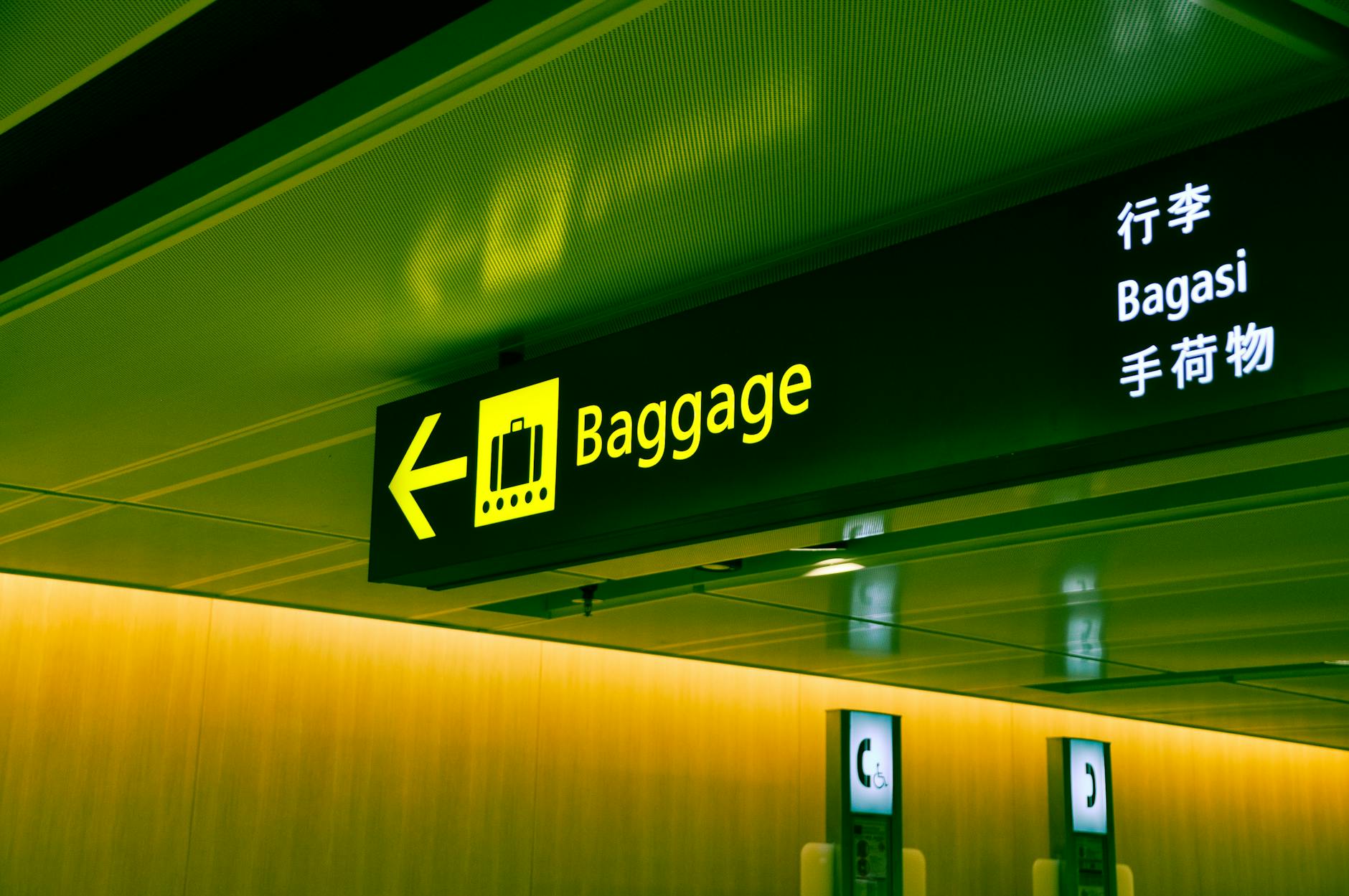
- Ground transportation is signposted from baggage claim — but that signage points at taxis, shuttles and buses. Ride apps are a separate route up to level 4 of the garages, and the signs for those say “ride app pickup.” Two different destinations, two different sets of signs.
- Luggage carts are paid, and card-operated. Worth it if you are moving four cases up to level 4.
Our Miami airport guide covers the building in full, including where to eat if you land early and where the quiet corners are.
If Your Flight Is Delayed
The scenario nobody plans for, and the one where knowing the options in advance is worth the most.
Contact the cruise line first, not the airline. If you booked the line’s own air or transfer product, they have a process for exactly this and may hold the ship or arrange to fly you to the first port. If you booked independently, they have no obligation, but they still want to know — a passenger who has told them they are running late is treated differently at the gangway from one who simply appears.
Know your ship’s all-aboard time, which is typically an hour to ninety minutes before the scheduled departure and is not the same as the end of your boarding window. That is the real deadline.
If you miss the ship, the standard remedy is to fly to the first port of call and join there — which requires a passport, which is why the passport advice on our main cruise port guide is not pedantry. Travel insurance covers this in most policies; same-day arrival is the exclusion that most often voids it.
If your luggage is delayed but you are not, board anyway. The bags can usually be forwarded to a port of call, and standing in an airport arguing about a suitcase while your ship sails is the worse of the two outcomes.
What It Costs
| Item | Typical 2026 cost |
|---|---|
| Rideshare, standard car | $25–$45 |
| Rideshare, larger vehicle | $50–$80 |
| Taxi, posted flat rate | Comparable to an unsurged rideshare |
| Cruise line transfer | $20–$35 per person each way |
| Shared shuttle | $12–$18 per person |
| Private sedan or SUV | $90–$160 |
| MIA Mover plus Metrorail plus a short ride | Around $12 |
| Rideshare from FLL | $55–$90 |
| Porter tip at the terminal | $2–$5 per bag |
Our Miami vacation cost guide covers the rest of the trip, and budget tips has more of this kind of arithmetic.
Honest Verdicts
- For two people, take a rideshare. It is half the price of two cruise line transfers and twice as fast. This is the answer for most readers.
- The level 4 pickup point is the whole trick. Knowing it before you land saves more frustration than any amount of price comparison.
- Cruise line transfers are insurance, not transport. Worth it on a tight same-day arrival, wasteful otherwise.
- The Metrorail route is legitimate and almost nobody should take it. Great with a backpack, miserable with two suitcases.
- Do not rent a car for this journey. It is the most expensive possible way to travel nine miles.
- FLL’s cheaper fare is often not cheaper. Add $60 to $90 each way and an hour of I-95 before deciding.
- Fly in the day before. Nothing else on this page matters as much.
Frequently Asked Questions
How far is Miami airport from the cruise port?
About nine miles, or twenty-five minutes without traffic. Allow forty-five minutes to an hour if you are traveling between 11:00 and 13:30 on a turnaround Saturday.
Where do rideshares pick up at Miami airport?
On level 4 of the parking garages, not at the arrivals curb. Follow the signs for ride app pickup and allow ten minutes to get there with luggage.
Is a taxi or a rideshare cheaper to the Port of Miami?
An unsurged rideshare is usually slightly cheaper. During the Saturday morning surge, the taxi’s posted flat rate is often the better deal — and it is fixed before you get in.
Is the cruise line transfer worth it?
For a couple, no — it costs more than a rideshare and takes twice as long. For a group of six or more, or if you are arriving the same morning and want the line to have some obligation to you, yes.
Can I take public transport from MIA to the cruise port?
Not the whole way. The free MIA Mover plus Metrorail to Government Center costs a couple of dollars and takes you to downtown, but you still need a short ride across Port Boulevard. Total around $12 and just over an hour.
What time should I land on cruise day?
Ideally, the day before. If you must fly in on the day, land by 11:00 on a domestic non-stop, never a connection, and never an international arrival.
How early should I leave the port for my flight home?
Nothing out of MIA before noon, and early afternoon is safer. Add an hour if you are flying from Fort Lauderdale.
Do I need to tell the driver which terminal?
Yes, always. Give the terminal letter from your boarding pass rather than “the cruise port” — the terminals are spread over two miles of island.
Give your driver the terminal letter rather than the ship’s name — drivers given a ship name guess, and they guess wrong often enough that it is worth checking your boarding pass before you get in the car. Our PortMiami terminal guide lists which line uses which terminal.
If your fare into Fort Lauderdale is cheaper, or your ship actually leaves from Port Everglades rather than PortMiami, the transfer arithmetic changes completely — FLL is ten minutes from its port, while crossing between the two cities can take over an hour. Our guide to PortMiami vs Port Everglades works through which airport and port pairing makes sense.
Related Miami Guides
- Port of Miami Cruise Port Guide — terminals, embarkation, disembarkation and everything else.
- Miami International Airport Guide — terminal layout, the MIA Mover and getting out efficiently.
- Hotels Near the Port of Miami — where to spend the night before.
- Port of Miami Cruise Parking — if you decide to drive after all.
- Getting Around Miami — Metrorail, Metromover and where the network stops.
- Miami Car Rental Guide — including the downtown drop-off trick.
- Fort Lauderdale from Miami — if you are flying into FLL.
- Miami Budget Tips — where the savings actually are.
Photo Credits
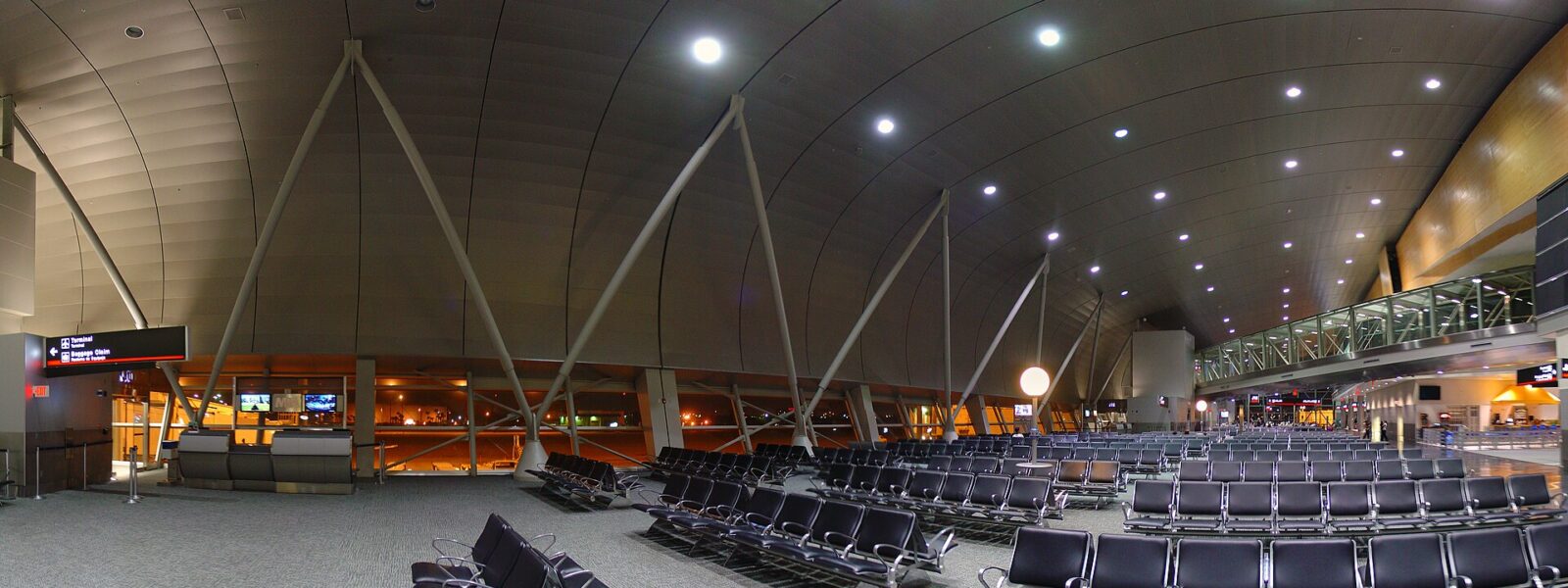
Miami International Airport concourse: 1 – Aéroport de Miami – Août 2008 by Martin St-Amant ( S23678 ), CC BY 3.0, via Wikimedia Commons.
MIA Mover at the airport station: MIA Mover arriving at airport station by Xnatedawgx, CC BY-SA 4.0, via Wikimedia Commons.
Remaining photographs from the miamitourism.org library.