Miami Transportation Guide: Getting Around Miami in 2026
Navigating Miami transportation is the make-or-break planning question for visitors. Unlike NYC or Boston, Miami isn’t a “leave the car at home” city — public transit is limited, neighborhoods sprawl, and South Beach, Wynwood, the Everglades, and Aventura sit a long way apart. Smart visitors mix Uber/Lyft, the free Beach Trolley, the free Metromover (Downtown), and selective rental cars to balance cost and convenience. This guide covers Miami transportation for 2026 — every option, real costs, and which works best for your trip type.
Miami Transportation: The Quick Answer
For South Beach & Mid-Beach stays: Free Beach Trolley + Uber/Lyft for off-island trips. No rental car needed.
For Brickell/Downtown stays: Free Metromover within Downtown + Uber for elsewhere.
For multi-region trips (beach + Wynwood + Everglades + Keys): Rental car for 1–2 days; Uber for shorter hops.
Budget travelers: Free Trolley + Metromover + Metrobus + selective Uber.
Luxury travelers: Uber Black or hotel limousine service.
Family travelers: Rental car for flexibility, especially with car seats.
Miami Transportation: Free Options
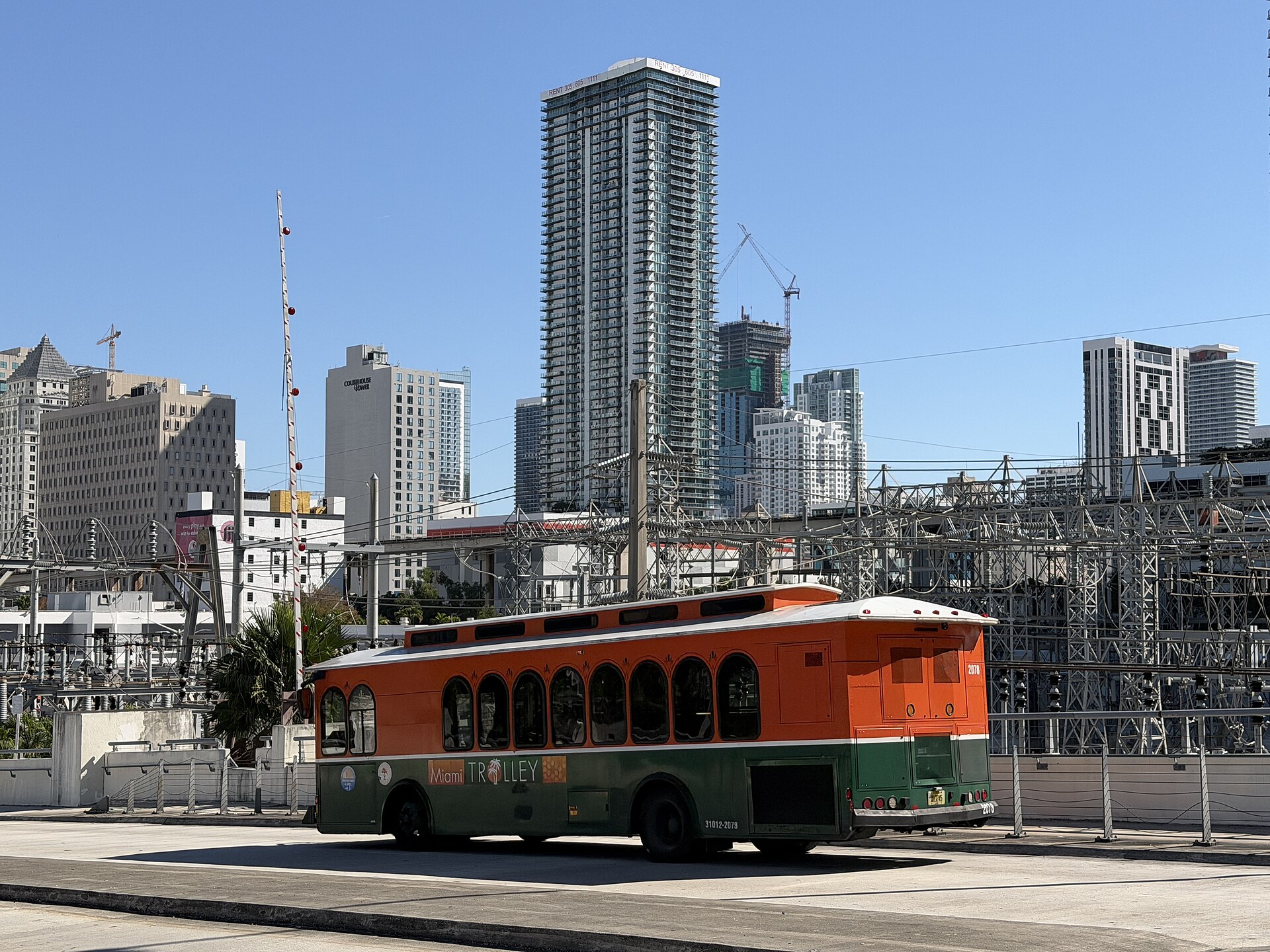
Miami Beach Trolley (FREE)
Free trolley service throughout Miami Beach. Routes cover South Beach (5th Street to 23rd Street), Mid-Beach (23rd to 63rd), and North Beach (63rd to the Surfside border). Buses come about every 20 minutes on average on each route. The smart-traveler choice for getting around Miami Beach without paying anything.
Hours: 8 AM–11 PM, seven days a week.
App: The “Miami Beach Trolley” app shows real-time vehicle locations.
Metromover (FREE)
Free elevated rail loop covering Downtown Miami. Three lines (Inner Loop, Brickell Loop, Omni Loop) connect Brickell, Downtown, Bayside, and the Omni area. Runs every 90 seconds during rush hour, every 3 minutes off-peak. 5:30 AM to 10 PM, 7 days a week.
Coverage: 21 stations from Financial District (Brickell) to School Board Station (Omni).
Best for: Brickell-to-Bayside/Wynwood adjacent travel.
MIA Mover (FREE)
Free people-mover at Miami International Airport connecting terminals to the rental car center, parking garages, and the Metrorail station. The ride takes about three minutes.
Miami Transportation: Public Transit (Paid)
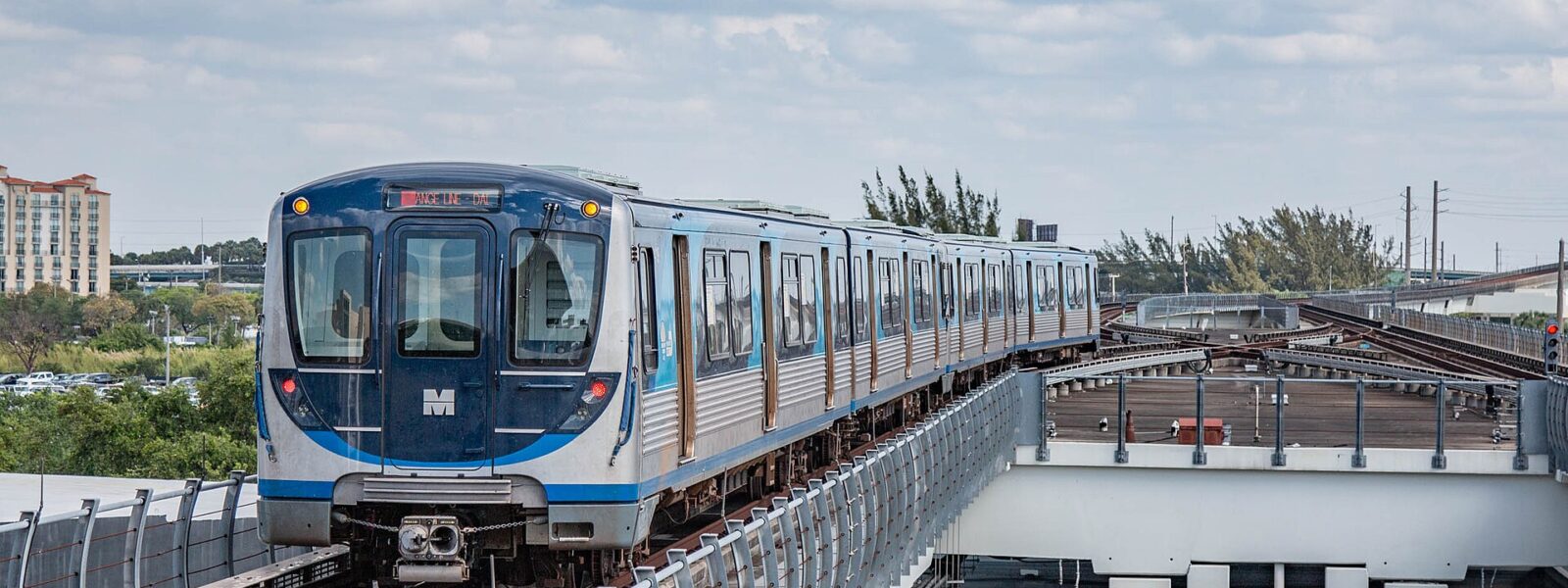
Metrorail
Two color-coded lines (Green and Orange) covering 24.4 miles and 23 stations. Single fare $2.25 with EASY Card, rising to $2.75 on January 1, 2027. Runs 5 AM–midnight daily. Orange Line trains serve MIA airport every 15 minutes.
Useful for: Airport-to-Downtown, Coral Gables-to-Downtown, Dadeland Mall.
Less useful for: Reaching Miami Beach (requires bus transfer), reaching Wynwood (closer to Government Center stop than direct).
Metrobus
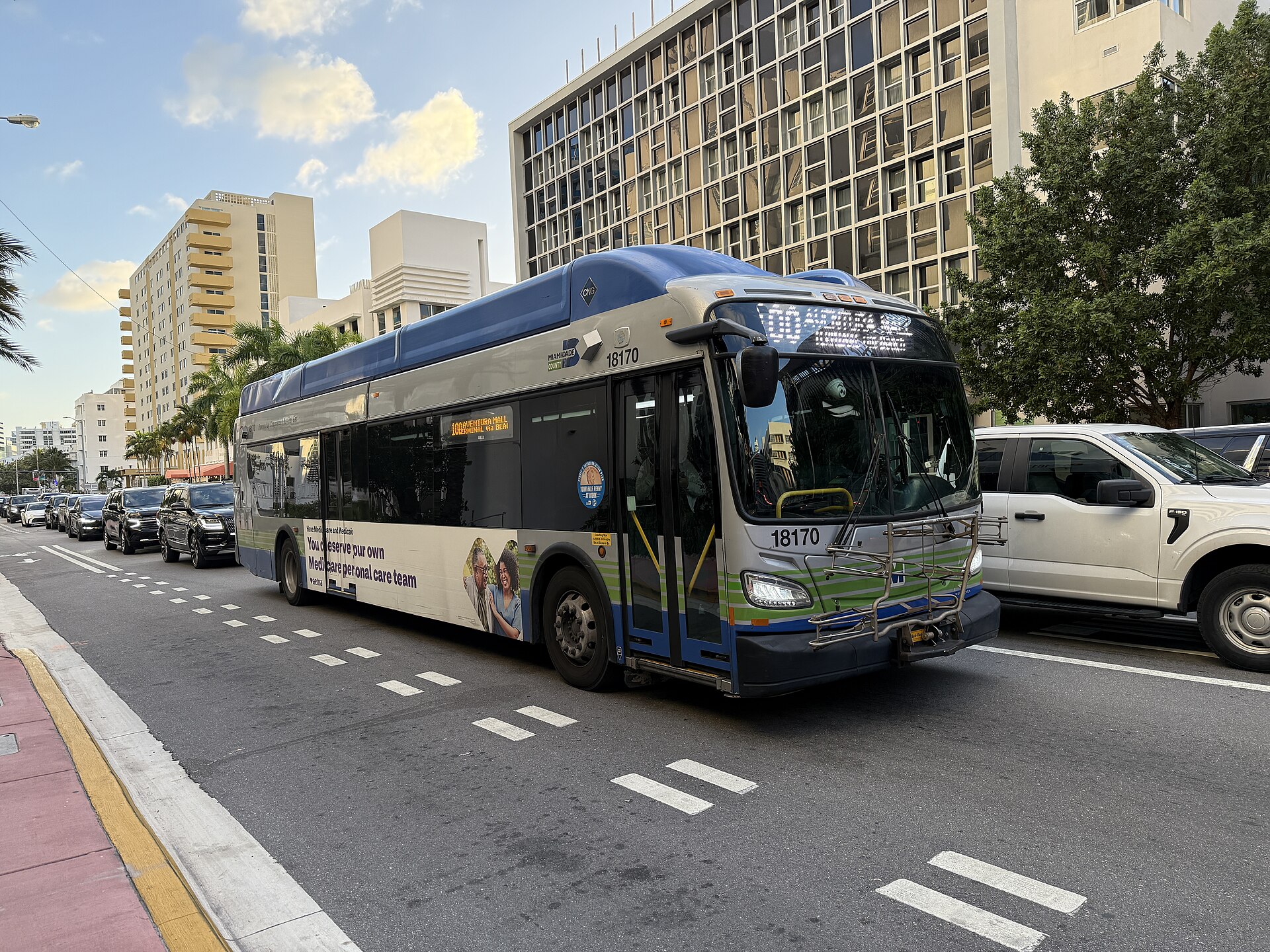
More than 70 routes covering Miami-Dade County. $2.25 single fare, going up to $2.75 from January 1, 2027. Several routes link Metrorail stations, Downtown, and the airport with the beaches (see the best ones below).
Best routes for tourists: Route 100 runs from Downtown through Miami Beach to Aventura Mall. From Miami International Airport Station, Route 150 is an express across the Julia Tuttle Causeway to Miami Beach, and Route 20 heads to Lincoln Road via Alton Road. Route 17 runs between 163rd Street Mall and Vizcaya Station along 17th and 22nd Avenues, stopping at Northside and Earlington Heights stations.
EASY Card
The reusable card for Metrorail and Metrobus. Buy from any Metrorail station. $2.25 per ride (the county’s increase takes it to $2.75 on January 1, 2027). Bus-to-bus transfers are free within three hours of first use, except on round trips, and bus-to-rail or rail-to-bus transfers are free with eligible electronic payment.
Miami Transportation: Uber & Lyft
Uber and Lyft are the practical choice for most tourist Miami transportation needs. Realistic 2026 pricing:
Airport (MIA) to South Beach: $35–$55
Airport to Brickell/Downtown: $20–$35
South Beach to Wynwood: $20–$35
South Beach to Brickell: $15–$25
Across South Beach (Lincoln Road to South Pointe): $8–$15
South Beach to Aventura Mall: $35–$55
South Beach to Bal Harbour: $15–$25
South Beach to Coconut Grove: $25–$40
Surge pricing: Friday and Saturday nights, major events (Art Basel, F1 weekend) and Spring Break push fares well above normal. Enter your destination in the app for a live quote, and plan around peak.
Uber Comfort or Black: Costs more than a standard Uber; the app shows the difference before you book. Worth it for groups of 4 or families with kids needing space.
Miami Transportation: Rental Cars

Rental car costs and considerations:
Compact car: $40–$80/day off-season, $60–$120/day peak. Plus rental taxes and fees + insurance.
Full-size or SUV: $80–$150/day.
Luxury: $200–$500/day.
Toll fees: Florida’s Turnpike and 95 Express add $5–$20 per day.
Hotel parking: $25–$45/night for valet at Miami Beach hotels. $15–$30/night at non-beach hotels.
Insurance: Standard insurance often doesn’t cover; rental car insurance $15–$30/day. Some credit cards include this benefit.
When to rent: Day trips to Everglades, Florida Keys, or beyond. Multi-region tourism with kids. Long stays.
When NOT to rent: South Beach-only stays (parking is impossible and expensive). Single-region urban trips.
Where to rent: MIA Rental Car Center is convenient. Pick up after arrival, drop off before departure. Off-airport agencies in South Beach/Brickell are cheaper but less convenient.
Miami Transportation: Parking
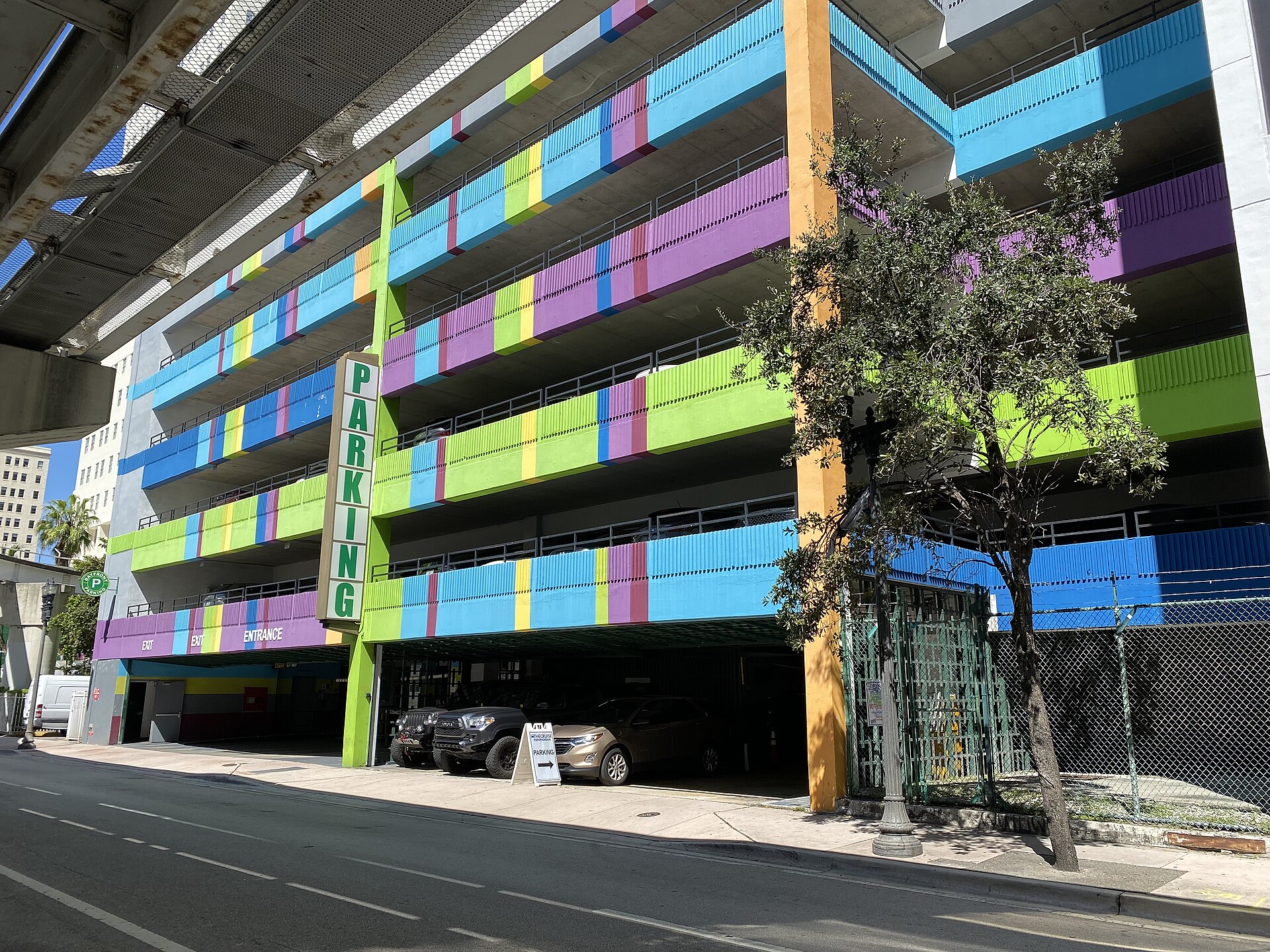
Miami Beach metered parking: $4/hour on the street in South Beach and the Entertainment District, $3/hour in East Middle Beach, $1/hour in West Middle Beach and North Beach (special events can change this). Use ParkMobile app or pay station kiosks. Time limits vary, so read the sign at your space.
Garage parking (Lincoln Road, etc.): $20–$45 daily.
Hotel valet: $25–$45/night.
Metrorail Park & Ride: $4.50/day at Metrorail station; $4.85 if paying via PayByPhone.
Metrobus Park & Ride: Always free.
The Miami Beach reality: Driving in South Beach during peak hours can mean 15–30 minutes to find parking, plus $4–6/hour. Most savvy visitors avoid driving in Miami Beach entirely and rely on the free Trolley + Uber.
Miami Transportation: Brightline Train
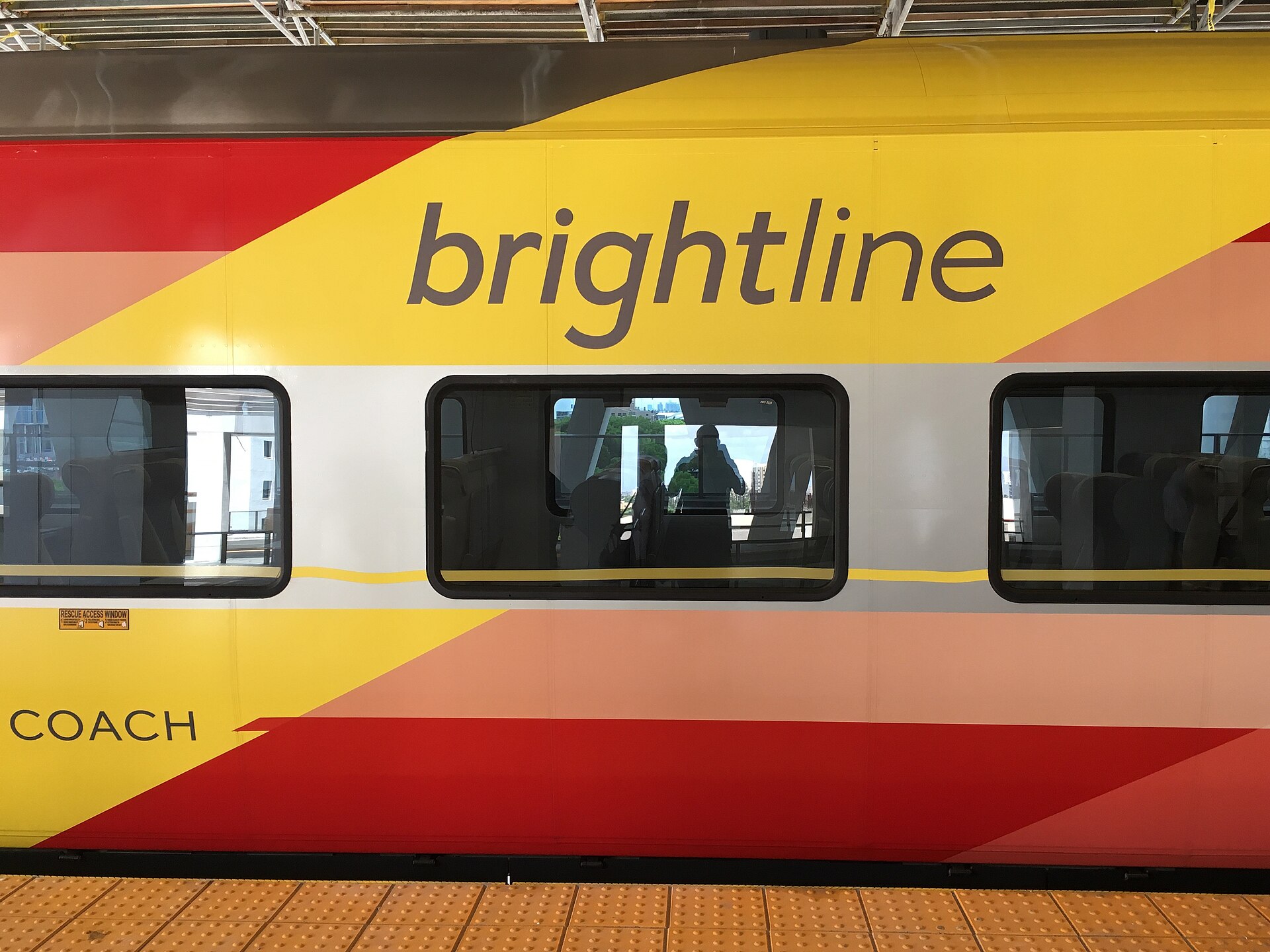
The privately-operated high-speed train connecting Miami to Fort Lauderdale, West Palm Beach, and Orlando.
Miami to Fort Lauderdale: 30 minutes, $25–$35.
Miami to West Palm Beach: 70 minutes, $35–$45.
Miami to Orlando: ~3.5 hours, $79–$129. Less time + less stress than driving I-95.
MiamiCentral Station: Downtown Miami, served by Metromover.
Brightline is the smart option for Orlando day trips, beach-hopping to Fort Lauderdale, or getting to West Palm Beach attractions like the Norton Museum or Mar-a-Lago neighborhood.
Miami Transportation: Bike Sharing
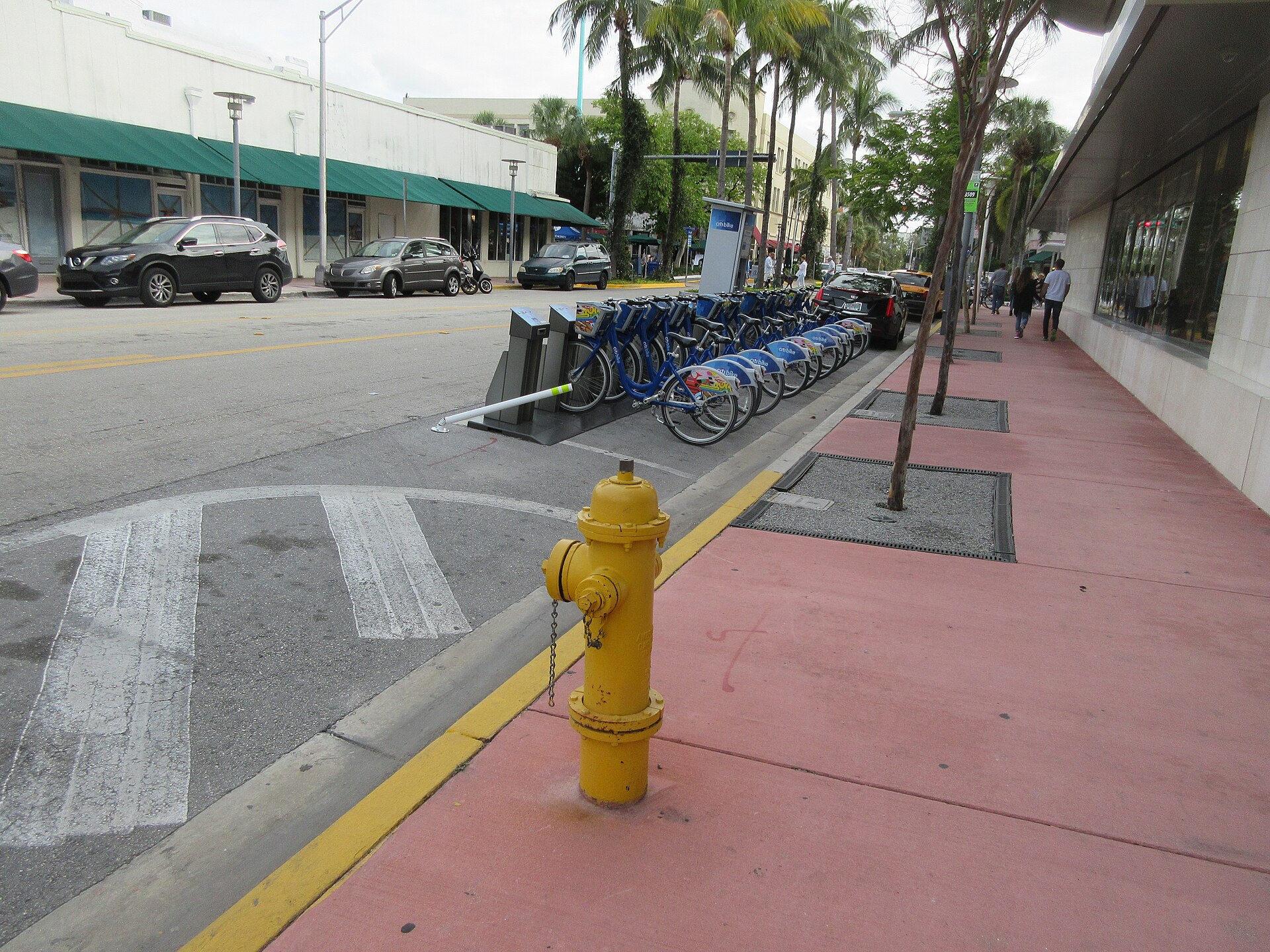
Citi Bike Miami is the bike-share program operating throughout Miami Beach and Downtown. Single-ride, day and membership prices are listed on citibikemiami.com.
Best routes: South Beach Promenade (paved bike path along the beach), Lincoln Road, Brickell to Bayside.
Considerations: Helmets recommended. Miami drivers can be aggressive — bike with caution.
Miami Transportation: Walking
South Beach is fully walkable from Lincoln Road to South Pointe. Wynwood is easy to cover on foot, mural to mural. Lincoln Road is a pedestrian street. The Miami Beach Beachwalk runs nine miles, from South Pointe Park to 87th Street. Brickell and Downtown sit close enough to walk between.
Don’t walk between regions: South Beach to Wynwood is too far to walk comfortably, and so is Brickell to Bal Harbour. Use Uber for cross-region travel.
Miami Transportation: From the Airport
Miami International Airport (MIA) to:
South Beach: Uber $35–55, taxi $30–45 (metered), private car $80–$120, Metrobus Route 150 $2.25 direct from Miami International Airport Station.
Brickell/Downtown: Uber $20–35, Metrorail $2.25, or $2.75 from January 1, 2027 (~30 min).
Aventura/Sunny Isles: Uber $35–55, taxi $40–55.
Coral Gables: Uber $25–40, Metrorail $2.25 (the same 2027 increase applies).
SuperShuttle: Shared rides $20–$35 to most Miami hotels.
Hotel shuttles: Most luxury hotels offer free or paid shuttle service.
Fort Lauderdale-Hollywood International (FLL) is the other airport within reach; the drive to Miami depends on traffic, so compare fares and transfer time for your dates. Brightline connects the Fort Lauderdale area to Miami in about half an hour.
Miami Transportation: Tips
1. Don’t rent a car for South-Beach-only trips. Parking is more expensive than Uber, and South Beach traffic is brutal. Free Trolley + Uber works perfectly.
2. Pre-pay for parking. ParkMobile and PayByPhone apps avoid parking-meter hassles.
3. Avoid driving Friday afternoon and Sunday afternoon. I-95 traffic from West Coast / Orlando = parking-lot conditions.
4. Use the free Beach Trolley app for real-time arrivals. Trolleys can run irregular schedules during peak periods.
5. Check Brightline schedules for FLL airport flights. Sometimes faster than driving I-95.
6. For Florida Keys day trips, rent a car. Public transit does reach the Keys (Route 301 runs from Florida City to Key Largo, Tavernier, Islamorada, and Marathon), but a car lets you stop wherever you like along the way.
Plan Your Miami Trip
For more, browse our complete Miami Travel Planning Guide, plus deep dives on Miami Airport guide (MIA), renting a car in Miami, Miami parking guide, and Miami itineraries.
For real-time Metrorail and Metrobus schedules, check the Miami-Dade Transit website.
Dodge Island is where Miami’s rail network stops short. Neither Metrorail nor the free Metromover crosses onto it, but the free City of Miami Coral Way Trolley does: ride Metromover from Government Center to Freedom Tower Station and change to the trolley, which crosses the PortMiami Bridge. The other options are a car, a rideshare or a hotel shuttle over the Port Boulevard bridge or through the PortMiami tunnel. Our Port of Miami cruise port guide explains which of the two approaches to take and when.
There is one journey where Miami’s transit network almost works and then stops just short: MIA to the cruise terminals. The free MIA Mover and Metrorail will get you to downtown for a couple of dollars, but the rail stops short of Port Boulevard, so the last leg is the free Coral Way Trolley from Freedom Tower Station or a car. Our guide to Miami airport to the cruise port sets that route against the alternatives.
Related Miami Guides
- Full guide: Miami Travel Planning
- Car Rental Tips
- Parking in Miami Beach
- Miami Airport (MIA) Guide
- Is Miami Safe?
Photo Credits
Miami Metrorail airport approach: MDT Orange Line Hitachi Miami Airport Station (51980407686) by Han Zheng, CC BY-SA 2.0, via Wikimedia Commons.
Miami-Dade Metrobus on Collins Avenue: MDT Metrobus 18170 on FL A1A NB past 40th Street Miami Beach by Dough4872, CC BY-SA 4.0, via Wikimedia Commons.
Miami Trolley downtown: Downtown Miami Trolley Bus, March 2026 by Phillip Pessar, CC BY 4.0, via Wikimedia Commons.
Citi Bike docks in Miami Beach: Miami Beach Florida – Fire hydrant and bike racks off Lincoln & Jefferson, 2018 by Infrogmation of New Orleans, CC BY 2.0, via Wikimedia Commons.
Brightline at MiamiCentral: Brightline Arriving At Miami Station (28432071368) by Phillip Pessar, CC BY 2.0, via Wikimedia Commons.
Downtown Miami parking garage: Parking Garage Stripes, Downtown Miami FL 2022 by Phillip Pessar, CC BY 2.0, via Wikimedia Commons.