Best Seafood Miami: Top Restaurants for 2026

This article contains advertising. Our booking links are routed through a partner that adds commission tracking automatically, so if you book through one we earn a commission from the provider, at no extra cost to you. It never affects what we recommend. Affiliate disclosure
Miami sits where the Atlantic, the Gulf Stream and Biscayne Bay converge, and the city’s cooking has been shaped by that geography for a century. Stone crab boats unload in Key Largo, pink shrimp come up from the Tortugas, yellowtail snapper arrives whole and still stiff, and a Cuban, Peruvian and Nikkei population has spent decades arguing about the right way to dress raw fish. The best seafood restaurants in Miami range from a 1913 dining room with a maître d’ worth tipping to a fish market with picnic tables out back where a whole fried snapper costs less than a cocktail on Ocean Drive. This guide covers where to eat, what it costs, when to book and what to skip.
Joe’s Stone Crab: How to Actually Get In
Joe Weiss opened a lunch counter at 11 Washington Avenue in 1913, two years before Miami Beach was incorporated as a city. Stone crabs did not arrive on the menu until 1921, when a Harvard ichthyologist showed Weiss what was crawling around in the shallows offshore. More than a century later, Joe’s is still family-run, still cracks its claws by hand, and is regularly ranked among the highest-grossing independent restaurants in the United States. The room itself is the point: white tablecloths, tuxedoed career waiters, a dark bar off to the side, and a level of controlled chaos that feels closer to a 1950s supper club than anything else in South Florida.
Here is the thing most guides still get wrong. Joe’s spent decades refusing reservations, and that reputation has outlived the policy. Joe’s now accepts reservations through OpenTable, with a $25 per-person charge for no-shows or cancellations inside 24 hours. Walk-ins are still welcome and still seated by availability, so the old advice to turn up at 5pm and put your name down works fine — but if you have a fixed evening, book. Parties over 12 need to call the restaurant directly.
Claws are sold by the order, not by the pound, in four grades. As of the 2026 summer menu that runs roughly $49.95 for medium, $59.95 for select, $74.95 for large and $129.95 for jumbo, with a $30 supplement to turn any full order into a “Joe’s Classic” with cole slaw, hashed browns, creamed spinach and a slice of key lime pie. Prices move with the docks, so treat those as a guide rather than a quote. The rest of the menu is more forgiving than its reputation suggests: the famous fried half chicken is $8.95, the burger $18.95, and most fish entrées land between $35 and $52. Valet is $15 at lunch and $25 at dinner, and there is limited free self-parking across the street for diners, closing at 11:15pm. Next door, Joe’s Take Away does counter service with café seating and no reservation needed — the same kitchen, roughly half the ceremony.
Timing matters. Joe’s shortens its week in summer, currently closing Mondays and Tuesdays, with lunch Friday to Sunday from 11:30am to 2:30pm and dinner Wednesday to Sunday from 5pm to 10pm. Winter hours expand. The worst nights are Friday and Saturday between 7pm and 9pm in high season; the best are a Wednesday in early November, when the season’s claws have just landed and the tour buses have not.
Stone Crab Season, Decoded
Florida stone crab is managed by the state, not the federal government — the Florida Fish and Wildlife Conservation Commission sets a harvest season that runs from October 15 to May 1 each year, closing on May 2. Only the claws are taken, they must measure at least 2⅞ inches, and the crab goes back into the water alive. Stone crabs can regrow a claw three or four times over a lifetime, which is why the fishery is one of the few genuinely renewable shellfish operations in the region. Harvesting whole crabs is illegal.
What that does not mean is that claws vanish from menus on May 2. Joe’s, among others, serves stone crab year-round from stock held after the season closes; the flavor is fine, but the very best claws are the ones landed between late October and February. Everything is market price because it genuinely is — restaurants negotiate at the dock, and a stormy week or a thin year pushes prices up hard.
Beyond Joe’s, three places are worth knowing. Truluck’s at 777 Brickell Avenue owns its own fishery near Naples, which means claws that are never frozen and, in season, an all-you-can-eat stone crab deal on Monday nights that has hovered around $79 with a soup or salad and a side. Klaw, in a 1920s Spanish Renaissance building at 1737 N Bayshore Drive, plates some of the best claws in the county alongside live Norwegian king crab kept in house tanks, and has Edgewater’s only rooftop bar. And for eating at home, Holy Crab Delivery near Merrick Park in Coral Gables sells never-frozen claws for pickup or next-day delivery, with a Key Largo key lime pie that is worth adding to the box.
Seafood Row on the Miami River
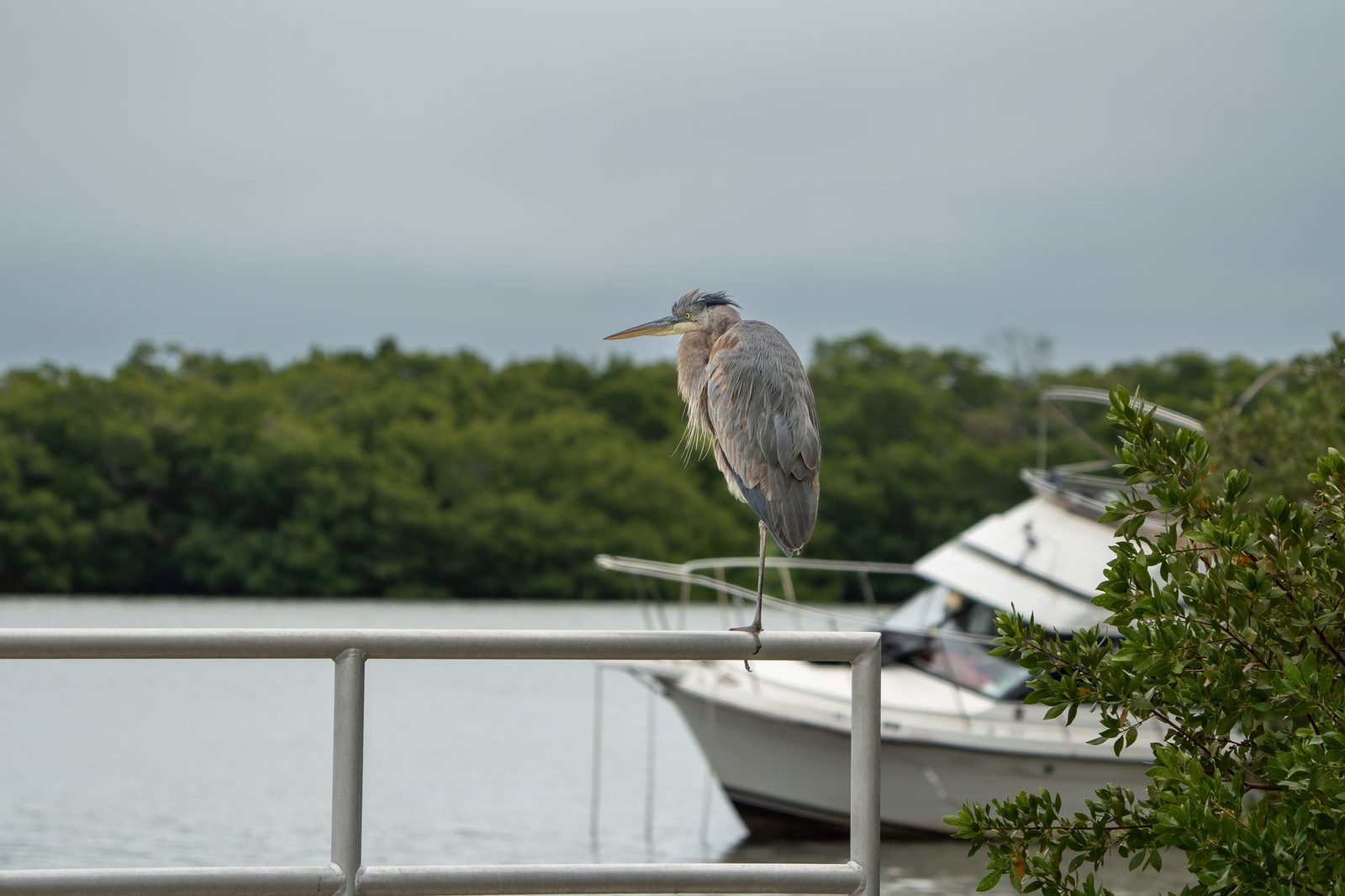
The stretch of North River Drive west of Downtown is the most underrated eating in the city. It is not glamorous — you are looking at working commercial docks, cargo cranes and boats bound for the Bahamas — but the fish comes off vessels tied up behind the kitchen.
Garcia’s Seafood Grille & Fish Market at 398 NW North River Drive has been run by the same family since 1966 and is now overseen by brothers Luis and Esteban Garcia Jr. The interior is dark wood and low ceilings, like the inside of an old boat; the terrace is plastic chairs and river traffic. Order from the blackboard specials, or default to fried grouper fingers, a whole fried yellowtail snapper, or the conch fritters. Oysters come raw, fried or in a shot glass. Expect roughly $18–40 for a main, and no wait to speak of if you eat early. It is open daily from 11am, running to 9pm most nights and 10pm on Friday and Saturday. The fish market next door sells the same catch by the pound.
A hundred meters upriver, Casablanca Seafood Bar & Grill at 404 NW North River Drive does the same trick on a bigger scale, with an attached retail market and free dockage if you arrive by boat. Sit on the balcony and you will watch commercial boats unload at the back door while you eat. Note that the group’s second location, Casablanca on the Bay on North Bayshore Drive, has closed — if an older list sends you there, you want the river address instead. Crazy About You, at 1155 Brickell Bay Drive, is the polished bayfront cousin: a Spanish-Italian-American menu with a smoked mahi dip, tuna poke and grilled ponzu salmon, and a terrace that looks straight out at the water. It opens late morning and runs to 11pm or midnight, and it is one of the easier waterfront tables to get on short notice.
Where to Eat Oysters in Miami
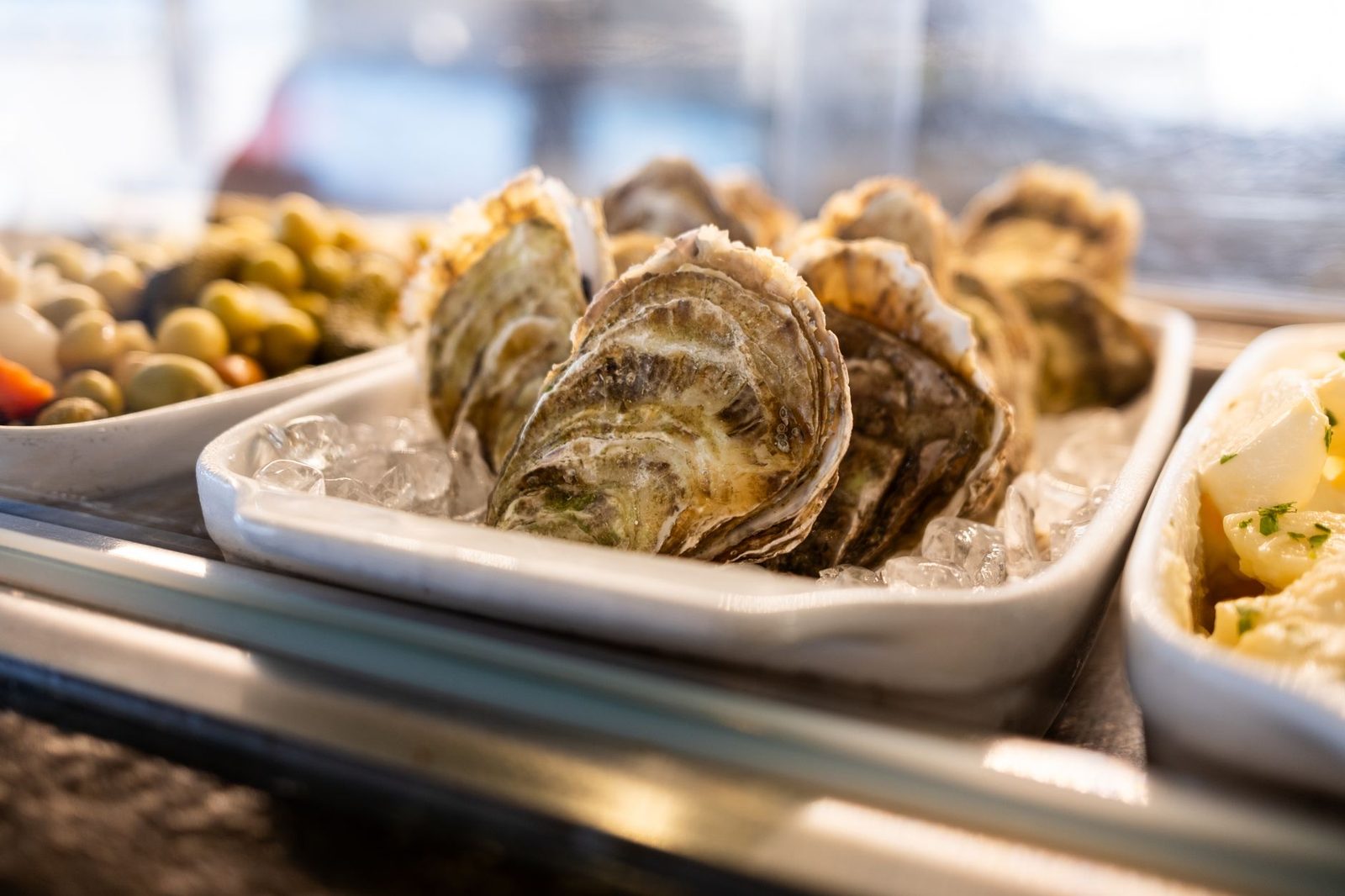
Miami is not an oyster-producing city, so everything is flown in — which makes the turnover of the room more important than the pedigree of the shell. The River Oyster Bar at 33 SE 7th Street has been doing this in Brickell since 2003 and remains the benchmark. Chef-owner David Bracha runs a genuinely varied list from both coasts, plus local shrimp from Cape Canaveral and Keys stone crab in season. Happy hour runs daily from 3pm to 7pm with oysters around $2, beers $5 and wine and cocktails $8, which is the single best value raw bar hour in the city. It is loud, unpretentious and full of people who work nearby; sit at the bar and eat a dozen.
In Coconut Grove, Monty’s Raw Bar at 2550 S Bayshore Drive is the opposite experience — an enormous open-air tiki structure over the marina, frozen drinks, Gulf oysters all day, and Throwback Thursday promotions that have gone as low as 69 cents a shell. It is a place to drink in the afternoon rather than eat seriously, but the key lime pie is real and the stone crab in season is good. In the Design District, Michael’s Genuine at 130 NE 40th Street serves a rotating daily selection by the half-dozen and dozen alongside a caviar supplement, in a room that costs money but has aged extremely well. Downtown, Over Under on East Flagler pours a martini made with gin infused from the shells of the oysters you are eating and sources from a small Florida operation — call ahead, because availability genuinely fluctuates. For cheap and fun, Sweet Liberty on 20th Street in South Beach runs 95-cent oysters from 4pm to 8pm daily, and Water Lion inside the Sagamore on Collins shucks a small, well-chosen regional selection for people drinking lambrusco.
One correction worth making: Mignonette, the marble-countered Edgewater oyster bar in a converted 1930s gas station, closed in March 2026 after nearly twelve years. It appears on almost every older list of the best seafood restaurants in Miami. It is no longer there.
The High End: Michelin Stars and Big Rooms
Greater Miami holds 15 Michelin stars across 13 restaurants in the current Florida guide, and several of them are effectively seafood restaurants. The Surf Club Restaurant by Thomas Keller, at 9011 Collins Avenue inside the Four Seasons at The Surf Club in Surfside, retains its one star. The dining room is the reason to go — amber lighting, plush banquettes, a vintage bar, the whole thing engineered to feel like a private club in 1948. The cooking is Continental rather than fashionable: a seared crab cake with spicy mayonnaise, Maine lobster thermidor rebuilt with sauce Américaine. Book through Resy two to four weeks out for a weekend table, or take an early weeknight seat, which is easier and no less good. Expect $150–250 a head before wine.
Miami’s three starred omakase counters are, functionally, the finest fish in the city. Shingo, in Coral Gables at 112 Alhambra Circle, is chef Shingo Akikuni’s Edomae counter and the one most locals name first. Hiden, reached through a discreet entrance in Wynwood, seats a handful of guests for a seasonal tasting built on fish flown from Japan. Ogawa, north of the Design District on NW 2nd Avenue, seats ten. All three book weeks ahead through Tock or SevenRooms and run well north of $250 a person. If you want the sushi without the ceremony, Sushi Garage — the Juvia group’s original Sunset Harbour room has closed, but the CocoWalk location at 3015 Grand Avenue is open daily from noon with a 5pm to 8pm happy hour — does inventive rolls, nigiri and small plates at a fraction of the price.
For big rooms with a scene attached, Sexy Fish at 1001 S Miami Avenue in Brickell is the maximalist choice: Damien Hirst mermaids, a Frank Gehry fish lamp, an enormous Asian-influenced seafood menu and a bar that turns into a DJ set after 10pm on Fridays and Saturdays. Happy hour is 4pm to 7pm on weekdays. Estiatorio Milos at 730 First Street in South Beach is the grown-up alternative — whole fish laid out on ice, priced by weight, grilled simply, plus charcoal-broiled octopus that is arguably the single best plate of seafood in Miami Beach. Neither is cheap; Milos in particular can surprise you when a fish is weighed.
Ceviche, Tiradito and Latin Seafood
Miami is a ceviche town in a way few US cities are, and the Peruvian influence runs deepest. The reference point for a decade was La Mar by Gastón Acurio at the Mandarin Oriental on Brickell Key, where chef Diego Oka’s ceviches and tiraditos set the standard. That room closed when the hotel was demolished for redevelopment, and a new Brickell location has been announced — check before you plan an evening around it, because the reopening has slipped.
In the meantime, Pisco y Nazca is the accessible option, with ceviche gastrobars in Downtown Doral at 8551 NW 53rd Street and in Kendall at the Palms at Town & Country. Both stay open late — to midnight on Fridays and Saturdays in Doral — and both do a proper leche de tigre, causa and a pisco list, for roughly $20–35 a main. Osaka, the Peruvian-Japanese group’s first US outpost at 1300 Brickell Bay Drive, covers the Nikkei end with tiraditos, sushi and a weekday prix-fixe lunch. And Elcielo Miami at 31 SE 5th Street holds a Michelin star for Juan Manuel Barrientos’s modern Colombian tasting menu, which is theatrical, multi-sensory and heavy on coastal Colombian seafood — book well ahead and set aside three hours.
Seafood by Neighborhood
Miami is spread out and traffic is punishing, so it pays to eat near where you are staying rather than crossing a causeway at 7pm. On South Beach, the anchors are Joe’s at the southern tip, Estiatorio Milos on First Street, Sweet Liberty for cheap oysters, and The Lobster Shack at 613 Lincoln Road for a New England-style lobster roll, snow crab and lobster tacos from noon to midnight — note the mandatory 20 percent service charge before you calculate the bill.
Brickell and Downtown give you the River Oyster Bar, Truluck’s, Sexy Fish, Osaka, Elcielo and Crazy About You within a short walk or a short Metromover ride, plus the Miami River places a few minutes west. Coconut Grove has Monty’s on the marina, Sushi Garage at CocoWalk and Shore to Door on Douglas Road. Key Biscayne, over the Rickenbacker Causeway, has the Rusty Pelican, Boater’s Grill and The Cleat. Surfside and Bal Harbour mean The Surf Club Restaurant. Little Havana means La Camaronera. And the further south you drive — Pinecrest, Kendall, Palmetto Bay — the more the seafood belongs to locals rather than visitors.
Dockside Spots You Reach by Boat
Arriving by water is a genuinely different Miami experience, and several restaurants are set up for it. Boater’s Grill sits on No Name Harbor inside Bill Baggs Cape Florida State Park at the far end of Key Biscayne, family-run for more than twenty years, serving locally caught snapper, several paellas and a homemade ceviche with the calmest water view in the county. It opens at 11am daily, closing at 8pm Sunday to Wednesday and 10pm Thursday to Saturday. If you drive, you pay the state park entry fee — budget roughly $8 per vehicle and check the park site — but you also get the 1825 Cape Florida Lighthouse and a beach in the bargain.
The Cleat, run by the same group at Crandon Marina at 1200 Crandon Boulevard, is the more casual sibling: an outdoor bar with cold drinks, fried seafood and what regulars will argue is the best sunset view in Miami. Lido Bayside Grill at The Standard Spa on Belle Isle serves from 8am to midnight with citrus- and fermentation-forward grilled and chilled plates, a High Tides happy hour from 4pm to 6pm Monday to Thursday, and first-come boat docking for vessels up to 40 feet. Casablanca on the river offers free dockage while you eat. Monty’s, the Rusty Pelican on the Rickenbacker Causeway, and Amara at Paraiso in Edgewater — where the terrace is about as close to Biscayne Bay as you can eat without getting wet — round out the waterfront list. Amara books up most nights, so reserve if you want an outdoor table.
Cheap Seafood Locals Actually Eat
The gap between what tourists eat and what Miamians eat is widest at the bottom of the price range. La Camaronera at 1952 W Flagler Street in Little Havana has been run by the Garcia brothers since 1976 and is the home of the pan con minuta: a whole fried snapper, bones and tail intact, slapped into a lightly toasted Cuban roll with onion and lime, for under $10. You order at the counter, eat standing at a shelf, and it is one of the great cheap sandwiches in America. It has a Michelin Guide mention and a weekday oyster-and-beer happy hour.
Plaza Seafood Market at 3114 NW 17th Avenue does fried snapper, shrimp and conch salad in generous, Caribbean-inflected portions with no frills whatsoever. Heads or Tails on NW 54th Street griddles or fries whatever came in, served with plantains, rice and beans. Miami Shores Fish Market inside the Citadel food hall on NE Second Avenue makes the best fresh fish sandwiches in Miami-Dade and a New England clam chowder that would pass muster in Boston. FreshCo Fish Market & Grill in Kendall — a Yelp Top 100 seafood pick — does key lime fish wings, conch fritters and tostones topped with tuna ceviche, with a second, larger location in Downtown Doral. Catch of the Day near the airport on NW 42nd Avenue is the reliable pre-flight option, with a properly seared rare yellowtail tuna.
Fish Markets Worth the Drive
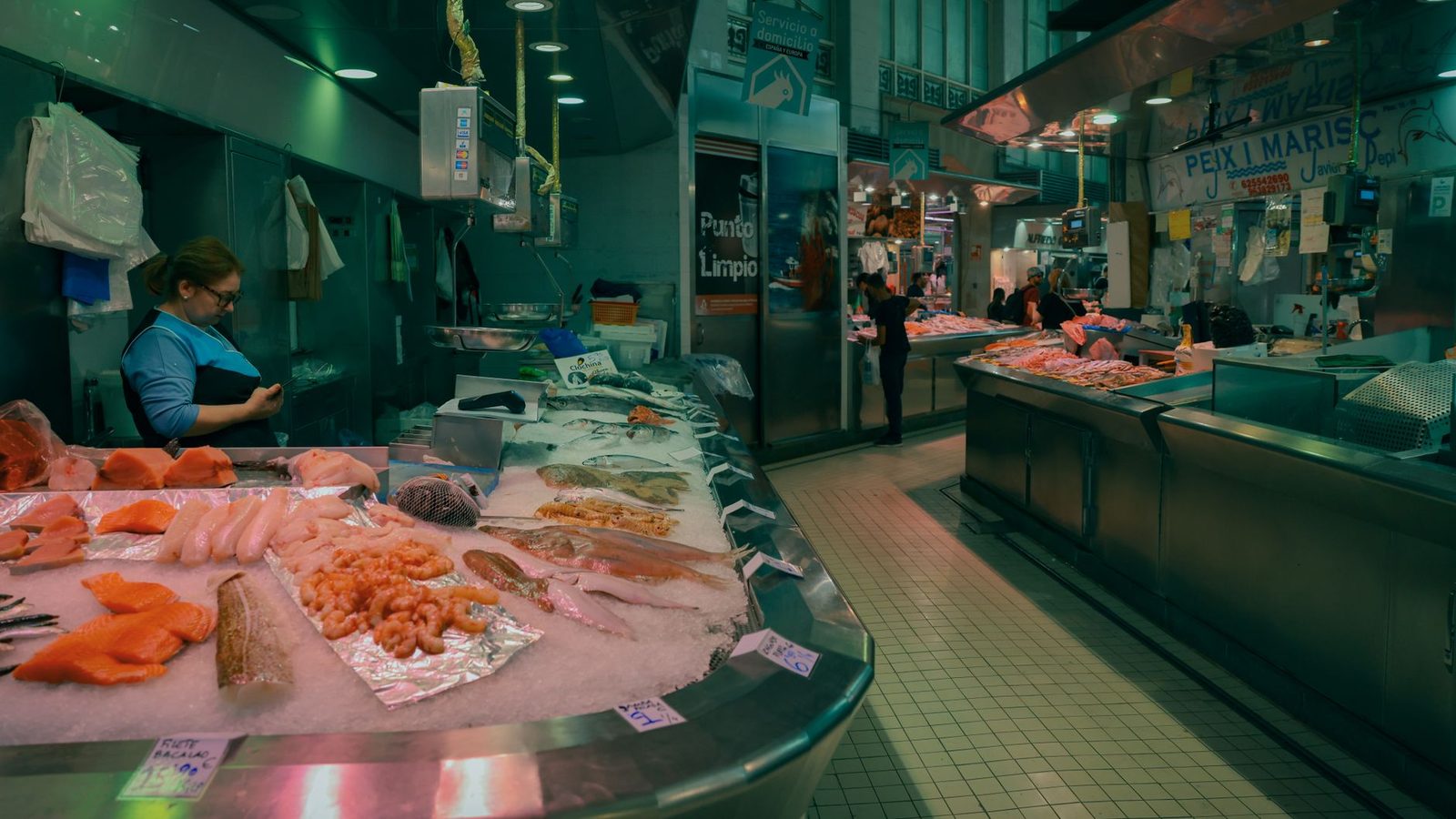
If you have a kitchen, or just want to see what is actually being landed, the markets are the most honest window into the Miami seafood scene. Captain Jim’s at 2950 W Dixie Highway in North Miami dates to the 1990s and is now owned by David Garcia of La Camaronera; the counter runs to yellowtail snapper and hogfish, grilled, blackened or fried, plus seasonal stone crab and conch salad. Captain’s Tavern in Pinecrest has been sourcing seafood since the 1970s and its attached market carries the widest selection in south Miami-Dade; the restaurant itself, on South Dixie Highway, is a genuinely great old-school room full of large families.
Golden Rule Seafood at 17505 S Dixie Highway in Palmetto Bay has been family-owned since 1943 and will steam whatever you buy on site — live blue crabs, oysters, lobster, stone crab. Fresh Florida Fisheries just off Coral Way at 2238 SW 57th Avenue displays local snapper, grouper and swordfish on ice and will grill or fry your choice for a small fee, served at picnic tables with tostones or rice and beans. Shore to Door on Douglas Road in Coconut Grove changes its menu daily according to what local fishermen bring in, and on Saturday evenings the backyard turns into a low-key party with self-serve beer and live music from around 6pm — call first, because hours move with the weather. Krudo in North Miami Beach is the kosher-certified option, strong on sushi-grade tuna and poke.
Florida Species and When They’re Good
Ordering well in Miami means knowing what is actually local. Yellowtail snapper is the house fish of South Florida — mild, flaky, best whole and fried or simply grilled — and it is available most of the year. Mutton snapper is the premium cousin, firmer and richer. Hogfish, caught by spear rather than line, is the local delicacy and the thing to order if you see it on a blackboard; it is sweet, dense and rarely leaves the state. Grouper is available year-round in some form, though specific species close seasonally in Atlantic waters, so a menu promising “fresh Florida grouper” in a closed month deserves a question.
Florida pink shrimp run all year and are the ones to ask for by name. Rock shrimp are a Florida speciality with a lobster-like texture, usually split and broiled, and sold popcorn-style. Mahi mahi peaks in spring and early summer, and wahoo shows up on market boards in cooler months. Spiny lobster — the clawless Florida variety, all tail — has a regular season from early August to the end of March, with a two-day recreational mini-season in late July that is a genuine local event. And stone crab claws, as covered above, run October 15 to May 1. Eat with the calendar and you will eat better and cheaper.
Sustainability, Mislabelling and What to Skip
Seafood fraud is a real problem in Florida, and grouper is the most commonly substituted fish on the state’s menus — cheaper imported catfish, tilapia or Asian basa frequently arrives labelled as grouper, particularly at tourist-facing restaurants with suspiciously low prices. The defense is simple: ask where the fish came from and whether it is whole or filleted. Restaurants that buy directly from local boats, like Garcia’s, Casablanca or the market-attached grills, will answer immediately and specifically. Restaurants that cannot answer are telling you something.
A few other things worth knowing. Most shrimp served in the US is imported and farmed; Florida pink shrimp cost more and taste better, and it is worth asking. Large predatory fish — king mackerel, swordfish, large tuna — accumulate mercury, which matters if you are pregnant or feeding small children; snapper, shrimp and stone crab are much lower risk. Stone crab itself is one of the better choices you can make, given the claws-only regulation and the crabs’ ability to regenerate. And skip the “Florida lobster” advertised in December with claws attached, because Florida spiny lobster does not have them.
Finally, treat any list of Miami restaurants — including this one — as perishable. The city closes and reopens rooms at a rate that would alarm most food scenes. Mignonette, Le Sirenuse, Sushisamba, The Spillover, Shuckers and Casablanca on the Bay have all appeared on “best of” roundups long after they shut. Check that a place is open before you drive.
Planning Your Seafood Crawl: Costs, Timing and Parking
Budget realistically. A market lunch or a pan con minuta runs $10–20 a head. Casual sit-down seafood at Garcia’s, Boater’s Grill, FreshCo or The Lobster Shack lands at $25–45 with a drink. Mid-range rooms such as the River Oyster Bar, Monty’s, Amara or Crazy About You come in around $50–80. Klaw, Truluck’s, Sexy Fish and Milos push $90–150. And the tasting menus — The Surf Club Restaurant, Elcielo, Shingo, Hiden, Ogawa — start around $150 and climb past $300 with pairings. Stone crab sits outside all of this at true market price, which in a bad year can double.
On reservations: the starred restaurants and omakase counters need two to four weeks, and the omakase counters release seats on a fixed schedule, so set a reminder. Joe’s, Klaw, Truluck’s and Milos are comfortable at a week out, less in summer. The markets, river spots and casual bars take walk-ins. Almost everywhere in Miami is easier between May and October, when the city empties and prices soften — the trade-off is heat, afternoon storms and no stone crab landings until mid-October.
On getting around: parking on South Beach is expensive and metered, and valet at the higher-end rooms runs $15–30. The Miami River restaurants have their own lots. Key Biscayne requires a car or a rideshare and a state park fee at Bill Baggs. Brickell is the one district where you can genuinely walk between four or five good seafood restaurants, and the Metromover is free. If you would rather catch your own dinner, our fishing charters guide covers the boats, and several captains will point you to a restaurant that will cook your catch.
Frequently Asked Questions
What is the best seafood restaurant in Miami?
It depends what you want. Joe’s Stone Crab is the iconic answer and the one experience most visitors should have at least once. For fine dining, The Surf Club Restaurant by Thomas Keller holds a Michelin star. For value and honesty, Garcia’s on the Miami River is hard to beat. For oysters, the River Oyster Bar in Brickell has been the local benchmark for over twenty years.
When is stone crab season in Florida?
October 15 to May 1, set by the Florida Fish and Wildlife Conservation Commission, with the fishery closing on May 2. Claws must measure at least 2⅞ inches and the crab is returned to the water alive. Some restaurants, Joe’s included, hold stock and serve claws outside those dates, but the freshest and best-value claws land between late October and February.
Does Joe’s Stone Crab take reservations?
Yes. Despite its long-standing no-reservations reputation, Joe’s now accepts bookings through OpenTable, with a $25 per-person fee for no-shows or late cancellations. Walk-ins are still welcome and seated by availability, and Joe’s Take Away next door is counter service with no booking required. For parties over 12, call the restaurant directly.
How much does seafood cost in Miami?
Market and counter meals run $10–20. Casual sit-down seafood is $25–45 a head, mid-range restaurants $50–80, and high-end rooms $90–150. Tasting menus start around $150 and can exceed $300 with wine. Stone crab is always market price and varies year to year; at Joe’s, an order currently ranges from roughly $50 for medium claws to $130 for jumbos.
Where do locals eat seafood in Miami?
Away from the beach. The Miami River strip, the markets in North Miami and Palmetto Bay, La Camaronera in Little Havana, FreshCo in Kendall, Captain’s Tavern in Pinecrest and Shore to Door in Coconut Grove are where Miamians actually go. The rule of thumb: the further you are from Ocean Drive, the more likely the fish came off a boat that morning.
Which Miami seafood restaurants can you reach by boat?
Boater’s Grill on No Name Harbor and The Cleat at Crandon Marina are both set up for arrivals by water on Key Biscayne. Lido Bayside Grill at The Standard on Belle Isle offers first-come docking for vessels up to 40 feet, and Casablanca on the Miami River provides free dockage while you dine. Monty’s in Coconut Grove sits directly on its marina.
What Florida fish should I order in Miami?
Yellowtail snapper is the local default and excellent whole and fried. Hogfish is the connoisseur’s pick and rarely leaves Florida. Mutton snapper is the richer premium option, and Florida pink shrimp and rock shrimp are both genuinely local. Mahi mahi peaks in spring and early summer. Spiny lobster runs roughly August to March, and stone crab from mid-October to May.
Do I need reservations for seafood restaurants in Miami?
For Michelin-starred rooms and omakase counters, book two to four weeks out — Shingo, Hiden and Ogawa release seats on a schedule and sell out fast. Joe’s, Klaw, Truluck’s and Milos are usually fine a week ahead. Markets, river restaurants and raw bars take walk-ins. Everything loosens between May and October, when Miami’s dining scene quietens considerably.
Is Miami seafood actually fresh, or is it imported?
Both, and the difference is worth chasing. Restaurants attached to fish markets or sitting on the Miami River genuinely buy off local boats. Elsewhere, much of the shrimp is imported and farmed, and grouper is the most commonly mislabelled fish in Florida. Ask where a fish came from; a kitchen that sources properly will answer without hesitating.
Where can I buy fresh fish to cook myself in Miami?
Captain Jim’s in North Miami, Golden Rule Seafood in Palmetto Bay, Captain’s Tavern Seafood Market in Pinecrest, Fresh Florida Fisheries off Coral Way, and the markets attached to Garcia’s and Casablanca on the Miami River. Several, including Fresh Florida Fisheries and Golden Rule, will cook or steam what you buy on the spot for a small charge.
What is the best time of year for seafood in Miami?
November to February. Stone crab claws are at their freshest and most plentiful, spiny lobster season is open, the weather is dry and mild, and the whole city is set up for eating outdoors. The trade-off is that it is peak season, so book earlier and expect higher prices at the top end. Summer is cheaper and quieter but stone crab landings stop.
Is there good budget seafood in Miami?
Yes, and it is some of the best food in the city. La Camaronera’s pan con minuta comes in under $10, Plaza Seafood Market and Heads or Tails serve enormous fried fish plates for little money, and the River Oyster Bar’s 3pm to 7pm happy hour puts oysters at around $2. Fish markets with picnic tables give you restaurant-quality fish at retail prices. Miami’s food and dining guide has more in this vein.
For the tasting menus, wine programs and special-occasion rooms beyond seafood, our fine dining guide covers the rest of the high end.