Sargassum Seaweed in Miami: Season, Cleanup and Forecasts
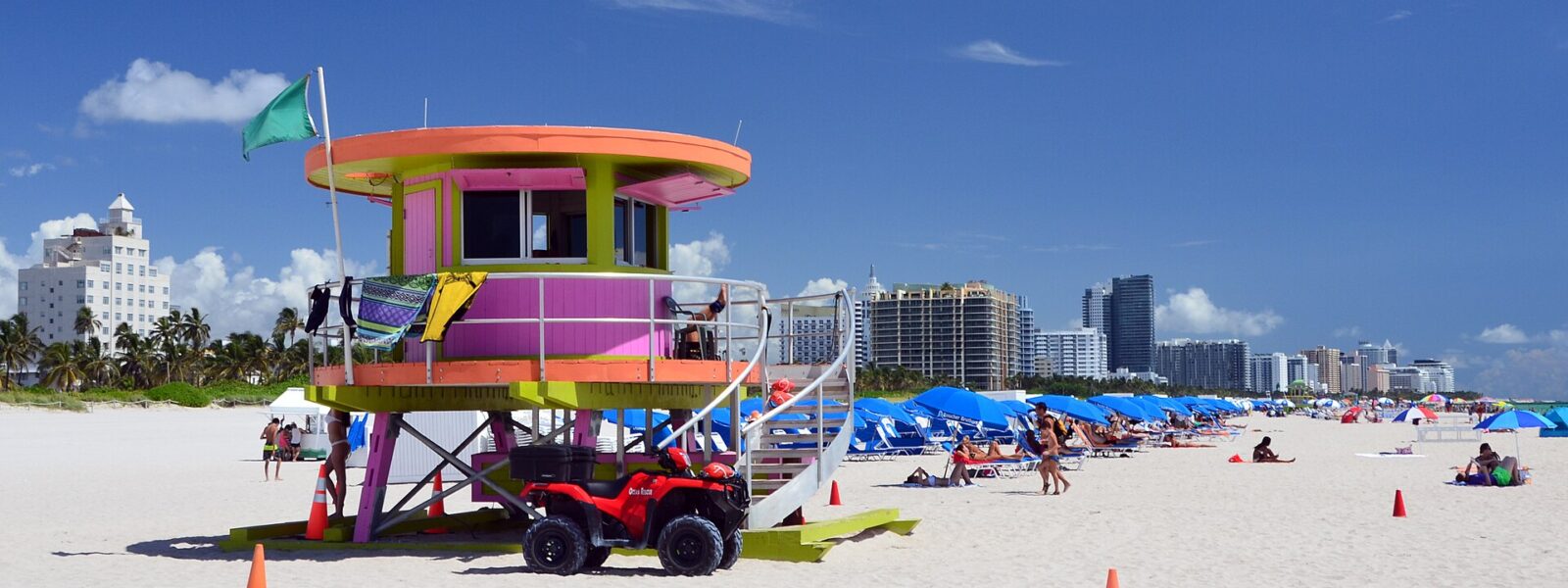
Some summer mornings the first thing you notice on the walk down to the sand is the smell, faintly like rotten eggs, before you see the cause: a rust-colored band of weed along the waterline, sometimes ankle-deep, with a tractor already working its way along it. That is sargassum, the floating brown seaweed Miami Beach and the rest of South Florida’s Atlantic shore get every year in the warm months, and in a heavy year it decides how good your beach day is more than the weather does.
This guide covers what sargassum is, which months bring it, how Miami-Dade County deals with it, whether it is harmful, the free forecasts that tell you what is coming, and what to do with a beach day when the shoreline is buried. Agency details were checked in November 2026 against the City of Miami Beach, Miami-Dade County, the Florida Department of Health and the University of South Florida’s monitoring lab. Bloom sizes change every year, so treat the seasonal pattern as the guide and the current outlook as the thing to check before you go.
The Short Answer for November to February Trips
If your trip falls between November and February, sargassum is very unlikely to be your problem. The City of Miami Beach says large amounts typically arrive between March and October, with the peak generally in June and July. The University of South Florida’s Optical Oceanography Lab, which publishes a monthly outlook for the whole region, said in its bulletin of October 31, 2026 that the amount of sargassum in the Caribbean and the Gulf had more than halved during October in most regions, and that beaching events around Florida should be negligible. It expected the decline to carry on to the end of November or into December.
That does not mean every beach will be spotless. A thin ribbon of weed, seagrass and driftwood at the high-tide line is normal on any beach, in any month, and it is not what people mean when they complain about “the seaweed.” What winter visitors are mostly spared is the summer mat: the thick, wet carpet that piles up faster than crews can move it, smells as it rots, and turns the first few yards of water brown.
Summer travelers are the ones who need this page. If you have a June or July trip booked and your heart set on swimming off South Beach every day, read the forecasting section below, and build a little flexibility into your plans.
Seaweed Season by Month
The table below follows the season the City of Miami Beach publishes and the pattern in USF’s monthly bulletins. It describes what usually happens, not a forecast. The size of the bloom swings a great deal from one year to the next, and a calm stretch in a bad month is just as possible as an unlucky day in a good one.
| Months | What to expect | What to do |
|---|---|---|
| November to February | Outside the season the city gives. The October 2026 USF outlook expected negligible beaching around Florida as the bloom kept shrinking. | Nothing special. Plan beach days as normal. |
| March to May | The season opens. How much arrives depends on how big that year’s bloom has grown out in the Atlantic. | Read the latest USF bulletin a few weeks out; check webcams the morning you go. |
| June and July | The peak, according to the city. These are the months most likely to bring heavy mats and smell. | Check the daily NOAA risk map and the beach webcams; keep a pool or bay-side backup in mind. |
| August to October | Still inside the season. In 2026, USF’s August bulletin reported beaching continuing in southeast Florida, before a sharp drop in October. | Same as summer: check before you drive, and be ready to switch plans. |
For temperatures, rainfall and sea temperatures month by month, the Miami weather by month guide has the detail, and the best time to visit Miami weighs seaweed against crowds, prices and hurricane season.
What Sargassum Actually Is
The sargassum that reaches Florida is a brown seaweed that never anchors to the seabed. It floats its whole life, held up by small round air bladders that look like peppercorns, and drifts in rafts that range from a fistful to mats you could see from a plane. People have been sailing through it for centuries; the Sargasso Sea in the North Atlantic is named after it.
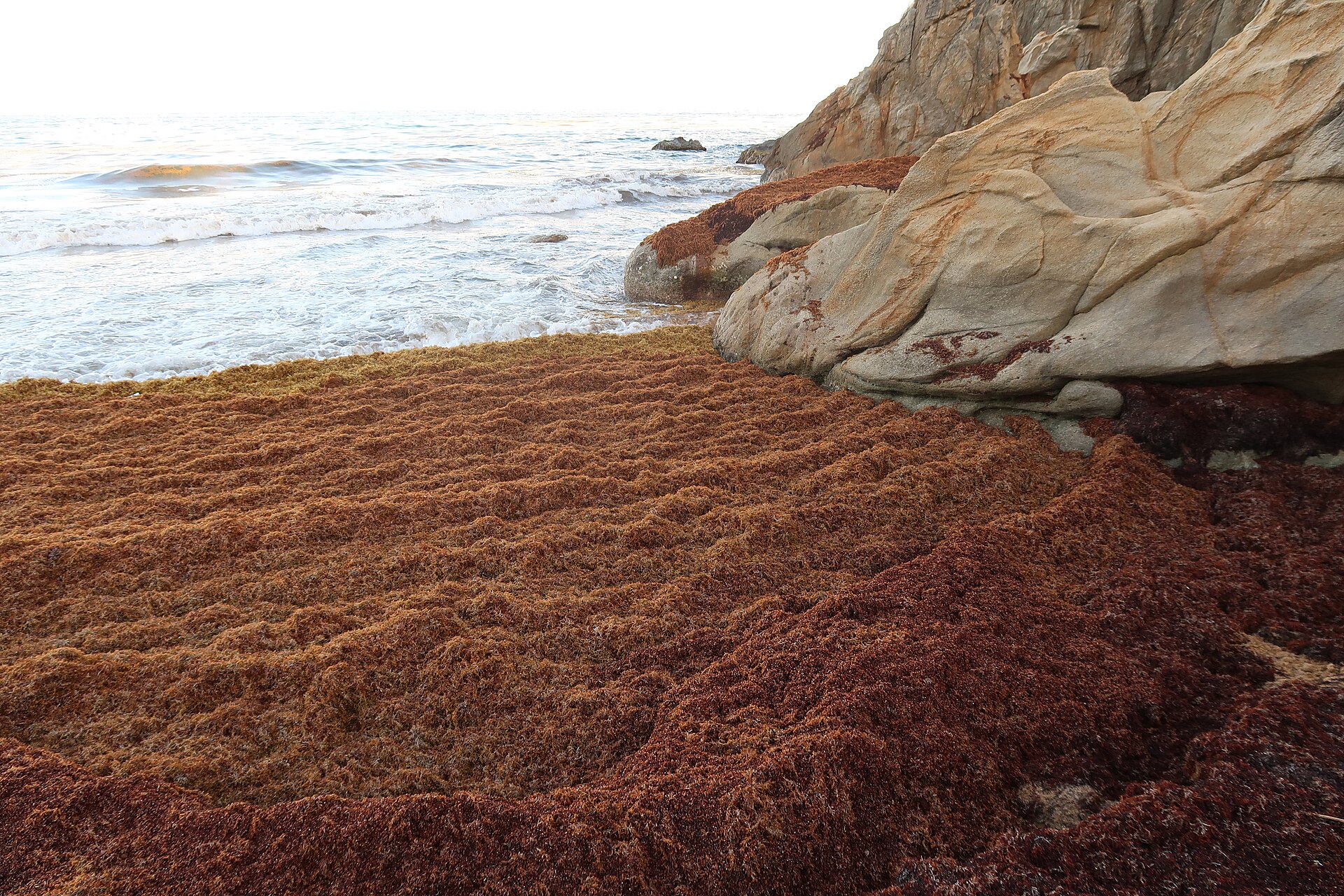
What changed is the scale. USF’s lab dates the start of what scientists call the Great Atlantic Sargassum Belt to 2011. Since then, large amounts of the weed have appeared in the Caribbean every summer except 2013, and in big years the belt stretches roughly 5,000 miles from the coast of West Africa to the Gulf. The Florida coast sits at the end of the line: the currents that carry the belt westward feed weed through the Caribbean and up toward South Florida.
2026 was a heavy year. USF’s bulletin at the end of August reported that sargassum amounts in most parts of the region were above the 75th percentile of everything recorded between 2011 and 2025, and that beaching was continuing in southeast Florida that month. By the end of October the lab described Florida as almost sargassum-free. That swing from crisis to nothing inside two months is typical, and it is why a forecast is more useful than a reputation.
It is not all bad news
Out at sea, the floating mats are a nursery and a feeding ground. The City of Miami Beach points out that sargassum is a feature of the critical habitat designated for loggerhead sea turtles, and that weed which washes up helps nourish the dunes. That is the reason it cannot simply be scooped off the ocean before it lands, and the reason crews treat it the way they do once it arrives.
Who Cleans It, and How
On Miami Beach, the cleanup is a county job. The city’s sargassum page says the weed is removed and managed daily by Miami-Dade County under a state permit. County Parks crews work the 7.5 miles of Miami Beach’s shoreline every day, collecting, removing, cutting and turning the buildup at the waterline. In the worst hot spots the weed is removed, and the rest is cut into the shoreline so it breaks down in the sand rather than rotting on top of it.
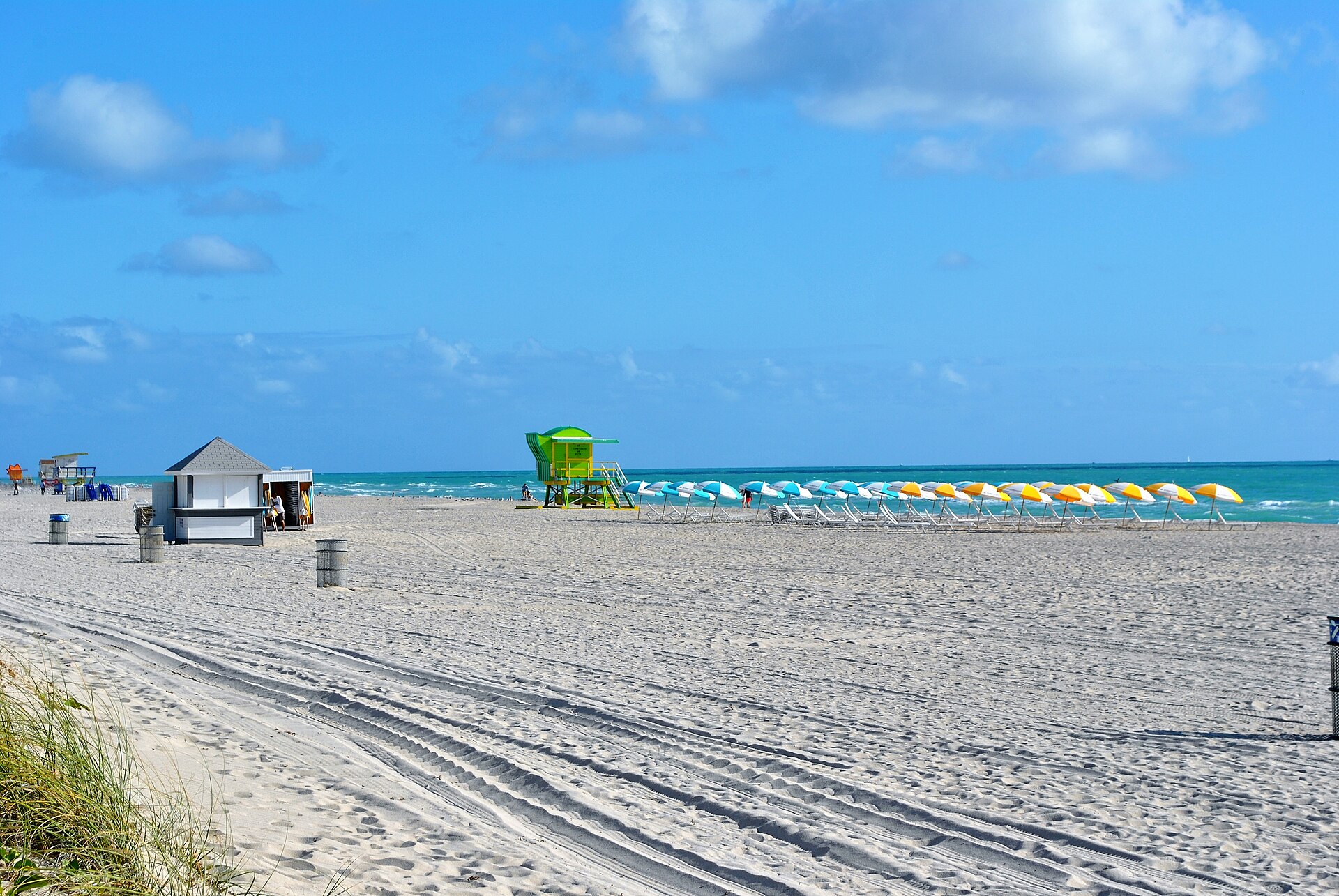
A few details explain what you see on the sand:
- The morning turtle survey comes first. During sea turtle nesting season, which in Miami-Dade runs from March 1 to October 31, a team checks for nests and hatchlings each morning before any heavy machinery goes onto the beach. Once the survey is done, crews keep cleaning until sunset, whatever the tide is doing.
- Nobody pulls it out of the water first. The city notes that removing sargassum from the water before it lands is prohibited under county, state and federal rules, largely because of the wildlife living in it. A heavy morning can look worse than it is, because the cleanup starts only after the weed lands.
- Don’t stand in the tractor’s way. It sounds obvious, but the city asks people specifically not to block the machines, because every stop slows the clearing.
- Unauthorized cleaning is reportable. Raking the beach in front of a building without permission during nesting season can disturb nests. The city lists the Florida Fish and Wildlife Conservation Commission’s number, 850-488-7708, for reporting it, and 888-404-3922 for a disturbed nest or an injured turtle.
Cleanup costs money. WUSF, the public radio station, reported in May 2026 that taxpayers spend nearly $4 million a year on the tractors alone, that no offshore barriers had been approved for Miami-Dade, and that the county was running a pilot with start-up companies looking at ways to turn collected sargassum into useful products. For the current state of the county’s program, its seaweed page at miamidade.gov/seaweed is the place to look.
Which beaches get cleaned first?
There is no published priority list, and anyone who claims to know which beach the tractors reach first on a given morning is guessing. What is published is that Miami Beach’s 7.5-mile shoreline gets daily attention, and that county crews work the waterline at the beaches the county maintains. Crews work until sunset, so a beach that looks bad on the early webcam may improve during the day, but on a heavy-landing day the weed can arrive faster than it is cleared. Checking more than one beach before you commit to a long drive is the safest approach.
Is Sargassum Harmful?
For most visitors, it is a nuisance rather than a health risk, but there are a few things worth knowing. The guidance below follows the Florida Department of Health’s advice for sargassum season.
The smell
As the weed rots on the sand it gives off hydrogen sulfide, which is the rotten-egg smell, and the City of Miami Beach adds ammonia to that list. The Department of Health says the gas can irritate the eyes, nose and throat, and that people with asthma or other breathing problems may be more sensitive. On an open beach the breeze usually disperses it, and the department does not expect it to harm health for people passing through. If you are sensitive to it, a beach day on a smelly stretch simply is not going to be pleasant, and moving on is the right call.
The weed and the creatures in it
The seaweed itself can’t hurt you, according to the Department of Health. The tiny creatures living in it can, and contact with them can cause rashes or blisters. The department’s advice is to avoid touching sargassum and avoid swimming in or near it, and to wear gloves if you need to handle it. That is worth passing on to children, who tend to treat a fresh pile as a toy.
Sea lice are something else
“Sea lice” is a different summer problem that often gets blamed on seaweed. The itchy rash, known as seabather’s eruption, is caused by tiny stinging larvae caught under a swimsuit, not by the weed. If you come out of the water with an itch under your suit, rinse off and change out of the swimsuit promptly. For current advice on either problem, the Florida Department of Health in Miami-Dade is the local authority.
Is it safe to swim?
Swimming through a mat is unpleasant and, given what lives in it, not advised. Swimming in clear water further along the beach is fine, so long as the flags and the lifeguards say the water is fine. Seaweed and water quality are separate issues. Bacteria levels are monitored by the Florida Department of Health’s Healthy Beaches program, which samples five Miami Beach sites weekly (South Pointe Drive, 21st Street, 53rd Street, 73rd Street and 79th Street), and the city’s beach conditions page shows any advisory in force. The city reports that about 98% of its 2026 monitoring events came back with no advisory.
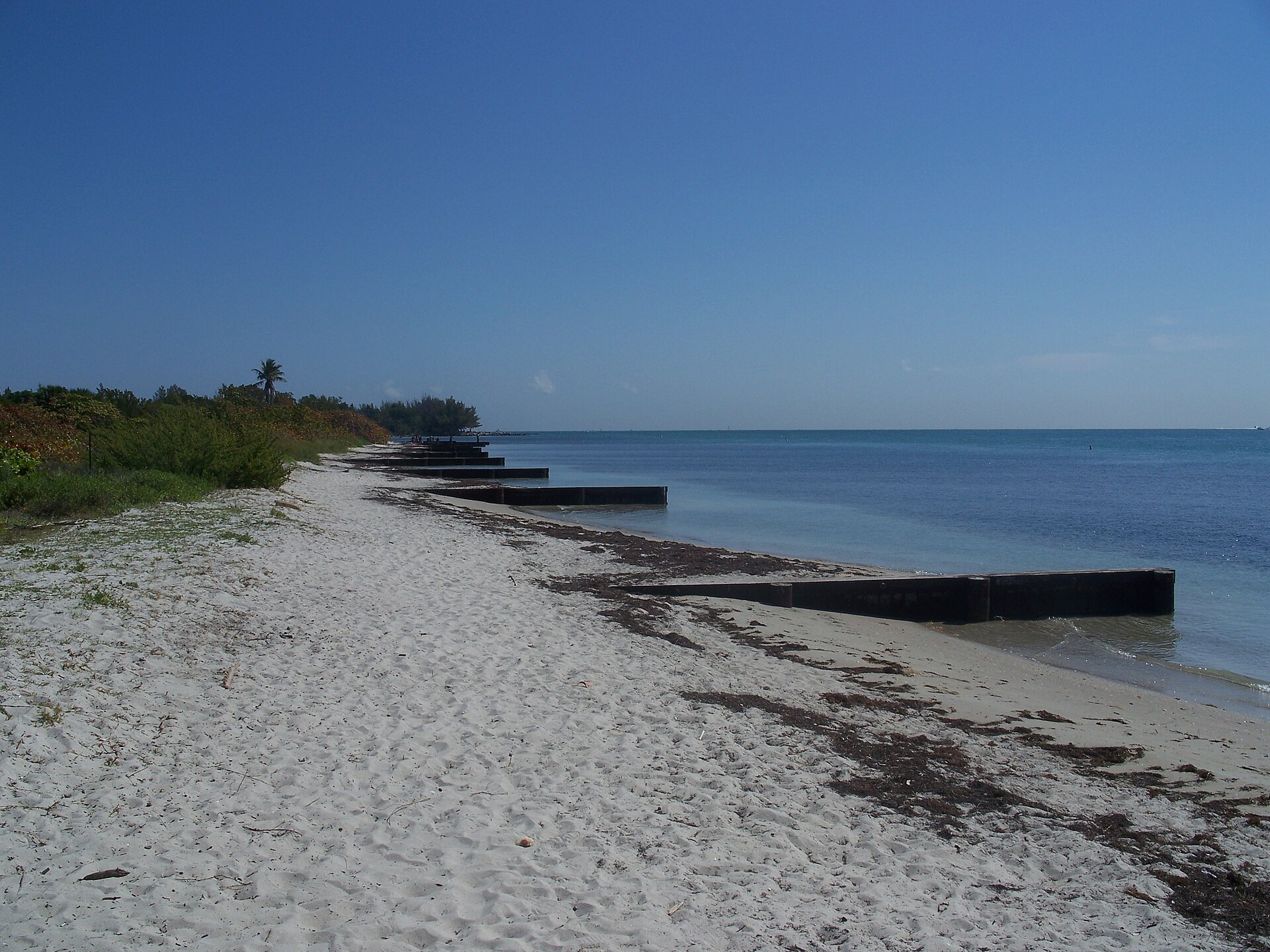
How to Check Before You Go
The good news is that sargassum is closely monitored. Four free sources cover everything from the season ahead to this morning’s sand.
For the season: USF’s monthly outlook
The University of South Florida’s Optical Oceanography Lab has published a monthly sargassum outlook since February 2018, released by the last day of each month and posted on its Sargassum Watch System page (optics.marine.usf.edu). Each bulletin sums up the satellite picture for the Caribbean and the Gulf, says where the weed has been landing, and gives the lab’s expectation for the coming month or two. The lab is clear that the bulletin is a general outlook and is not meant to predict conditions at a particular beach. Read it when you are deciding which month to travel, and again a couple of weeks before a summer trip.
For the next few days: NOAA’s inundation risk map
The Sargassum Inundation Risk product, run by NOAA’s Atlantic Oceanographic and Meteorological Laboratory with NOAA CoastWatch and USF, updates daily. It colors stretches of coast by risk level: blue for low, yellow for a warning, orange for medium and red for high, with black where there isn’t enough data. The product is labeled experimental, and you can download each day’s report as a PDF. It also has a form for submitting your own photos of seaweed landings, which helps the scientists check the model.
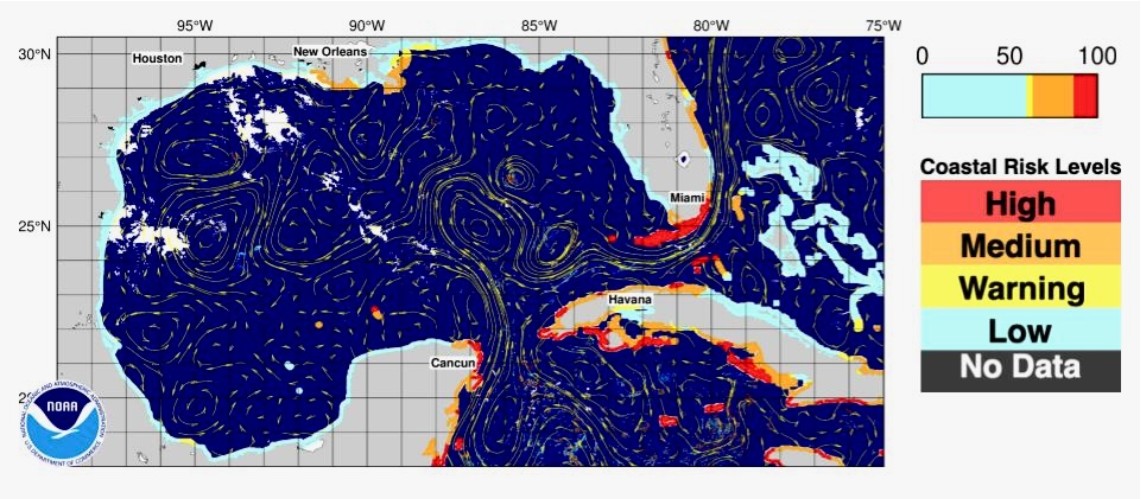
For this morning: the Miami Beach webcams
The City of Miami Beach’s current beach conditions page, run by Ocean Rescue, has live webcams at 1st Street and 21st Street, along with any Department of Health advisory. It is the fastest way to see whether the waterline is clear before you load the car. The 1st Street camera sits at the southern end of South Beach, which helps if you are deciding between there and somewhere farther north.
For water quality: Healthy Beaches
Bacteria sampling results are published by the Florida Department of Health’s Healthy Beaches program and the Department of Health in Miami-Dade. This is a separate question from seaweed, but if you are checking one, it takes ten seconds to check the other.
What none of them can tell you
No forecast can promise a clean beach on the specific day you booked three months ago. The bulletins describe a region weeks ahead, and the risk map is a model. If clear water is the whole point of a summer trip, the honest advice is to book somewhere with a good pool as a backup, avoid prepaying for a beach cabana you can’t cancel, and decide each morning.
Where to Go on a Bad Seaweed Week
When the Atlantic side is buried, you have three kinds of fallback: another stretch of coast, a beach that is not really open ocean, and water that has nothing to do with the sea.
Try a different beach
No agency publishes a list of beaches that escape sargassum, and conditions on one beach on one morning say little about the next. But beaches do differ on any given day, and Miami-Dade has a lot of shoreline. If South Beach looks bad on the webcam, it is worth checking South Pointe Park, Haulover Beach or Sunny Isles Beach to the north, or heading over the causeway to Crandon Park and Bill Baggs Cape Florida on Key Biscayne. Hollywood Beach in Broward is another option if you are already heading north. The Miami beaches guide covers parking and access for each.
Matheson Hammock’s atoll pool
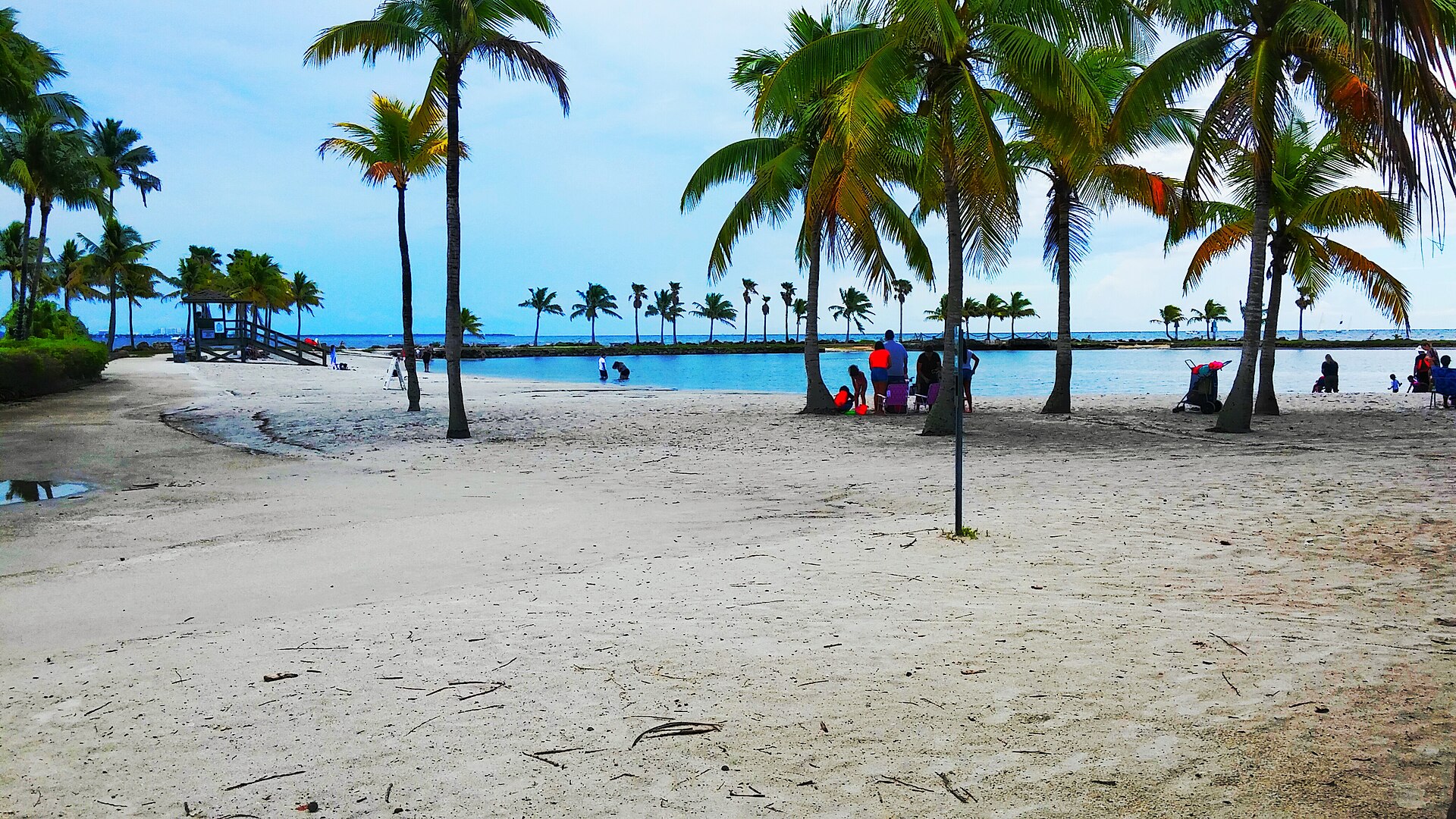
The man-made atoll pool at Matheson Hammock Park in Coral Gables is a calm, shallow lagoon on Biscayne Bay rather than the open Atlantic, which makes it the classic backup for families. It is still bay water, so it can’t be guaranteed weed-free, but it is a very different setting from the ocean beaches. Winter pool hours are 9 a.m. to 4:30 p.m. on weekdays and 9 a.m. to 5:30 p.m. on weekends; in summer they run to 5:30 p.m. on weekdays and 6:30 p.m. on weekends. The county lists lifeguards on weekends and holidays, and parking is $7 plus tax on weekdays and $10 plus tax on weekends and holidays. Hours can change for wildlife or water quality, so check the county park page before you go.
Venetian Pool
If you want swimming that has nothing to do with the ocean, Coral Gables’ Venetian Pool is the most Miami answer. It is a historic public pool filled with spring water from the aquifer, with two waterfalls and cave-like grottos. Non-residents pay $23 for adults and teens 13 and over and $18 for children aged 3 to 12. Children must be at least 3 years old and 38 inches tall, with proof of age, so it does not work for toddlers. The Coral Gables guide has the rest of the neighborhood.
Your hotel pool
The least romantic answer is often the right one. A hotel with a proper pool deck turns a bad seaweed morning into a non-event, and in June and July it is worth weighing when you book. The best Miami hotels with pools guide is a good place to start.
Or skip the beach for a day
Miami is not short of things to do away from the shore. The rainy-day activities guide works just as well on a seaweed day: museums, Wynwood, food halls and Little Havana are all a short ride from the beach. Come back in the late afternoon, when crews have had a full day on the sand.
If You Arrive and the Sand Is Covered
Sometimes you get there and it is just bad. A few things make the day salvageable:
- Walk before you settle. Weed collects unevenly. A few hundred yards up the beach can be noticeably better, especially if the tractors have already worked one section.
- Set up upwind and back from the waterline. The smell comes from rotting piles, and the breeze moves it. Distance helps more than anything.
- Keep shoes on near the piles. Fresh mats are slippery and full of small, prickly life. Rinse off afterward.
- Keep children and dogs out of the heaps. The creatures in the mats are what cause rashes, per the Department of Health.
- Don’t swim through a mat. If the first few yards of water are brown with weed, it is not a swimming day on that stretch.
- Don’t buy into the cabana upsell. On a heavy-landing day, a beach chair rental right on the waterline is a seat beside the problem. Rent further back or not at all.
Swimmers who mainly want calm water should also read the best beaches for swimming in Miami, which covers currents, flags and where the water is calmest. For winter planning, Miami in November is a month when seaweed season is normally over and beach conditions are usually dependable.
Frequently Asked Questions
Is there seaweed on Miami Beach in November?
In November it is usually quiet. The City of Miami Beach gives the season as March to October, and USF’s outlook at the end of October 2026 expected beaching around Florida to be negligible. For today’s conditions, check the city’s beach conditions page and its webcams at 1st Street and 21st Street.
When is seaweed season in Miami?
The City of Miami Beach says large amounts typically arrive between March and October, peaking in June and July. The size of the bloom varies a lot by year, so check USF’s monthly outlook for the current picture.
Is sargassum harmful?
The Florida Department of Health says the seaweed itself can’t hurt you, but the small creatures living in it can cause rashes or blisters, and rotting piles release hydrogen sulfide, which can irritate the eyes, nose and throat. People with asthma may be more sensitive. Avoid touching it or swimming near it.
Does Miami Beach clean up the seaweed?
Yes. Miami-Dade County Parks crews work the 7.5 miles of Miami Beach every day under a state permit, collecting, removing, cutting and turning the weed at the waterline. During nesting season they survey for sea turtle nests every morning before the machines start.
Why don’t they remove it before it reaches the beach?
The City of Miami Beach says removing sargassum from the water before it lands is prohibited under county, state and federal rules. The floating mats are habitat for marine life, including young sea turtles.
Can I check the seaweed forecast before I book?
You can check the outlook, not the exact day. USF publishes a monthly regional bulletin by the end of each month, and NOAA’s Sargassum Inundation Risk map updates daily. Neither predicts a specific beach on a specific date, so for summer trips keep a pool or a bay-side backup in mind.
Is sea lice the same as sargassum?
No. The itchy rash called sea lice, or seabather’s eruption, comes from tiny stinging larvae in the water, not from the seaweed. Changing out of a wet swimsuit and rinsing off promptly helps.
Related Miami Guides
- Miami Beaches: How to Pick the Right One
- Best Beaches for Swimming in Miami
- Miami Weather by Month
- Best Time to Visit Miami
- Matheson Hammock Park Guide
- Best Family Beaches in Miami
- Best Miami Hotels with Pools
Photo Credits
Sargassum mat at Punta Tuna Beach, Puerto Rico: Punta-Tuna-Beach-Sargassum-Close-Up-Wide by BrickLightning, CC0, via Wikimedia Commons.
NOAA Sargassum Inundation Risk map, 26 April 2026: NOAA Sargassum Inundation Risk report for 26 April 2026 by NOAA AOML, Public domain, via Wikimedia Commons.