Bill Baggs Cape Florida State Park: Lighthouse, Beach and No Name Harbor
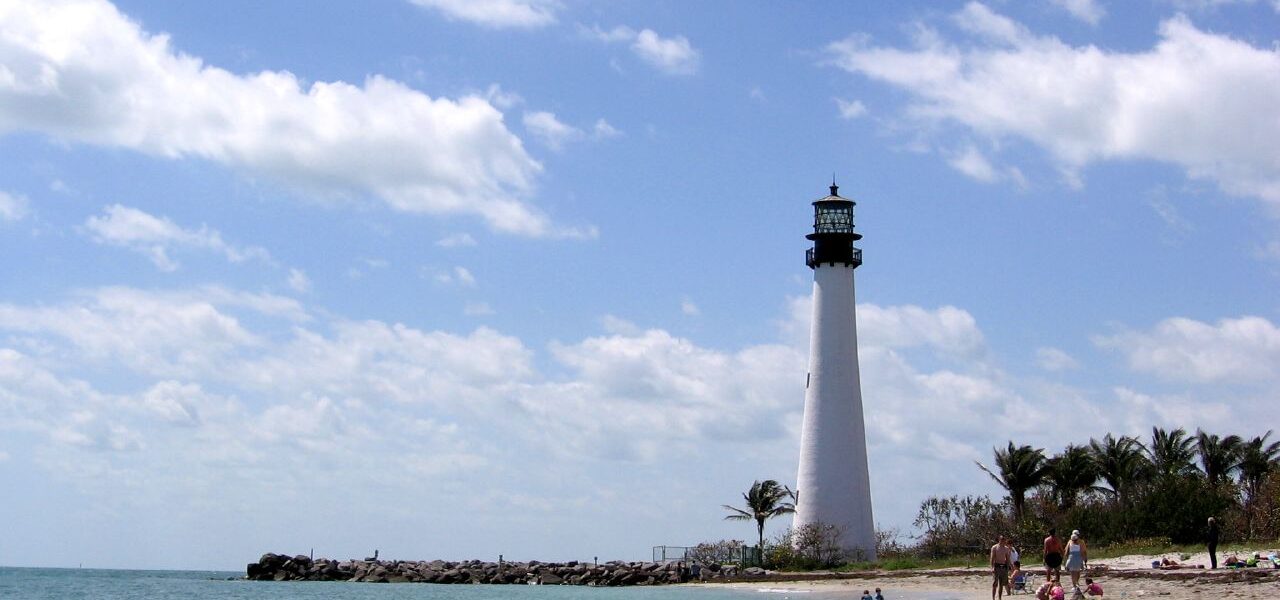
The lighthouse shows up before the beach does. Drive to the very end of Crandon Boulevard, pay at the gate, follow the road through the trees, and the white tower rises over the sea grape at the point where Key Biscayne runs out of land. It has been standing there since 1825, longer than anything else in Miami-Dade, and the beach running north from it is the quietest good beach in the city. Bill Baggs Cape Florida State Park is the place locals take visitors when they want to show them a Miami that has nothing to do with Ocean Drive.
This guide covers everything you need for a day there: getting in and what it costs, the lighthouse tours and the climb, the beach, No Name Harbor and the bay side, trails, bikes and kayaks, where to eat, and the remarkable history of a spot that was a gateway to freedom long before it was a park. Fees were checked in September 2026. State park fees change rarely, but they do change, so treat them as the right order of magnitude. For the rest of the island, see our Key Biscayne guide.
Bill Baggs at a Glance
| What | Detail (checked September 2026) |
|---|---|
| Where | 1200 South Crandon Boulevard, at the southern tip of Key Biscayne |
| Hours | 8am to sundown, 365 days a year |
| Entry | $8 per vehicle with 2 to 8 people; $4 for a single-occupant vehicle or motorcycle; $2 on foot or by bike |
| Size | About 400 acres, the southern third of the island |
| Lighthouse | Built 1825; guided tours twice a day, Thursday to Monday, included in park entry; 109 steps to the top |
| Beach | About a mile of quiet sand on the Atlantic side, usually clear water |
| Food | The Lighthouse Café near the beach and Boater’s Grill at No Name Harbor |
| Activities | Bike and kayak rental, nature trails, seawall fishing, picnic areas |
| Getting there | Over the Rickenbacker Causeway (toll) and the length of Key Biscayne; about 25 minutes from Brickell |
Where It Is and How the Park Works
Bill Baggs fills the southern third of Key Biscayne, about 400 acres from the edge of the village to the tip of the island. Crandon Boulevard ends at the park gate, so there is no way to miss it. Once inside, a park road loops through restored coastal hammock to a series of parking areas, and almost everything sits along one of three edges:
- The ocean side. The beach, about a mile of it, running north from the lighthouse along the Atlantic, with boardwalks over the dunes and the main concession and café near the middle.
- The point. The Cape Florida Lighthouse and the keeper’s cottage, at the southern tip, where the beach ends in a rock jetty and the view opens out across the water toward Stiltsville and Biscayne National Park.
- The bay side. A long seawall along Biscayne Bay that is one of the best free fishing spots in Miami, and No Name Harbor, a small, sheltered anchorage with a restaurant on its edge, in the park’s northwest corner.
In between are the trails, the picnic shelters and the hammock that grew back after Hurricane Andrew. The distances are small enough to walk, but a bike makes the park feel twice as big and twice as pleasant, which is why so many people rent one.
Getting There and Getting In
Driving
From Brickell, cross the Rickenbacker Causeway, which is a toll road with electronic collection, so check how your rental company handles tolls, and keep going straight down Crandon Boulevard past Crandon Park and through the village to the park gate. Allow about 25 minutes from Brickell or downtown outside rush hour, and around 30 from Miami International Airport. On weekends, the causeway backs up from late morning, and a Sunday afternoon queue can double the trip.
Fees
Entry is $8 per vehicle with two to eight people, $4 for a vehicle with only the driver or for a motorcycle, and $2 per person if you walk or cycle in. That is the cheapest good beach day in Miami for a carload of people, and the $2 rate makes it worth considering a bike for the last stretch. The park opens at 8am and closes at sundown every day of the year.
One thing that catches visitors out: on busy weekends and holidays the park can reach capacity, and when it does, new cars wait at the gate until others leave. If you are coming on a sunny Saturday or a long weekend, arrive close to opening time.
Without a car
Metrobus route 102 runs from the Brickell Metrorail station across the causeway and onto the island. It is not frequent, and you need to check in the GO Miami-Dade Transit app whether your trip goes as far as the park gate. A rideshare from Brickell is the simpler option. Cyclists can ride the Rickenbacker’s bike lanes, the classic long ride in Miami, and arrive for $2. Our Miami transportation guide has the details.
The Cape Florida Lighthouse
The lighthouse is the reason many people come, and it rewards the effort. Built in 1825, it is the oldest standing structure in Miami-Dade County, and it has survived a war, a fire, a century of neglect and a hurricane that flattened almost everything around it.
Tours and the climb
Rangers and volunteers run guided tours of the lighthouse and the keeper’s cottage twice a day, Thursday to Monday. The tours are included in your park entry, there is nothing extra to pay and you do not need to book. You simply turn up at the base of the tower at the time posted at the entrance station. The tower and cottage are only open during tours, so check the time when you pay at the gate and plan your morning around it. On Tuesdays and Wednesdays you can see the lighthouse from outside but not go in.
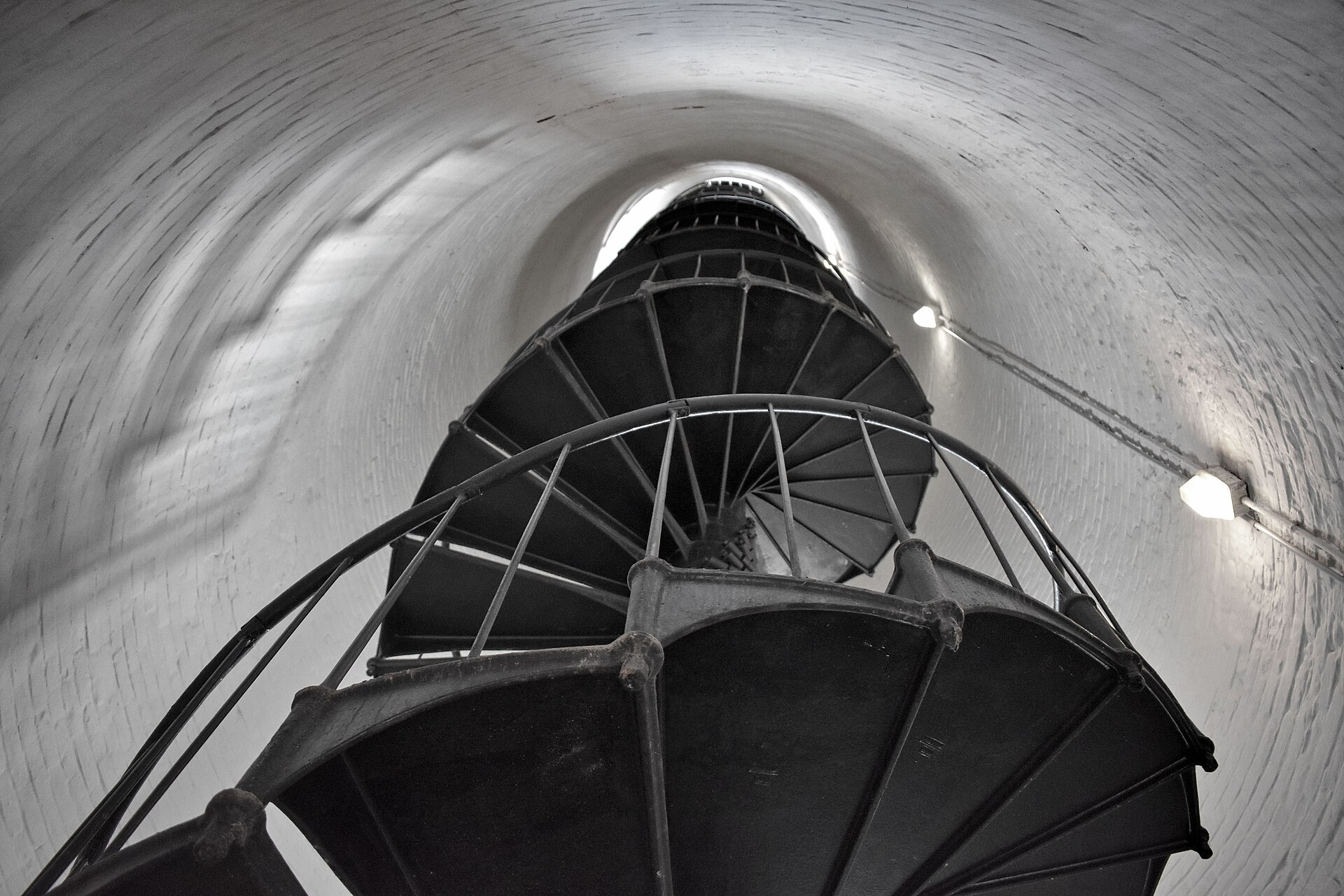
There are 109 steps to the top, up a narrow iron spiral inside the brick tower. It is not a hard climb for anyone reasonably fit, but it is steep, it is enclosed and it is warm, especially on a summer afternoon, so bring water and take your time. From the top, the view is one of the best in Miami: the Atlantic to the east, Biscayne Bay and the downtown skyline to the northwest, Stiltsville standing in the shallows to the south and the whole green length of the park below you.
The keeper’s cottage at the base is a reconstruction furnished to show how the keepers and their families lived on what was, for most of the nineteenth century, one of the remotest posts on the American coast. The guides are good, and their stories about the 1836 attack are the part most people remember.
The Beach
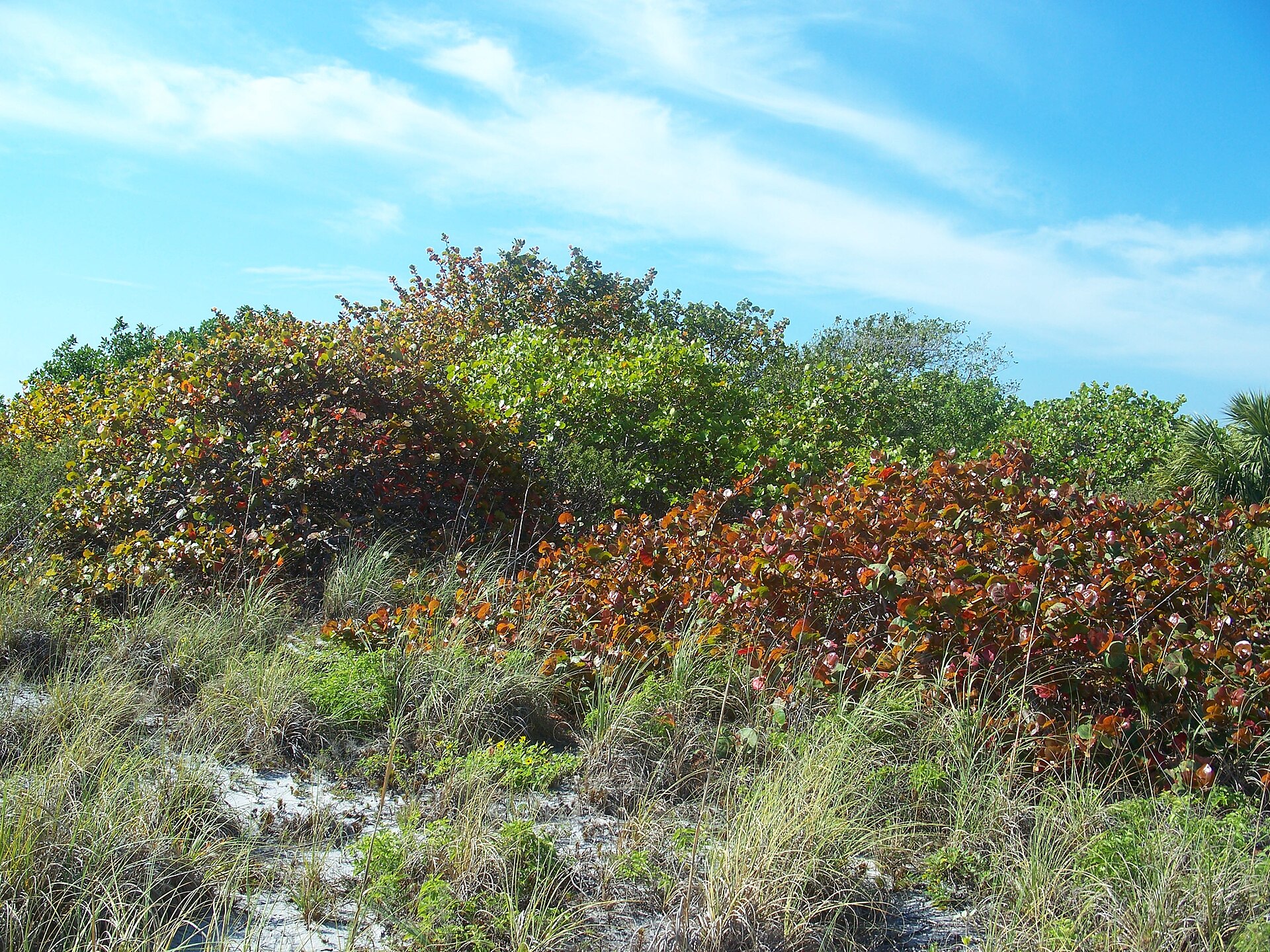
The beach at Bill Baggs runs about a mile north from the lighthouse along the Atlantic. It is narrower and wilder than Crandon’s, with the dunes covered in sea oats and sea grape rather than lawns, and boardwalks and sandy paths leading through them to the water. It is also noticeably quieter. On a weekday morning, you can walk for ten minutes and see a handful of people.
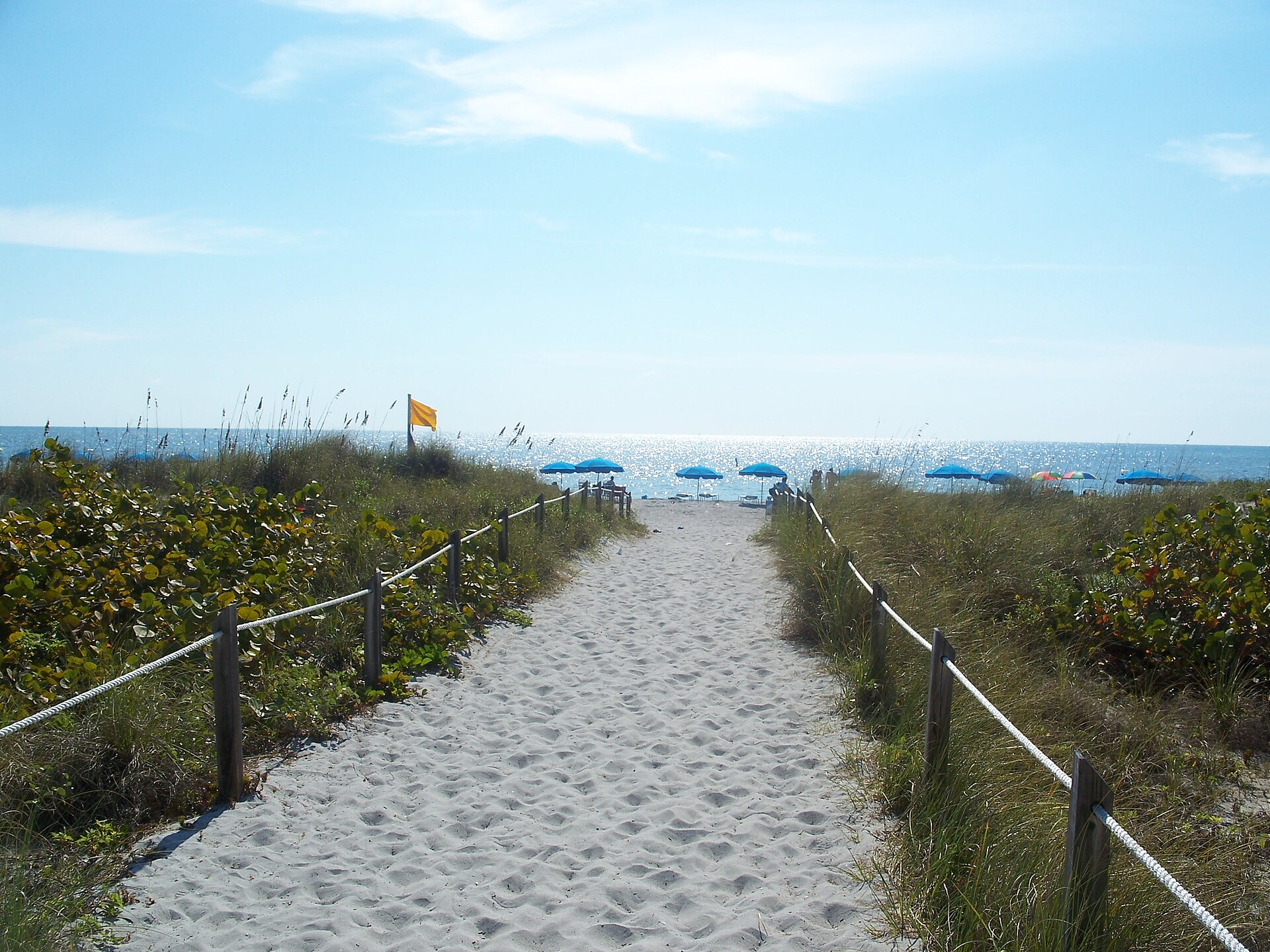
The water is the other draw. It is usually clearer than at Crandon and generally calm, though the ocean side does get some chop when the wind blows hard from the east. Chairs and umbrellas can be rented on the beach, which is useful because there is little shade on the sand itself.
Two cautions. First, do not assume a lifeguard is watching. State park beaches are not always guarded, so check what is posted when you arrive, read the flags and swim within your ability. Second, stay away from the rocks at the point by the lighthouse, where the currents around the tip of the island are stronger than they look. The best swimming is in front of the main beach area, away from both ends.
As at every Miami beach, sargassum seaweed can wash up in the warmer months, and the state park does not rake the beach as aggressively as Miami Beach does its city sand. It is part of a natural shoreline, and on most days it is a thin line at the tide mark rather than a problem.
No Name Harbor and the Bay Side
Walk or cycle across to the west side of the park and the mood changes. The Atlantic gives way to the calm, shallow water of Biscayne Bay, and a long seawall runs along the shore, with the skyline on the horizon to the north.
No Name Harbor
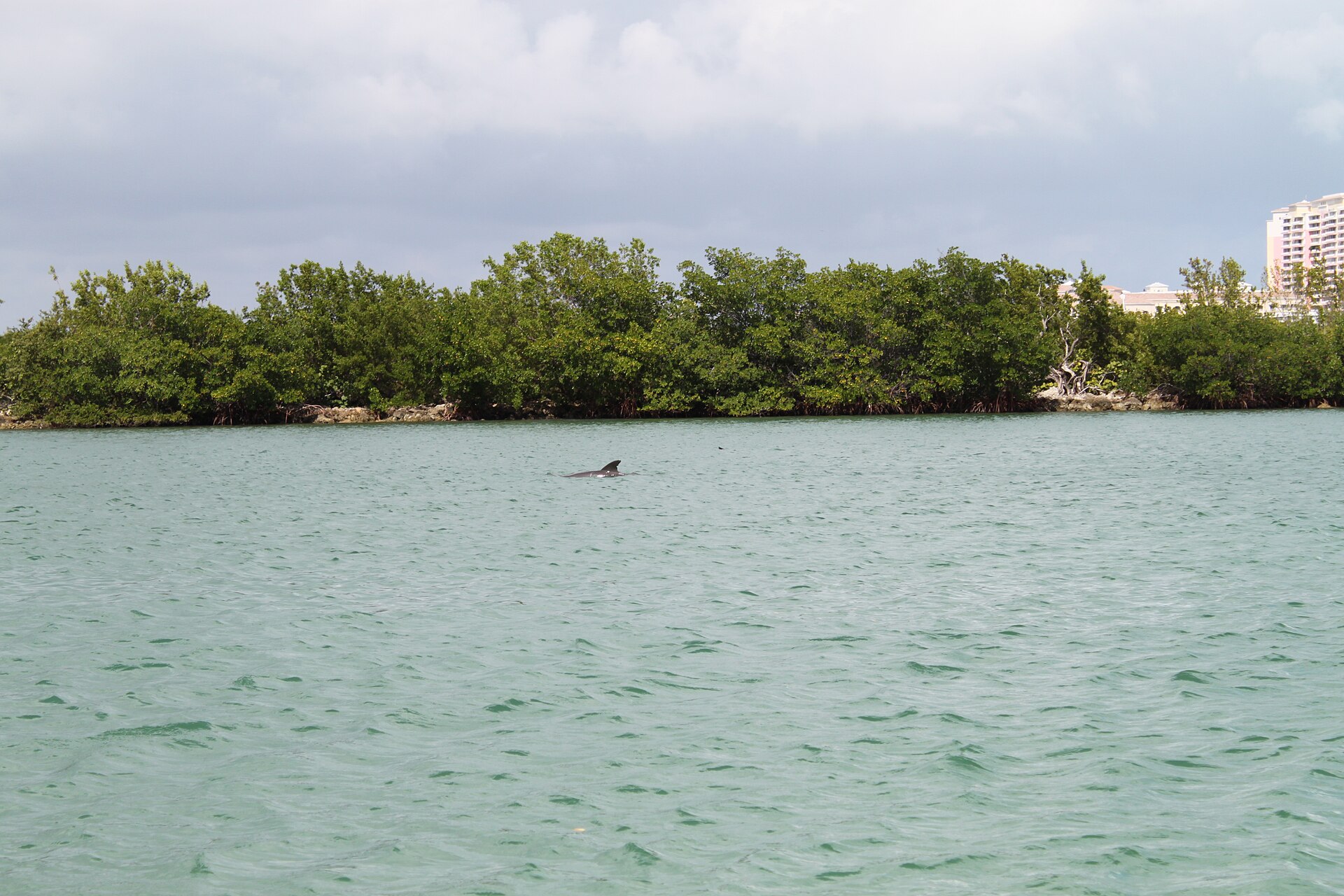
No Name Harbor is a small, almost circular anchorage cut into the bay side of the park, ringed by mangroves and almost always full of sailboats. Cruising sailors use it as a sheltered stop, and it is one of the most popular places in Miami to anchor before or after crossing to the Bahamas. For visitors it is a lovely spot for a late lunch, a stroll around the water and, often, a sighting of dolphins or manatees in the channel outside.
The seawall
The seawall along Biscayne Bay is one of the best free fishing spots in the region, and bait and tackle are sold in the park. You need your own Florida recreational saltwater fishing license, resident or not, and it is cheap and quick to buy online. Even if you do not fish, the seawall is a fine walk, especially in the late afternoon, when the light goes gold over the bay and the skyline. It is also the best place in the park to watch the sunset, because the ocean beach faces east.
Stiltsville
From the southern seawall and the point, look south across the water and you will see a cluster of wooden houses standing on stilts in the middle of the bay. This is Stiltsville, a handful of survivors of a community of shacks built over the shallows from the 1930s onward, now part of Biscayne National Park. You cannot walk to them, but they are one of the most photographed sights from Bill Baggs and a good reason to bring a zoom lens.
Trails, Bikes and Kayaks
The park road loops through the hammock and connects the main areas, and it is popular with cyclists, runners and families on rented bikes. Bike rental is near the main concession, including family-sized pedal carts that are easier for small children than a bike. A slow loop takes in the beach, the lighthouse, the bay-side seawall and No Name Harbor, and it is the best way to see the whole park in a morning.
Nature trails thread through the restored coastal hammock and the mangrove wetlands, with interpretive signs about the plants and animals that came back after Hurricane Andrew. Bring insect repellent, especially near the mangroves late in the day, and expect to see wading birds, lizards and, if you are lucky, a raccoon that is much too comfortable with people.
Kayaks can be rented too. On a calm morning, paddling along the bay side and around toward the lighthouse point is one of the most rewarding ways to see the park, with the tower, the dunes and Stiltsville all from the water. Check the wind before you go, stay close to the shore, and do not try to round the point if the water is choppy. For more on paddling and other water activities, see our Miami water sports guide.
Where to Eat
The park has two places to eat, both casual and both with a view.
- The Lighthouse Café, near the beach, serves Cuban-influenced plates and cold drinks to beachgoers. It is the easy lunch if you have spent the morning on the sand.
- Boater’s Grill, on the edge of No Name Harbor, does casual seafood with a view of the sailboats, and it is the better choice for a long lunch or an early dinner before the park closes.
Hours vary with the season, and both get busy on weekends. Picnicking is the other option, and the shaded picnic areas are a good reason to pack a cooler. Remember that glass is not allowed on the beach, and state park rules on alcohol are strict, so leave it at home. For a proper meal afterwards, Key Biscayne’s village center is a few minutes north along Crandon Boulevard.
A History Worth Knowing
The Saltwater Underground Railroad
Long before the lighthouse, Cape Florida was a doorway to freedom. In the early 1820s, hundreds of Black Seminoles and people who had escaped slavery gathered here and sailed for the Bahamas, then under British rule, in around 27 sloops and dugout canoes. In 2004, the site was recognized as part of the National Underground Railroad Network to Freedom, and a historical marker in the park tells the story. It is one of the most important places in Miami that most visitors have never heard of, and it is worth seeking out the marker.
The lighthouse
The lighthouse was built in 1825, when this was one of the loneliest stretches of coast in the United States. In 1836, during the Second Seminole War, it was attacked and set on fire. The keeper’s assistant was killed, and the keeper survived, badly wounded. The lighthouse was rebuilt in the 1840s, and it served until 1878, when a new light on the offshore reef at Fowey Rocks replaced it. After decades out of service, a full restoration in the 1990s brought it back to life, and it was relit in 1996.
The park and Hurricane Andrew
The state created the park in 1967 and named it after Bill Baggs, editor of The Miami News from 1957 until his death in 1969, who had campaigned to save the tip of the island from development. For decades, much of the park was covered in Australian pines, an invasive tree that crowded out native plants. In 1992, Hurricane Andrew flattened them. It was a disaster at the time, but it gave the park a chance to start again with native vegetation, and today’s sea grape, dune grasses, hammock and mangroves are the result of that restoration.
When to Go
| Months | Weather | Notes |
|---|---|---|
| December to March | Highs around 76°F to 80°F, dry, water in the low 70s | The most comfortable months for the climb, the trails and cycling. Windy days can make the beach choppy. |
| April and May | Hot and mostly dry | Excellent beach weather, before the summer storms. Weekends get busy. |
| June to September | Hot and humid, afternoon thunderstorms | Go early: the lighthouse is hot inside by afternoon, and storms often arrive after lunch. Hurricane season runs from June to November. |
| October and November | October around 85°F and still wet; November around 80°F and drier | Warm water, fewer people and a good time to visit once the rain eases. |
Plan around the lighthouse tours, which run Thursday to Monday, and around the crowds, which peak on weekend afternoons and holidays. A weekday morning, arriving at 8am, gives you the beach almost to yourself, a comfortable climb and lunch before the heat sets in. Our Miami weather by month guide has more detail.
Rules and Safety
- Swim with care. Check whether lifeguards are on duty, read the flags and stay away from the rocks at the point.
- No glass on the beach, and leave the alcohol at home.
- Pets are allowed in parts of Florida state parks on a leash, but not on the beach. Check the posted rules before you bring a dog.
- Fishing needs a Florida saltwater license.
- Stay on the boardwalks and paths through the dunes. The dune plants are what hold the beach together.
- Sea turtles nest from May to October. Leave marked nests alone.
- The park closes at sundown, and the rangers mean it.
Bill Baggs or Crandon?
The two parks are a few minutes apart, and they suit different days. Crandon Park is the better family beach: very shallow, calm water behind a sandbar, lots of shade, picnic groves, a carousel and huge parking lots. Bill Baggs is the better day out for everyone else: clearer water, a quieter, wilder beach, the lighthouse, the trails, the history and No Name Harbor. Plenty of people do both, with Crandon in the morning for the children and Bill Baggs after lunch for the lighthouse and the sunset. Our Miami beaches guide compares them with every other beach in the county.
A Perfect Day at Bill Baggs
- 8am: Arrive as the gate opens and park near the beach.
- 8:30am: Swim and walk the beach while it is at its quietest.
- Late morning: Catch the first lighthouse tour of the day and climb before the tower heats up.
- Lunch: The Lighthouse Café, or a picnic in the shade.
- Early afternoon: Rent bikes and loop through the hammock to the bay side.
- Late afternoon: Walk the seawall to No Name Harbor and look for dolphins and Stiltsville.
- Sunset: An early dinner at Boater’s Grill, then watch the light fade over the bay before the park closes.
The Honest Verdict
Bill Baggs Cape Florida is the best all-round day out on Key Biscayne, and one of the best in Miami. For $8 a car, you get a quiet beach with clear water, a lighthouse you can climb, trails, bikes, kayaks, two places to eat and a genuinely important piece of history.
Go if you want a calmer, more natural beach than anything on Miami Beach, you are interested in history, you love lighthouses or photography, or you want a whole day out rather than a few hours on the sand.
Think twice if you have toddlers and want the very calmest water and most facilities, in which case Crandon is better; if you visit on a Tuesday or Wednesday expecting to climb the lighthouse; or if you want beach bars and nightlife, which you will find on South Beach. And do not arrive at noon on a holiday Saturday and expect to drive straight in.
Frequently Asked Questions
How much does it cost to visit Bill Baggs Cape Florida State Park?
$8 per vehicle with two to eight people, $4 for a single-occupant vehicle or motorcycle, and $2 for pedestrians and cyclists (checked September 2026). There is also a toll on the Rickenbacker Causeway.
Can you climb the Cape Florida Lighthouse?
Yes, on guided tours that run twice a day from Thursday to Monday. The tours are free with park entry and you do not need to book. There are 109 steps to the top.
What are the park’s hours?
8am to sundown, every day of the year.
Is the beach at Bill Baggs good for swimming?
Yes. The water is usually clear and calm, but check whether lifeguards are on duty, read the flags and stay away from the rocks at the point by the lighthouse.
Is there food in the park?
Yes. The Lighthouse Café is near the beach, and Boater’s Grill is on No Name Harbor. Hours vary with the season, and many visitors bring a picnic.
Can I bring my dog?
Leashed pets are allowed in parts of Florida state parks, but not on the beach. Check the posted rules at the entrance.
Who was Bill Baggs?
The editor of The Miami News from 1957 until his death in 1969, who campaigned to protect the southern tip of Key Biscayne from development. The state park, created in 1967, bears his name.
Can you see Stiltsville from Bill Baggs?
Yes. From the southern seawall and the point by the lighthouse, you can see the stilt houses standing in Biscayne Bay to the south.
Related Miami Guides
- Miami Beaches: The Complete Guide — every beach in the county, and how to choose.
- Key Biscayne Guide — the island, its village and where to eat.
- Crandon Park — Key Biscayne’s family beach, a few minutes north.
- Best Beaches in Miami — our ranking of the whole coast.
- Biscayne National Park — Stiltsville, the reefs and the islands.
- Hidden Gems in Miami — more places most visitors miss.
- Miami Outdoors and Nature — parks, trails and wildlife across the county.
- Water Sports in Miami — kayaks, paddleboards and more.
- South Pointe Park — the tip of Miami Beach, across the water.
Photo Credits
The Cape Florida Lighthouse from the water: Cape Florida Lighthouse (133476516) by Ken Bosma, CC BY 2.0, via Wikimedia Commons.
The lighthouse staircase: Cape Florida Lighthouse (7) by Tamanoeconomico, CC BY-SA 4.0, via Wikimedia Commons.
The path to the beach: Bill Baggs SP beach01 by Ebyabe, CC BY-SA 3.0, via Wikimedia Commons.
A dolphin near No Name Harbor: Dolphins in No Name Harbor – panoramio by SerenityNow, CC BY-SA 3.0, via Wikimedia Commons.
Sea grape on the dunes: Bill Baggs SP01 by Ebyabe, CC BY-SA 3.0, via Wikimedia Commons.