Where to See Manatees in Miami: Free Spots, Tours and Rules
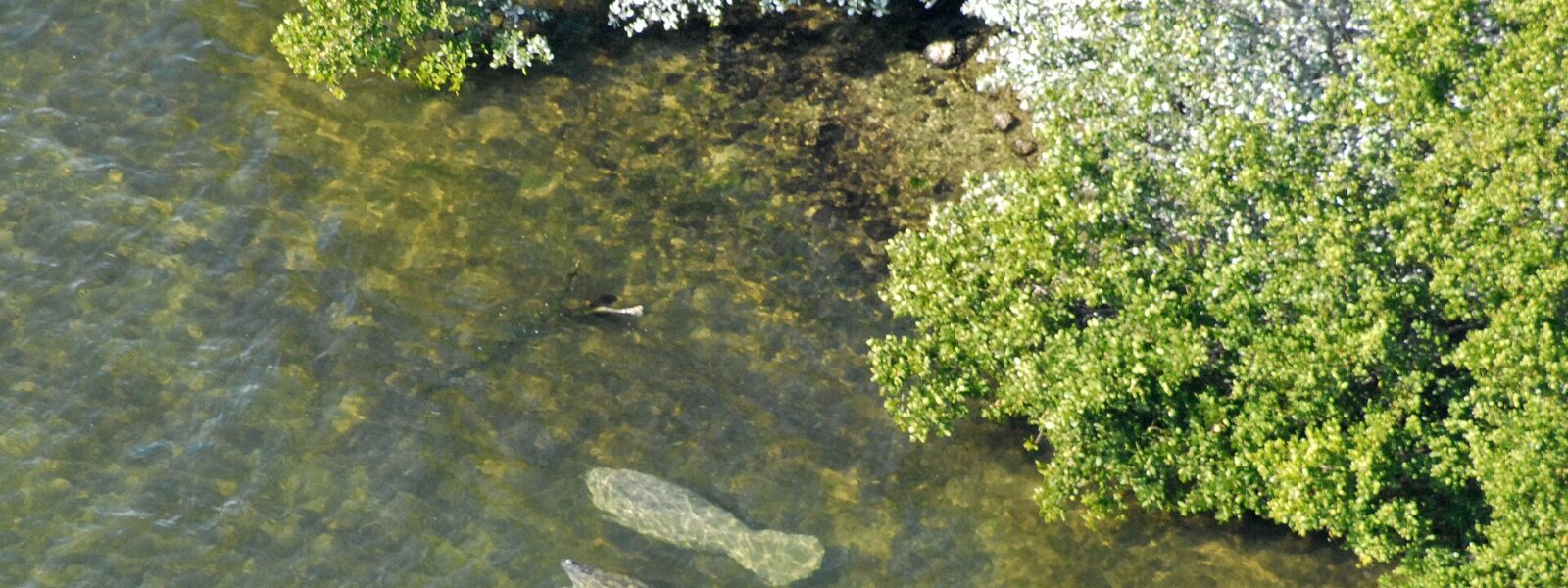
Most people who see a manatee in Miami see a nose first: two nostrils breaking a patch of calm water, a slow breath, then a broad gray back sliding under again. Manatees come up to breathe every three to five minutes, so if you are watching the right water you rarely wait long. Finding manatees in Miami is mostly a matter of knowing which water that is, and in winter, when the bay cools, the answer is the sheltered basins, canals and rivers where the water stays warmer.
This guide covers why manatees move inshore in the cooler months, the places in and around Miami where official sources say to look, the kayak tours that paddle through their feeding grounds, the free viewing center in West Palm Beach where manatees gather in winter in plain view, where swimming with manatees is and isn’t on the cards, and the rules that protect them. Prices and dates were checked in November 2026 against Deering Estate, the Biscayne National Park Institute, Manatee Lagoon, Miami-Dade County and the US Fish and Wildlife Service. Tour dates and prices change, so confirm before you book.
Manatees in Miami at a Glance
| Where | What it is | Cost | When |
|---|---|---|---|
| Deering Estate boat basin, Palmetto Bay | A calm basin on Biscayne Bay that the estate calls one of Miami’s best manatee-viewing spots | $18 adults, $10 ages 4–14 (plus tax) | Daily 10 a.m.–5 p.m., last entry 4 p.m.; best in winter |
| Deering Estate Wildlife Kayak Adventure | Guided paddle from the boat basin over seagrass and into the mangroves | $50, including estate admission | 20 December 2026; 17 January and 28 February 2027 |
| Biscayne National Park Institute, Kayak the Mangroves | Two-hour paddle from the Dante Fascell Visitor Center, led by a naturalist for the first hour | $39 per person | 9 a.m., 11:30 a.m. and 2 p.m. |
| Canals, rivers and marina basins around Biscayne Bay | The sheltered water manatees use in cold weather | Free | Cold mornings in winter |
| Manatee Lagoon, West Palm Beach | A free viewing deck over a power plant’s warm-water outflow | Free, with free parking | 15 November to 31 March, daily 9 a.m.–4 p.m. (closed Thanksgiving and Christmas Day) |
Why Manatees Come Inshore in Winter
Manatees are big, slow and surprisingly bad at coping with cold. The US Fish and Wildlife Service says they cannot tolerate water below 68°F for long, and Miami-Dade County warns that they suffer once the water drops under that mark and can sicken or die if they cannot find warmer water over a prolonged cold spell. To get through the winter, many rely on natural springs, the warm outflows from power plants, and sheltered basins that hold their heat.
In Miami-Dade, the county says, canals and rivers fed by warmer groundwater act as those refuges. Manatees live in the county all year round, but the cold months change where they are. In summer they spread out across the bay, the coast and beyond; the federal wildlife service says the Florida manatee’s range in warm months can stretch west to Texas and north as far as Delaware Bay. When the water cools in the fall, they head back to peninsular Florida and its warm-water sites, and that is when your chances of seeing one in a quiet Miami basin improve.
The official calendar reflects this. Manatee Lagoon, the viewing center in West Palm Beach, treats 15 November to 31 March as manatee season, and Miami-Dade’s seasonal manatee zones run from 15 November to 30 April.
The honest odds
Manatees in Miami are not a sure thing. They are wild animals moving through a big, open bay, and a sighting is a bonus rather than something you can book. Spend a cold winter morning in the right places and your chances are decent; spend a hot August afternoon at a random marina and they are slim. If seeing a manatee is the whole point of your trip, read the section on Manatee Lagoon below: on a cold winter morning, the center says, dozens can gather in view of its deck.
Deering Estate’s Boat Basin
Start at the historic Deering Estate in Palmetto Bay, which the estate puts 15 miles from downtown, about half an hour’s drive without traffic. The estate describes its boat basin on Biscayne Bay as one of Miami’s best spots to observe manatees in their natural habitat, and explains why: fresh water mixing with the bay’s calm conditions creates an ideal place for them to gather. The estate also suggests keeping an eye out for sea turtles, rays, sharks and dolphins, which is a reasonable list of bonuses for a morning spent standing by the water.
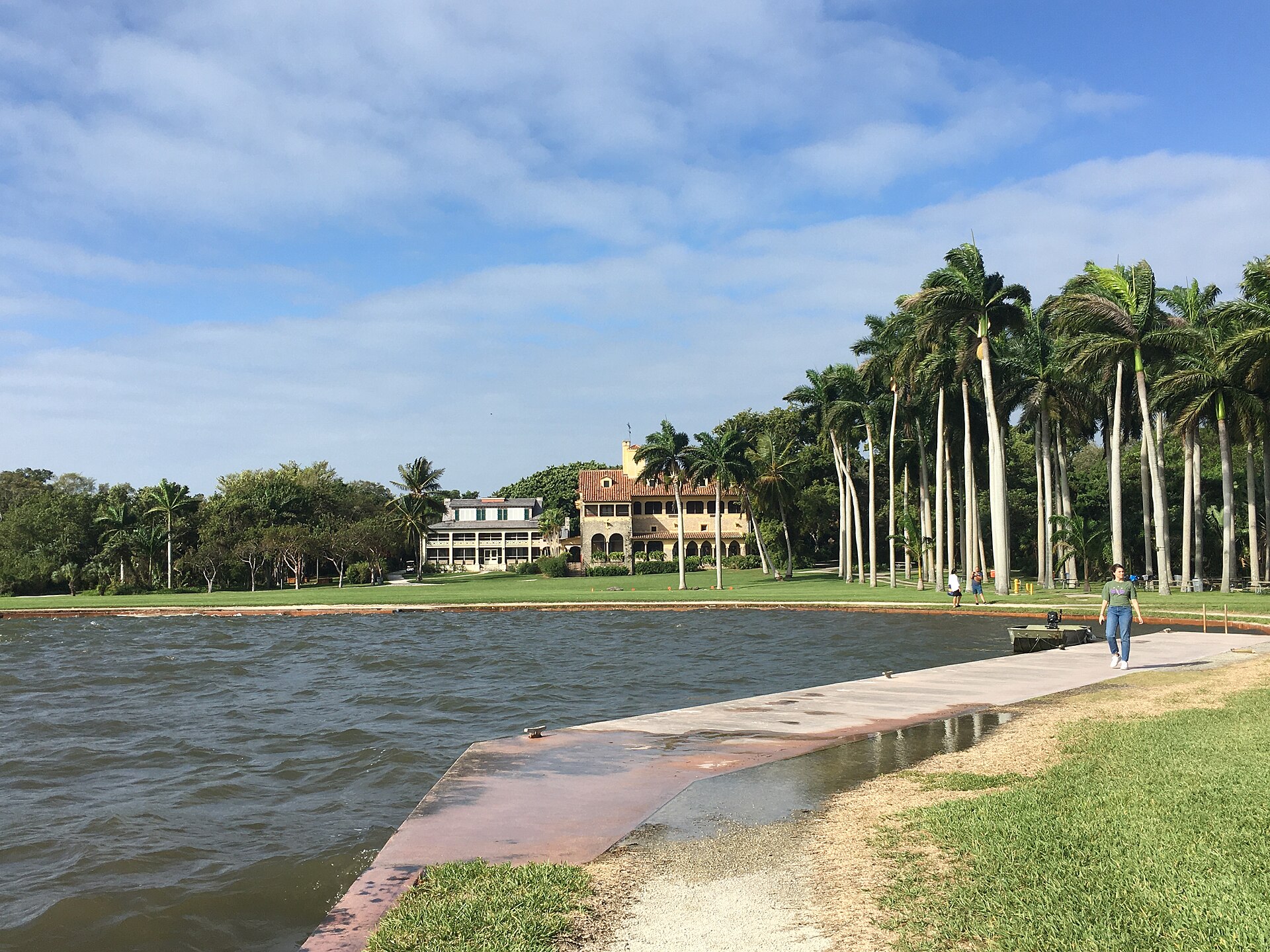
You need a general admission ticket to reach the basin: $18 plus tax for adults, $16 plus tax for seniors 62 and over and for US military personnel and veterans, $10 plus tax for ages 4 to 14, and free for children 3 and under. Parking is free. The estate is open daily from 10 a.m. to 5 p.m., with no admission after 4 p.m., and closes on Thanksgiving and Christmas Day. Tickets are sold online through Miami-Dade’s Park Link system.
A few tips for the basin:
- Go in winter, on a cool day. The colder the bay, the more appealing a sheltered basin becomes.
- Arrive early. Calm morning water makes a surfacing snout far easier to see.
- Be patient. Watch one patch of water for ten minutes rather than walking the whole edge.
- Check the bay before you go. The estate runs a live camera on Biscayne Bay, linked from its visitor page.
The estate’s big manatee day is Manatee Appreciation Day on Wednesday, 31 March 2027, from 10 a.m. to 4 p.m., with reduced admission of $8 to $16 and programs about manatee habitat and protection. The rest of the estate, from the historic houses to the hammock trails, is covered in our Deering Estate guide.
Canals, Rivers and Marina Basins Around Biscayne Bay
Away from Deering, the useful clue is where the state has drawn its manatee zones. The rule that sets them for Miami-Dade, in force since 1991, names more than two dozen areas, from Dumfoundling Bay and the Oleta River in the north, through the Little River, the Biscayne Canal, the causeways and the Miami River, to the Coral Gables Canal, Convoy Point and the coast from Black Point to Turkey Point. Zones exist where manatees need protecting from boats, so they are a fair guide to where the animals spend their time. Parts of the Little River, the Biscayne Canal and the Coral Gables Canal even become no-entry zones from 15 November to 30 April, so in winter you watch those from the bank, not from a boat or a kayak.
The waterways themselves are the other clue: the county says canals and rivers fed by warmer groundwater are where manatees shelter in cold weather.
That does not mean every dock in those areas comes with a manatee. What it does mean is that a quiet seawall, a public dock or a marina basin along those waterways, on a cold morning, is a reasonable place to watch. Look for calm, sheltered water rather than open, choppy bay.
Black Point Park and Marina
One easy place to try in the south of the county is Black Point Park and Marina in Cutler Bay, a county park close to Biscayne National Park whose marina basin is a year-round idle-speed manatee zone. It has a jetty that runs 1.5 miles out into Biscayne Bay, a large picnic pavilion, bike paths and a dockside restaurant, the Black Point Ocean Grill, where you can watch the water over lunch. The marina and boat ramp are open around the clock and the park office keeps 8 a.m. to 5 p.m. hours. The county doesn’t advertise it as a manatee spot, so treat any sighting as luck, but it is a pleasant place to spend an hour looking.
Biscayne National Park
The Biscayne National Park Institute, the park’s partner for guided trips, lists manatees among the wildlife of the bay, and the park’s mainland headquarters, the Dante Fascell Visitor Center at Convoy Point near Homestead, has no entrance fee. The visitor center is also where the park’s partner institute runs its paddling trips, described below. For snorkeling, boat trips to the islands and the rest of the park, see our Biscayne National Park guide.
Paddle Tours That Go Where Manatees Feed
A kayak puts you low on the water, quiet and slow, which is exactly how you want to meet a manatee. Two organizations run guided trips across the seagrass beds manatees graze and into the mangroves along the shore. Neither can promise a sighting, and neither should, but both put you in good habitat with someone who knows what to look for.
Deering Estate Wildlife Kayak Adventure
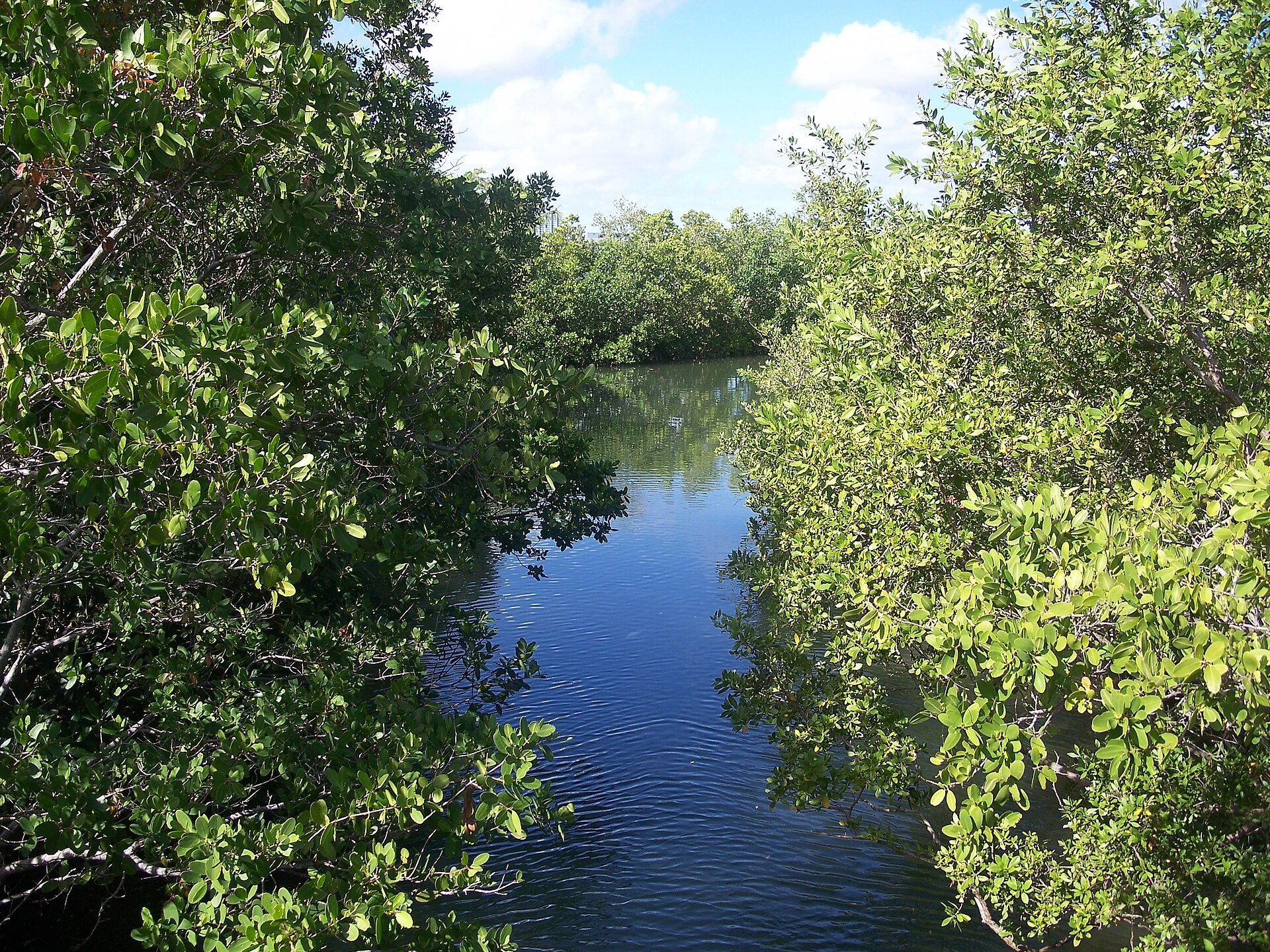
Deering’s guided wildlife paddle leaves from the same boat basin, crosses seagrass beds on Biscayne Bay and heads into a mangrove forest, with a guide pointing out wildlife above and below the water. It costs $50 a person, including that day’s admission to the estate, and runs from 9 a.m. to noon. Upcoming dates are 20 December 2026, 17 January 2027 and 28 February 2027; spaces are limited, so book through Park Link well ahead, and check the estate’s events page for later dates. The estate also runs evening Moonlight Kayak Tours to Chicken Key, an island off the estate, at $50 a person, on 22 January, 19 February, 19 March, 16 April and 14 May 2027. Kayak and paddleboard rentals at Deering Point are suspended until further notice, so plan on a guided trip if you want to paddle from the estate.
Biscayne National Park Institute: Kayak the Mangroves
The Biscayne National Park Institute, the park’s nonprofit partner for guided trips, runs a two-hour paddle from the Dante Fascell Visitor Center through the mangroves and seagrass meadows. A naturalist leads the first hour and shows you where to watch for wildlife, then you paddle on your own for the second. Shared trips cost $39 a person and leave at 9 a.m., 11:30 a.m. and 2 p.m.; a private trip costs $234 for up to six paddlers or $390 for up to ten. Shared trips are for ages 6 and up, private trips for ages 3 and up, and the boats are sit-on-top doubles. There is a 275-pound weight limit for in-water activities, and you need proper shoes, not flip-flops.
On your own
If you would rather paddle independently, Oleta River State Park in North Miami Beach rents single kayaks from $30 an hour through its concessionaire, and the Oleta River is an idle-speed manatee zone all year. Our Oleta River State Park guide has the rental prices and routes. Wherever you paddle, the rules below apply: drift, watch, and let a manatee decide how close it wants to be.
Worth the Drive: Manatee Lagoon in West Palm Beach
If seeing manatees is the goal rather than a hope, drive north. Manatee Lagoon, an FPL Eco-Discovery Center at 6000 N. Flagler Drive in West Palm Beach, is a free educational center with an observation deck over the warm-water outflow from Florida Power & Light’s Riviera Beach Next Generation Clean Energy Center. On cold winter days, manatees gather in that warm water within plain view of the deck, and the center says that in season you might see dozens at once.
The practical details are refreshingly simple:
- Cost: free, with free parking and no reservation needed.
- Season: 15 November to 31 March.
- Hours: daily, 9 a.m. to 4 p.m., during manatee season, except Thanksgiving and Christmas Day (it closes at 2 p.m. on Christmas Eve and New Year’s Eve, and is closed on New Year’s Day). From 1 April to 14 November it closes on Mondays.
- Inside: a 16,000-square-foot center of hands-on exhibits about manatees and the Lake Worth Lagoon, plus free public programs, some of which need registration.
- Rules: no swimming or fishing (there is no water access) and no pets.
Two cautions. The center is clear that there is no guarantee: these are wild animals, and on a warm day they have less reason to crowd into the outflow. And the upstairs observation deck closes for private events, weather and maintenance, so check the closure dates on the center’s visitor page before you set off. It is about 76 miles north of downtown Miami by road, which a route planner puts at roughly an hour and a half without traffic; allow more on I-95 at rush hour. The best plan is to watch the forecast and go on the coldest morning of your trip.
Can You Swim with Manatees?
Swimming with manatees isn’t something to plan in Miami. Sightings here are unpredictable, the animals are protected, and the in-water manatee encounters Florida is known for happen far up the Gulf coast, north of Tampa, at Crystal River.
Even there, the rules are strict. Crystal River National Wildlife Refuge, which the Fish and Wildlife Service says is the only refuge created specifically to protect the Florida manatee, prohibits touching or disturbing a resting or feeding manatee anywhere in Kings Bay, including Three Sisters Springs, along with chasing, cornering, feeding or giving them anything to drink. Refuge staff look after seven manatee sanctuaries in the bay, and rangers run programs at Three Sisters Springs daily from 15 November to 31 March.
Blue Spring State Park, north of Orlando, is famous for its winter manatees too, but its spring and spring run close to swimming, snorkeling, diving and boating in the winter months, when the manatees arrive, so a winter visit there is about watching, not swimming. Check the park’s own pages for the exact dates each year.
If a manatee approaches you while you are swimming or paddling in Miami, the right response is the same as everywhere: stay calm, keep your hands to yourself and let it go on its way.
Look, Don’t Touch: The Rules
Manatees have been protected in Florida since 1893. Today they are covered by the state’s Florida Manatee Sanctuary Act and by two federal laws, the Marine Mammal Protection Act and the Endangered Species Act. In practice, that means you leave them alone. The rules at Crystal River spell out what that looks like, and they are good habits anywhere:
- Don’t touch a manatee, and never disturb one that is resting or feeding.
- Don’t chase or corner one, on foot, on a board, in a kayak or in a boat.
- Don’t feed them, and don’t offer water from a hose or a bottle, however thirsty they look.
- Give mothers and calves extra room. Miami-Dade County asks people to take particular care not to disturb a mother manatee with a nursing calf.
- Leave cold-stressed manatees in peace. The county says the best way to help them in cold weather is to avoid disturbing them in their warm-water refuges and to report any that look in distress.
On the Water: Boats, Jet Skis and Kayaks
Boats are the biggest danger to manatees here. Miami-Dade County says vessel collisions are the leading known cause of manatee deaths in Florida, and the leading cause in Miami-Dade over the past decade. The state adopted manatee protection and boating rules for the county in 1991, and they set speed zones across Biscayne Bay and its canals and rivers. Some apply all year; others are seasonal, running from 15 November to 30 April, and a few canals close to all entry in those months. Follow the posted signs.
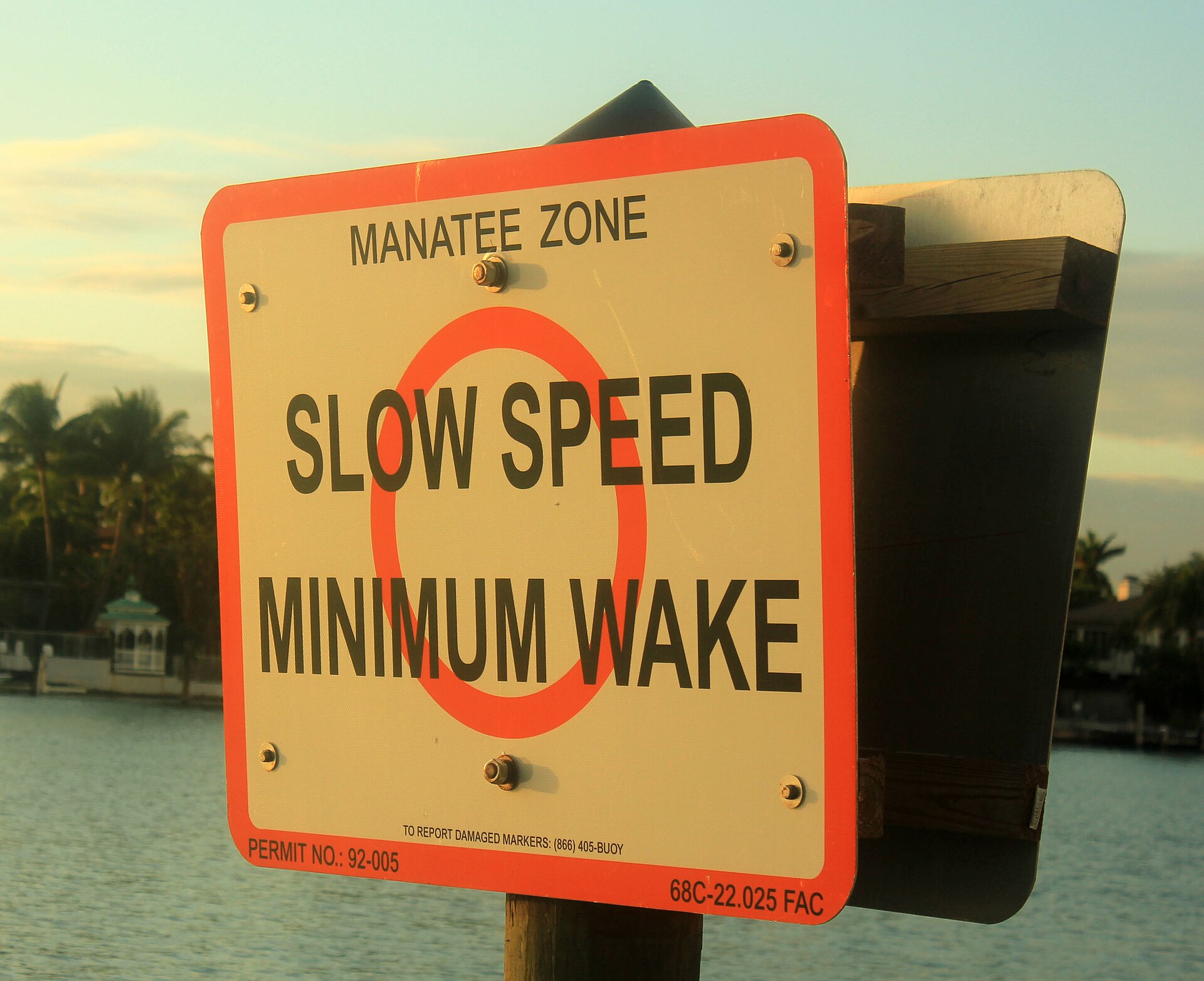
If you rent a boat or a jet ski, the signs are not decoration. Slow down where they tell you to, keep a lookout in shallow water, and wear polarized sunglasses, which make it far easier to see a dark shape under the surface. In a kayak or on a paddleboard, keep a respectful distance, stop paddling if a manatee surfaces near you, and never paddle over one. For renting boats and jet skis responsibly, see our Miami water sports guide.
How to Spot a Manatee
Manatees are easy to miss even when one is right in front of you. Adults are typically 9 to 10 feet long and weigh around 1,000 pounds, and some reach 3,500, yet they spend most of their time just under the surface, moving slowly, often grazing. They are herbivores that can spend up to eight hours a day eating seagrass and other plants. Algae on their skin can make them look green or brown rather than gray, so in murky water they blend in.
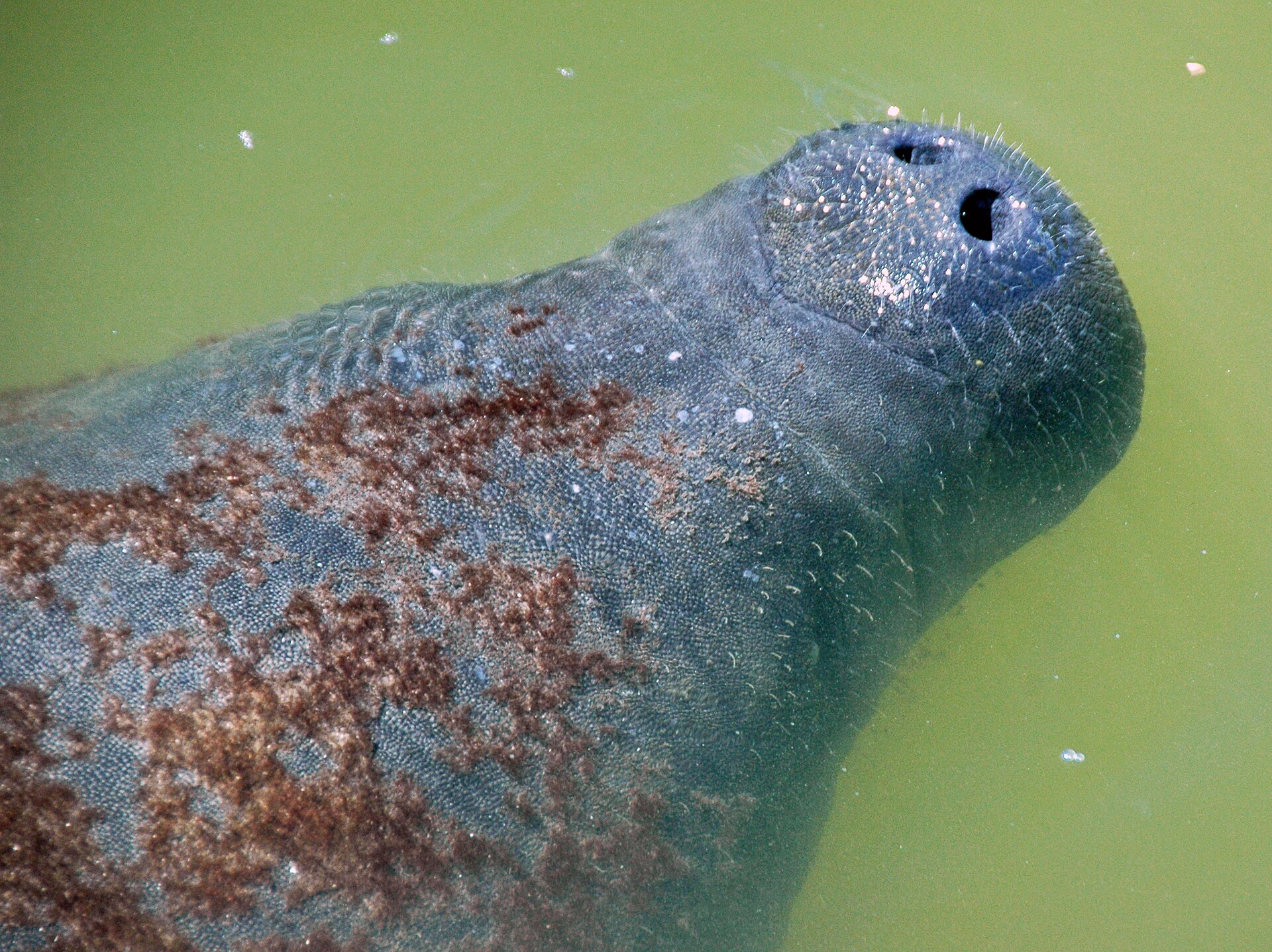
What to look for:
- A snout. Manatees surface every three to five minutes to breathe, usually showing only the tip of the nose and two nostrils. They can stay under for as long as 20 minutes, so keep watching.
- A broad back or a paddle-shaped tail rolling slowly at the surface.
- Calm water. Wind and chop hide everything. Mornings are often calmer.
- A small dark shape beside a large one. Calves are very dark at birth and stay with their mothers for about two years.
Good light helps: stand with the sun behind you, use polarized sunglasses, and look down into the water from a seawall or dock rather than across it.
When to Go
Winter, and the colder the better. From mid-November to the end of March, manatees concentrate in warm-water refuges, and a cold front that drops the bay’s temperature sends them looking for sheltered, warmer water. Cold mornings are the best time of all, because the animals are seeking warmth and the water is often calm.
In the warm months, from late spring to fall, manatees spread out across the bay and along the coast, so they are harder to find in any one place. They don’t vanish, and you can still be lucky from a kayak or a dock, but the planning advice flips: think of summer sightings as chance encounters rather than something to seek out. If you are fitting manatees into a broader winter trip, our Miami in January guide covers what else is on.
Manatees Today
The Florida manatee is listed as threatened under the Endangered Species Act. In January 2025 the Fish and Wildlife Service proposed keeping the Florida manatee as threatened while moving the Caribbean’s Antillean manatee back to endangered; that proposal has not been made final. The pressure on the population is real. WUSF reported in November 2026 that more than 3,600 manatees have died in Florida since 2021, including 632 in 2025 and 1,101 that starved in the Indian River Lagoon after pollution killed the seagrass they depend on. The same month, three conservation groups gave notice that they would sue the federal government over critical habitat it proposed in 2024 and has not finalized.
None of that makes a sighting less special. It does make the rules above matter more.
If You Find an Injured Manatee
If you see a manatee that is sick, injured, dead, orphaned or tagged, call the Florida Fish and Wildlife Conservation Commission’s Wildlife Alert line on 1-888-404-3922; from a cell phone you can also dial *FWC or #FWC. Miami-Dade County suggests being ready to give the animal’s exact location, whether it is alive, how long you have watched it, its approximate size, the nearest public boat ramp and a number where you can be reached. Don’t try to help it into the water or give it anything yourself.
Frequently Asked Questions
When is manatee season in Miami?
Roughly mid-November to the end of March. Manatee Lagoon in West Palm Beach treats 15 November to 31 March as the season, and Miami-Dade’s seasonal manatee zones run from 15 November to 30 April. Manatees live in Miami-Dade year-round, but winter is when they gather in warm, sheltered water you can watch from land.
Where can you see manatees for free in Miami?
Free options are public docks, seawalls and marina basins along the canals and rivers that run into Biscayne Bay, ideally on a cold morning. Deering Estate’s boat basin, which the estate calls one of Miami’s best manatee-viewing spots, needs a general admission ticket ($18 for adults). Manatee Lagoon in West Palm Beach, about 76 miles north, is free.
Can you swim with manatees in Miami?
It isn’t an activity to plan here. Florida’s in-water manatee encounters happen at Crystal River on the Gulf coast, under strict federal rules. If a manatee comes near you while you are swimming or paddling, stay still, don’t touch it and let it move on.
Is it illegal to touch a manatee?
Manatees are protected by the Florida Manatee Sanctuary Act, the Marine Mammal Protection Act and the Endangered Species Act. At Crystal River, federal rules specifically prohibit touching or disturbing a resting or feeding manatee, chasing, cornering, feeding or giving them water. Anywhere you meet one, the safe and lawful course is not to touch it.
Are manatees still endangered?
The Florida manatee is listed as threatened, not endangered. A 2025 federal proposal would keep it threatened while uplisting the Antillean manatee to endangered; that change has not been finalized.
What should you do if you see an injured manatee?
Call FWC’s Wildlife Alert line on 1-888-404-3922, or *FWC or #FWC from a cell phone, with the exact location and a description of the animal. Don’t try to move it or give it water.
Are there manatees in Biscayne Bay all year?
Yes. Miami-Dade County says manatees live in the county year-round. In summer they are spread out and harder to find; in winter they concentrate in warmer canals, rivers and basins.
Can you see manatees at Miami Seaquarium?
No. Miami Seaquarium’s last day open to the public was 12 October 2025.
Do manatee kayak tours guarantee a sighting?
No, and you should be wary of any that claim to. Tours from Deering Estate and the Dante Fascell Visitor Center paddle through seagrass and mangroves where manatees feed, but sightings depend on the animals, the weather and the water temperature.
Biscayne Bay’s other famous marine mammal is the bottlenose dolphin, and a winter paddle or national park cruise can turn up both. Our dolphin watching guide covers where wild dolphins show up, which trips give you the best chance, and the federal rules for watching them.
A kayak is one of the best ways to meet a manatee on its own terms, as long as you keep your distance and respect the seasonal no-entry zones. Our kayaking and paddleboarding guide has the rental stations, launch points, guided paddles and safety rules for Biscayne Bay.
Related Miami Guides
- Miami Outdoors and Nature
- Deering Estate Guide
- Biscayne National Park
- Oleta River State Park
- Shark Valley Everglades Guide
- Miami Boat Tours
- Water Sports in Miami
- Miami Seaquarium
Photo Credits
Two manatees in shallow water beside mangroves in Biscayne National Park (featured): Manatees Biscayne by the National Park Service South Florida / Caribbean Network, Public domain, via Wikimedia Commons.
The Deering Estate boat basin: Richmond and Stone House and Boat basin by Lianapupo, CC BY-SA 4.0, via Wikimedia Commons.
Mangrove channel at Oleta River State Park: Miami FL Oleta River SP08 by Ebyabe, CC BY-SA 3.0, via Wikimedia Commons.
Manatee Zone sign in Miami: Gfp-florida-miami-manatees-here by Yinan Chen, Public domain, via Wikimedia Commons.
Florida manatee surfacing: Trichechus manatus latirostris (Florida manatee) (Captiva Island, Florida, USA) 13 by James St. John, CC BY 2.0, via Wikimedia Commons.