Miami is synonymous with sun, sand, and crystal-clear ocean — but with more than 35 miles of coastline, choosing the right beach can make or break your trip. Whether you’re after the see-and-be-seen energy of South Beach, the family-friendly calm of Crandon Park, or a hidden stretch of sand most tourists never find, this guide breaks down the best beaches in Miami for every kind of traveler — with insider tips on parking, amenities, what to pack, and the smartest times to go.
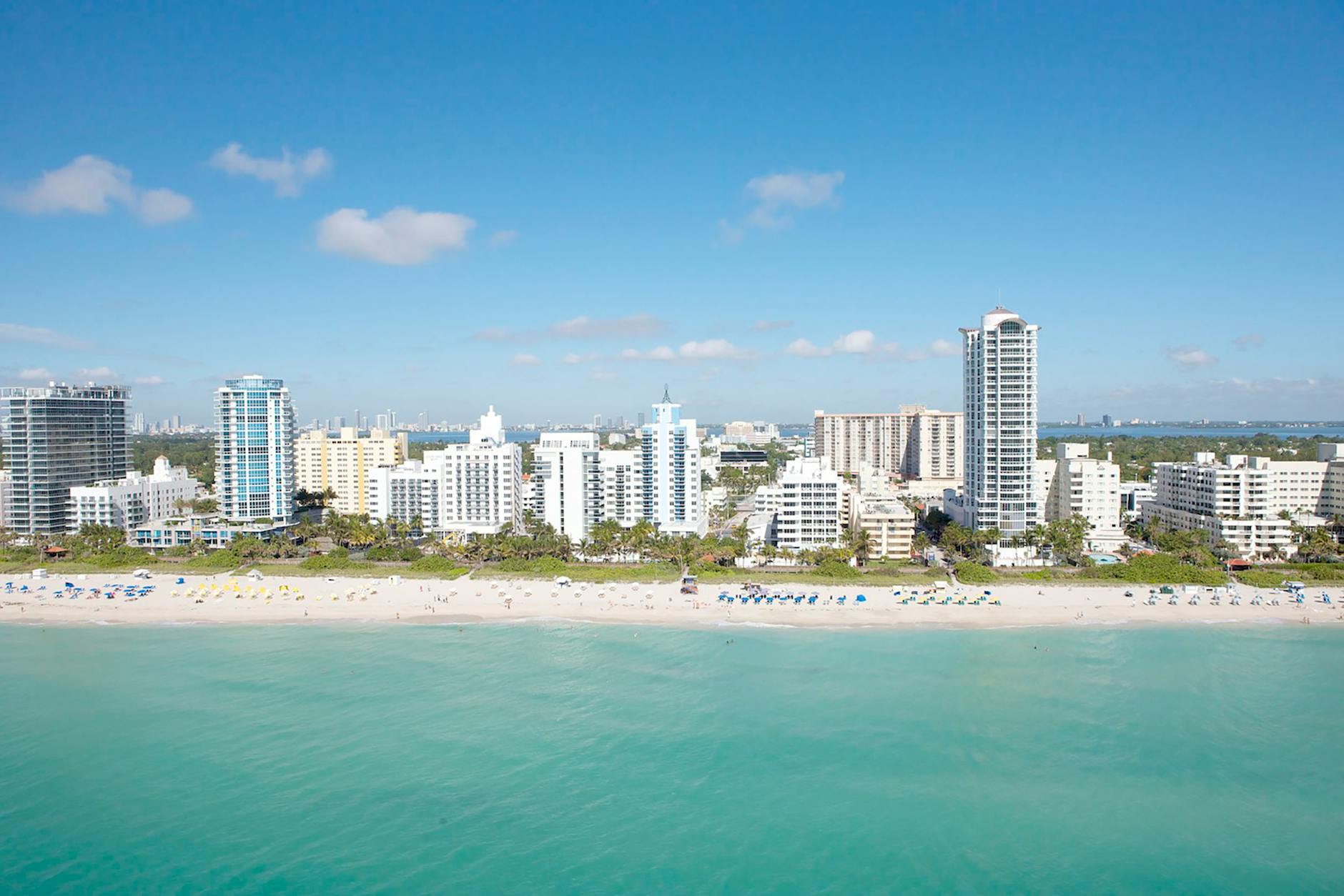
Quick Snapshot: The Best Beaches in Miami at a Glance
Short on time? Here’s a quick reference to help you match the right beach to your travel style. Each beach is detailed further down with everything you need to know.
| Beach | Best For | Crowd Level | Parking |
|---|---|---|---|
| South Beach | Iconic scene, nightlife, people-watching | Very busy | Metered, $4/hr |
| Mid-Beach | Balanced vibe, hotels, walking the boardwalk | Moderate | Metered, $1/hr |
| North Beach | Quiet, local feel, picnics | Light | Metered, $1/hr |
| Crandon Park | Families, calm water, picnics | Moderate | $7 flat lot |
| Bill Baggs / Cape Florida | Couples, nature, lighthouse | Light | $8 vehicle entry |
| Bal Harbour | Romance, luxury, scenic strolls | Light | Hotel/Garage |
| Surfside | Boutique-resort relaxation | Light | Metered street |
| Haulover | Surf, dogs, optional clothing-free section | Moderate | $7 flat lot |
| Hobie Island (Windsurfer) | Watersports, dog-friendly, locals | Light | Free roadside |
| Virginia Key | Families, history, quiet swimming | Light | $5 vehicle entry |
| Matheson Hammock | Toddlers, atoll pool, mangrove views | Light | $5 vehicle entry |
| Sunny Isles | High-rise hotels, families, jogging | Moderate | Metered street |
South Beach: The Iconic Miami Beach Experience
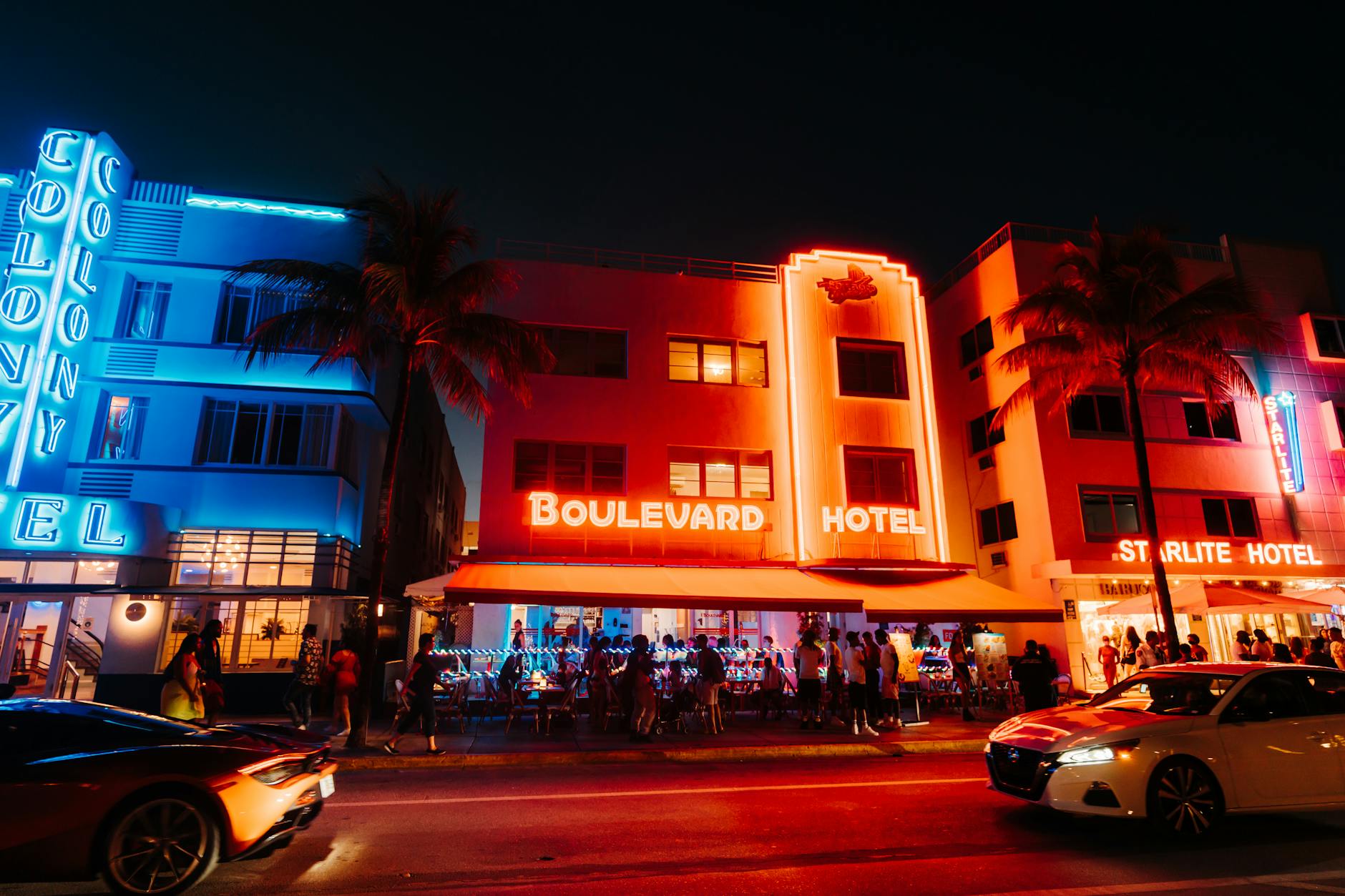
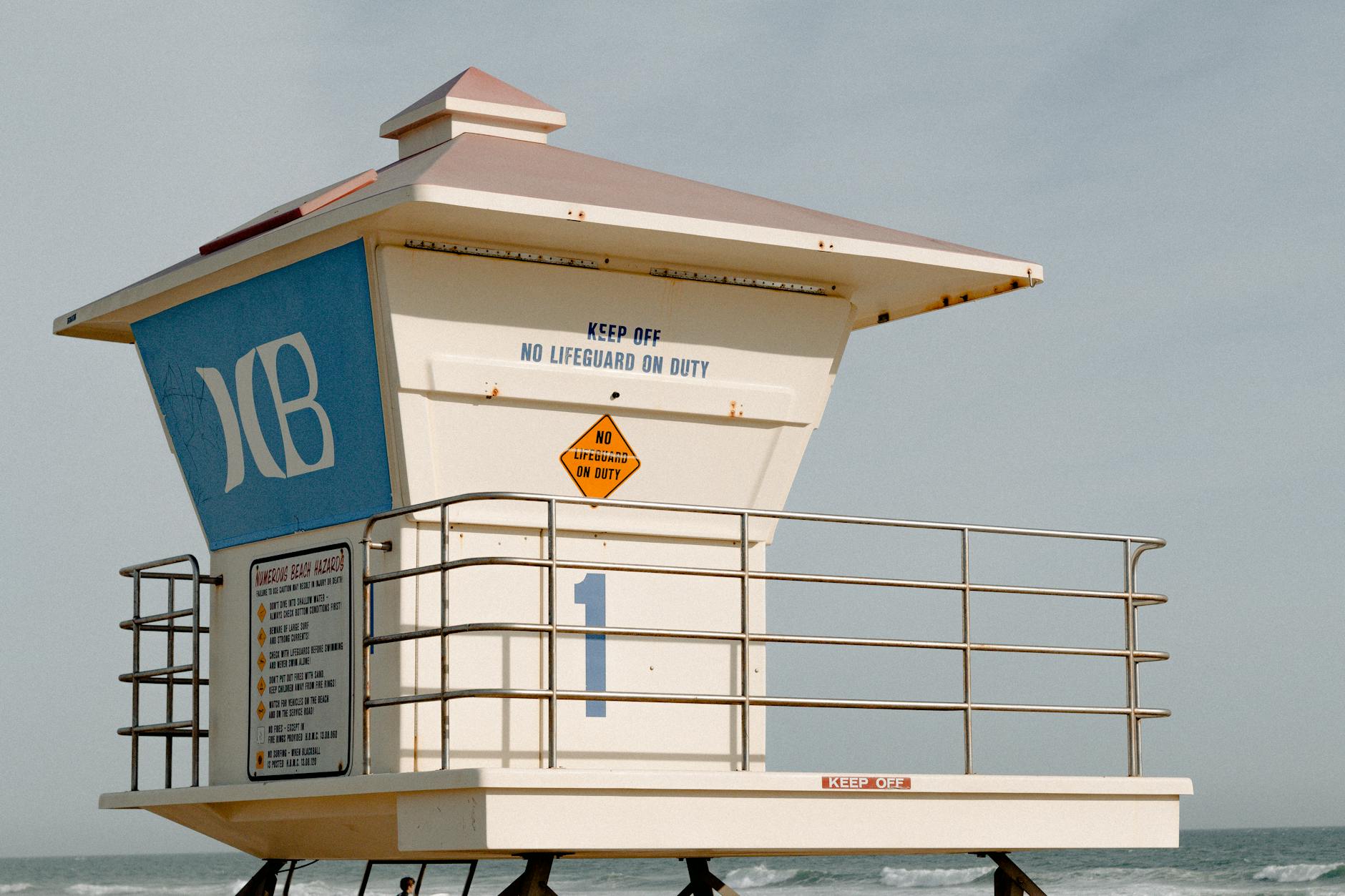
If you’ve seen Miami in a movie or on a postcard, you’ve seen South Beach — and it lives up to the hype. Stretching from 1st Street to 23rd Street on the southern tip of Miami Beach, “SoBe” is a wide ribbon of soft white sand bordered by pastel Art Deco hotels, palm trees, and the legendary Ocean Drive strip. The lifeguard towers — each painted a different color — have become symbols of Miami itself.
What to Know Before You Go
- Vibe: Energetic, social, see-and-be-seen. Expect music, beach bars, volleyball, and crowds.
- Best stretch: Between 5th and 14th Streets for the heart of the scene; South Pointe Park (1st St) for fewer crowds and great cruise-ship-spotting.
- Restrooms & showers: Available at most lifeguard stations.
- Food access: Hundreds of restaurants within a one-block walk; Lummus Park along Ocean Drive lines up cafés right at the sand.
- Best time to visit: Early morning (before 10am) for empty beach; late afternoon (4–6pm) for golden-hour photos and cooler temperatures.
Insider Tip
Skip the meter hassle and use the 13th Street Garage or the 17th Street Garage near Lincoln Road — both run roughly $4 per hour with daily caps, and they’re a five-minute walk to the sand. If you’re staying in a South Beach hotel, ask about beach attendants — most beachfront properties run complimentary umbrella and lounge service for guests on the public sand directly out front.
Mid-Beach: A Quieter Alternative with Real Style
Running roughly from 23rd Street up to 63rd Street, Mid-Beach trades the Ocean Drive bustle for a more refined, residential feel. This stretch is anchored by historic icons like the Fontainebleau and the Faena Hotel and connected by the Miami Beachwalk, a 4-mile pedestrian-and-bike path that hugs the dune line.
Mid-Beach draws a mix of in-the-know travelers, local beachgoers, and hotel guests who want the energy of Miami Beach without the spring-break atmosphere. The sand is just as wide as South Beach, often whiter, and noticeably less crowded — you can usually find space to spread out even on a busy weekend.
- Best for: Adult couples, photographers, hotel guests who want to walk to the beach without crossing a tourist crowd.
- Don’t miss: The Boardwalk between 21st and 46th Streets — quieter than the Ocean Drive sidewalk, and one of the best free things to do in Miami.
- Parking: Metered street parking at $1/hour, with garage options near 41st and 46th.
North Beach: Where Locals Actually Go
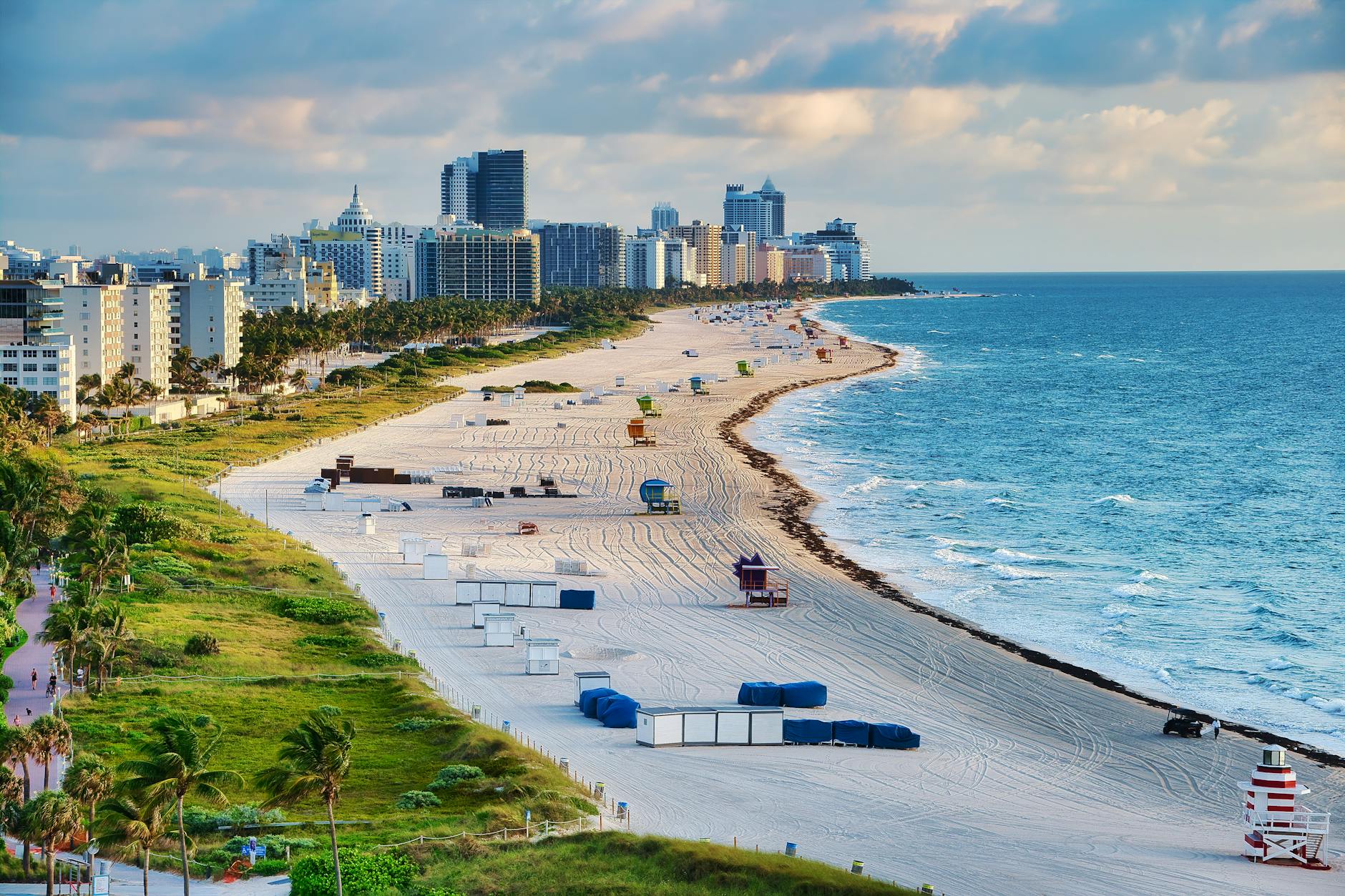
North Beach begins around 63rd Street and runs to the end of Miami Beach near 87th. It feels like a different city — quieter, leafier, with bilingual signage from a strong Argentine and French-speaking community. North Shore Open Space Park threads pine trees and grass right up against the dunes, making it ideal for picnics and slow afternoons.
- Best for: Travelers who want a relaxed beach day, families with school-age kids, anyone tired of Ocean Drive’s pace.
- Crowd level: Light even on Saturdays.
- Insider tip: Walk five minutes inland to Normandy Drive for affordable, authentic Argentine empanadas and South American cafés rare in South Beach.
Crandon Park Beach: The Family Favorite
Cross the Rickenbacker Causeway out to Key Biscayne and you’ll find Crandon Park Beach, a two-mile crescent of fine sand with calm, waist-deep waters that stretch surprisingly far offshore. Because the beach faces a natural sandbar, surf is gentle and predictable — making it Miami’s most family-friendly stretch.
- Amenities: Picnic pavilions, grills, restrooms, outdoor showers, kayak and paddleboard rentals.
- Don’t miss: The Crandon Park Nature Center — a small free museum about Biscayne Bay’s mangroves, manatees, and seabirds. Great rainy-hour pivot.
- Parking: $7 flat fee for the day; arrive before 11am on weekends.
- Pro tip: The far north end (toward the Crandon Marina) is even quieter and shaded by sea grape trees — perfect for a long picnic.
Bill Baggs Cape Florida State Park: Lighthouse, Trails & Calm Coves
At the southern tip of Key Biscayne, Bill Baggs Cape Florida State Park is the most scenic state park in Miami-Dade County. The 1825 Cape Florida Lighthouse — the oldest standing structure in the county — anchors a park of over 400 acres with mangrove trails, biking paths, and uncrowded beach coves.
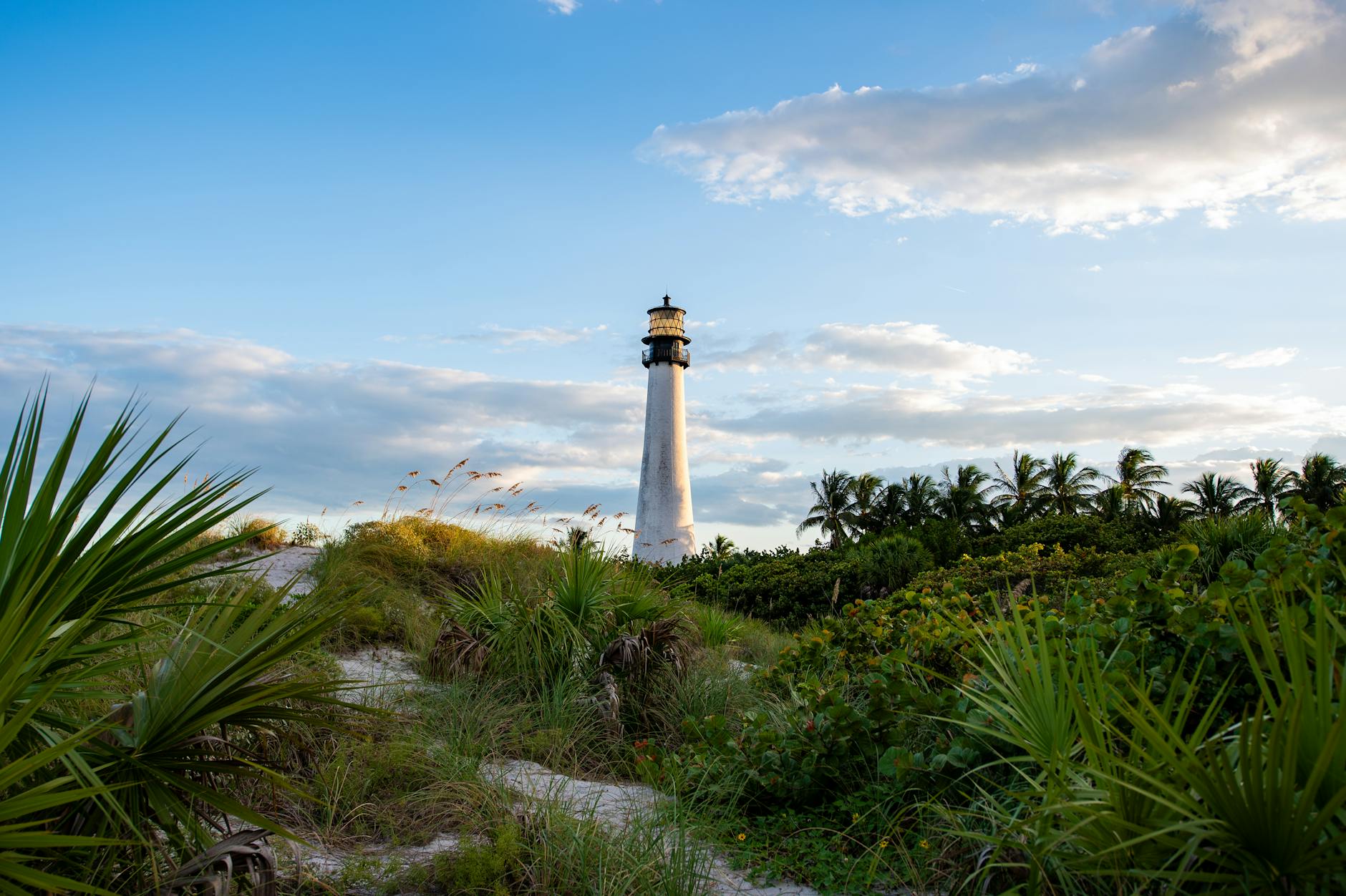
- Best for: Couples, nature lovers, photographers, anyone wanting to hike and beach in the same day.
- Highlights: Climb the lighthouse on guided tours (Thursday–Monday, weather permitting), bike-rent the perimeter loop, or kayak out from the lagoon.
- Restaurants: Two on-site casual seafood spots — Lighthouse Café and Boater’s Grill — sit right on the bay.
- Entry: $8 per vehicle (up to 8 people); $2 cyclists/walkers.
Bal Harbour Beach: Refined & Romantic
Just north of Miami Beach proper, Bal Harbour is a small, wealthy enclave wrapped around the legendary Bal Harbour Shops. Its beach is narrow but beautifully maintained, lined with luxury hotels (the Ritz-Carlton, the St. Regis) and connected by a paved oceanfront promenade.
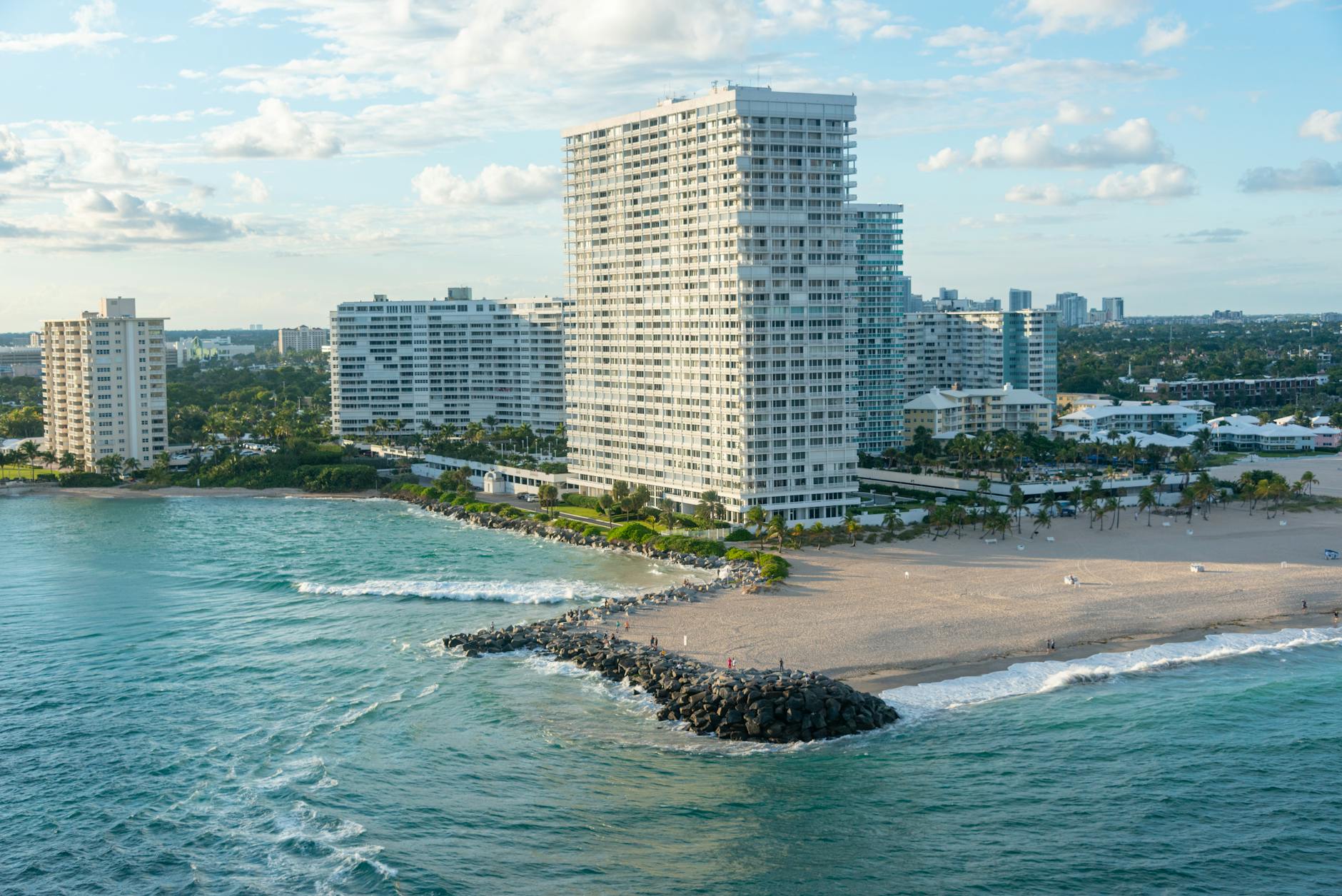
- Best for: Couples on a quiet getaway; shoppers; mature travelers.
- Vibe: Calm, manicured, low-key luxe.
- What to do: Walk the 1.5-mile Bal Harbour Beach Path, then stroll the open-air, koi-pond-lined Bal Harbour Shops for window shopping.
- Best for sunrise: Bal Harbour faces due east — the sunrise here is unobstructed.
Surfside Beach: Boutique & Walkable
Tucked between Bal Harbour and North Beach, the small town of Surfside packs a one-mile stretch of beach into a tight, walkable grid. The vibe is “vacation-living” rather than “tourist-zone” — boutique hotels, kosher delis, family-run cafés, and locals walking dogs in the morning.
- Best for: Travelers who want walkable beach access without the South Beach scene.
- Highlight: The Surfside Community Center on Collins Avenue offers heated outdoor pools and a children’s splash pad — open to non-residents for a small fee.
- Eat: Try Sazon Cuban Cuisine for casual lunch, or Carpaccio at Bal Harbour Shops for an upgrade.
Haulover Beach: Surf, Dogs & Food Trucks
A few miles further north, Haulover Park covers 99 oceanfront acres and is one of Miami’s most diverse beach experiences. The waves are the strongest in Miami-Dade — small enough to be safe, but big enough to learn to surf or boogie-board on. Haulover is also famous for its clothing-optional section at the north end (clearly signed and away from family areas) and its dedicated dog beach.
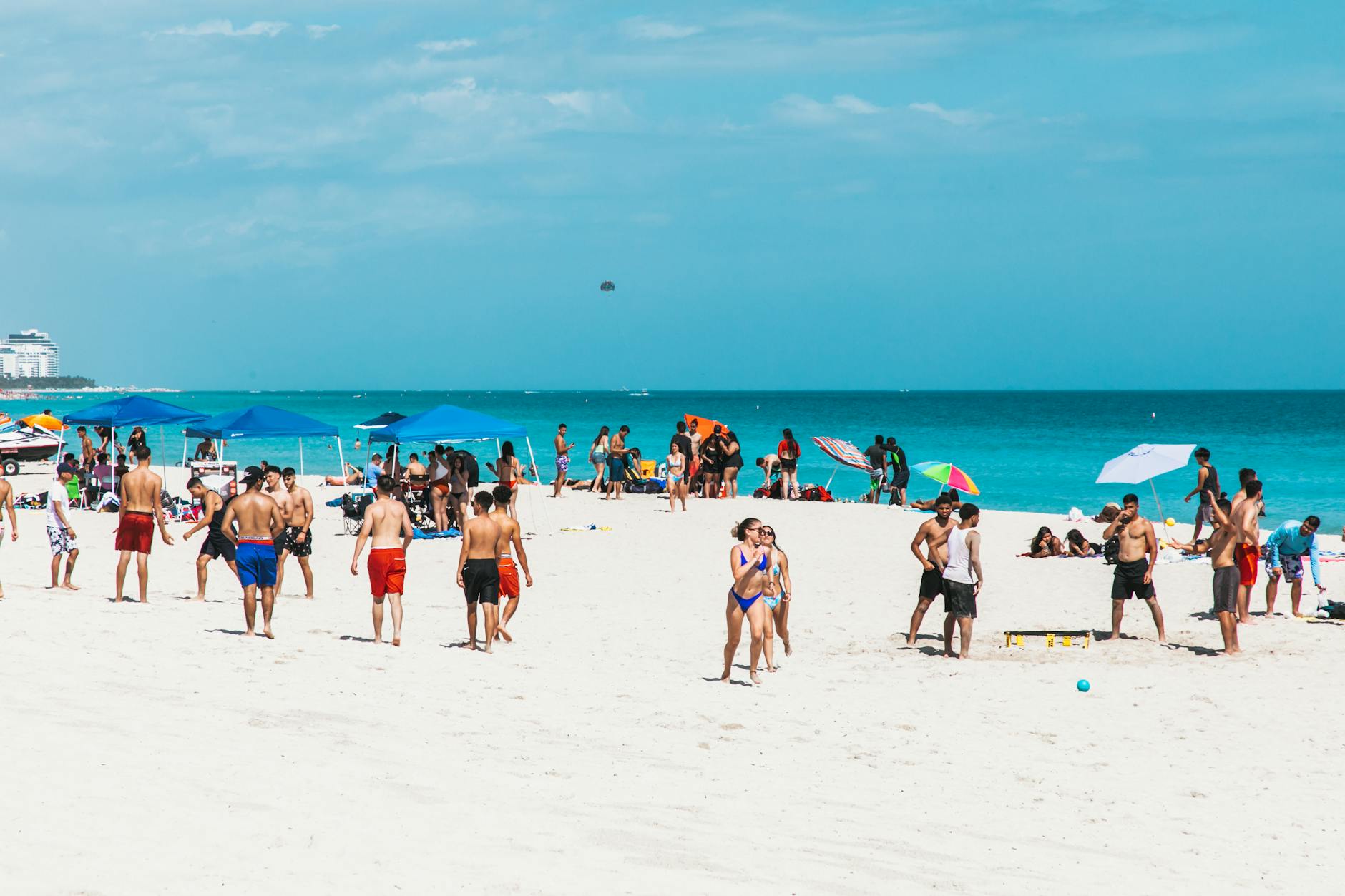
- Best for: Surfers, beginner boogie-boarders, dog owners, food-truck fans.
- Don’t miss: Food Trucks Tuesday at Haulover Park, 5–10 pm — easily one of Miami’s best low-cost evenings.
- Parking: $7 flat-fee lots; lots fill quickly on weekends.
- Heads up: The clothing-optional area is well-marked; if it’s not your scene, simply use the central or south lot entrances.
Hobie Island Beach (a.k.a. Windsurfer Beach)
Pull off Rickenbacker Causeway about a mile before the Key Biscayne tollbooth and you’ll find Hobie Island Beach — a hidden stretch of bayfront sand most tourists drive past. Calm, shallow, and protected from ocean swells, it’s the city’s epicenter for kiteboarding, windsurfing, and stand-up paddleboarding.
- Best for: Beginners learning watersports, dog owners (off-leash beach), photographers shooting the downtown skyline at sunset.
- Skyline view: One of the best in the city — downtown Miami rises directly across Biscayne Bay.
- Parking: Free roadside.
- Heads up: No lifeguards; supervise children closely even though water is shallow.
Virginia Key Beach Park: Historic & Family-Friendly
Just past Hobie Island, the historic Virginia Key Beach Park has a story most visitors never hear. Opened in 1945, it was for years the only beach in the area where Black residents were permitted to swim during segregation. Today, it’s a beautifully restored park with a vintage carousel, mini-train, and a wide stretch of palm-lined beach with calm water.
- Best for: Families with toddlers, history buffs, anyone wanting a low-cost beach day.
- Highlights: Vintage carousel and mini-train operate weekends; on-site picnic shelters can be reserved.
- Entry: $5 per vehicle.
- Don’t miss: The interpretive trail explains the park’s role in Miami’s civil rights history.
Matheson Hammock Park Beach: The Atoll Pool Secret
Down in Coral Gables, Matheson Hammock Park hides one of Miami’s most unusual beach experiences: a man-made atoll pool, fed and flushed by Biscayne Bay tides, that creates a swimming lagoon with no surf and a uniform 3- to 4-foot depth. It’s the safest swim in the city for toddlers, and a favorite for parents who don’t want to worry about waves.
- Best for: Parents with young children, swim-shy travelers, kayakers (rentals on-site).
- Bonus: The park’s mangrove maze is gorgeous; rent a kayak for a 90-minute paddle.
- Eat: Red Fish Grill at the marina serves casual seafood with bay views — book ahead for sunset.
- Entry: $5 per vehicle weekdays, $7 weekends.
Sunny Isles Beach: High-Rise Glamour
North of Haulover, Sunny Isles is a wall of luxury condo towers standing over a wide, flat beach. The vibe is upscale-residential, popular with European and Latin American visitors. The sand is clean and rake-groomed daily, and the city installed beach-access ramps and exercise stations along the dune.
- Best for: Joggers, fitness travelers, families staying in oceanfront condos.
- Highlight: The Newport Pier — fish, walk, or watch the sun rise without paying for parking inside the pier complex.
- Heads up: Building shadows reach the sand by ~2pm in winter; stake out a morning spot if you want full sun.
Best Miami Beaches by Travel Style
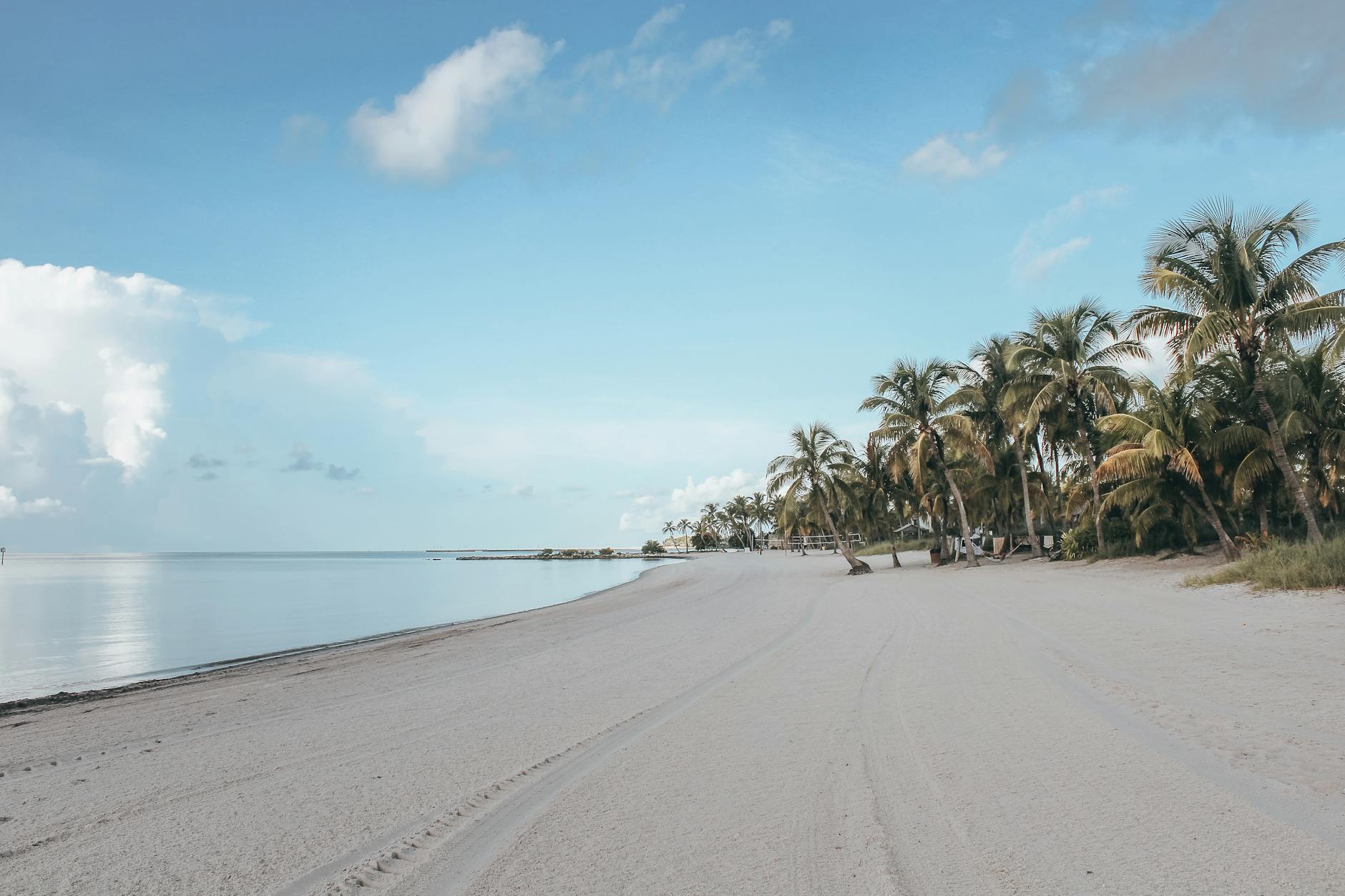
Best for Couples
For a romantic beach day, head to Bill Baggs Cape Florida State Park for the lighthouse-and-mangrove combo, or Bal Harbour Beach for a quiet promenade walk and an upscale lunch. Romantic Miami has more couples ideas, including sunset cruise pairings.
Best for Families
Choose Crandon Park for the offshore sandbar and gentle surf, Matheson Hammock for toddlers in the atoll pool, or Virginia Key Beach Park for the carousel and shaded picnic areas. Each has on-site lifeguards (during posted hours) and full bathroom facilities. The Miami Family Vacation Guide covers more kid-tested itineraries.
Best for Watersports
Hobie Island Beach is the city’s windsurfing and kiteboarding hub thanks to consistent breeze and shallow water. Crandon Park rents kayaks and SUPs at the south-end concession. Haulover Beach has the only surf-able waves in Miami-Dade. We cover this in depth in our Things to Do in Miami pillar.
Best for Nightlife & People-Watching
South Beach wins, full stop — it’s the only Miami beach with a built-in nightlife strip a block away. Stay there if your itinerary includes late-night clubs and dinner-and-dancing routines.
Best for Quiet & Solitude
Try North Beach for in-city quiet, the far north end of Haulover for tourist-free sand, or any weekday morning at Bill Baggs before noon for true solitude.
Practical Tips for Visiting Miami Beaches
Best Time of Year
Miami’s “perfect beach weather” runs November through April, when humidity drops and daytime temperatures hover at a comfortable 72–82°F. March through May hits a sweet spot — water’s warm enough to swim (~76°F+), spring-break crowds taper after mid-March, and rates drop after Easter. Summer (June–September) is hot, humid, and prone to afternoon thunderstorms; mornings are still beautiful, and water temps cresting 84°F are bath-warm.
Avoid spring break weeks (early March) if you want a quieter South Beach — the city imposes parking surcharges and curfews during peak weekends.
Beach Flag System (Important!)
Every guarded Miami Beach posts a colored flag at the lifeguard tower. Always check before entering the water.
- Green flag: Calm water, low hazard.
- Yellow flag: Moderate surf or currents — exercise caution.
- Red flag: High surf or strong currents — swimming not advised.
- Double red flag: Water closed to public.
- Purple flag: Dangerous marine life (jellyfish, Portuguese man-of-war) sighted.
Lifeguards & Safety
Miami Beach Ocean Rescue staffs lifeguard towers 9am–7pm, 365 days a year. Towers are spaced roughly every two blocks along South, Mid, and North Beach. Crandon, Bill Baggs, Haulover, Matheson Hammock, and Virginia Key all have lifeguards during park operating hours. Swim within sight of a tower whenever possible — Atlantic rip currents can develop quickly even on calm days.
Parking Strategy
South Beach metered street parking is $4/hour south of 23rd Street; lots are $2/hour. North of 23rd, meters drop to $1/hour. Free street parking runs 3am–9am citywide — early risers can grab a spot pre-9am and stay through the morning. Use the ParkMobile app for everything; license-plate recognition means you don’t need to return to your car to feed the meter.
For the parks: Crandon, Haulover, and Virginia Key charge a $7 flat fee per vehicle. Bill Baggs charges $8. Matheson Hammock is $5 weekdays / $7 weekends. Cash and credit accepted at staffed entrances; some have license-plate readers.
Beach Rules to Know
- No glass containers on any Miami-Dade beach — strict $500 fine.
- Alcohol is prohibited on Miami Beach sand and in city parks; some county parks (Crandon, Haulover) allow it in cans.
- Smoking and vaping are banned on all Miami Beach sand as of 2022; designated smoking zones exist on the boardwalk.
- Dogs are not permitted on Miami Beach sand except at the Haulover and Hobie Island designated beaches.
- Loud speakers require a city permit; portable speakers must be kept at conversational volume.
- Tents larger than 4’x4′ need a permit on Miami Beach; pop-up sun shades and umbrellas are fine.
What to Pack for a Day at a Miami Beach
- Reef-safe sunscreen (SPF 50+): Miami’s UV index regularly hits 10–11. Reapply every 90 minutes.
- Refillable water bottle: Lifeguard towers often have spigots; many parks have hydration stations.
- Lightweight beach umbrella or pop-up tent: Tree shade is rare on most Miami beaches.
- Aqua shoes for toddlers: Some beaches (Crandon especially) have submerged shells near the tide line.
- Insect repellent: Bring it for mangrove-bordered parks like Bill Baggs and Matheson Hammock — particularly at dusk.
- Cash for parking machines: Most accept card, but a $10 backup is smart.
- Light long-sleeve cover-up: Sun is intense; a UPF-rated cover-up is more useful than another tank top.
How to Spend a Beach Day in Miami: Sample Itineraries
The Iconic Miami Beach Day
9am — Coffee on Lincoln Road; walk to South Beach via 14th Street. 10am–1pm — Sand time near the lifeguard tower at 12th Street. 1pm — Lunch at Joe’s Stone Crab (in season) or Puerto Sagua. 3pm — Walk the boardwalk north to the Faena Hotel for a frozen cocktail. Sunset — Rooftop drink at the Betsy or 1 Hotel.
The Family Beach Day
9am — Drive to Crandon Park. 9:30am–12pm — Beach time with toys, snorkel masks, and shovels. 12pm — Picnic at the pavilions or at the Lighthouse Café in Bill Baggs. 1pm — Visit the Cape Florida Lighthouse and tour. 3pm — Crandon Park Nature Center for a cool-down. 4pm — Ice cream at Key Biscayne village before driving home.
The Quiet Couples Day
9am — Sunrise walk on Bal Harbour Beach Path. 10am — Coffee and pastry at Carpaccio in Bal Harbour Shops. 11am–2pm — Drive to Bill Baggs and rent bikes for the lighthouse loop. 2pm — Lunch at Boater’s Grill on the bay. 4pm — Beach nap at the south coves. Sunset — Drinks at a rooftop in Brickell with the skyline view.
Frequently Asked Questions
What is the most beautiful beach in Miami?
For postcard-perfect, South Beach wins on iconic value. For unspoiled scenery, Bill Baggs Cape Florida State Park is the most beautiful — turquoise water, lighthouse, mangroves, and minimal development.
Are Miami beaches free?
Yes — every public beach in Miami is free to enter. You only pay for parking (city meters $1–$4/hour) or park entry ($5–$8/vehicle for state and county parks).
Which beach is closest to Miami International Airport?
Crandon Park on Key Biscayne is the closest major beach (about 25 minutes by car). Virginia Key Beach Park is similarly close. Both beat the South Beach drive in afternoon traffic.
Can you swim in Miami in winter?
Yes. Water temperatures rarely drop below 70°F in winter, and many days hit 75°F. Locals find December–February water “chilly,” but it’s swimmable for most visitors. Air temperatures of 72–78°F make winter Miami’s most comfortable beach season.
Are Miami beaches safe?
Generally, yes — Miami beaches are well-patrolled by police and lifeguards. Rip currents are the biggest natural hazard; always swim near a tower and respect the flag system. Theft is the most common visitor complaint: never leave bags, phones, or wallets unattended on the sand. Use a small dry-bag with you in the water.
Are there sharks in Miami waters?
Sharks live in all Florida waters, but encounters at Miami beaches are extremely rare and bites are rarer still. The same waters host dolphins, manatees, and sea turtles. If lifeguards spot a hazardous shark, they’ll fly the purple flag and clear the water.
Is South Beach or Miami Beach better?
South Beach is Miami Beach — it’s the southern third of the city. The terms are used interchangeably, though “South Beach” usually means the lively scene below 23rd Street. “Mid-Beach” and “North Beach” cover the calmer northern stretches of the same barrier island.
Where do locals go to the beach?
Locals overwhelmingly favor Crandon Park, Bill Baggs, Hobie Island, and North Beach. South Beach is largely a tourist destination on weekends; many locals avoid it from November through April.
Plan Your Miami Beach Trip
The best beach in Miami isn’t a single answer — it’s the one that matches your travel style on the day you visit. Use this guide to mix and match: a morning at Crandon, an afternoon at Bill Baggs, an evening cocktail at South Beach, then a sunrise stroll up at Bal Harbour. With over a dozen distinct beaches across Miami-Dade, you can experience a totally different shoreline every day of a week-long trip.
Ready to keep planning? Our Things to Do in Miami pillar covers every category beyond the sand, and our Where to Stay in Miami guide pairs each neighborhood with the best beaches nearby. For seasonal trip-planning context — when to come, what to pack, how to get around — see Miami Travel Planning & Tips.
More on the Best Beaches in Miami
Picking the best beaches in Miami depends on your travel style — families want calm water, couples want quiet sand, and watersports fans want wind. Use the linked guides below to plan your full beach itinerary, and remember the best beaches in Miami are always uncrowded before 10am.
For more on best beaches in miami from official sources, visit Bill Baggs Cape Florida State Park — official Florida State Parks site.