Miami Heat Game Guide: Tickets, Seats and Kaseya Center Tips
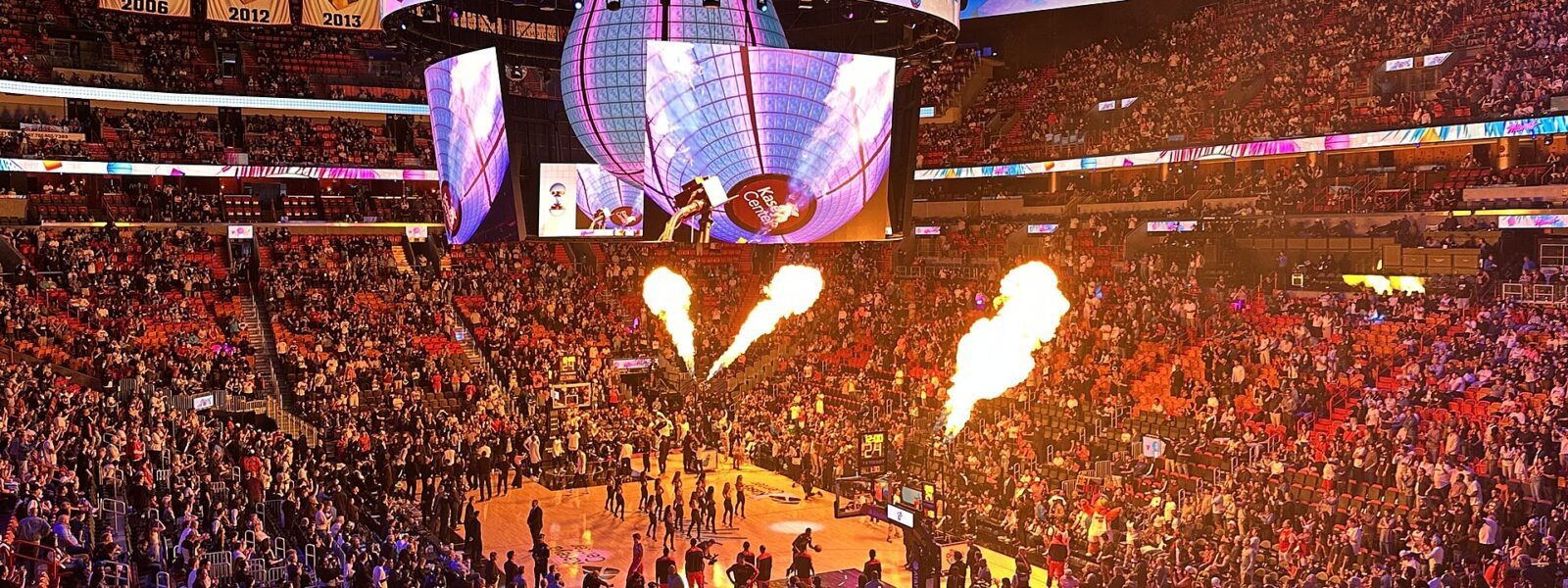
Ten minutes before tip-off at Kaseya Center, the lights go down, flames shoot up from the baseline, the three championship banners glow in the rafters, and a surprising number of the best seats in the lower bowl are still empty. Miami crowds arrive late, and they have a reputation for leaving early too. That is useful to know, because it tells you something about Miami Heat tickets: outside the playoffs and the marquee matchups, this is one of the more gettable tickets in the NBA, in the only major Miami venue you can reach without a car.
This guide covers the whole night: which games are cheapest and which are not, where to buy and where to sit, the arena’s strict no-bag rule, how to get there on the free Metromover, where to eat and drink before and after, and what to do with children. Prices were checked in September 2026 and move constantly on the resale market; treat every figure as a range rather than a quote. For the rest of Miami’s teams and venues, see our Miami sports guide.
Miami Heat Tickets at a Glance
| What to know | |
|---|---|
| Arena | Kaseya Center, 601 Biscayne Boulevard, on the downtown waterfront. About 19,600 for basketball |
| Season | 41 regular-season home games from late October to mid-April, then the play-in and playoffs |
| Upper level, ordinary game | Roughly $30–$60 per ticket |
| Lower bowl | Roughly $120 and up; courtside runs into four figures |
| Cheapest games | Weeknights in January and February against teams that are not contending |
| Children | Under-2s free on a lap. Everyone aged 2 and over needs a ticket |
| Bags | No-bag policy. Small purses under 10″ x 6″ x 2″, plus medical and infant bags, are allowed |
| Transit | Metromover Park West station, one block west, free. Metrorail via Government Center |
| Rideshare | Bayshore Drive and HEAT Boulevard, at Gate 6 |
| Parking | Flat-rate lots within walking distance; about $30–$50 close in on game nights |
Why a Heat Game Is Worth Your Evening
The Heat have been one of the NBA’s most consistently competitive franchises for three decades, and the arena wears that history openly. Championship banners from 2006, 2012 and 2013 hang above the court, along with the retired numbers of Alonzo Mourning, Tim Hardaway, Dwyane Wade, Chris Bosh, Shaquille O’Neal and Udonis Haslem, and Michael Jordan’s 23, retired in his honor by Pat Riley although Jordan never played for Miami. The franchise talks endlessly about “Heat Culture,” its brand of hard work, conditioning and toughness, and the phrase is written in giant letters across the front of the building.
It also has a habit of dramatic springs. In 2023 the Heat came through the play-in tournament as the Eastern Conference’s eighth seed and went all the way to the NBA Finals. Ten years earlier, in Game 6 of the 2013 Finals, Ray Allen hit a corner three with seconds left to force overtime, and the Heat went on to win the title in Game 7. Fans who had left early to beat the traffic found they could not get back in. The lesson has passed into local folklore: do not leave a Heat game early.
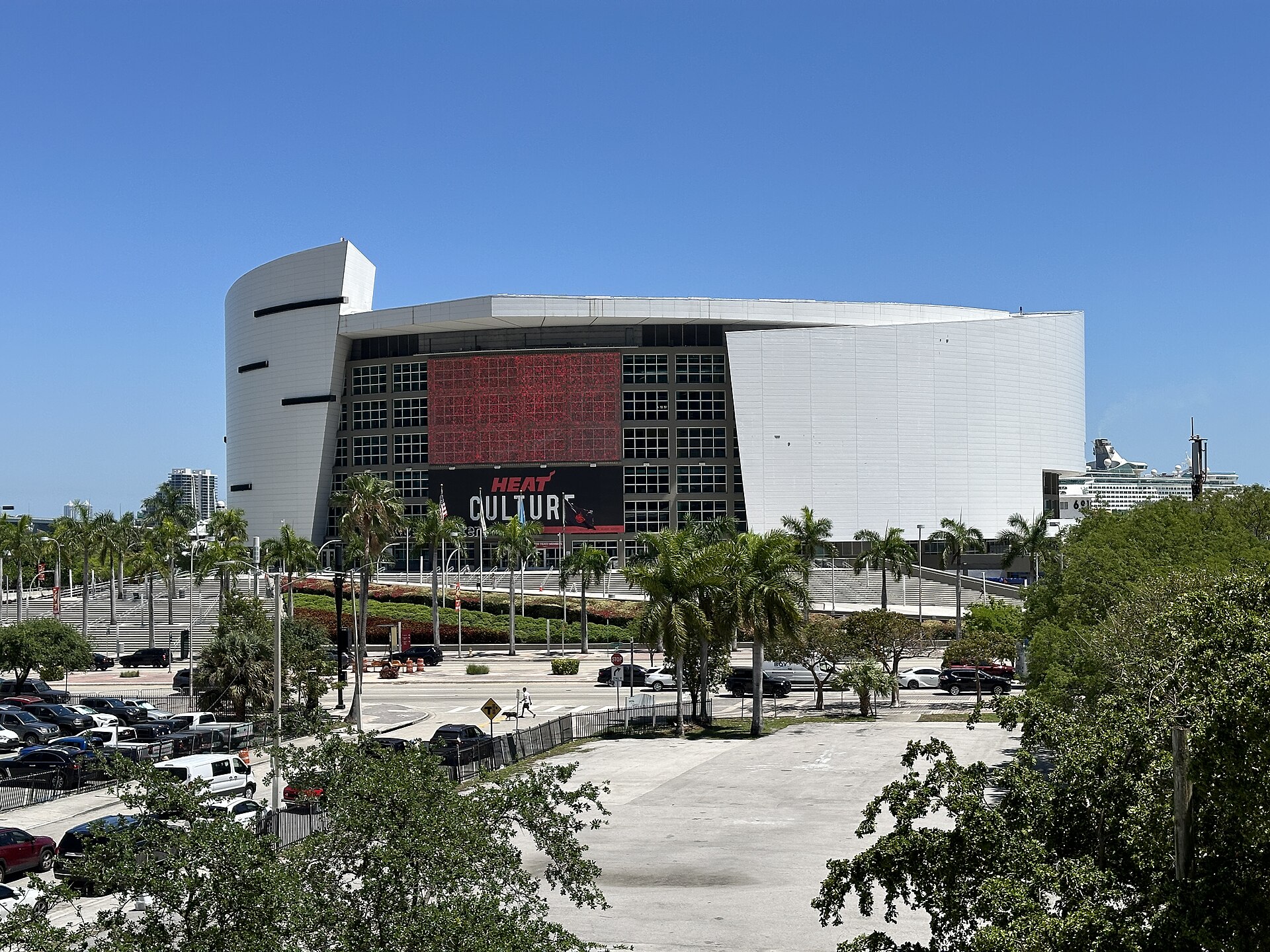
The arena opened on the last day of 1999 as the American Airlines Arena, was renamed FTX Arena in 2021 and then, after that company’s collapse, briefly Miami-Dade Arena, before becoming Kaseya Center in 2023. Locals still use all of those names. Whatever you call it, it sits right on Biscayne Bay, between Bayside Marketplace and Museum Park, with the Freedom Tower across the boulevard and the cruise port on the far side of the water.
A short history, for context
The Heat joined the NBA as an expansion team in 1988 and spent their first decade at the old Miami Arena in Overtown. Pat Riley arrived in 1995 as coach and team president, and the Alonzo Mourning and Tim Hardaway teams of the late 1990s gave the franchise its identity, along with a run of bitter playoff series against the New York Knicks that older fans still talk about. Dwyane Wade was drafted in 2003, Shaquille O’Neal arrived a year later, and the first title followed in 2006 against Dallas.
In 2010 LeBron James and Chris Bosh joined Wade, and the “Big Three” reached four straight Finals, winning in 2012 and 2013. Since then the Heat have been the NBA’s great overachievers: Finals appearances in 2020, in the Orlando “bubble,” and in 2023 as that eighth seed. It is a franchise that expects to compete, and the building feels like it.
When to Go
The NBA regular season runs from late October to mid-April, and the Heat play 41 home games. That is a lot of opportunities, and prices vary enormously between them.
- Cheapest: weeknight games, especially Monday to Wednesday, in January and February, against opponents who are rebuilding or out of contention. This is where upper-level tickets in the $30 to $60 range are easy to find.
- Mid-range: Friday and Saturday games, most games in November and March, and early-season games while the novelty is fresh.
- Most expensive: big-name opponents and anyone with a superstar, the holiday period between Christmas and New Year, when the city is full of visitors, and the final weeks of the season if the Heat are fighting for position.
- The NBA Cup: group-stage games in November are part of the regular season and count toward the standings, and they come with special courts and a little extra edge. Knockout rounds later in the tournament are a different ticket.
- Playoffs: tickets for home playoff games cost several times the regular-season price, sell out quickly, and come with the Heat’s “White Hot” tradition, in which the whole arena dresses in white.
For visitors, the sweet spot is a weeknight game in January or February. Miami’s weather is at its best, the arena is air-conditioned in any case, and a good upper-level ticket costs less than dinner on Ocean Drive. Our monthly guides to January and February cover what else is on at that time of year.
What Tickets Cost
| Ticket | Typical price, 2026 |
|---|---|
| Upper level, ordinary regular-season game | $30–$60 |
| Upper level, marquee opponent or weekend | Often double the ordinary price, sometimes more |
| Lower bowl, corners and baseline | From about $120 |
| Lower bowl, sideline | Well above $120, rising steeply toward the court |
| Courtside | Four figures and up |
| Playoff games | Several times the regular-season price |
| Beer and a hot dog inside | About $20–$25 for the pair |
| Parking close to the arena | About $30–$50 on game nights |
| Metromover to the arena | Free |
Fees are not included in those figures, and they are not small. A ticket advertised at $60 routinely costs close to $80 by the time service fees are added. Always compare the final total at checkout.
Where to Buy
Start with the team’s official ticketing through Ticketmaster, then its official fan-to-fan resale, where season-ticket holders sell the games they cannot use. Both deliver the ticket straight to your account and the same app that scans it at the door, which takes the fraud risk out of the transaction. The large resale marketplaces, such as StubHub, SeatGeek and Vivid Seats, are the next option and sometimes have better prices for ordinary games; compare the final totals rather than the headline figures.
For ordinary regular-season games, prices tend to fall in the last 48 hours as resellers who have not sold cut their asking prices. If the game is a nice extra rather than the reason for your trip, waiting until the day before often pays. For marquee opponents, holiday games and the playoffs, do the opposite and buy early.
Avoid tickets offered through social media or direct messages, and anyone asking to be paid by a transfer app or gift card. Tickets are mobile only and a screenshot will not scan, so a seller offering a PDF or an image is offering you nothing.
Where to Sit
Kaseya Center is a conventional two-tier NBA arena with suites and clubs between the levels, and there are very few truly bad seats. The choice comes down to budget and what you want from the evening.
- Upper level, near center court, is the value choice. You see the whole floor, the plays develop in front of you, and the price is a fraction of the lower bowl.
- Upper level corners and ends are the cheapest seats in the building, and fine for soaking up the atmosphere, though you will lean on the video board for detail at the far end.
- Lower bowl corners and baseline put you close to the players and the noise, and are where the lower bowl becomes affordable.
- Lower bowl sideline is the classic NBA view, and priced accordingly.
- Courtside is where Miami comes to be seen. It costs a great deal, and the view of the far end of the court is actually worse than from a few rows back.
Getting There
This is where the Heat beat every other Miami team: you do not need a car.
Metromover and Metrorail
The Metromover, downtown Miami’s free automated people mover, stops at Park West station, at 800 NE 2nd Avenue, one block west of the arena. From Brickell or anywhere downtown, ride the Omni Loop or transfer onto it and get off at Park West. It costs nothing.
From farther out, take Metrorail to Government Center, transfer to the Metromover’s Omni Loop and ride to Park West. Metrorail runs from 5 a.m. to midnight every day, and the arena says service may be extended to 1 a.m. after events. A single Metrorail ride costs $2.25. Our Miami transportation guide explains how the network fits together.
Brightline, shuttles and trolleys
Brightline’s MiamiCentral station is about a ten-minute walk from the arena, which makes a Heat game realistic from Fort Lauderdale, Boca Raton or West Palm Beach without driving. The Heat also run a Gameday Express shuttle from Broward County; check the team’s website for pick-up points and prices. The free City of Miami Trolley runs several routes through downtown every 15 to 20 minutes.
Walking
Most downtown hotels are within a fifteen-minute walk. In October and April, evening showers are common, so check the radar before you set off on foot. From Brickell it is twenty-five to thirty-five minutes on foot along Biscayne Boulevard, or a few minutes on the Metromover. After a game the walk back is busy, well lit and much quicker than waiting for a car.
Rideshare and taxis
Rideshare drop-off and pick-up is at the corner of Bayshore Drive and HEAT Boulevard, at Gate 6. Taxis, limos and buses use Gate 3 on NE 8th Street, which is also where accessible drop-off is, along with Gate 4. After the final buzzer, surge pricing and traffic around the arena peak together. Walking ten minutes before you book the car is usually cheaper and faster.
Driving and parking
The surface lots directly beside the arena have been permanently removed, so parking now means one of the flat-rate lots and garages within walking distance. Expect roughly $30 to $50 close to the arena on game nights and less farther out; prices across the downtown area can range from about $5 to $50 depending on distance and demand. From Miami Beach, the MacArthur Causeway lands almost at the arena’s door, about fifteen minutes without traffic. Our Miami parking guide covers the apps and garages downtown.
Bags, Security and What to Wear
Kaseya Center’s bag policy is stricter than at most arenas, and it catches people out every night.
- The arena asks guests not to bring a bag at all. Small bags and purses smaller than 10″ x 6″ x 2″ are allowed.
- Medical bags and infant bags are permitted after inspection.
- Anything larger has to go in a locker. Rentable Binbox lockers are available from one hour before doors open until one hour after the event, but they are a hassle you can avoid by leaving the backpack at the hotel.
- Tickets are mobile only. Add yours to your phone’s wallet before you leave, because the signal inside a full arena is poor.
- Bring a layer. The arena is kept very cold, and a T-shirt that felt right on Biscayne Boulevard will feel wrong by the third quarter.
Dress is whatever you like. The lower bowl leans toward Miami’s dressed-up nightlife crowd, especially near the court, and team jerseys are everywhere else.
Before and After the Game
The arena is surrounded by some of downtown Miami’s best and worst options for a pre-game drink or meal, and the difference is worth knowing.
- Bayside Marketplace, next door, is a generic outdoor mall with chain restaurants and tourist-priced drinks. The waterfront is pleasant for a beer as the sun goes down, but eat somewhere else.
- Museum Park is ten minutes’ walk north. On Thursdays, PAMM is free from 5 to 9 p.m., which makes a Thursday game a very good evening: art and a bay view before tip-off, basketball after. Frost Science is next door. See our PAMM guide.
- Downtown and Brickell have the best choice of restaurants and bars within a short walk or a free Metromover ride. Our downtown Miami guide and Brickell guide have the best of them.
- After the game, Brickell’s bars and rooftops are the easy option, and Wynwood is ten minutes by car if you want to keep going. See our best bars guide and rooftop bars guide.
A game-night timeline
| Time | What to do |
|---|---|
| 5:30 p.m. | Dinner in Brickell or downtown, or a free Thursday evening at PAMM. |
| 6:45 p.m. | Walk or ride the Metromover to Park West. Doors open ahead of tip-off; the time is on your ticket. |
| 7:00 p.m. | In your seat for the warm-ups and the build-up. |
| 7:20 p.m. | Lights down, flames up: the introductions. Do not miss them. |
| 7:30 p.m. | Tip-off. |
| About 10 p.m. | Final buzzer. Walk to the Metromover or along the bay rather than joining the rideshare queue at Gate 6. |
Tip-off times vary by game and by national TV schedule, so check yours, but the shape of the evening is the same. The flames, the lights and the introductions are part of the show, and watching the lower bowl fill up around you in the first quarter is part of the Miami experience.
Taking Children
A Heat game is one of the best evenings out in Miami with children, as long as you account for the ticket rule and the hour. Children under two can sit on a lap for free; everyone else needs a ticket. Games are about two and a half hours, indoors and well organized, with Burnie, the Heat’s mascot, working the crowd during breaks. Weeknight games finish late for young children, so look for weekend games with earlier start times when the schedule has them.
For a family, the upper level is the sensible buy. Four lower-bowl seats can easily cost more than the rest of the day combined, while four upper-level seats at an ordinary game cost about the same as a family lunch. Our things to do with kids guide and Miami with teenagers guide cover the rest of the trip.
Accessibility
Accessible drop-off is at Gates 3 and 4 on NE 8th Street. Accessible and companion seating is sold through the team’s official ticketing, where you can filter for it; buy these seats there rather than on the resale sites, which do not always label them clearly. The Metromover and Metrorail stations have elevators, and the Park West station is a short, level block from the arena. If you need help on the night, guest services staff at the gates can direct you to elevators and accessible restrooms.
Arena Tours and Non-Game Days
Kaseya Center runs behind-the-scenes tours that include the Heat’s locker room, one of the few ways to see a working NBA arena up close without a game ticket. They are a good rainy-afternoon option; book through the arena and check which days they run, since events take priority. Our rainy day activities guide has more indoor ideas.
The rest of the year, the arena is Miami’s main venue for big concerts, from Latin superstars to global tours, as well as other live events. The bag rule and the transit advice are the same for all of them. Our live music guide covers the concert side.
A Heat Game Before or After a Cruise
Kaseya Center sits directly across the water from PortMiami, the busiest cruise port in the world, and the port bridge begins almost at the arena’s door. If you are flying in the day before a sailing, as most cruise lines recommend, a Heat game is one of the best ways to spend that first evening. Stay downtown, walk to the arena, walk back, and you are a short ride from the terminal in the morning.
The one thing to plan around is luggage. The arena’s no-bag rule means your cases have to stay at the hotel, and the Binbox lockers are not built for suitcases. Book a downtown hotel that will hold bags after checkout if your game falls on the day you disembark. Our guides to hotels near the cruise port and what to do before your cruise cover the rest of the pre-sailing day.
Where to Stay for a Heat Game
- Downtown or Brickell is ideal. You can walk or ride the free Metromover to the arena, and the city’s densest collection of restaurants and bars is on your doorstep. See our downtown and Brickell hotels guide.
- Miami Beach is fifteen to twenty minutes away over the MacArthur Causeway without traffic. Take a rideshare, and budget for surge pricing after the game.
- Anywhere else, drive to a Metrorail station and ride in, rather than driving downtown.
Our where to stay in Miami guide compares every neighborhood.
Heat, or Another Miami Team?
If you have one free evening and want live sport, the Heat are rarely the wrong answer, but they are not the only one.
| Team | Season | Cheap seat | Getting there | Best for |
|---|---|---|---|---|
| Miami Heat | October–April | About $30–$60 | Free Metromover, one block | Visitors without a car; a reliable evening in any weather |
| Miami Marlins | April–September | About $20–$40 | Drive, or Metrorail plus a short ride | Families and budget travelers; Little Havana food |
| Inter Miami | See the 2027 calendar change | From about $150 on resale | Metrorail and a ten-minute walk | Soccer fans prepared to pay for the Messi era |
| Dolphins and Hurricanes | September–January | Varies widely | Car or rideshare only | A full day built around football and a tailgate |
Our Inter Miami tickets guide explains that market, and the Miami sports guide covers the rest. If you cannot get a ticket at all, the sports bars of Brickell and downtown show Heat games as a matter of course; our best bars guide points to reliable ones.
Honest Verdicts
- A weeknight game in January or February is one of the best-value nights out in Miami. An upper-level ticket, a free train ride and a walk along the bay.
- Do not drive. The Metromover is free, stops a block from the arena, and beats any parking lot on price and on time after the buzzer.
- Leave the bag at the hotel. The no-bag rule is enforced, and the locker line is a poor start to the evening.
- Skip dinner at Bayside. Have a drink by the water there if you like, and eat in Brickell or downtown.
- Courtside is for being seen. The view from ten rows back is better and costs a fraction as much.
- Stay until the final buzzer. Ask anyone who left Game 6 in 2013.
Frequently Asked Questions
How much are Miami Heat tickets?
For an ordinary regular-season game, upper-level tickets typically cost about $30 to $60 and lower-bowl seats start around $120. Marquee opponents, holiday games and the playoffs cost considerably more, and fees add a significant amount at checkout.
What is the cheapest way to see a Heat game?
Pick a weeknight game in January or February against a team that is not contending, buy an upper-level seat through the official resale or wait for last-minute price drops, and take the free Metromover to Park West station.
Can you bring a bag into Kaseya Center?
Only a small bag or purse smaller than 10″ x 6″ x 2″, or a medical or infant bag. The arena asks guests not to bring bags at all. Larger bags have to go in a rentable locker.
What is the closest Metromover station to Kaseya Center?
Park West station, at 800 NE 2nd Avenue, one block west of the arena. The Metromover is free. From Metrorail, change at Government Center onto the Metromover’s Omni Loop.
Do children need a ticket for a Heat game?
Children under two can sit on an adult’s lap for free. Everyone aged two and over needs a ticket.
Where do rideshares pick up at Kaseya Center?
At the corner of Bayshore Drive and HEAT Boulevard, at Gate 6. Taxis, limos and buses use Gate 3 on NE 8th Street.
Can you tour Kaseya Center?
Yes. The arena runs behind-the-scenes tours that include the Heat’s locker room. Book through the arena and check dates, because events take priority.
When does the Heat season start?
The NBA regular season starts in late October and runs to mid-April, with 41 home games at Kaseya Center, followed by the play-in tournament and the playoffs.
Related Miami Guides
- Miami Sports Guide — every team, venue and typical ticket price.
- Downtown Miami Guide — the neighborhood around the arena.
- Getting Around Miami — Metromover, Metrorail and the buses.
- Best Bars in Miami — before and after the game.
- Downtown and Brickell Hotels — stay within walking distance of the arena.
- Live Music in Miami — the arena’s concert calendar and the rest of the scene.
Photo Credits
Kaseya Center before a Heat game: Kaseya Center prior to a Miami Heat game during the 2024-25 season by Gatorfan252525, CC BY-SA 4.0, via Wikimedia Commons.
Kaseya Center exterior: Kaseya Center Downtown Miami FL, 5 April 2024 by Phillip Pessar, CC BY 2.0, via Wikimedia Commons.
Remaining photographs from the miamitourism.org library.