PortMiami Terminal Guide
A driver on Port Boulevard will ask you one question and it is not “which ship?” It is “which terminal?” — and a surprising number of passengers cannot answer it. The Port of Miami cruise terminals are strung along roughly two miles of Dodge Island, each one belonging to a different cruise line, each with its own garage, its own drop-off lane and its own way of processing five thousand people in four hours. Turning up at the wrong one costs you twenty minutes you do not have.
This is the reference page: which terminal each line uses, what each building is actually like inside, where to be dropped off, how check-in works, and what the constant construction on the island means for your sailing. Checked September 2026. The one caveat that governs everything below — your boarding pass is the authority, not this page and not a pattern you remember from a previous cruise. The wider guide to sailing from here is our Port of Miami cruise port guide.
The Terminals at a Glance
| Terminal | Line | Character |
|---|---|---|
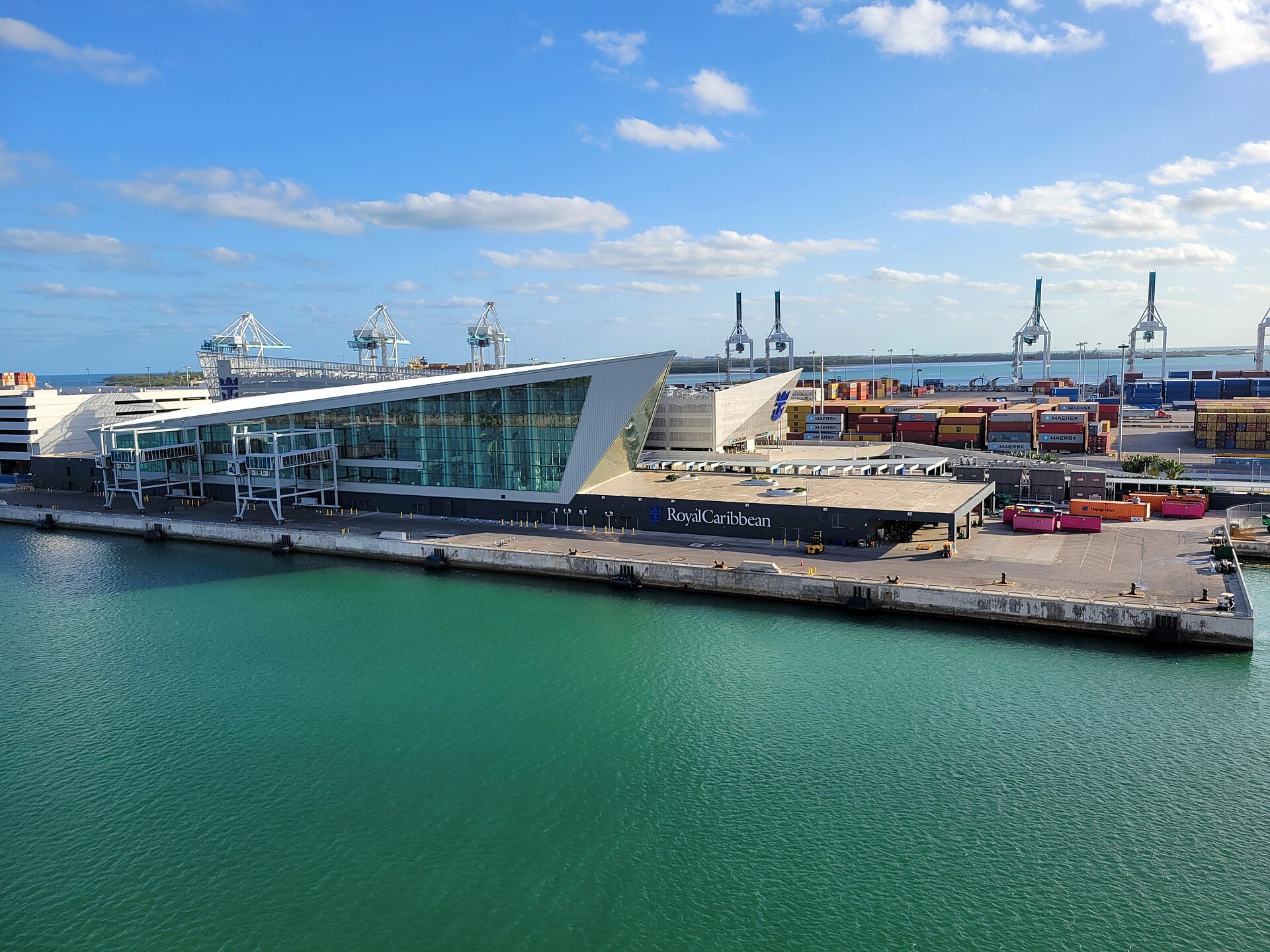
| A | Royal Caribbean | The “Crown of Miami” — angular glass, built for the Oasis-class ships |
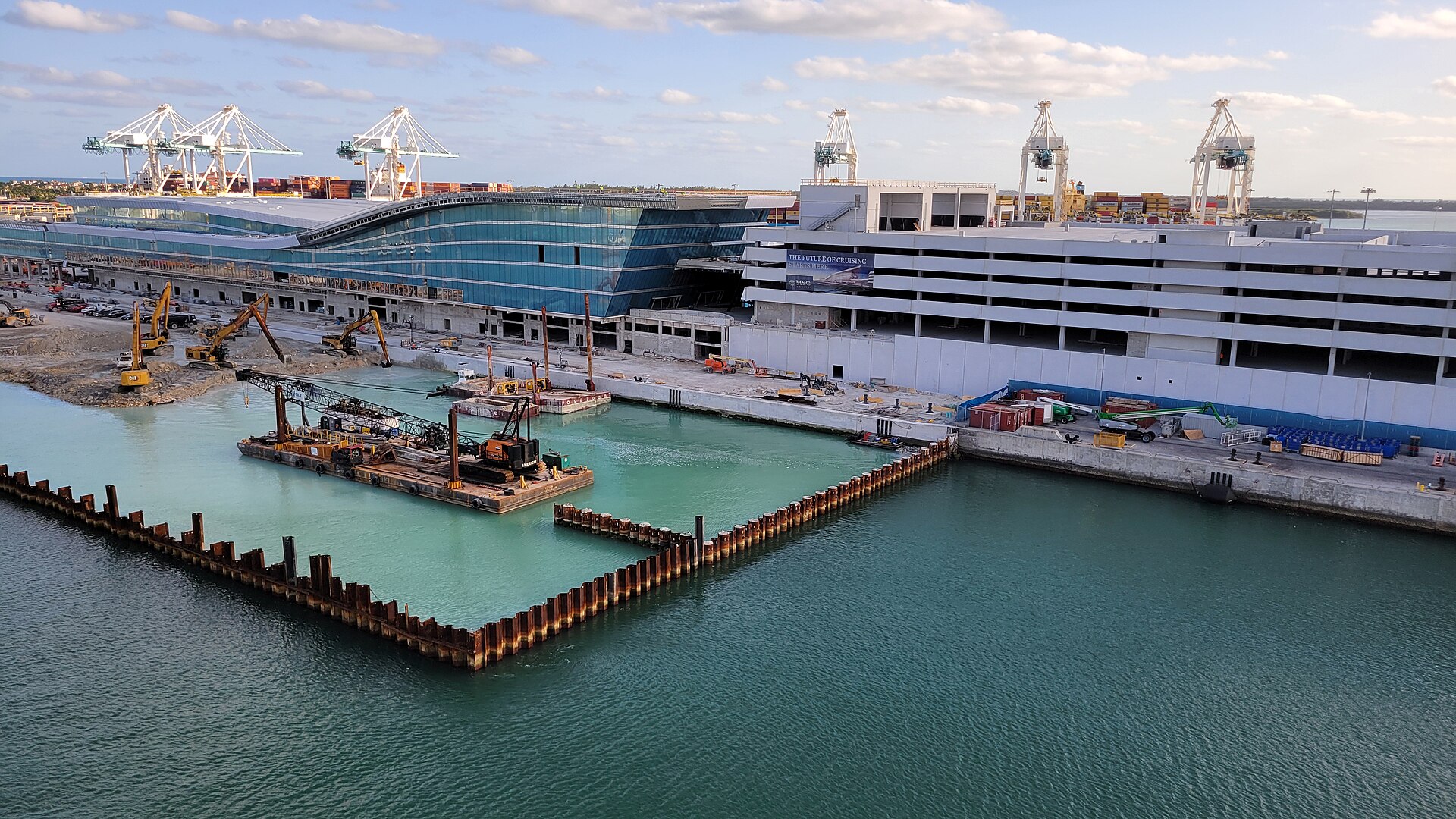
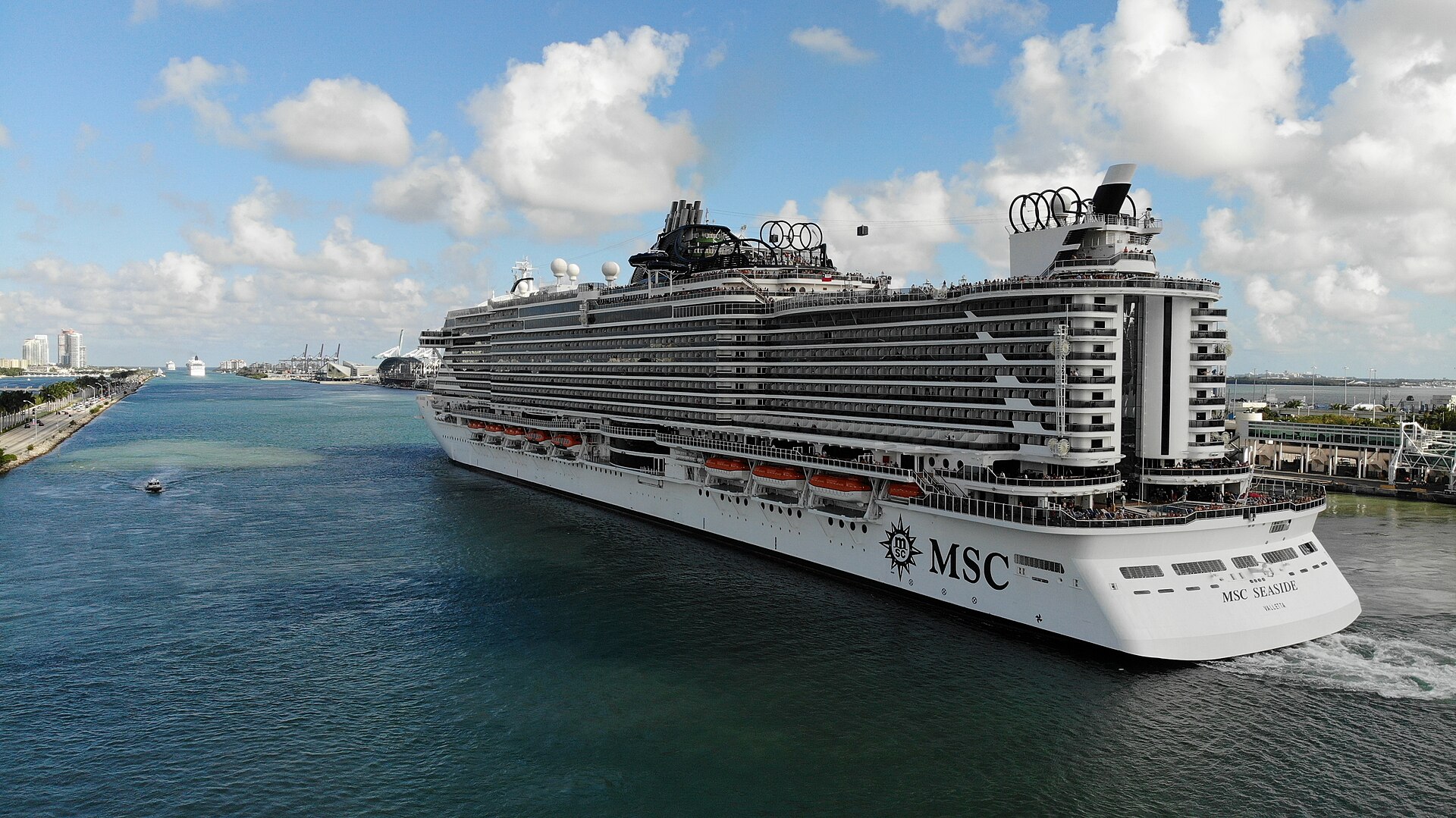
| AA / AAA | MSC Cruises | MSC’s own double terminal, the newest large complex on the island |
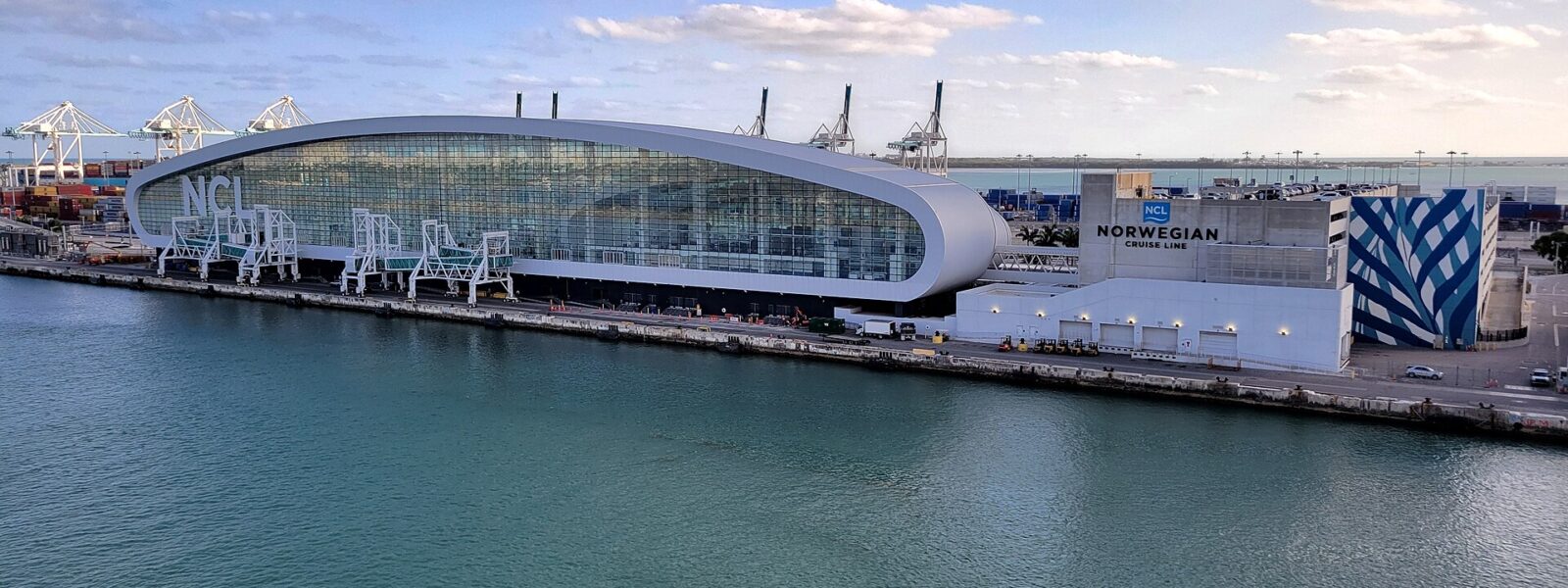
| B | Norwegian Cruise Line | The elliptical “Pearl” — three boarding bridges, purpose-built for NCL’s fleet |
| C | Celebrity, plus overflow | Also takes Royal Caribbean sailings displaced by construction |
| D | Carnival | Older, functional, straightforward |
| E | Carnival | Nearest the oversized-vehicle lot |
| F | Carnival | Rebuilt for the Excel-class ships |
| J | Boutique / small ship | Oceania, Regent, Azamara, Windstar, Silversea, and small-ship calls by Cunard and Holland America |
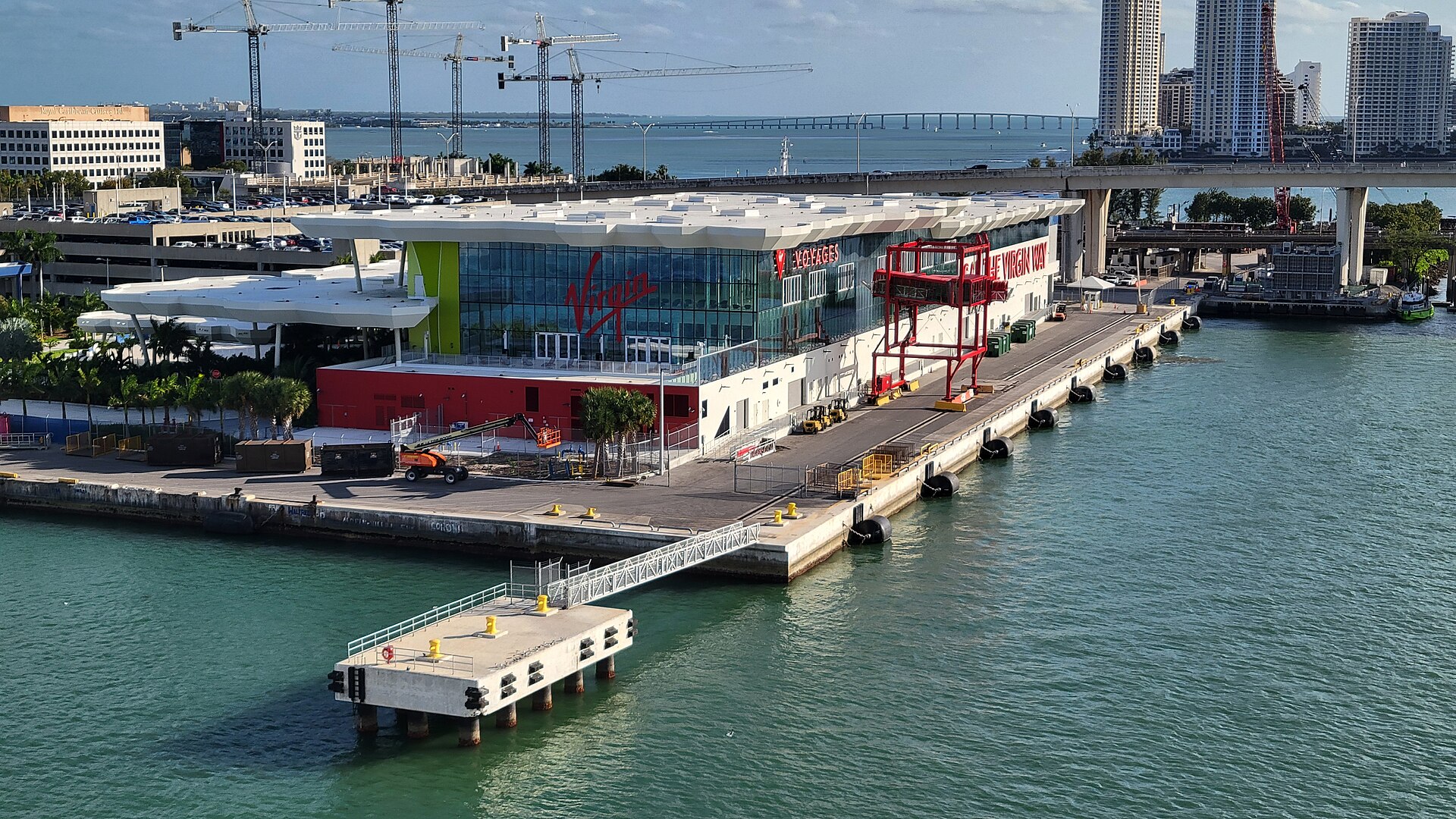
| V | Virgin Voyages | Adults-only; the quickest check-in on the island |
Terminal G no longer exists. It was demolished, and a new Royal Caribbean terminal is being built on the site with a target of late 2027. Any guide still listing a Terminal G is out of date, and a certain number of them are.
Find Your Terminal Before You Leave the Hotel
The terminal letter appears in three places and you should check at least two of them the night before:
- Your boarding pass or e-ticket, usually near the top with your arrival window.
- Your luggage tags, which you print and attach yourself — the terminal is printed on them because the porters sort by it.
- The cruise line’s app, which is the most current of the three and updates if an assignment changes.
If they disagree, trust the app. Assignments do move, particularly while construction narrows the number of available berths, and a change made a week before sailing will not be reflected on a document you printed a month ago.
The Terminals, One by One
Terminal A — Royal Caribbean
The landmark building on the island: a low, angular glass structure at the western end, designed for the largest ships in the world and processing crowds to match. Inside it is bright, open and organized around a long check-in hall with facial-recognition lanes for US citizens, which move considerably faster than the document desks beside them.
The scale is the thing to prepare for. When an Oasis-class or Icon-class ship turns around, six or seven thousand people leave in the morning and the same number arrive in the afternoon. Arrive inside your window rather than before it — early does not help here, it just puts you in a holding area.
Terminal AA and AAA — MSC Cruises
MSC’s own complex on the north side, and the newest large terminal on the island. Two adjacent buildings sharing a garage, designed so MSC can turn around two ships at once. European in feel — the signage, the queuing system and the staffing all reflect a line that carries a lot of non-American passengers, which in practice means a slightly more formal check-in and better multilingual support.
Terminal B — Norwegian Cruise Line
The most striking building at PortMiami and, for money, the best-designed: a long ellipse of curved glass with “NCL” set into the end, three boarding bridges along its length, and a garage attached at the eastern end. It was built specifically for Norwegian’s Miami fleet and it shows — the flow from drop-off through security to the gangway is the most efficient on the island when it is working properly.
Terminal C — Celebrity and overflow
Less distinctive than its neighbors and more important than it looks, because it absorbs what the construction displaces. Celebrity sails from here regularly, and Royal Caribbean departures moved off Terminal A end up here too. If your boarding pass says C and you were expecting A, this is why — it is not a mistake.
Terminals D, E and F — Carnival
Carnival’s three-terminal group on the south side. D and E are the older buildings: functional, unglamorous, and perfectly efficient once you are inside. F was rebuilt for the Excel-class ships and is markedly more modern.
One practical note specific to this group: Oversized vehicles, RVs and trailers use Surface Lot E, at $25 per space per day, or $50 for two spaces. If you are arriving in anything large, plan for that lot, whichever Carnival ship you are on. Our cruise parking guide covers the oversized rules.
Terminal J — the boutique terminal
The small-ship terminal, and a completely different experience from everything else here. Oceania, Regent Seven Seas, Azamara, Windstar and Silversea use it, along with small-ship calls by Cunard and Holland America. A few hundred passengers rather than several thousand, so check-in takes minutes, the queue is short, and the elaborate arrival-window choreography that governs Terminal A is largely irrelevant.
If you are sailing from J, most of the standard cruise-port advice on the internet does not apply to you. Turn up inside your window, walk in, and be on board in fifteen minutes.
Terminal V — Virgin Voyages
Virgin’s own terminal, red and green and unmistakable, at the eastern end near the Port Boulevard approach. Adults-only sailings, a smaller ship, and a check-in process the line has deliberately built around its app — most of it happens on your phone before you arrive. When it is not busy it is the fastest boarding at PortMiami by a clear margin.
What Is Actually Inside a Terminal
Broadly the same sequence everywhere, with variations in polish rather than process:
- A drop-off lane at the front where porters take your checked bags. This is the last time you will see them until the evening.
- A security screening area, airport-style: bags through a scanner, you through a detector. Liquids rules are the cruise line’s, not the TSA’s — the restriction is on alcohol rather than volume.
- A check-in hall, increasingly with facial-recognition lanes for US citizens who have uploaded a photo in advance. These are genuinely fast. The document desks beside them are not.
- A waiting area with seating, restrooms and, in the newer terminals, natural light. In the older ones it is a large room with rows of chairs.
- The gangway, called by boarding group or simply opened once your window is active.
What is not inside: anything worth eating. Terminal catering across the island ranges from a vending machine to a small kiosk, and lunch is included the moment you step aboard. Eat before you arrive. There is also no left luggage, no shower, and nowhere to wait comfortably for several hours — which is the practical reason arriving early does not work.
Wi-Fi exists in the newer terminals and is unreliable in all of them. Download your boarding pass rather than relying on loading it at the door.
Accessibility
All the terminals are step-free from the drop-off lane through to the gangway, with lifts where levels change and accessible restrooms throughout. A few points worth planning around:
- Wheelchair assistance is arranged through the cruise line, not the terminal, and should be requested when you book rather than on the day. Terminal staff can help, but the dedicated service is the line’s.
- The drop-off lane is the right approach for anyone who cannot manage the walk from the garage — unload at the door first, then park.
- Accessible parking spaces exist in every garage, close to the terminal walkways, and are not reservable. Arrive at the start of your window.
- Gangway gradients vary with the tide and the ship, and can be steeper than they look. Staff will assist if asked.
- Mobility scooters and wheelchairs travel free and are not counted as luggage, but the line needs to know the dimensions in advance for cabin access.
The Island Is a Building Site, and Will Be for Years
PortMiami has been rebuilding itself continuously for a decade, and the current round is not finished. Terminal G has gone; MSC’s complex is recent; Royal Caribbean’s replacement terminal is under construction with a target of late 2027; berths get closed and reassigned while the work goes on.
What this means for you is small but real:
- Assignments shift more than they used to. Check the app the night before, every time.
- Traffic patterns on the island change. Follow the signs and the traffic officers rather than a memory of last year’s route.
- Older guides are wrong more often than usual. Anything written before 2025 may name terminals that no longer exist or lines that have moved.
If You Arrive at the Wrong Terminal
It happens, usually because a driver guessed. The fix is not complicated but it is slow.
The terminals are spread over about two miles and there is no shuttle between them. If you are on foot, you cannot practically walk it with luggage — the roads are working port roads with cargo traffic. Go back to the drop-off lane, order another ride, and give the correct terminal letter this time. Budget twenty to thirty minutes.
If you are driving and have already taken a garage ticket at the wrong terminal, speak to the attendant before you park. Driving out again immediately is usually handled without charge; discovering the problem after four hours is not.
Getting Dropped Off
Every terminal has a drop-off lane directly in front of it, and rideshares, taxis, shuttles and private cars all use it. Two things make the difference between a smooth arrival and a scrappy one:
- Give the terminal letter, every time. Not the ship name, not “PortMiami.” Drivers who are given a ship name guess, and they guess wrong about a third of the time.
- Have your luggage tags attached before you get out of the car. Porters work fast and a bag without a tag becomes your problem to sort out at a desk inside.
Tip the porter a few dollars a bag. Keep medication, travel documents, swimwear and anything you want before dinner in your carry-on, because checked bags routinely take until early evening to reach the cabin. Our guide to getting from Miami airport to the cruise port covers the journey itself.
Disembarkation, Terminal by Terminal
Coming home works the same way everywhere: the ship clears customs, passengers are released from around 07:00, and the terminal is empty by about 10:30. US Customs at PortMiami now uses facial comparison for most arriving passengers, which has turned a long queue into a walk-past.
The differences between terminals are marginal. The newer buildings — A, AA, B, F, V — have more space in the luggage hall and clearer collection zones. The older Carnival terminals are more crowded but no slower. Terminal J is nearly instant, because there are only a few hundred people.
The self-assist walk-off option, where you carry your own bags off from about 07:00, is the fastest route out of every terminal on the island and often has you through in twenty minutes. It only works if you can genuinely manage your luggage down several decks of stairs and crowded lifts.
What You Can and Cannot Take Through
Terminal security is run to the cruise line’s rules rather than the airport’s, and the differences trip people up in both directions.
- Liquids are not restricted the way they are at an airport. You can carry a full water bottle through. What is restricted is alcohol — most lines allow a limited quantity of wine or champagne per cabin and confiscate spirits, holding them until the end of the cruise.
- Power strips and extension leads with surge protection are prohibited on every major line and are routinely pulled out of bags at the scanner. Non-surge-protected strips and USB blocks are usually fine.
- Irons, kettles and travel steamers are prohibited. This is a fire rule and it is not negotiable.
- Drones are generally confiscated at boarding and returned at the end of the sailing.
- Knives, including dive knives and multi-tools, are held for the duration.
If something is taken, you get a receipt and collect it on the final morning at the terminal. That collection is at a desk in the luggage hall, and it adds fifteen minutes to a disembarkation you were hoping would be quick.
Arriving on a Day When Several Ships Turn Around
PortMiami’s record day was over 72,000 passengers, in April 2025, and while that is exceptional, four or five simultaneous turnarounds is an ordinary winter Saturday. Everything on this page is easier midweek.
You can tell what kind of day you have landed on before you reach the island: if the Port Boulevard bridge is backed up at 11:00, so is everything behind it. On those days, add fifteen minutes to every estimate here, take the tunnel rather than the bridge if you have the choice, and take the later half of your boarding window rather than the earlier one — the queues at 14:30 are a fraction of the queues at 12:00, and your cabin will already be ready.
Honest Verdicts
- Terminal B is the best building on the island and the flow through it is the best-designed. Terminal A is the most impressive to look at and the most crowded to use.
- Terminal J passengers should ignore most cruise-port advice. Small ships board in minutes; none of the crowd management applies.
- Do not eat in a terminal. There is nothing worth eating and lunch is free the moment you board.
- The facial-recognition lane is worth ten minutes. Upload your photo during online check-in rather than at the desk.
- Trust the app over the printout. Assignments move, and the app is the version that updates.
- Arriving early is not a strategy. There is nowhere comfortable to wait in any of these buildings.
Frequently Asked Questions
How many cruise terminals does the Port of Miami have?
Nine in active passenger use — A, AA/AAA, B, C, D, E, F, J and V. Terminal G was demolished and a replacement Royal Caribbean terminal is due on the site in late 2027.
Which terminal does my cruise line use?
Royal Caribbean at A, MSC at AA/AAA, Norwegian at B, Celebrity at C, Carnival at D, E and F, Virgin Voyages at V, and small-ship luxury lines at J. Assignments shift during construction, so check your boarding pass and the line’s app.
Where do I find my terminal number?
On your boarding pass, on your printed luggage tags, and in the cruise line’s app. If they disagree, the app is the most current.
Can I walk between the terminals?
No. They are spread across about two miles of working port roads with cargo traffic, and there is no shuttle between them. Take a vehicle.
Is there food in the cruise terminals?
Effectively none worth having — a vending machine or a small kiosk at most. Eat before you arrive; lunch is included as soon as you board.
Are the terminals wheelchair accessible?
Yes, all of them, step-free from the drop-off lane to the gangway. Request wheelchair assistance through your cruise line when you book rather than on the day.
What happens if I go to the wrong terminal?
Order another ride from the drop-off lane and allow twenty to thirty minutes. If you have already taken a garage ticket, speak to the attendant before parking.
Does each terminal have its own parking?
Yes — a garage directly beside it, with no shuttle needed. Rates run roughly $22 to $35 a day and are paid on exit. See our cruise parking guide.
Checking your terminal letter is one of the jobs best done the evening before, along with confirming the shuttle and packing an afternoon carry-on. Our guide to a day in Miami before your cruise covers that checklist and how to fill the free hours without making the morning harder.
Knowing your terminal is step one of a longer morning. Our step-by-step guide to Miami cruise embarkation picks up from there: what to hand the porters, what to keep, how security and check-in work, what you can carry on, and which side of the ship to stand on for the sailaway.
Related Miami Guides
- Port of Miami Cruise Port Guide — the full picture of sailing from here.
- Port of Miami Cruise Parking — garage rates, off-site lots and the debit card rule.
- Miami Airport to the Cruise Port — every transfer option compared.
- Hotels Near the Port of Miami — where to stay the night before.
- Getting Around Miami — and why no transit route reaches the island.
- Parking in Miami — the rest of the city.
- Miami International Airport Guide — the other big transit building in your trip.
- Downtown Miami Guide — what is across the water from the terminals.
Photo Credits
Norwegian’s Terminal B: Norwegian Cruise Line (NCL) Terminal B at PortMiami (March 11, 2024) 01 by Kiran891, CC BY-SA 4.0, via Wikimedia Commons.
MSC’s terminal under construction: MSC shared terminal under construction at PortMiami (March 11, 2024) by Kiran891, CC BY-SA 4.0, via Wikimedia Commons.
Remaining photographs from the miamitourism.org library.