Cruises from Miami: Lines, Ships & Itineraries
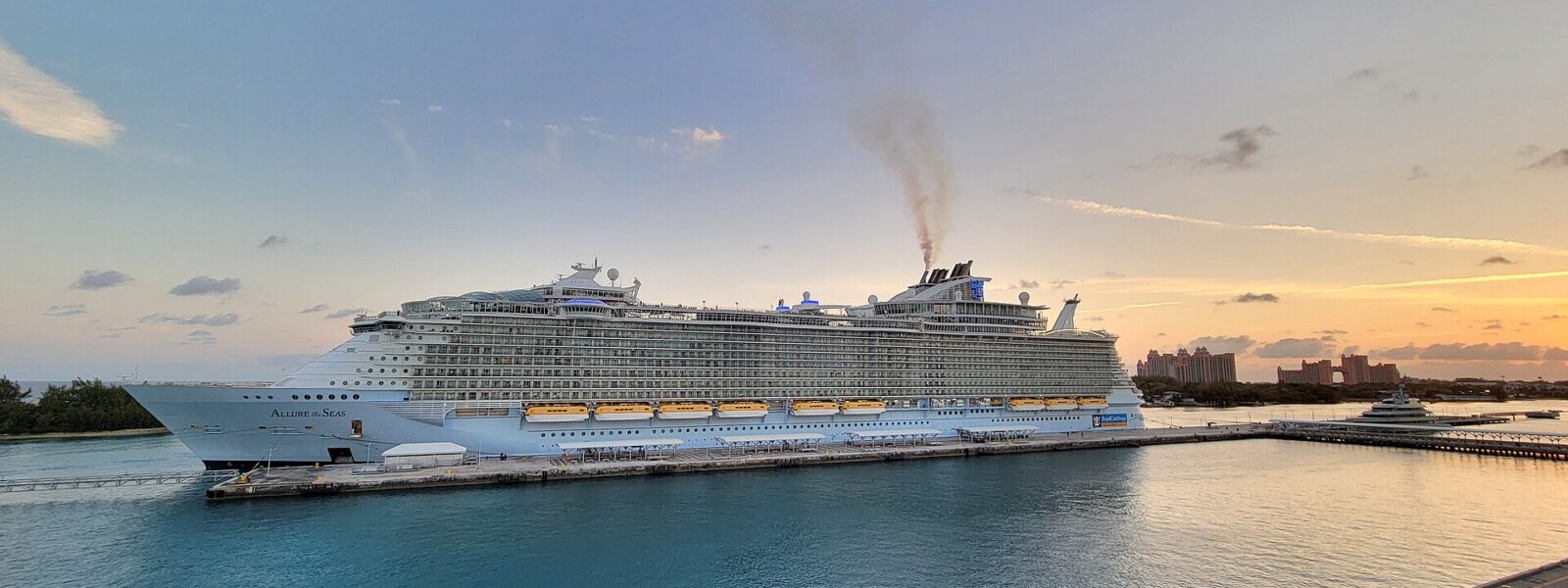
More people begin a cruise in Miami than anywhere else on earth, and on a January Saturday you can watch the reason for it: seven or eight ships alongside Dodge Island at once, sailing to seven or eight different sets of islands. Cruises from Miami cover a wider range than any other port — three nights to Nassau on a budget, eleven nights to the Southern Caribbean, a Panama Canal transit, or a transatlantic repositioning voyage in November when the fleet moves back to Europe.
This guide is about choosing between them: which lines sail from here and who they suit, what each itinerary length actually gives you, what a cruise really costs once the fare stops being the whole price, and when to book. Prices were checked in September 2026 and cruise fares move constantly — treat everything below as a working range rather than a quote. The logistics of the port itself are in our Port of Miami cruise port guide.
At a Glance: The Itineraries
| Length | Where | Typical fare per person | Suits |
|---|---|---|---|
| 3–4 nights | Nassau plus a private island | $200–$450 inside cabin | First cruises, long weekends, testing the water |
| 5 nights | Key West, Cozumel, or Bahamas plus one more | $350–$650 | A short week without the sea days |
| 7 nights, Eastern | San Juan, St Thomas, St Maarten | $500–$1,000 | Beaches, warm water, more sea days |
| 7 nights, Western | Cozumel, Grand Cayman, Roatán, Costa Maya | $500–$1,000 | Ruins, reefs and actually doing something ashore |
| 10–11 nights | Southern Caribbean | $900–$1,800 | Islands the big ships rarely reach |
| Panama Canal | Partial or full transit | $1,200–$3,000 | The engineering, and a genuine bucket-list day |
| Transatlantic | Europe, April and November | $700–$1,500 | Sea-day people and the best value in cruising |
The Lines That Sail From Miami
Nine or so operators use PortMiami regularly, and the differences between them matter more than the differences between itineraries. A seven-night Western Caribbean on Carnival and on Silversea are not the same holiday in any respect except the map.
Royal Caribbean — Terminal A
The biggest ships in the world, sailing to the line’s own private island. Enormous, activity-dense, and aimed squarely at families and groups who want a resort that moves. If your idea of a good day at sea involves a rock wall, a water park and four restaurants, this is it. If you want quiet, look elsewhere. Terminal A is built for these ships and handles crowds well.
Carnival — Terminals D, E and F
The value operator, and unashamed about it. Fares are the lowest of the big lines, the crowd is younger and louder, and the short Bahamas sailings are where a very large share of Americans take their first cruise. Excellent for what it is; a poor fit if you were hoping for a quiet balcony and a wine list.
Norwegian Cruise Line — Terminal B
The middle ground, and the line that popularized not dressing for dinner or eating at a fixed time. More restaurants, fewer rules, and a slightly older crowd than Carnival. Terminal B is the best-designed building on the island, which is a small pleasure at the start of a holiday.
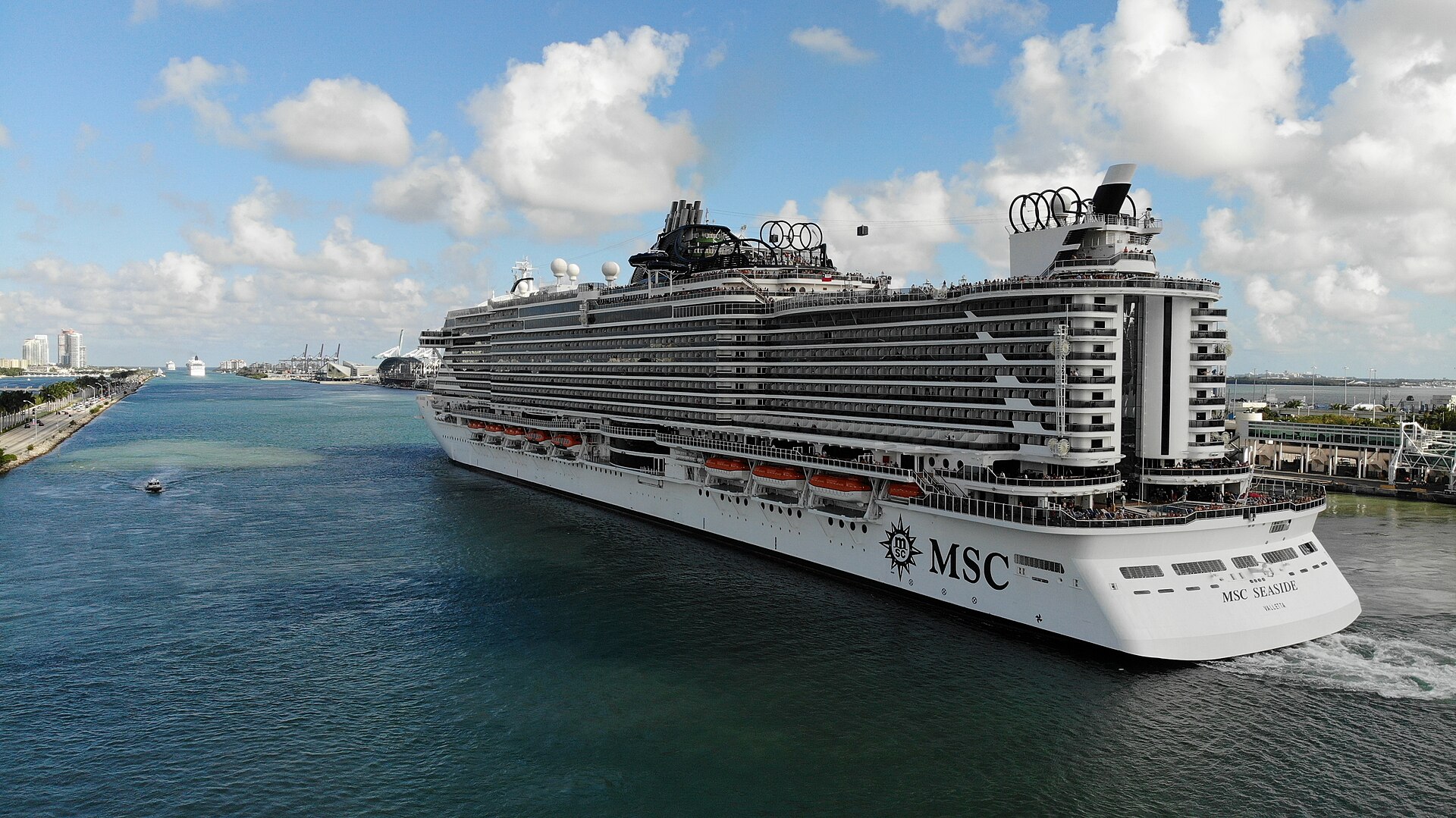
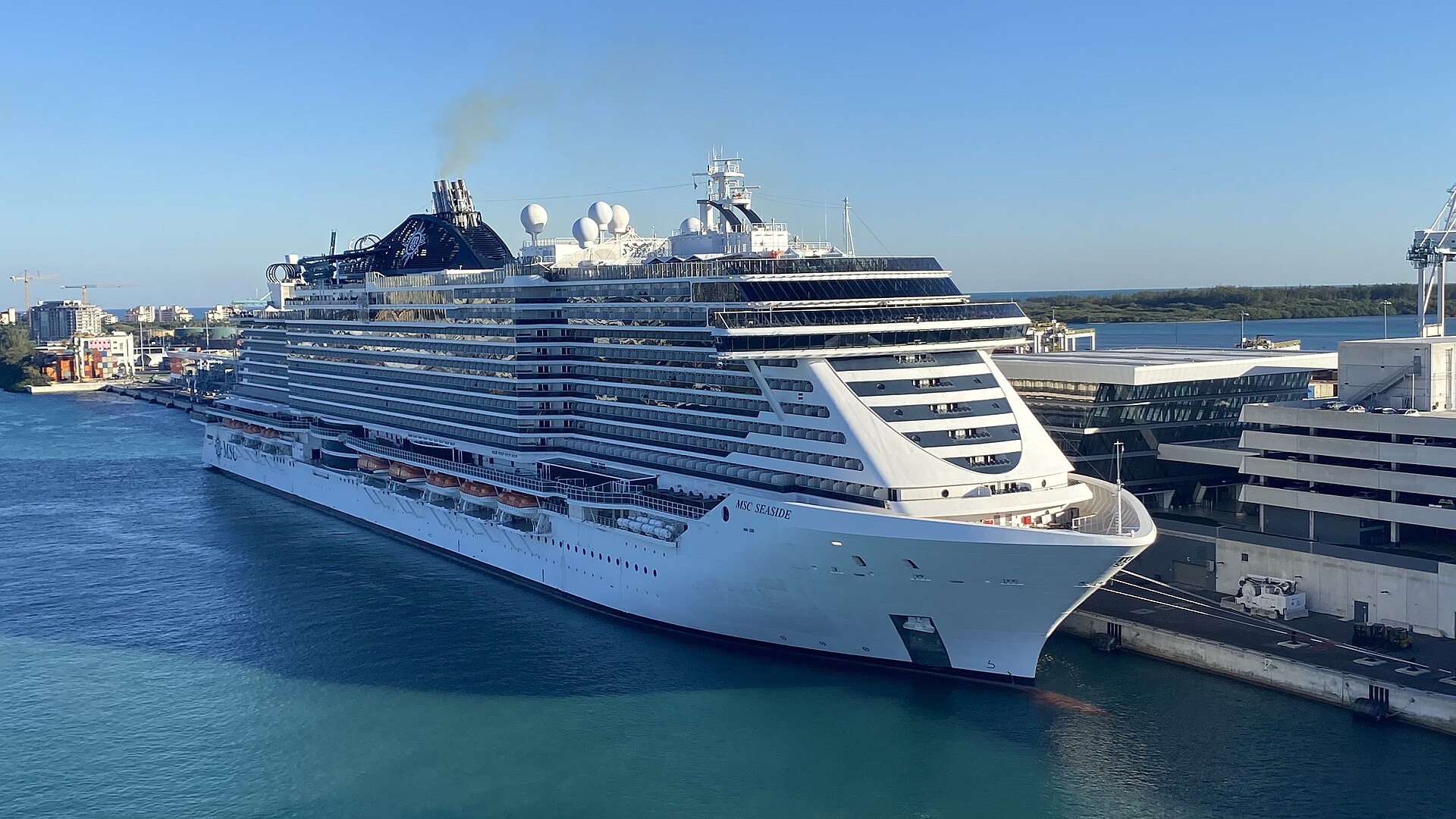
MSC Cruises — Terminals AA and AAA
European in style and ownership, which in practice means a more international passenger mix, better coffee, and a two-tier product where the paid “Yacht Club” area is genuinely a ship-within-a-ship. Fares are often the lowest on the board for a comparable ship, and the line sails to its own marine-reserve private island in the Bahamas.
Virgin Voyages — Terminal V
Adults only, no formal nights, no buffet, tips and Wi-Fi included in the fare, and a design language closer to a boutique hotel than a cruise ship. It is the most genuinely different product sailing from Miami and it suits couples and groups in their thirties and forties. It is not cheap and it is not for children, by design.
Celebrity — Terminal C
A step up in tone from the mass-market lines without going full luxury: better food, calmer public spaces, more adults. The most common answer for people who found a Carnival or Royal Caribbean ship overwhelming but do not want to pay small-ship prices.
The small ships — Terminal J
Oceania, Regent Seven Seas, Azamara, Windstar and Silversea, plus small-ship calls by Cunard and Holland America. A few hundred passengers, ports the big ships cannot enter, food that is the point rather than the fuel, and fares that are two to five times higher — though far more is included. Boarding takes fifteen minutes rather than two hours.
Itineraries, in Detail
Short Bahamas sailings — 3 and 4 nights
The volume business at this port, and the reason so many people start cruising here. Friday and Monday departures, Nassau plus a cruise line’s private island, back before you have used a week of leave. Fares outside peak weeks are genuinely low — an inside cabin can be under $250 per person before extras.
What you get: a taste of the ship, two ports, and one full sea day at most. What you do not get: any real sense of the Caribbean, or enough time to settle into the rhythm that makes longer cruises worthwhile. It is the right first cruise and a slightly unsatisfying tenth one.
Worth being clear about the difference from a day trip: if what you want is the Bahamas and back inside twenty-four hours, that is the fast ferry to Bimini, covered in our Bahamas day trip guide, and it is a completely different proposition.
Eastern Caribbean — 7 nights
San Juan, St Thomas and St Maarten, sometimes with Tortola or Antigua. More sea days than the Western route because the distances are longer, better beaches, and duty-free shopping that some people plan the whole week around. It is also the itinerary most exposed to hurricane-season rerouting between August and October.
Western Caribbean — 7 nights
Cozumel, Grand Cayman, Roatán, Costa Maya, sometimes Ocho Rios or Falmouth. Mayan ruins, cenotes, reef diving and rainforest rather than beach bars. The better choice if you actually want to do things ashore. Cozumel is a deep-water berth with no tendering, which matters more than it sounds when your port call is six hours long.
Southern Caribbean — 10 and 11 nights
Aruba, Curaçao, Bonaire, Barbados, St Lucia, Grenada. Drier, less hurricane-exposed, and considerably less visited by the mega-ships. Fewer sailings, higher fares, and a much stronger sense of having gone somewhere. If you have done a seven-night Caribbean cruise and found it repetitive, this is the fix.
Panama Canal
Partial transits enter the locks, turn around in Gatún Lake and come back; full transits go all the way through to the Pacific and end somewhere else. The engineering day is genuinely extraordinary and the rest of the itinerary is a Caribbean cruise. Book a balcony on the correct side, or accept that you will be on an open deck at 06:00 with everyone else.
Transatlantic repositioning
Every April and November the fleet moves between the Caribbean and Europe, and those crossings are sold at a fraction of the per-night price of anything else. Twelve to fifteen nights, six or seven of them at sea, one-way, and you buy your own flight home. The best value in cruising and completely wrong for anyone who needs something to happen every day.
The Private Islands
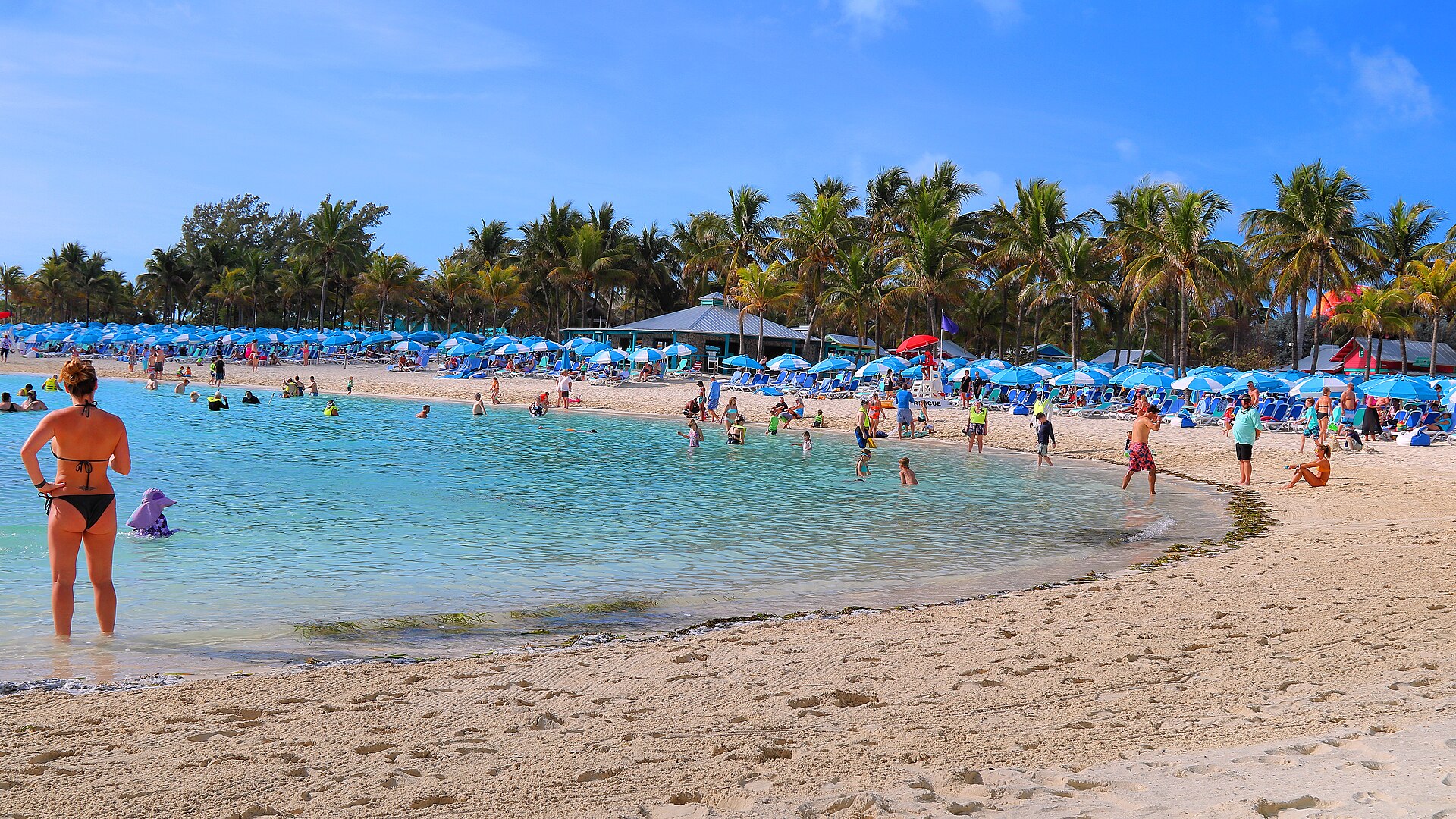
Nearly every short cruise from Miami includes a day at a beach the cruise line owns, and these have become a genuine reason to pick one line over another.
- Perfect Day at CocoCay — Royal Caribbean’s, and the most developed: water park, zip line, a helium balloon, several beaches. Much of it costs extra on top of your fare.
- Ocean Cay MSC Marine Reserve — MSC’s, and the quietest and most attractive of them. A restored former industrial site now run as a marine reserve, with ships often staying into the evening.
- Celebration Key and Half Moon Cay — Carnival’s two. Half Moon Cay is the older and much-loved one, a crescent of sand reached by tender; Celebration Key is the new, large-scale development.
- Great Stirrup Cay — Norwegian’s, the original private island in the Bahamas, straightforward and beach-focused.
- Bimini Beach Club — Virgin’s, smaller and more of a beach club than an island day.
The honest note: these are lovely and they are busy. Four to six thousand people land on the same strip of sand at the same time, the good loungers go in the first twenty minutes, and the peaceful photographs in the brochure were taken before the tenders arrived. Get off early, walk further than you think you need to, and they are excellent.
What a Cruise Actually Costs
The advertised fare is roughly half to two-thirds of what you will spend, and the gap catches first-timers every time. Here is the full picture.
| Item | Typical 2026 cost |
|---|---|
| Fare, 7-night Caribbean, inside cabin | $500–$900 per person |
| Fare, 7-night Caribbean, balcony | $900–$1,600 per person |
| Port fees and taxes | $100–$250 per person, added at booking |
| Gratuities | $16–$22 per person per day, charged automatically |
| Drinks package | $60–$110 per person per day |
| Wi-Fi | $20–$35 per day |
| Shore excursions | $60–$200 per person per port |
| Specialty restaurants | $30–$70 per person per meal |
| Port parking, 7 nights | $175–$200 — see our parking guide |
| Travel insurance | 4–8% of the total trip cost |
A realistic total for two people on a seven-night Caribbean cruise in a balcony cabin, with gratuities, a drinks package, a couple of excursions and parking, lands somewhere between $4,000 and $5,500 — against an advertised fare that might have said $899 each. None of this is hidden exactly, but very little of it is prominent.
The three places to save real money: skip the drinks package unless you will genuinely drink five or six a day, book excursions independently in port rather than through the ship where the port is safe and walkable, and use an off-site parking lot rather than the port garage — our cruise parking guide covers that last one. Our Miami budget tips apply to the land end of the trip.
Choosing a Cabin
The cabin decision usually accounts for more of the fare difference than the itinerary does, and the received wisdom is not always right.
- Inside cabins have no window, and on a big ship that matters less than people expect — you are in the room to sleep. They are the cheapest by a wide margin and the right choice on a short cruise or a first one. The exception is anyone prone to seasickness or claustrophobia, for whom the lack of a horizon is a genuine problem.
- Oceanview cabins have a window that does not open. They cost more than inside and less than balcony, and on most ships they are the least good value of the three.
- Balconies are where the money goes and, on a seven-night sailing with sea days, where it is usually worth going. Morning coffee outside is the single most-cited reason people upgrade and keep upgrading.
- Suites buy you space, priority boarding and, on several lines, access to a separate restaurant and sun deck. On MSC and Norwegian in particular the top tier is effectively a separate ship, and if you are going to spend that much it is a better use of money than a bigger balcony.
Two location rules worth knowing whatever you book: mid-ship and low down is the steadiest part of the vessel, which matters in open water; and check what is directly above and below your cabin before you confirm. A room under the buffet or above the theater is cheap for a reason.
Shore Excursions: Booked With the Ship or Independently?
This is where a surprising amount of the total cost lands, and the right answer varies by port.
Book through the ship when the port is remote, the excursion involves a long drive, or the activity is time-critical. The ship’s genuine advantage is that it waits for its own tours — if a bus is late back, the ship holds. It does not hold for you.
Book independently when the port is safe, walkable and close to what you want. Cozumel, Grand Cayman, Nassau and St Thomas all fall into this category for most activities, and independent operators typically charge half to two-thirds of the ship’s price for the same thing. Leave a two-hour buffer before all-aboard and you are fine.
Or do nothing at all. A perfectly good port day is walking off, finding a beach within a taxi ride, and being back for lunch. Nobody’s cruise was ruined by skipping an organized tour, and plenty have been soured by paying $180 a head for a coach.
Sea Days, and Whether You Will Like Them
The single best predictor of whether someone enjoys cruising is how they feel about a day at sea, and it is worth being honest with yourself before booking an itinerary with several.
A sea day on a big ship is busy — shows, classes, pools, a dozen places to eat, and a daily programme with something in every hour. A sea day on a small ship is quiet by design: a book, a lecture, a long lunch. Neither is better and they attract completely different people.
Short Bahamas sailings have almost no sea days, which is part of why they work as an introduction. Seven-night Eastern Caribbean itineraries have two or three. Transatlantic crossings have six or seven consecutively, which is either the entire appeal or an ordeal. If you have never done one, do not start with a repositioning voyage however good the fare looks.
When to Sail, and When to Book
| Period | Fares | Conditions |
|---|---|---|
| January–March | Highest | Best weather, fullest ships, book far ahead |
| April–May | Moderate | The sweet spot — warm, quieter, low storm risk |
| June–August | Low | Hot and humid; school holidays fill family ships |
| September–October | Lowest | Peak hurricane season; expect itinerary changes |
| November–early December | Moderate | Excellent value before the Christmas surge |
| Christmas and New Year | Highest of all | Book a year ahead or do not bother |
On booking timing: “wave season” runs January to March and is when the lines run their heaviest promotions for the following year, which is genuinely when the best combination of choice and price exists. Last-minute deals are real but they are a gamble — you get what has not sold, which is usually an inside cabin on an unpopular date, and flights bought late erase the saving.
About hurricane season: ships move, itineraries change, and sailings are rarely cancelled outright. If a specific port is the entire reason you booked, do not sail between August and October. If you simply want to be on a ship in warm water for very little money, it is the best value on the board — and travel insurance stops being optional.
Big Ship or Small Ship?
The single most consequential choice, and the one most people make by accident.
A big ship — five to seven thousand passengers — is a destination in itself. Water parks, theaters, a dozen places to eat, and something happening at every hour. The trade is crowds: queues at the buffet, four thousand people getting off at the same port, and a private island that feels like a busy public beach. Best for families, first-timers and anyone who wants the ship to be the holiday.
A mid-size ship — two to three thousand — is the sensible middle. Enough on board to matter, small enough to move around, and it can enter ports the giants cannot.
A small ship — a few hundred — is a different product entirely. Ports the big ships cannot reach, no queues anywhere, food and service as the main event, and far more included in the fare. It costs two to five times as much and it is worth it to the people it suits.
Your First Cruise From Miami
If you have never cruised and you are choosing from this port, the sensible sequence is:
- Take a 3- or 4-night Bahamas sailing first. It is cheap, it is short, and if you discover you dislike being on a ship you have lost a weekend rather than a fortnight.
- Book an inside cabin the first time. You will find out whether you actually spend time in it. Many people do not.
- Fly in the day before, without exception. See our guide to hotels near the Port of Miami.
- Take a passport, even on a closed-loop sailing where a birth certificate is technically sufficient. Without one you cannot fly home from a foreign port if you miss the ship.
- Do not book the drinks package on the first cruise. You do not yet know what you drink at sea. You can usually add it on day one.
- Add two or three days in Miami. You have flown here; the city is worth more than a transfer. Our first-time visitor guide and things to do in Miami cover it.
Cruising With Children, or Without Them
Miami’s fleet is unusually clearly divided on this, which makes the choice easier than at most ports.
If you are traveling with children, Royal Caribbean and Carnival are built for you — supervised kids’ clubs by age band, water parks, and private-island days designed around families. Norwegian and MSC both work well too, MSC particularly because European family pricing often lets children sail free or heavily discounted, which can halve the cost of a family of four. School holidays fill these ships completely, so book early for July, August and the Christmas period.
If you are actively avoiding children, Virgin Voyages is adults-only across its whole fleet, which is the cleanest solution. Celebrity and the Terminal J small ships are not formally adults-only but carry very few children outside school holidays. Sailing in late January, early May or November also thins them out considerably on any line.
One thing that catches families out at this port specifically: everyone aged two and over needs their own fare, and a third and fourth person in a cabin is charged at a reduced but real rate. The advertised “from” price is always double occupancy.
Seasickness, and Which Routes Are Rough
Most people never feel it, and the ones who do are usually surprised by where.
The Bahamas routes and the Western Caribbean are generally calm — shallow, sheltered water and short distances. The Eastern Caribbean crosses more open ocean and can be noticeably livelier, particularly in winter when the trade winds are up. Transatlantic crossings in November are the roughest thing sailing from Miami and are not the place to discover you are susceptible.
If you are unsure: book mid-ship and low, take an over-the-counter remedy before you feel anything rather than after, and start with a short Bahamas sailing. Modern stabilizers do a great deal, and a large ship in the Caribbean in April is about as gentle as open water gets.
Combining a Cruise With Time in Miami
The mistake most visitors make is treating Miami as an airport with a port attached. You have flown a long way; the city is worth two or three days at either end and it costs very little to add them.
The obvious structure is two nights before and one after: arrive, see something, sail, come back, spend a final day, fly out rested. That also removes the two biggest logistical risks in cruising — the same-day arrival and the tight return connection — which is worth more than the hotel costs.
What to do with those days depends on your taste, and our things to do in Miami guide covers the range. If you want a shortlist: the Art Deco district and the beach at 12th Street; Little Havana for lunch and dominoes; Wynwood’s murals in the late afternoon; Vizcaya or Fairchild for a morning; and an evening in Brickell. Our Miami itineraries put those into a workable order, and day trips from Miami covers the Everglades and the Keys if you have longer.
Honest Verdicts
- The advertised fare is not the price. Add 60 to 100 percent and you are close. Anyone telling you a seven-night Caribbean cruise costs $899 is quoting one line of the invoice.
- Short Bahamas cruises are a great first cruise and a mediocre holiday. Two ports, one of them owned by the cruise line, and no time to settle.
- The drinks package is a bad deal for most people. It breaks even at roughly five or six drinks a day, every day, including port days.
- Private islands are busy. Lovely, but plan for four thousand other people rather than the photograph.
- Repositioning crossings are the best value in cruising and the fastest way to find out whether you like sea days.
- Book ship excursions where the port is difficult and independently where it is not. The ship’s real advantage is that it waits for its own tours.
- Do not sail in September for a specific port. Sail in September for a cheap week on a ship, and take whatever islands you are given.
Frequently Asked Questions
Where do cruises from Miami go?
Mainly the Bahamas on short sailings and the Eastern, Western and Southern Caribbean on longer ones, plus Panama Canal transits and transatlantic crossings in April and November.
How much does a cruise from Miami cost?
Fares start around $200 per person for a three-night Bahamas sailing in an inside cabin and run to several thousand for a small-ship or long itinerary. Expect the true total to be roughly 60 to 100 percent above the advertised fare once port fees, gratuities, drinks and excursions are added.
What is the cheapest cruise from Miami?
A three- or four-night Bahamas sailing on Carnival or MSC, outside peak weeks, in an inside cabin. September and early December are the cheapest months.
Which cruise line is best for families?
Royal Caribbean and Carnival, comfortably — the biggest ships, the most for children to do, and the private islands built around family days. Virgin Voyages is adults-only and Terminal J’s small ships are not aimed at children at all.
Do I need a passport for a cruise from Miami?
For a closed-loop sailing that starts and ends in Miami, US citizens can technically use a birth certificate and government photo ID. Take the passport anyway — without one you cannot fly home from a foreign port if you miss the ship.
Is it safe to cruise during hurricane season?
Yes. Ships move away from storms, and sailings are rarely cancelled. What changes is the itinerary, often at two days’ notice. Book insurance and do not sail August to October for one specific port.
How far in advance should I book?
Six to twelve months for peak season and Christmas, and use the January-to-March promotional period for the following year. Last-minute deals exist but the choice is poor and flights are expensive.
What is the difference between a cruise and a Bahamas day trip?
Entirely different. A cruise is a multi-night sailing with a cabin; the day trip is a fast ferry to Bimini and back within a day. See our Bahamas day trip guide.
Most of these sailings leave in the late afternoon, and the lines all recommend arriving in Miami the day before. That leaves you a free day in the city with a suitcase in tow; our guide to what to do in Miami before a cruise is built around exactly that problem.
Some of these itineraries also sail from Fort Lauderdale, thirty miles up the coast, and the choice between the two is not only about the fare. Flights, parking, the pre-cruise night and the sailaway all differ; our comparison of Port of Miami vs Port Everglades sets them side by side.
At the other end of the scale from the week-long voyages are the Friday-to-Monday weekenders and the midweek four-nighters, which Miami runs in greater numbers than almost any port in the world. Our guide to short cruises from Miami explains which lines run them, which private islands they visit and how much the gratuities, parking and extras add to a cheap fare.
Related Miami Guides
- Port of Miami Cruise Port Guide — terminals, transfers, embarkation and disembarkation.
- PortMiami Terminal Guide — which line uses which building.
- Port of Miami Cruise Parking — where the easy savings are.
- Hotels Near the Port of Miami — the night before, and the night after.
- Miami Airport to the Cruise Port — every transfer compared.
- Bahamas Day Trip from Miami — the same-day alternative.
- Key West Day Trip — another way to see a port without a cabin.
- Miami Boat Tours — time on the water without leaving the bay.
Photo Credits
Allure of the Seas at Nassau: Allure of the Seas & Atlantis Paradise Island resort, Nassau Cruise Port, Bahamas (March 14, 2024) by Kiran891, CC BY-SA 4.0, via Wikimedia Commons.
Chill Island at CocoCay: Chill Island CocoCay Bahamas 2024 by Larry D. Moore, CC BY 4.0, via Wikimedia Commons.
Remaining photographs from the miamitourism.org library.