Best Beaches for Swimming in Miami, for Every Kind of Swimmer
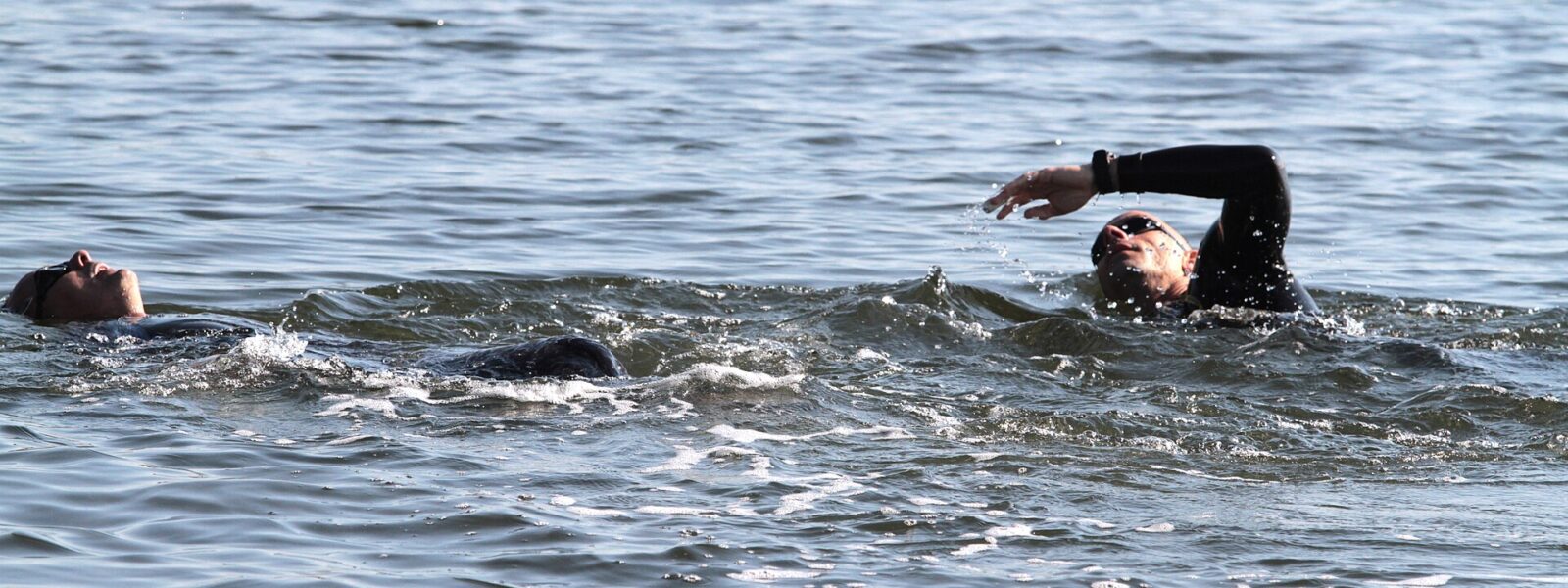
The beach that looks best in photographs is not always the one you want to swim at. South Beach is beautiful and busy, Haulover has the most character, and Sunny Isles has the widest sand, but the question a swimmer asks is different: how calm is the water, how clean, how clear, how deep, and is there a lifeguard watching? Judge them that way and the best swimming beaches Miami has are a slightly different list, led by a sheltered beach on Key Biscayne that most first-time visitors never see.
This guide ranks Miami’s beaches purely as places to swim, for every kind of swimmer: small children and nervous beginners, families, strong ocean swimmers and people who want to swim a mile before breakfast. It also covers where not to swim, how to check the water quality, what the flags mean and how warm the sea is each month. It is deliberately narrower than our best beaches in Miami ranking, which weighs everything else a beach day involves. Details were checked in September and October 2026.
Swimming Beaches at a Glance
| Beach | Water | Lifeguards | Best for | Watch out for |
|---|---|---|---|---|
| Crandon Park, Key Biscayne | Shallow and calm behind an offshore sandbar | Yes | Families, beginners, relaxed swimming | Seagrass, summer seaweed, weekend crowds |
| Bill Baggs Cape Florida | Usually the clearest, calm | Check on arrival | Confident swimmers who want clear water | Currents at the point by the lighthouse |
| Matheson Hammock atoll pool | Enclosed tidal pool, no waves | Yes, swimming only while on duty | Toddlers and very nervous swimmers | Periodic bacteria advisories; murky at low tide |
| South Beach and Mid-Beach | Open ocean, usually gentle | Yes, Miami Beach Ocean Rescue | Ocean swimming close to everything | Rip currents near jetties; crowds |
| North Beach and Surfside | Open ocean, usually gentle | Yes | Quiet ocean swims, distance swimming | Fewer facilities |
| Sunny Isles Beach | Open ocean, generally gentle | Yes, 10 towers | Families staying in the north | Swimming near the fishing pier |
| Virginia Key Beach Park | Calm bay water | Yes | Quiet, shallow swimming | Seaweed along the tide line |
| Haulover | Open-ocean surf that varies with the weather | Yes | Bodysurfing and strong swimmers | Inlet currents at the south end |
How We Judged Them
Five things matter when you are actually in the water, and they are the basis of every recommendation here:
- Calm. How often the water is flat or gently rolling rather than choppy, and how protected the beach is from swell.
- Safety. Whether lifeguards are on duty, how often rip currents form and how far you are from inlets, channels and jetties.
- Water quality. How the beach performs in the state’s regular bacteria testing, and how exposed it is to runoff after rain.
- Clarity. Whether you can see your feet, which matters more to some swimmers than to others.
- Depth. How quickly the bottom drops away, which decides whether a beach suits toddlers or lap swimmers.
No beach wins on all five. The calmest water tends to be the shallowest and least clear; the clearest water is on beaches with fewer facilities; the best ocean swimming is on the busiest sand. The rankings below are by the kind of swimmer you are.
Best Overall for Safe Swimming: Crandon Park
If you only swim at one beach in Miami, make it Crandon Park on Key Biscayne. An offshore sandbar breaks up the swell before it reaches the two-mile beach, leaving long stretches of shallow, warm, gentle water where you can wade out a long way before it reaches your waist. Lifeguards watch over the beach, there is shade under the palms behind it, and parking is $7 plus tax Monday to Thursday and $10 plus tax Friday to Sunday.
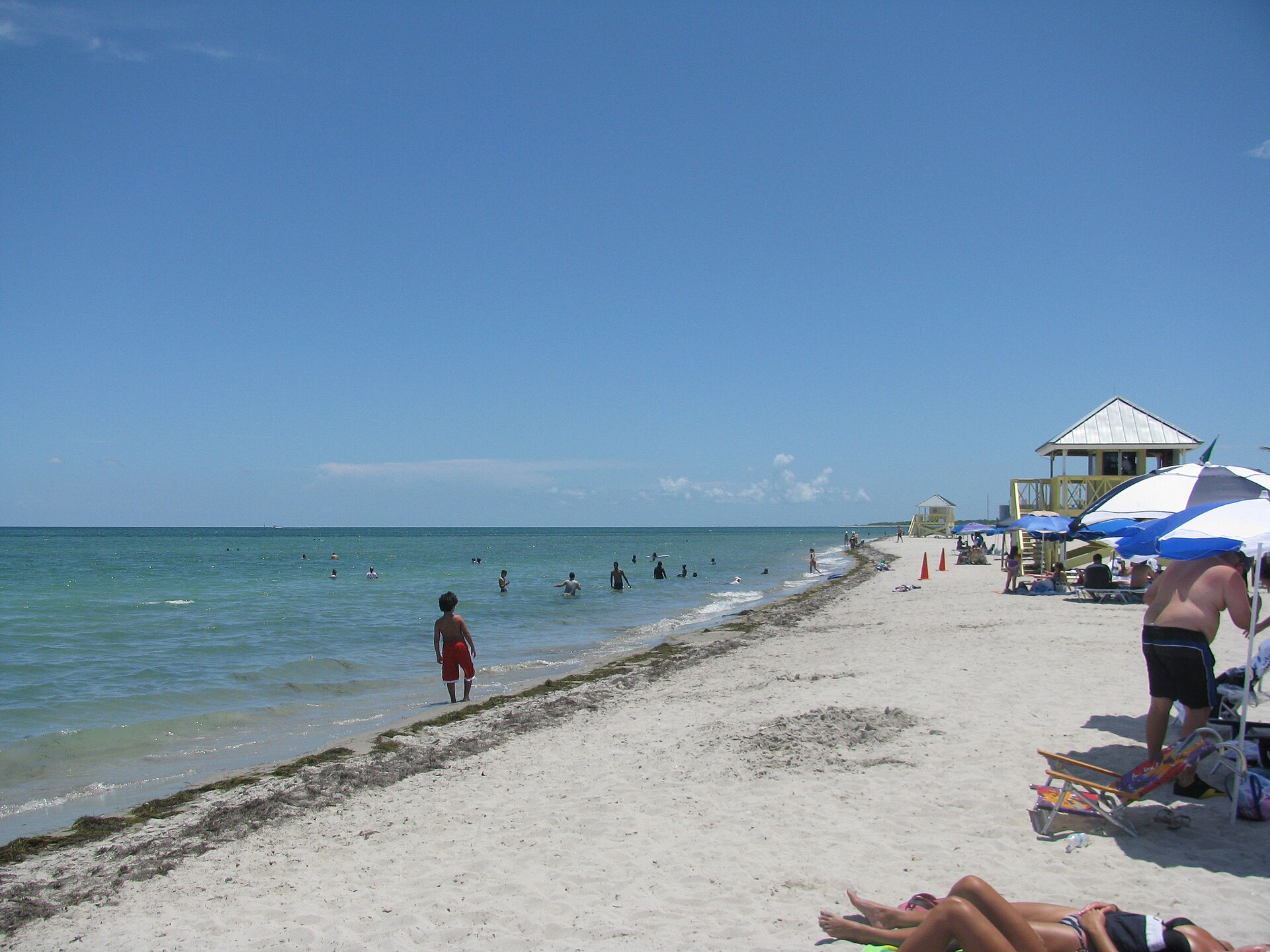
The trade-offs are honest ones. The water is not Caribbean-clear, the bottom is often patchy with seagrass, and from late spring into summer it is the Miami beach where you are most likely to meet a line of sargassum seaweed. For safe, relaxed swimming, though, nothing else in the county comes close, and it is where Miami’s own families take their children.
Clearest Water: Bill Baggs Cape Florida
A few minutes south of Crandon, at the tip of Key Biscayne, Bill Baggs Cape Florida State Park usually has the clearest water of any beach near Miami. It is still calm on most days, with a little more movement than Crandon when the wind is from the east, and the beach is quieter and wilder, backed by dunes rather than lawns. Entry is $8 per vehicle.
Two cautions. Check what is posted about lifeguards when you arrive, because state park beaches are not always guarded, and swim in front of the main beach rather than near the rocks at the point by the lighthouse, where the currents around the tip of the island are stronger than they look. For a confident swimmer who wants to see the bottom, it is the best water in the area.
Best for Toddlers and Nervous Swimmers: Matheson Hammock
The atoll pool at Matheson Hammock Park in Coral Gables is a man-made lagoon enclosed by a ring of sand and rock, filled and drained by the tide from Biscayne Bay. There are no waves and no currents, and the water stays shallow for a long way out, which makes it the gentlest swimming in Miami for a two-year-old or an adult who is uneasy in the sea.
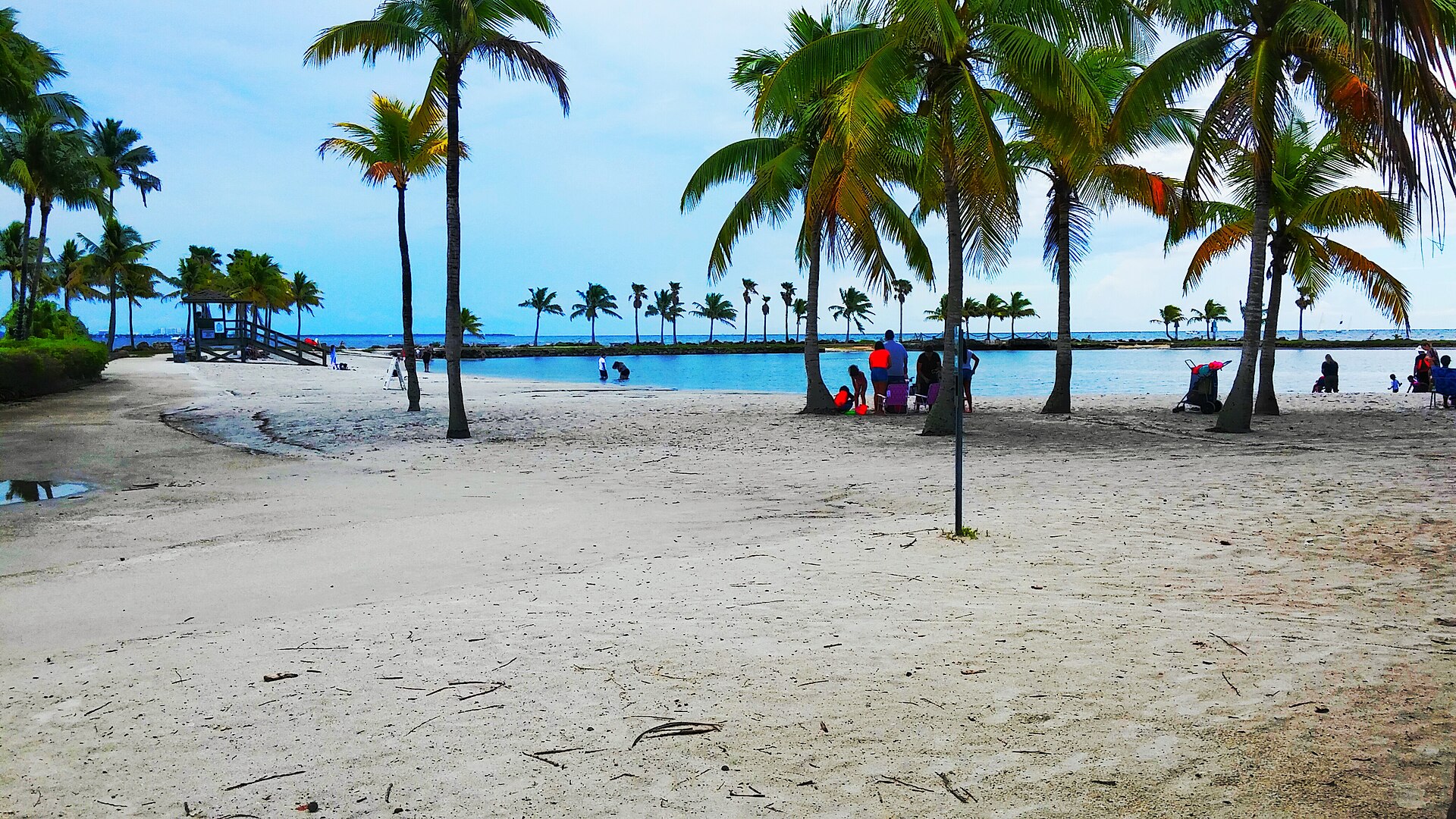
The lagoon is open seven days a week and lifeguards are on duty at weekends and holidays. The published hours are 9am to 5:30pm on weekdays and 9am to 6:30pm at weekends in summer, and 9am to 4:30pm on weekdays and 9am to 5:30pm at weekends in winter. Go near high tide, when the water is deeper and clearer. And check the water-quality results before you go, because the atoll has periodically been placed under no-swim advisories for high bacteria levels, especially after heavy rain. Parking is $7 plus tax on weekdays and $10 plus tax on weekends and holidays.
Best Ocean Swimming: South Beach and Mid-Beach
For swimming in the open Atlantic with lifeguards, facilities and everything else within walking distance, the Miami Beach strip is hard to beat. On most days the water is gentle, the sand slopes gradually and the lifeguard towers are spaced along the whole beach. Miami Beach Ocean Rescue, headquartered on the sand at 1001 Ocean Drive, and its hotline, (305) 673-7714, gives the day’s conditions.
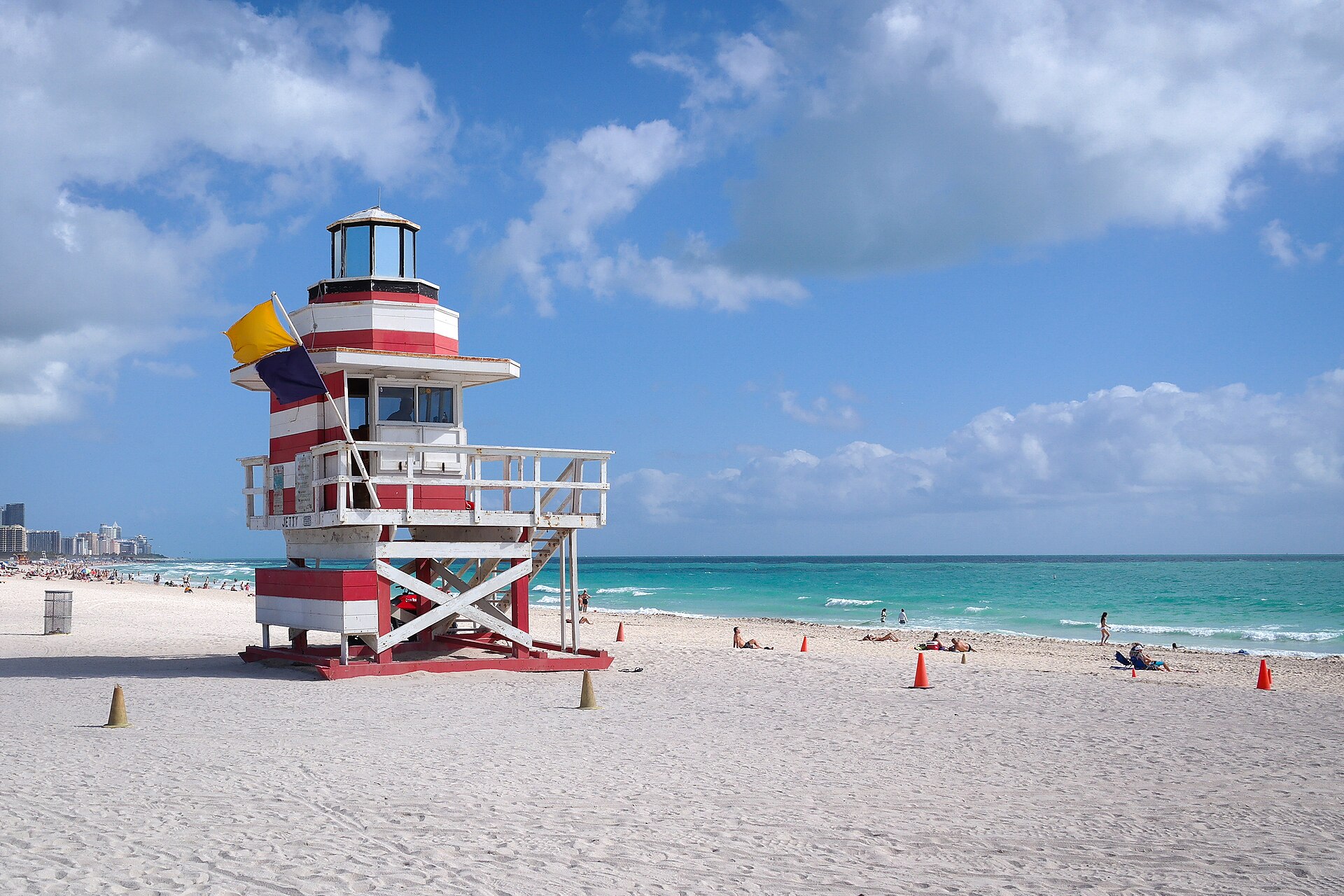
Choose your spot with care. Rip currents are the genuine risk on the ocean beaches, and they are strongest near the jetties at South Pointe and Government Cut, so swim in front of a tower in the middle of the beach rather than near the rocks. The water in front of Lummus Park, between about 5th and 15th streets, is the most crowded; Mid-Beach, from the 20s into the 40s, is calmer in every sense. Our South Beach guide covers the neighborhood.
Best for Distance Swimming: North Beach and Surfside
If your idea of a swim is a mile before breakfast, head north. The beaches of North Beach and Surfside have the same gentle Atlantic water as South Beach, with a fraction of the people, and early in the morning, when the sea is usually at its calmest, they are ideal for a long swim parallel to the shore.
- Swim parallel to the beach, not out to sea, and stay inside the line where the waves break or would break.
- Stay within sight of a lifeguard tower while they are staffed, and tell the lifeguard what you are doing.
- Tow a brightly colored swim buoy. Boats, jet skis and paddleboards use the same water, and a buoy makes you visible.
- Do not swim alone, and never at dawn or dusk near fishing piers, where fish and bait attract larger fish.
- Know your exit. Note the street-end access points as you go so you can come ashore if conditions change.
The Miami Beach boardwalk runs right behind these beaches, which makes it easy to walk back to your starting point. Our North Beach and Surfside guide covers the neighborhoods.
Best for Families Staying North: Sunny Isles Beach
Sunny Isles Beach has wide sand, generally gentle water and its own lifeguards in 10 towers, on duty from 9:30am to 6pm during daylight saving time and from 9am to 5:30pm in winter. It is an excellent choice if you are staying at one of the resorts there. Stay well clear of the Newport Fishing Pier when you swim: fishing lines and hooks are in the water, and swimming under the pier is not allowed.
Best Calm Bay Swimming: Virginia Key Beach Park
On the Rickenbacker Causeway, before you reach Key Biscayne, Virginia Key Beach Park faces calm, shallow water that suits a quiet swim, and a history worth knowing: during segregation, it was the beach set aside for Miami’s Black residents. It is far less busy than the ocean beaches, though the tide line often carries seaweed and the water is bay water, generally less clear than the open ocean.
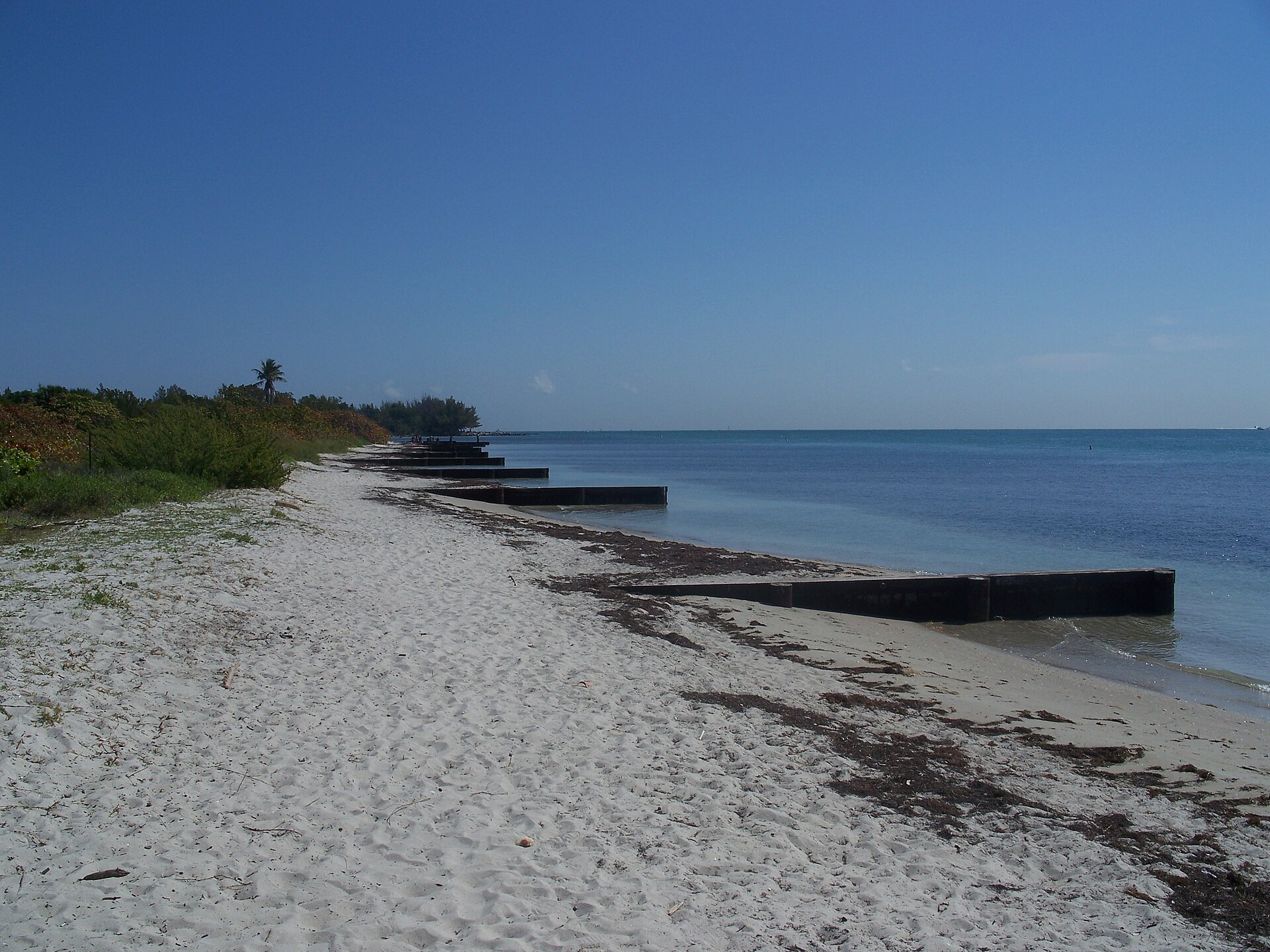
Nearby Hobie Island, on the same causeway, has similarly calm water but is above all a windsurfing and kiteboarding beach, with boards and kite lines moving fast in the shallows. Check whether lifeguards are posted, and swim well away from the launch areas.
Best for Waves: Haulover
Haulover has the most consistent surf in Miami-Dade, which makes it the most fun beach for bodysurfing and boogie boards, and the least suitable for weak swimmers when a winter swell is running. It is lifeguarded year-round, and on a calm summer day it is as gentle as anywhere. The rule at Haulover is simple: stay well away from the inlet at the south end, where tidal currents run strongly through the cut between the bay and the ocean.
One More: Homestead Bayfront Park
About forty minutes south of downtown, beside the headquarters of Biscayne National Park, Homestead Bayfront Park has an atoll pool much like Matheson Hammock’s, with calm water and no surf. It is too far to be a casual choice from Miami Beach, but if you are visiting Biscayne National Park or heading toward the Keys, it is a pleasant place for a swim. Our Biscayne National Park guide covers the area.
Where Not to Swim
Some of Miami’s most dramatic water is the most dangerous. Avoid:
- Government Cut and the inlets. The shipping channel at South Pointe and Haulover Inlet both carry strong tidal currents and boat traffic. Never swim in them or near their mouths.
- Jetties and rocks. Rip currents form along them, and the rocks are sharp.
- Under or beside fishing piers. Lines, hooks and the fish they attract make piers poor company for swimmers.
- Boat channels, marinas and the Miami River. Boat traffic and poor water quality.
- Canals and the inner bay after heavy rain. Runoff carries bacteria and debris into the water, and canals and rivers test worst of all.
- Windsurfing and kiteboarding areas, where boards and lines move fast.
- Anywhere at night, alone, after drinking or when there is lightning about.
Is the Water Clean?
Usually, yes, but it is worth checking, and it is easy to do. Under Florida’s Healthy Beaches program, the Department of Health in Miami-Dade County regularly samples popular beaches for enterococci, bacteria that indicate fecal pollution, and posts advisories when levels run high. Results fall into three bands:
| Rating | Enterococci per 100 mL of seawater |
|---|---|
| Good | 0 to 35 |
| Moderate | 36 to 70 |
| Poor | 71 or more |
When two consecutive samples at a beach come back above 70, the department issues a swimming advisory, and signs go up advising people not to swim until the water tests clean again. The beach itself stays open. Results and advisories are posted on the department’s Miami-Dade website, and they also appear in the free Swim Guide app, which shows each beach as a pass or a fail.
The ocean beaches generally test well. The pattern is the useful part: open ocean beaches are cleanest, enclosed and bay-side water is more variable, and anywhere near a canal or outfall is worst, especially in the day or two after heavy rain. If it has poured overnight, choose an ocean beach for your swim.
Reading the Conditions
The flags
Every lifeguarded beach flies the same flags. Green means calm conditions; yellow, the most common, means moderate surf or current; red means high hazard; double red means the water is closed; and purple means dangerous marine life, usually jellyfish or Portuguese man o’ war. Our Miami beaches guide explains each in more detail.
Rip currents
A rip current is a narrow channel of water flowing away from the beach, often visible as a darker, choppier gap in the waves, sometimes carrying foam or seaweed out to sea. If you are caught in one, do not fight it. Swim parallel to the shore until you are out of the current, then swim back in at an angle. If you cannot, float, wave and shout for help. Swimming in front of a lifeguard tower is the single best protection.
Jellyfish, man o’ war and other wildlife
- Portuguese man o’ war blow ashore on strong east winds, mostly between December and March. They sting even when washed up and apparently dead, so watch where you step.
- Stingrays rest in shallow, sandy water. Shuffle your feet as you wade so they move away before you step on one.
- Sargassum seaweed arrives in mats from roughly April to August. It is harmless but unpleasant to swim through, and Miami Beach rakes its city beaches most mornings.
- Sharks are present along every Florida coast, and encounters are rare. Avoid swimming at dawn and dusk, near fishing piers, around schools of bait fish and in murky water near inlets.
Water Temperature by Month
Miami’s sea is swimmable all year. Nobody needs a wetsuit for an ordinary swim, though winter water can feel bracing on a windy day.
| Months | Approximate sea temperature | What it feels like |
|---|---|---|
| January and February | Low 70s °F | Refreshing; cool when a front blows through |
| March and April | Mid 70s °F | Comfortable for most swimmers |
| May and June | Around 80°F, rising | Warm and pleasant |
| July to September | Mid to high 80s °F | Bath-warm; little relief from the heat |
| October | Around 82°F | Still warm |
| November and December | Upper 70s °F, falling | Comfortable, cooling toward winter |
For air temperatures and rainfall, see our Miami weather by month guide.
When to Swim
- Morning is best. The sea breeze usually builds through the day, so the water is calmest and clearest early, and summer thunderstorms tend to arrive in the afternoon.
- Swim during lifeguard hours, which vary by beach and season.
- On bay beaches, go near high tide, when the water is deeper and fresher.
- Get out at the first thunder. Lightning is a far greater risk on a Florida beach than any animal in the water.
- Winter fronts bring wind and waves for a day or two; the beaches on Key Biscayne and the atoll pools stay calmer than the ocean side.
Swimming With Children
- Pick the right beach for their age: Matheson’s atoll for toddlers, Crandon for young children, the ocean beaches for confident older swimmers.
- Stay within arm’s reach of non-swimmers, even in shallow water, and keep inflatable toys for calm days, because offshore winds can carry them out quickly.
- Use a coast-guard-approved life jacket for weak swimmers rather than arm floats.
- Agree a meeting point, such as the nearest lifeguard tower, in case anyone gets separated.
- Take breaks in the shade and drink water. Children overheat faster than adults.
Our family beaches guide has more on the calmest beaches for children, and things to do in Miami with kids covers the rest of the city.
What to Bring for a Swim
- Goggles, even for a casual swim. Salt water stings, and you will see far more on the clearer beaches.
- Reef-safe sunscreen and a rash guard. The sun reflects off the water, and a long swim burns shoulders fast.
- Water shoes for the bay beaches and the atoll pools, where the bottom can be soft, shelly or patchy with seagrass.
- A bright swim cap or buoy if you plan to swim any distance from shore.
- Fresh water to drink and to rinse off afterwards, especially at the bay beaches.
- A small first-aid kit, and the knowledge that lifeguards deal with stings every day. If something stings you, head for the nearest tower.
- Cans or plastic bottles only. Glass is banned on every beach in Miami-Dade, and alcohol is banned on Miami Beach’s city beaches year-round.
Accessible Swimming
Getting into the sea with limited mobility takes a little planning, but it is possible. Sunny Isles Beach offers beach wheelchairs on request: call the city’s Cultural and Community Services Department on 305-792-1706 or ask a lifeguard at any of the 10 towers. The Miami Beach boardwalk behind the Miami Beach strip is fully paved and ADA accessible, which makes it easier to reach the sand near a lifeguard tower. For the calmest entry into the water, the gently shelving shallows at Crandon and the enclosed atoll at Matheson Hammock are the most forgiving, and the lifeguards at any of them can tell you about the day’s conditions before you go in.
When You Would Rather Have a Pool
Some days the sea is simply not inviting: red flags after a front, a seaweed-heavy week in July or a bacteria advisory at the beach you planned to visit. Miami has good alternatives. The Venetian Pool in Coral Gables, a 1920s coral-rock quarry turned into a public swimming pool, is one of the most beautiful pools in the country, and many hotels have pools worth planning a stay around. Our Coral Gables guide and hotels with pools guide cover both.
The Honest Verdict
For most swimmers, Crandon Park is the best beach in Miami: calm, shallow, lifeguarded and easy. Bill Baggs is the choice for clearer water, Matheson Hammock’s atoll for the very young or very nervous, and the Miami Beach strip for ocean swimming close to your hotel, as long as you stay in front of a tower and away from the jetties.
The rest is common sense, applied consistently. Swim in the morning, near a lifeguard, away from inlets and piers, and check the water-quality results after heavy rain. Do that, and Miami’s water is one of the great pleasures of a trip here, warm enough to swim in every month of the year.
Frequently Asked Questions
Which Miami beach has the calmest water?
The atoll pool at Matheson Hammock is calmest, because it is enclosed. Among open beaches, Crandon Park on Key Biscayne, protected by an offshore sandbar, is the calmest.
Is the water in Miami clean enough to swim in?
Usually. The Department of Health regularly tests popular beaches and posts advisories when bacteria levels are high. Ocean beaches test best; avoid canals and the inner bay after heavy rain, and check the Swim Guide app or the department’s website before you go.
Can you swim in Miami in winter?
Yes. The sea is in the low 70s °F in January and February, cool but swimmable, and most visitors from colder places find it perfectly pleasant. Windy days after a cold front are the exception.
Is it safe to swim at South Beach?
Yes, if you swim in front of a lifeguard tower, read the flags and stay away from the jetties and Government Cut at the southern end, where rip currents are strongest.
Is Haulover good for swimming?
On calm days, yes, and it is lifeguarded year-round. It faces the open ocean, so surf varies with the weather and weaker swimmers should choose a calmer beach on rough days, and everyone should stay away from the inlet at the south end.
What does a purple flag mean?
Dangerous marine life, usually jellyfish or Portuguese man o’ war. Take extra care in the water and watch where you step on the sand.
When is the sea warmest in Miami?
From July to September, when it reaches the mid to high 80s °F. It is coolest in January and February, in the low 70s.
Are there sharks at Miami beaches?
Sharks live along the whole Florida coast, but encounters with swimmers are rare. Reduce the risk further by avoiding dawn and dusk swims, fishing piers, bait schools and murky water near inlets.
Related Miami Guides
- Miami Beaches: The Complete Guide — every beach in the county, and how to choose.
- Best Beaches in Miami — our overall ranking of the coast.
- Crandon Park — the safest open beach for swimming.
- Matheson Hammock Park — the atoll pool in Coral Gables.
- Bill Baggs Cape Florida — the clearest water near Miami.
- Family-Friendly Beaches in Miami — calm water for children.
- Snorkeling Near Miami — where to see reefs and fish.
- Water Sports in Miami — paddleboards, kayaks and more.
Photo Credits
Open-water swimmers: 130308-A-WP252-001 (8598031490) by USASOC News Service, CC BY 2.0, via Wikimedia Commons.
Virginia Key Beach Park: Miami FL Virginia Key Beach Park03 by Ebyabe, CC BY-SA 3.0, via Wikimedia Commons.