Shark Valley Guide: The Everglades Tram, Bike Loop and Tower
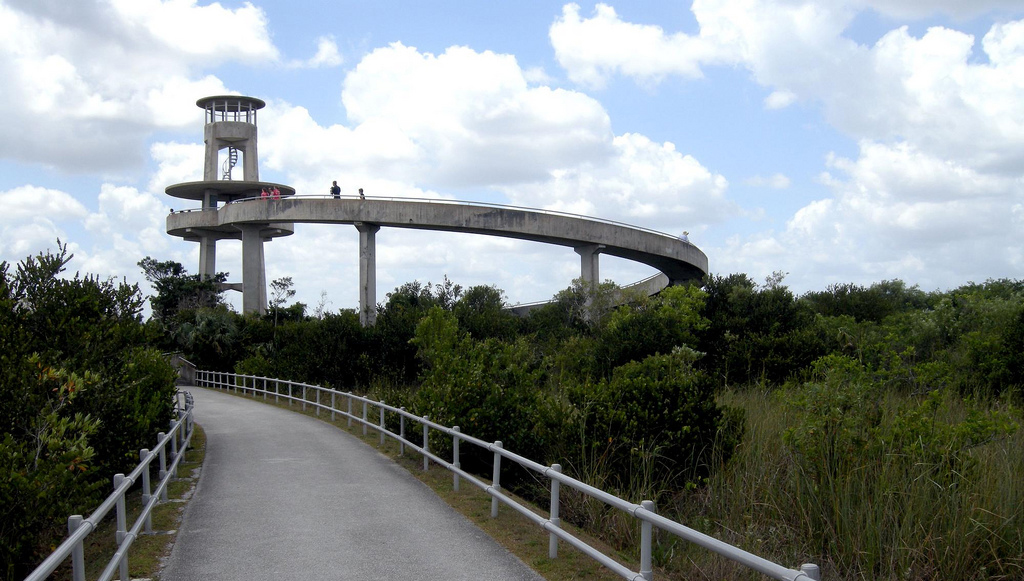
There are no sharks at Shark Valley, and nothing anyone from hill country would call a valley. What there is, about an hour’s drive west of downtown Miami on the Tamiami Trail, is a 15-mile paved loop through open sawgrass, a 45-foot observation tower at the halfway point, and alligators that treat the edge of the road as a good place to warm up. Shark Valley is the Everglades National Park entrance closest to Miami, and for most visitors it is the simplest way to get out into the river of grass: no boat, no fan engine, no long drive south through Homestead.
This guide covers getting there and parking (the part that catches people out in winter), the entrance fee, the tram tour and bike rental with their current prices and times, the two short walks, the tower, how to behave when an alligator is lying beside the path, the best months to go, and the stops worth making on the Tamiami Trail. Prices and hours were checked in November 2026 against the National Park Service and Shark Valley Tram Tours, the park’s concessioner. Fees and timetables change, so confirm before you drive out.
Shark Valley at a Glance
| Details | |
|---|---|
| Open | Daily, 8:30 a.m. to 6 p.m. for vehicles |
| Park entry | $35 per private vehicle, $30 per motorcycle, $20 per person on foot or by bike (15 and under free); valid seven days; card or digital pass only |
| Visitors who live outside the US | $100 extra per person aged 16 and over, unless you hold an Annual or America the Beautiful pass |
| Tram tour | About 2 hours; $36 adults (13–61), $27 seniors (62+), $19 children (3–12), plus park entry |
| Bike rental | $27 per bike for the day; rentals 8:30 a.m. to 4 p.m., back by 5 p.m. |
| The loop | 15 miles, paved and flat; observation tower at the halfway point, about 7 miles from the parking lot |
| Short walks | Bobcat Boardwalk (0.2 mile, accessible) and Ottercave Trail (0.3 mile, unpaved) |
| Food and water | Snacks and soft drinks only; one water fountain out on the loop, at the tower |
| Access conditions | 305-221-8776 (National Park Service) |
Why It’s Called Shark Valley
The name puzzles almost everyone who pulls into the lot. The tram company’s own explanation is that the sharks are real but far away: the water that moves slowly south through this part of the Everglades eventually feeds the Shark River and the Little Shark River on the southwest coast, whose brackish estuaries are feeding and nursery grounds for bull, blacktip and lemon sharks. The “valley” is relative. South Florida’s coastal ridges sit higher than the interior, about 14 to 17 feet above sea level on the west side and 15 to 20 feet on the Atlantic side, while the visitor center area is around 7 feet. By Florida standards, that is a valley.
You will not see a shark here. You will see a horizon so flat and so wide that the 45-foot tower feels like a mountain.
Getting There from Miami
Shark Valley sits on US-41, the Tamiami Trail. Through most of Miami-Dade that road is SW 8th Street, the same street as Calle Ocho in Little Havana, so from much of central Miami the directions are simply: get on 8th Street and keep driving west until the houses give way to sawgrass. Coming from the Florida Turnpike, the park service directs drivers west on US-41.
Without traffic, a route planner puts the visitor center about 39 miles and just under an hour from downtown Miami, about 32 miles and 55 minutes from Miami International Airport, and about 43 miles and a little over an hour from South Beach. Add time for weekday rush hour on the way out of the city, and more for the line at the gate in winter.
Don’t plan on a ride-share home
There is no public transport to Shark Valley. The park service warns that people who arrive by Uber, Lyft or taxi often can’t get a ride back, because drivers rarely come this far out for a pickup. Either arrange the return with your driver before you get out, book a round-trip car service, or treat this as a trip for a rental car. Our Miami car rental guide covers the options, and if you would rather not drive at all, our Everglades tours from Miami guide lists operators that include transport.
Parking, and the winter line
This is the part of a Shark Valley visit that ruins more mornings than the weather. The lot is small for the number of people who want to use it, and once it fills, the entrance runs one car in for every car out. The park service says to expect long waits between 10 a.m. and 3 p.m., that in peak season (typically December into April) the lot is usually full by 10 a.m., and that on the busiest winter weekends and holidays the wait at the entrance station can run past an hour. If you have a tram booked, it advises arriving an hour and a half to two hours before departure.
The fixes are simple, if not always convenient:
- Go on a weekday. It is the park service’s first suggestion for avoiding the line, and the busiest waits are on winter weekends and holidays.
- Arrive before 10 a.m. or after 3 p.m. Being in line when the road opens at 8:30 is the surest way in.
- Call ahead. 305-221-8776 gets you the park’s current access conditions.
- Have a plan B. One of the airboat stops 15 to 20 minutes back toward Miami makes a fine consolation if the line is hopeless.
Entrance Fees and Passes
Shark Valley charges the standard Everglades National Park entrance fee at its gate: $35 for a private vehicle, $30 for a motorcycle, and $20 per person for anyone arriving on foot or by bicycle, with children 15 and under free. A pass is good for seven consecutive days, so hang on to it if you plan to visit the Anhinga Trail at the park’s main entrance later in the week. The gate is cashless. Bring a card, or buy a digital pass online before you set off.
Under a fee schedule that took effect on 1 January 2026, visitors who don’t live in the US pay an extra $100 each from age 16, unless they are covered by an Annual or America the Beautiful pass. That changes the arithmetic for international visitors considerably. Two adults from overseas in a rental car pay $235 at the gate before anyone buys a tram ticket, and two tram seats add $72. If you are touring several national parks on the same trip, compare the price of an America the Beautiful pass before you arrive. If you live locally and plan to come back, the Everglades Annual Pass costs $70.
Hours
The Shark Valley area is open daily from 8:30 a.m. to 6 p.m. Everglades National Park itself never closes, but the Shark Valley road is closed to vehicles outside those hours, so 8:30 to 6 is effectively your window. Within it, the tram and bike schedules set the shape of the day: the last bike goes out at 4 p.m., and the last tram on the current timetable leaves at 4 p.m. too.
Closures do happen. In late August 2026 the park shut the whole Shark Valley area for two days because of wildfires. Check the alerts on the park’s website, or call the number above, before a long drive.
The Tram Tour
The tram is how most first-time visitors see Shark Valley, and it earns its price. The two-hour tour covers the full 15-mile loop in open-sided trams, with a park-trained naturalist on board who points out the wildlife you would ride straight past and explains how the slow sheet of water across the sawgrass keeps the whole system alive. At the halfway point the tram stops at the observation tower, and you get time to walk up the ramp to the deck.
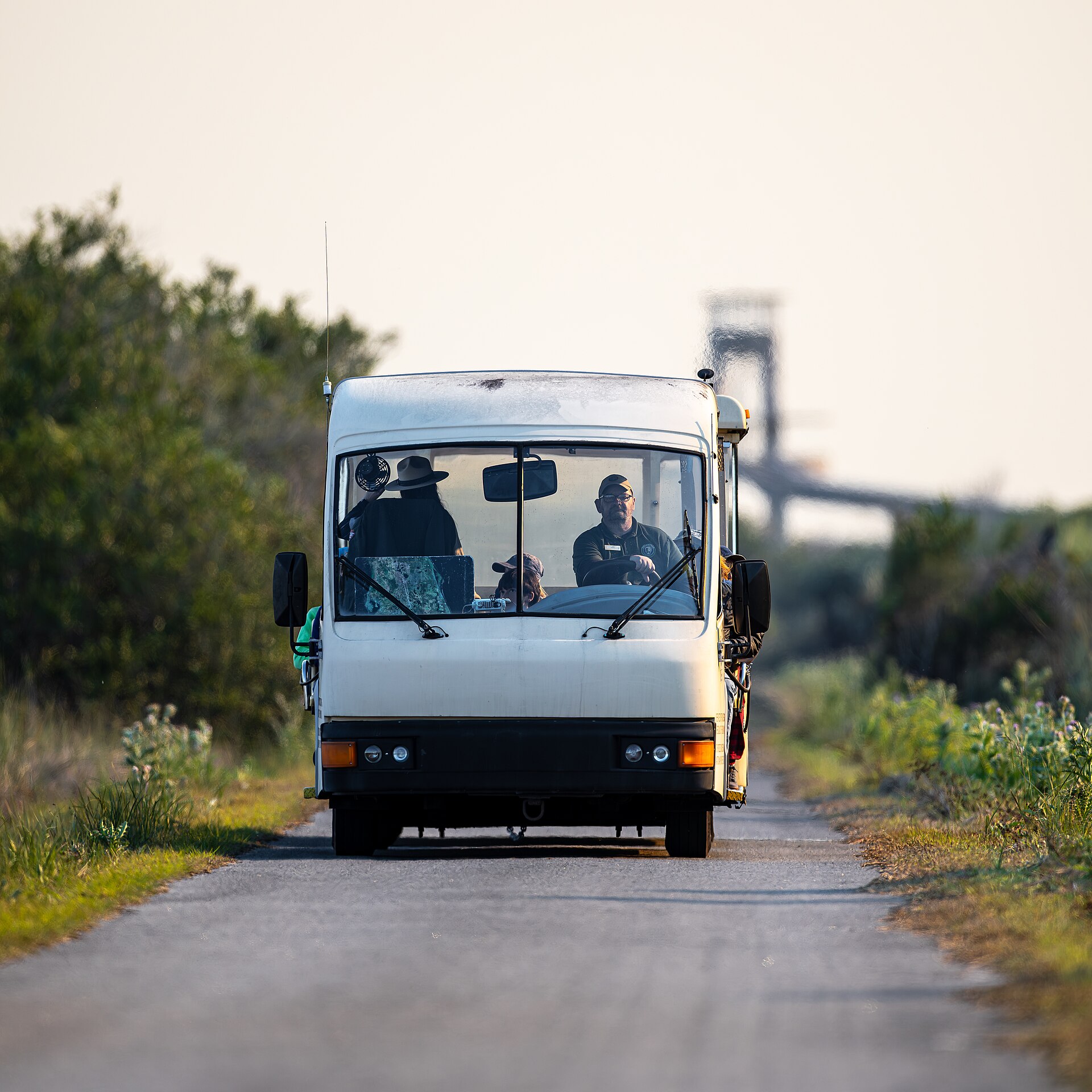
Prices and departure times
- Adults (13–61): $36
- Seniors (62+): $27
- Children (3–12): $19
Park entry is on top. Through 18 December 2026, trams leave at 9:30 a.m., 11 a.m., 12:30 p.m., 2 p.m. and 4 p.m. From 20 December the park’s program page lists trams every hour into early April, and the exact winter departures appear on the tram company’s booking calendar. Groups and military visitors can ask about rates by phone on 305-221-8455.
Booking
Visitation is highest from 26 December to 30 April, and the tram company strongly recommends reserving for that period. You can book seats online when they are available, but you must collect your tickets at least 30 minutes before departure. Remember the parking line: a booked 11 a.m. tram does you no good if you are still twentieth in the queue at the gate at 10:45. On a winter weekend, take the park service’s advice and arrive very early, or book the first tram of the day and be at the gate before it opens.
Is the tram accessible?
Yes. The company says its tram tours are accessible for visitors with disabilities and asks that you tell staff ahead of time about any special needs, so they can be ready.
Tram or bike?
The tram wins if it is hot, if anyone in the group would struggle with 15 miles of pedaling, or if you want the commentary. A naturalist who knows where the snail kites hunt and what the alligator holes do in the dry season will show you more than you would find alone. The bike wins in the cool months if you are reasonably fit, because you can stop wherever you like, for as long as you like, and the silence between the herons is half the point of the place.
Biking the 15-Mile Loop
Cycling the loop is the classic Shark Valley outing, and in winter it is one of the best half days in South Florida. The road is paved and flat, closed to private cars, and shared only with walkers, the trams and the occasional park vehicle.
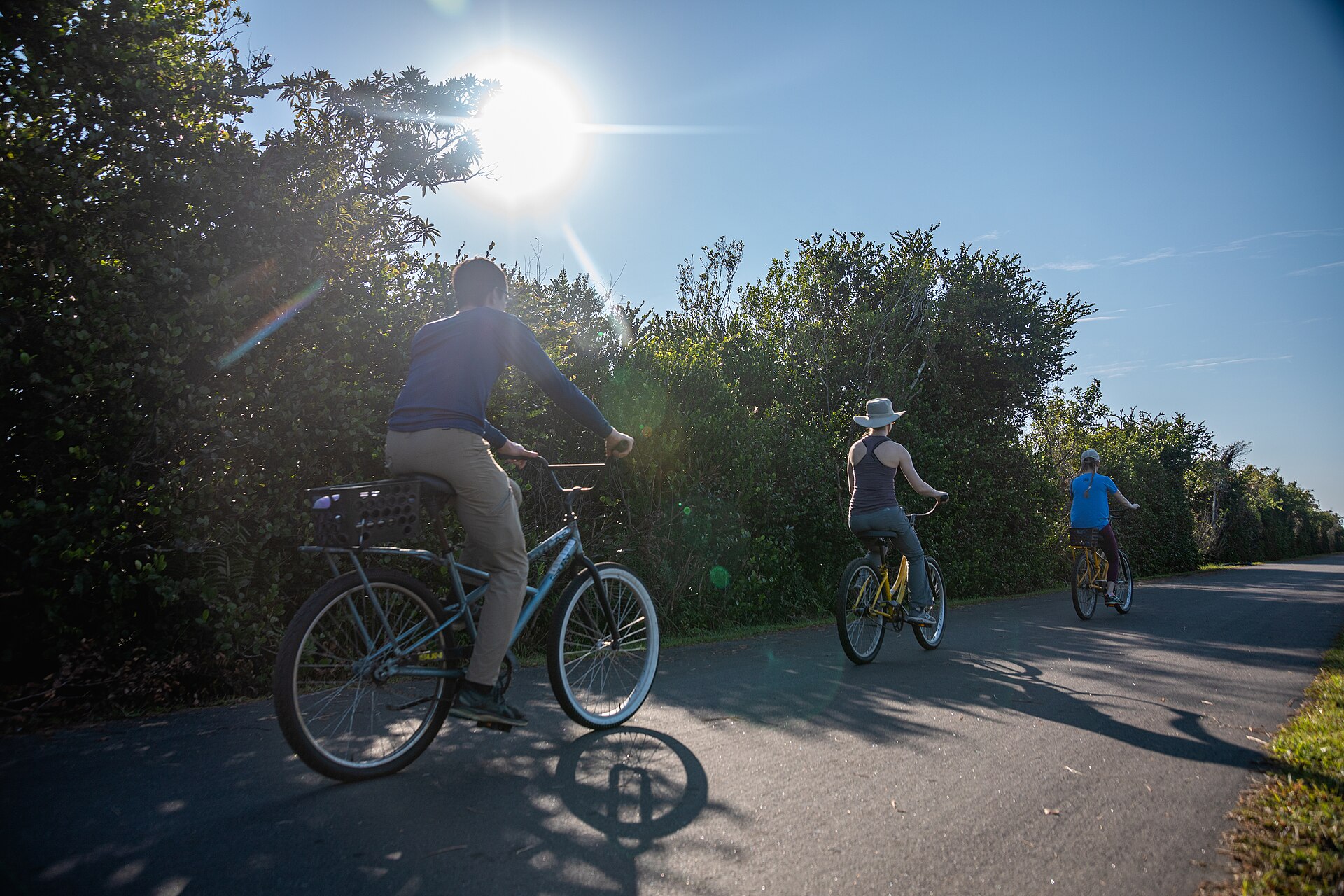
Renting a bike
Shark Valley Tram Tours rents bikes for $27 each for the day. Rentals run from 8:30 a.m. to 4 p.m., and every bike has to be back by 5 p.m. The bikes are single-gear cruisers with coaster brakes, which means you pedal backward to stop; if you haven’t ridden one since childhood, try it in the parking lot first. Helmets come with every rental and adult bikes have baskets. Bring photo ID. Bikes go first come, first served, but you can also reserve online, which is worth doing on any winter weekend. If you are traveling with children, ask at the rental desk what sizes are available before you promise anyone a ride.
How long it takes
The rental company says most riders take two to three hours, and that is realistic for a relaxed pace with a stop at the tower. Do the math on the deadline: rent after about 2 p.m. and you will be rushing to get round and back by 5. Rent at 4 p.m. and you have time for an out-and-back, not the loop.
How hard it is
There are no hills, so the effort comes from the distance and the conditions. There is very little shade anywhere on the loop, and the only water out there is a fountain at the tower, 7 miles from the lot. In January, with highs in the 70s, that is a pleasant ride for anyone who can manage 15 miles on a bike. In July, with highs around 90°F and humidity to match, it is a slog that leaves most people wishing they had taken the tram. Carry more water than you think you need.
Rules of the road
- Stop for the trams and for government vehicles. They have right of way.
- Helmets are required for riders under 16.
- Your own bike is welcome, and so are e-bikes.
- Roller skates, skateboards, longboards and scooters are not allowed on the loop (mobility scooters excepted), and neither is anything else with a motor.
- Keep 15 feet from wildlife, which on this road mostly means alligators. More on that below.
Walking at Shark Valley
You don’t have to commit to the whole loop. Two short trails leave the tram and bike road:
- Bobcat Boardwalk is a 0.2-mile accessible boardwalk, an easy stroll for almost anyone, including wheelchair users.
- Ottercave Trail is a 0.3-mile unpaved path. The park service warns that it can be slippery when wet, so wear proper shoes after rain.
Walking out along the loop road for a mile or two and coming back the same way is also a perfectly good visit if you only have an hour or two, and it costs nothing beyond the park entry. Walking the whole 15 miles is possible but punishing in the sun; very few people do it, and in the warmer months you shouldn’t.
From 29 November 2026 to 3 April 2027, rangers lead a 30-minute Shark Valley Stroll every day at 10:15 a.m. It is wheelchair accessible and a good introduction if you arrive early and want some context before you set off on your own.
The Observation Tower
Halfway round, about 7 miles from the parking lot, the loop reaches the observation tower, a concrete tower with a long, curving ramp that climbs gently to a deck 45 feet up. The tram company calls it the highest accessible point in Everglades National Park and says the view stretches 20 miles in every direction. On a clear winter day you see exactly what the phrase “river of grass” means: pale gold sawgrass running to the horizon, broken only by dark tree islands, with nothing human in sight except the road you came in on.
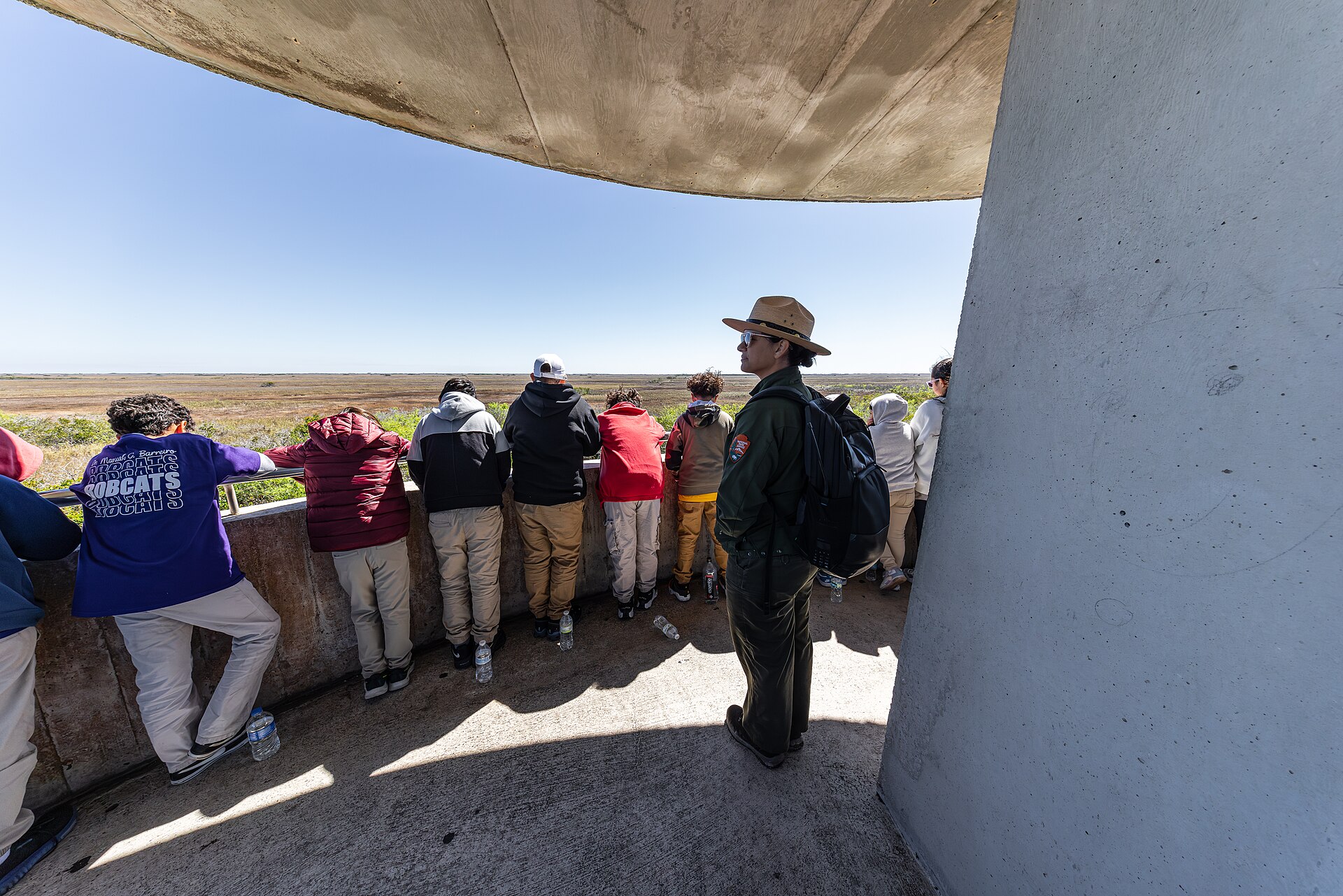
Take a few minutes at the bottom too. The pond beside the tower is worth a slow look for alligators and wading birds, and the park service has photographed an American crocodile resting below it. The tower is also where you refill your bottle, at the only water fountain on the loop.
Because the ramp is gradual, the deck is reachable for most visitors who can manage a long, gentle incline. If you are on the tram, the stop gives you time to walk up and back; if you are cycling, lock up at the bottom and take your time.
Alligators on the Path: How Close Is Too Close
The park service describes Shark Valley as known for excellent wildlife viewing, alligators above all, and they often lie on the grass verges or right at the edge of the pavement. They are not there for you. Alligators are cold-blooded, and a sunny strip of asphalt beside water is an attractive place to warm up.
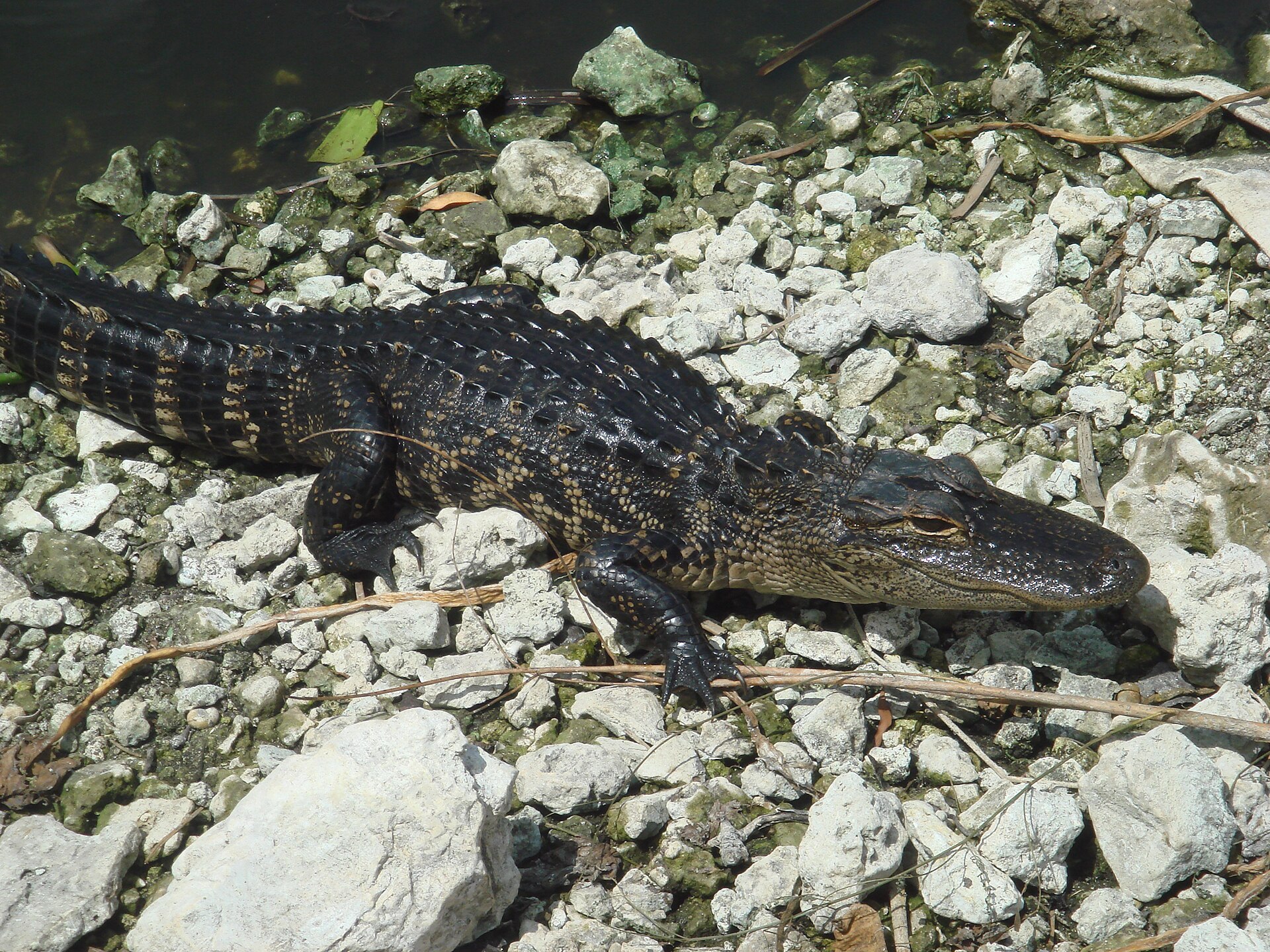
The rule is not a suggestion. The park service requires you to stay 15 feet (5 meters) from all wildlife, and harassing, touching or feeding any animal is illegal. On a road that a single tram nearly fills, 15 feet takes some thought. A sensible approach:
- If an alligator is on the verge and you can pass at 15 feet or more, do it steadily on the far side, without stopping alongside it for a photo.
- If it is across the road, or you can’t give it the space, wait. It will move eventually. If you are short of time, turn around.
- Never try to move one, whether by throwing something, poking it or ringing a bell at it.
- Keep children beside you, not ahead of you, and don’t let anyone crouch near the water’s edge.
- Use a zoom lens. Every good alligator photo at Shark Valley was taken from a respectful distance.
Pets are where the rules get strict. Dogs are allowed only in the parking lot, not on the tram road or any trail, and the park’s reasoning is blunt: a dog is about the size of the prey alligators eat. Don’t leave one waiting in a hot car either. If you are traveling with a dog, Shark Valley is a place to skip.
What Else Lives Here
Alligators get the attention, but the birds are often the better show. Great blue herons wade the shallows, ospreys hunt over the water, and the tram company points birders toward Shark Valley as a front-row seat for the Everglade snail kite, a bird of prey that lives almost entirely on apple snails. Look in the water as well as on the banks: gar, an ancient-looking fish with a long, narrow snout, cruise the clearer pools, and raccoons work the edges of the path.
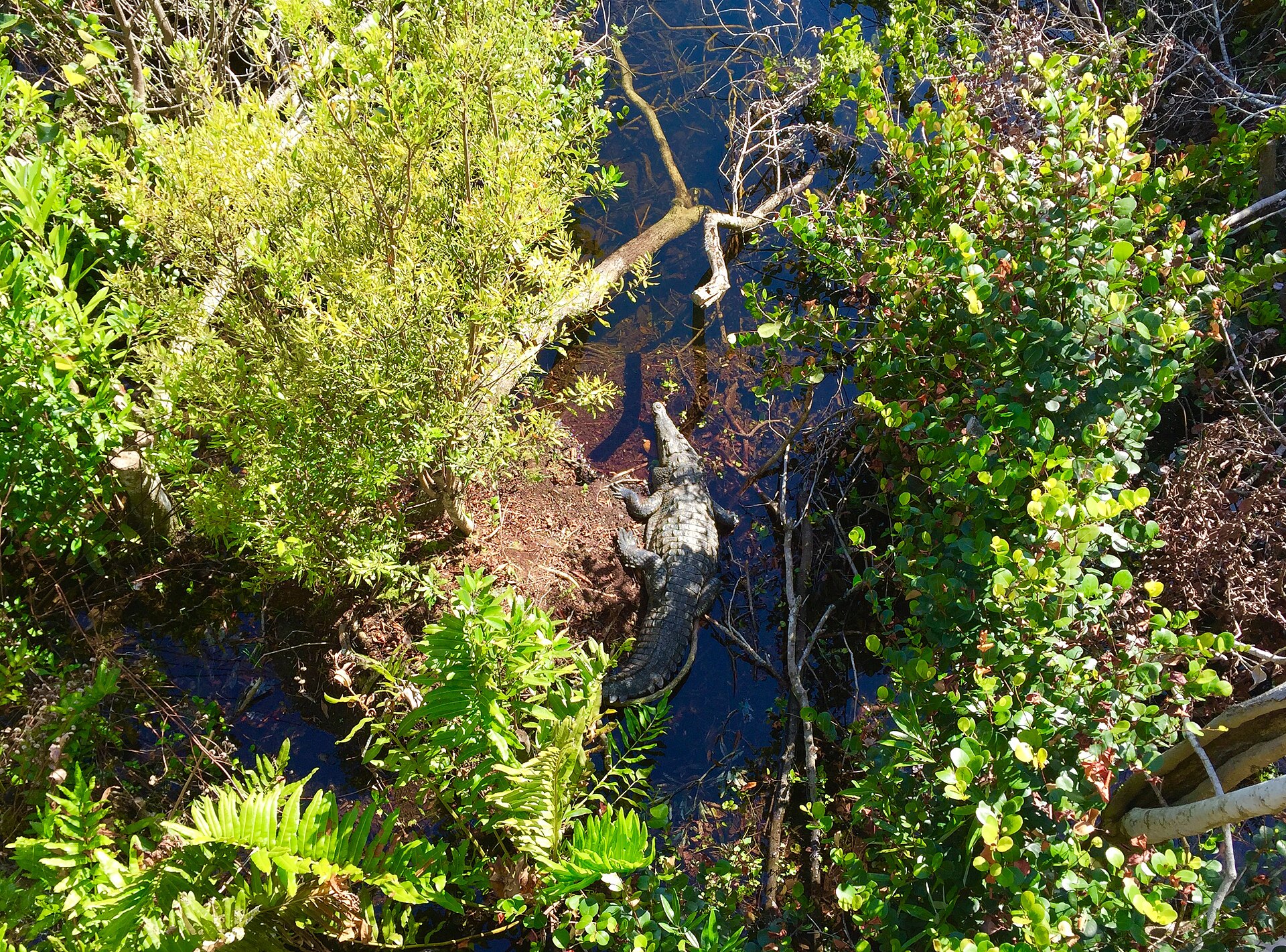
The American crocodile is the long-shot sighting. They are much less common than alligators in this part of the park, but they do turn up, and the park service describes south Florida as the only place where American alligators and American crocodiles live side by side. Crocodiles are paler and grayer, with a narrow, tapered snout and teeth that show along the closed jaw; alligators are darker, with a broad, rounded snout.
What you see depends heavily on the season. In the dry months the water drops, and wildlife gathers around what remains, which makes animals easier to find. In the wet season water spreads across the whole landscape and the animals disperse with it, so a summer visit can be quieter.
When to Go
The dry season: roughly November to April
This is Shark Valley’s season, and it is not close. The park service describes the dry season as mild, with average highs around 77°F, fewer mosquitoes and abundant wildlife. The tram company’s advice is the same: lower water concentrates animals near the remaining pools, and the cooler, drier air keeps the biting insects down. December to March are the classic months. The cost is the crowds. This is exactly when the parking lot fills by mid-morning, so a dry-season visit works best on a weekday, early.
The wet season: roughly May to November
Summer is a different place. The park service puts average highs around 90°F with humidity over 90 percent, warns of daily thunderstorms, and describes mosquitoes as profuse. Animals scatter across the flooded sawgrass, so sightings are less predictable. It is not a write-off, though. The lot is easier, the clouds over the sawgrass are spectacular, and the tram, with its roof and its breeze, is a reasonable way to see it. Go first thing in the morning, before the afternoon storms build, and bring serious insect repellent.
The two National Park Service pages that describe the seasons draw the line between them slightly differently, so treat November and April as transition months. If you are planning around the weather, our Miami weather by month guide gives the bigger picture.
Best time of day
Early. The road opens to cars at 8:30 a.m., the light is softer, the air is cooler, and you are ahead of the 10 a.m. parking crunch. The other good window is after 3 p.m., when the morning crowd starts leaving, although you then have limited time on a rental bike.
Food, Water and Facilities
Shark Valley is not a place to count on buying lunch. Shark Valley Tram Tours sells snacks and soft drinks, and that is all; the park service recommends bringing your own meals. Pack a proper lunch and plenty of water, eat it before or after the loop, and carry snacks on the bike. The only drinking water on the loop itself is the fountain at the tower.
The park service calls Shark Valley one of the most accessible areas of Everglades National Park: the Bobcat Boardwalk is an accessible boardwalk, the trams are accessible with notice, the ranger stroll is wheelchair accessible, and the tower is reached by a gradual ramp rather than stairs.
Rules Worth Knowing Before You Go
- No private cars on the loop. Vehicles stop at the entrance road and parking lot; beyond that it is feet, bikes or the tram.
- No pets beyond the parking lot. Not on the tram road, not on the trails.
- No feeding, touching or harassing wildlife. It is illegal, and it is how alligators learn to approach people.
- No fishing at Shark Valley.
- Leave the drone at home. Drones are prohibited in national parks unless a permit has been approved, and a violation is a misdemeanor.
- Bring a card. The gate doesn’t take cash.
Shark Valley, the Anhinga Trail or an Airboat?
These three are the usual choices for a first taste of the Everglades from Miami, and they are very different experiences.
| Option | Where | Time on site | Cost | Best for |
|---|---|---|---|---|
| Shark Valley tram | Tamiami Trail (US-41) | About 2 hours, plus parking time | $36 adult, plus park entry | First-timers, families, the tower and a naturalist’s commentary |
| Shark Valley by bike | Tamiami Trail (US-41) | 2–3 hours | $27 bike rental, plus park entry | Active visitors in the cooler months |
| Anhinga Trail | Royal Palm, four miles past the main entrance near Homestead | 0.8-mile trail, round trip | Park entry only | Close-range wildlife with very little effort |
| Airboat ride | Park concessions 15–20 minutes east of Shark Valley on US-41 | Depends on the operator | Check the operator | Speed, spray and a ride out into the sawgrass |
There are no airboats at Shark Valley itself. The park’s three airboat concessions, Coopertown Airboats, Gator Park and Everglades Safari Park, are back toward Miami on the same road, which makes an airboat ride and Shark Valley an easy pairing in one day. Our Everglades airboat tours guide compares the operators.
The Anhinga Trail is the better choice if you want the most wildlife for the least effort: a short trail and boardwalk at Royal Palm where the park service says alligators, turtles and wading birds are commonly seen, especially in winter. It is also on the other side of the park, reached through Homestead and Florida City rather than along the Tamiami Trail. One entrance fee covers both for seven days, so a two-day Everglades plan can include both. For a wider look at the region’s parks and preserves, start with our Miami outdoors and nature guide.
Stops Along the Tamiami Trail
The road to Shark Valley is part of the trip. A few stops are worth knowing about, in the order you meet them heading west from Miami:
- Coopertown Airboats (22700 SW 8th Street) is the closest of the three airboat concessions to the city, open daily with walk-ins from 9 a.m. to 5 p.m.
- Gator Park (24050 SW 8th Street) lists daily hours of 9 a.m. to 5 p.m. and says no reservations are needed for its airboat tours; check its site for current prices.
- Everglades Safari Park (26700 SW 8th Street) is open daily from 9 a.m. to 5 p.m., with the last airboat at 4:30 p.m.
- Miccosukee Indian Village, at mile marker 36 on US-41, has a museum and gift shop run by the Miccosukee Tribe. It now opens Thursday to Sunday only, 9 a.m. to 4 p.m., with admission at $15 for adults, $10 for ages 7 to 12 and $4 for ages 6 and under. It is closed on Thanksgiving (26 November 2026), Christmas Day and New Year’s Day, and closes at 1 p.m. on Christmas Eve. Confirm hours with the village before you go.
- Clyde Butcher’s Big Cypress Gallery, much farther west at 52388 Tamiami Trail East in Ochopee (mile marker 54.5), shows the photographer’s large black-and-white Everglades and Big Cypress landscapes and is open daily from 10 a.m. to 5 p.m.
If you keep going, the Tamiami Trail continues all the way across the state to the Gulf coast. Our Naples day trip guide covers that drive, and Shark Valley makes a natural first stop on it.
A Half-Day Plan
- 7:30 a.m. Leave downtown Miami with lunch, water and sunscreen in the car. From Miami Beach, leave a little earlier.
- 8:30 a.m. Be at the gate as the road opens. Rent bikes straight away, or collect tickets for the first tram.
- 9:00 a.m. to noon. Ride the loop at an easy pace. Stop wherever the wildlife is, spend twenty minutes at the tower, refill your water and ride back. On the tram, you will be back by about 11:30.
- Noon. Walk the Bobcat Boardwalk, then eat your picnic before you leave.
- Afternoon. Head back east for an airboat ride at one of the concessions 15 to 20 minutes away, or drive straight back into the city. US-41 delivers you onto Calle Ocho, so a late Cuban lunch in Little Havana is an easy finish.
On a Thursday to Sunday, the Miccosukee Indian Village fits into the same morning. If you want to see more of the Everglades in one day, our day trips from Miami guide has longer itineraries.
What to Bring
- Water, and more of it than you expect. There is only one fountain on the loop.
- Sun protection: a hat, sunglasses and sunscreen. Shade is scarce.
- Insect repellent, essential from late spring to fall and useful even in winter.
- Lunch and snacks. Only snacks are sold on site.
- A card for the gate and photo ID if you are renting a bike.
- Binoculars or a zoom lens for the birds and for keeping a respectful distance from the alligators.
- A light rain jacket in the wet season, when afternoon storms are routine.
Is Shark Valley Worth It?
Yes, for almost anyone curious about the Everglades, with two caveats. The first is the winter weekend: arrive at 11 a.m. on a Saturday in February and you may spend an hour in a line of cars and miss your tram. The second is the summer middle of the day, when heat, humidity and mosquitoes make the bike loop an endurance test. Get those two things right, with an early start on a cool, dry weekday, and Shark Valley is one of the best value days out within reach of Miami: a real national park landscape, wildlife you can watch at your own pace, and a view from the tower that shows the Everglades as no airboat can.
Who should skip it? Anyone who only wants an adrenaline ride, which is what the airboats are for; anyone traveling with a dog; and anyone with a single free morning on a peak-season weekend who isn’t prepared to be at the gate when it opens.
Frequently Asked Questions
How long is the Shark Valley loop?
The loop is 15 miles, paved and flat. The observation tower is at the halfway point, about 7 miles from the parking lot. The tram takes about two hours, and the rental company says most cyclists take two to three hours.
Can you drive the Shark Valley loop in your own car?
No. Private vehicles are allowed only on the entrance road and in the parking lot. Beyond that, you go on foot, by bike or on the tram.
How much does Shark Valley cost?
Park entry is $35 per private vehicle, $30 per motorcycle or $20 per person on foot or bike (15 and under free), valid for seven days and payable by card only. Visitors who live outside the US pay $100 extra each from age 16, unless they hold an Annual or America the Beautiful pass. The tram costs $36 for adults, $27 for seniors and $19 for children aged 3 to 12; bike rental is $27 a day.
Do you need to book the Shark Valley tram?
It is strongly recommended from 26 December to 30 April, when visitation peaks. Collect your tickets at least 30 minutes before departure, and in busy periods arrive an hour and a half to two hours early to get through the parking line.
What are Shark Valley’s hours?
The Shark Valley area is open to vehicles daily from 8:30 a.m. to 6 p.m. Bike rentals run from 8:30 a.m. to 4 p.m., with bikes due back by 5 p.m.
Will I see alligators at Shark Valley?
The park service describes the area as known for excellent wildlife viewing, alligators included, and your odds are best in the dry season, roughly November to April, when falling water levels concentrate wildlife around the remaining pools.
Is it safe to bike past alligators?
Yes, if you follow the rules. Stay at least 15 feet away, pass steadily on the far side without stopping beside them, and wait if one is across the road. Never try to move or feed one.
Can you bring a dog to Shark Valley?
Only into the parking lot. Pets are not allowed on the tram road or any trail, partly because a dog is about the size of an alligator’s prey.
Is there food at Shark Valley?
Only snacks and soft drinks, sold by Shark Valley Tram Tours. Bring your own lunch and plenty of water.
Can you take an Uber to Shark Valley?
You can get there, but the park service warns that visitors often can’t find a ride back, and there is no public transport. Arrange your return before your driver leaves, or rent a car.
Shark Valley is only one of the places to see alligators near Miami. Our guide to seeing alligators near Miami covers the Anhinga Trail at Royal Palm, the free roadside boardwalks in Big Cypress, the crocodiles at Flamingo, and the airboat parks and alligator shows, with the best months to go.
Related Miami Guides
- Miami Outdoors and Nature
- Everglades Tours from Miami
- Everglades Airboat Tours
- Biscayne National Park
- Day Trips from Miami
- Naples Day Trip
- Oleta River State Park
- Miami Weather by Month
Photo Credits
Shark Valley observation tower and ramp (featured): Shark Valley Observation Tower by Milan Boers, CC BY 2.0, via Wikimedia Commons.
Tram on the Shark Valley loop road: Everglades Shark Valley Program (55339480913) by evergladesnps, Public domain, via Wikimedia Commons.
Cyclists on the loop: Biking in Shark Valley (53425811372) by evergladesnps, Public domain, via Wikimedia Commons.
Visitors and a ranger on the observation deck: Everglades Shark Valley Program (55338414057) by evergladesnps, Public domain, via Wikimedia Commons.
Alligator on the rocks: Alligator at Shark Valley Picture 197 by NancyHeise, Public domain, via Wikimedia Commons.
American crocodile at Shark Valley: American Crocodile at Shark Valley Observation Tower (40616706242) by evergladesnps, Public domain, via Wikimedia Commons.