Port of Miami Cruise Port Guide
This article contains advertising. Our booking links are routed through a partner that adds commission tracking automatically, so if you book through one we earn a commission from the provider, at no extra cost to you. It never affects what we recommend. Affiliate disclosure
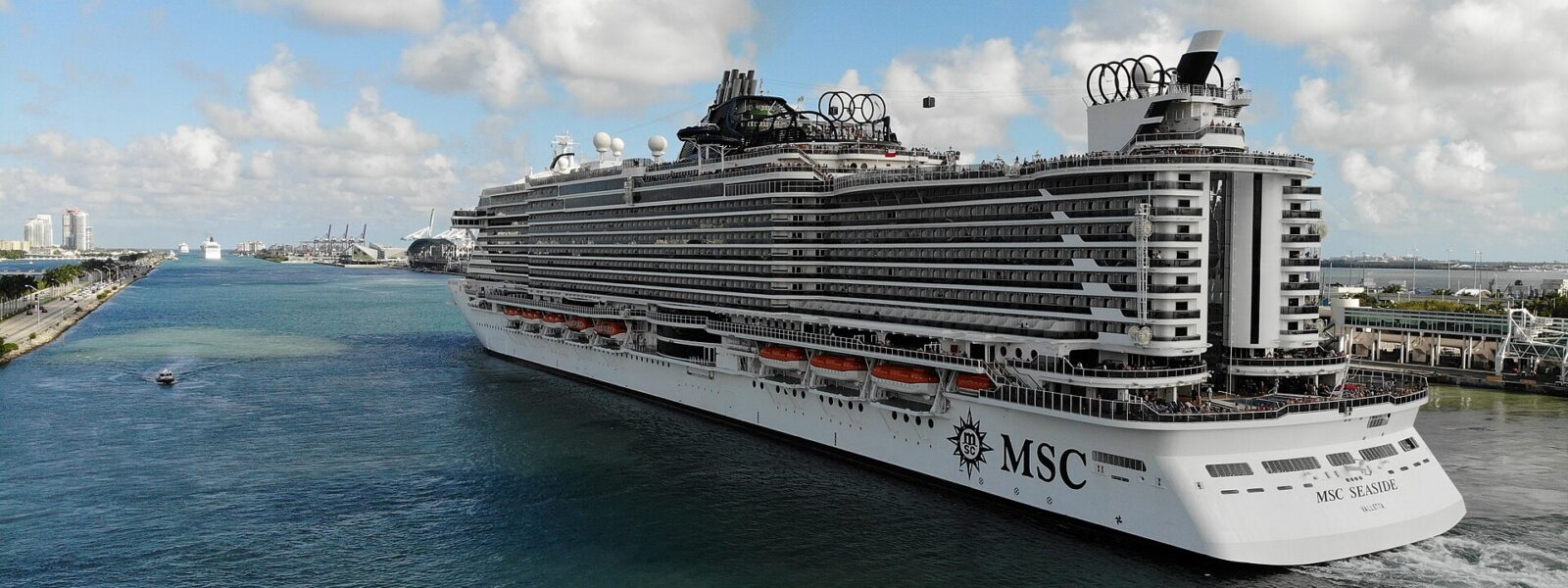
Stand on the Bayfront Park seawall at about half past four on a Saturday afternoon and you can watch four ships leave in under an hour, one behind the other, close enough to read the names on the bows. That parade is the clearest picture anyone gets of what the Port of Miami cruise port actually is: not a building, but a man-made island a quarter of a mile off downtown with seven working passenger terminals strung along its north and south sides, moving more cruise passengers than any other port on earth.
This guide covers the practical half of that — which terminal your line uses, how to get onto Dodge Island from the airport or from Miami Beach, what parking costs and how you pay for it, where to sleep the night before, and what a cruise out of Miami actually sails to. Prices were checked in September 2026 and should be treated as the right order of magnitude rather than a quote; port and terminal fees in particular move every season.
At a Glance: PortMiami Numbers That Matter
| What | Detail |
|---|---|
| Location | Dodge Island, Biscayne Bay — one mile east of downtown Miami |
| Passenger terminals | A, AA/AAA, B, C, D, E, F, J, V |
| Drive from Miami International (MIA) | ~9 miles, 25 minutes off-peak, 50+ minutes at 8am or 5pm |
| Drive from Fort Lauderdale (FLL) | ~28 miles, 40 minutes off-peak, 75+ at peak |
| Drive from South Beach | ~4 miles, 15 minutes across the MacArthur Causeway |
| Parking | Roughly $20–$35 per day, paid on exit, garages beside each terminal |
| Typical embarkation window | 11:00–15:30, staggered by cabin or check-in slot |
| Typical disembarkation | Off the ship 07:00–10:00, clear of the terminal by 10:30 |
| Busiest months | January to March, plus the two weeks either side of Christmas |
| Hurricane season | 1 June – 30 November, peak mid-August to mid-October |
Where the Port Actually Is
PortMiami occupies Dodge Island, which is not a natural island at all but dredged spoil consolidated into a single landmass in the 1960s. It sits between downtown Miami on the west and the mouth of Government Cut on the east, with the southern tip of South Beach a few hundred yards across the water. The container cranes on the eastern half are the cargo operation; the passenger terminals face the city, which is why the ships look like they are parked in the skyline when you see them from Brickell.
There are exactly two ways onto the island by road, and knowing which one you want is worth more on embarkation morning than any amount of general Miami traffic advice.
Port Boulevard Bridge
The old way. A short causeway that leaves downtown at Biscayne Boulevard beside Bayside Marketplace and lands on the western end of Dodge Island. It is the direct route from downtown hotels, from Brickell, and from anywhere on the mainland side. It is also the road every taxi, shuttle bus and luggage van uses. Between 10:00 and 13:00 on a Saturday it can be genuinely slow, and there is nowhere to turn around once you are on it.
The PortMiami Tunnel
The newer and usually faster option, opened in 2014 specifically to keep port traffic off downtown streets. It runs under the bay from Watson Island on the MacArthur Causeway and surfaces in the middle of the terminal area. If you are coming from Miami Beach, from MIA via I-395, or from anywhere on I-95, your map app will almost certainly route you through it — and it should. The tunnel bypasses the downtown grid entirely.
Neither route is tolled for passenger cars. If you are driving yourself, put the specific terminal letter into your map app rather than “PortMiami,” because the terminals are spread over roughly two miles of island and the signage assumes you already know where you are going.
The Terminals, Line by Line
This is the single most common trip-up: people arrive at the port and the shuttle driver asks “which terminal?” and they do not know. It is printed on your boarding pass and on your luggage tags. Check it the night before, because assignments shift, particularly while construction is under way.
| Terminal | Lines | Notes |
|---|---|---|
| A | Royal Caribbean | The “Crown of Miami” — the curved landmark terminal built for the Oasis-class ships |
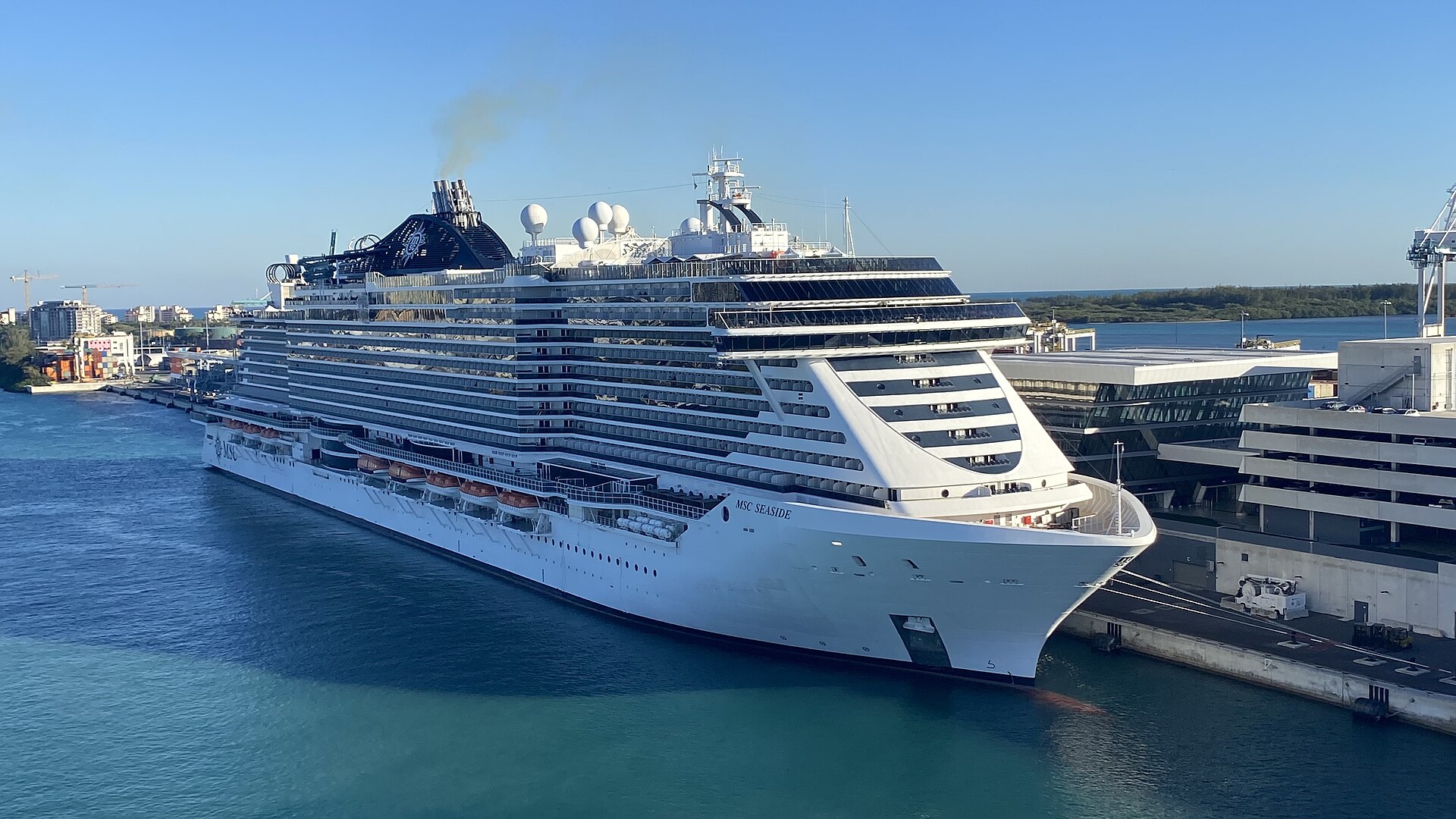
| AA / AAA | MSC Cruises | MSC’s own double terminal, the newest large complex on the island |
| B | Norwegian Cruise Line | Purpose-built for NCL’s Miami-based fleet, including the new Norwegian Luna |
| C | Celebrity, plus overflow | Also takes Royal Caribbean sailings displaced by construction |
| D, E, F | Carnival Cruise Line | F was rebuilt for the Excel-class ships; E is nearest the oversized-vehicle lot |
| J | Boutique terminal | Oceania, Regent Seven Seas, Azamara, Windstar, Silversea, and small-ship calls by Cunard and Holland America |
| V | Virgin Voyages | Adults-only sailings; the fastest check-in on the island when it is not busy |
Terminal G no longer exists — it was demolished, and a new Royal Caribbean terminal is being built on the site with a target of late 2027. Until that opens, some Royal Caribbean and Celebrity departures are handled from Terminal C or Terminal J instead. This is exactly the kind of change that makes a two-year-old blog post dangerous, so treat your boarding pass as the only authority and ignore anyone confidently telling you where “Royal always docks.”
The boutique Terminal J deserves a specific mention because it behaves differently from everything else here. Small-ship lines board a few hundred people rather than five thousand, so check-in is quick, the queue is short, and there is no advantage whatsoever in arriving early. If you are sailing Oceania or Silversea, the elaborate arrival-window choreography that applies at Terminal A is largely irrelevant to you.
Getting to the Cruise Port
From Miami International Airport
MIA is about nine miles west of the port, and the drive is straightforward — MacArthur Causeway or the tunnel, twenty-five minutes when the roads are behaving. The catch is that embarkation days concentrate demand into a three-hour window, so a trip that takes twenty-five minutes at 07:00 can take an hour at 11:30.
- Rideshare. Usually the cheapest option for one or two people. Pick-up at MIA is from the designated ride-app zone on level 4 of the parking garages, not the curb outside baggage claim — a detail that costs people fifteen minutes of wandering. Surge pricing on a Saturday morning is real.
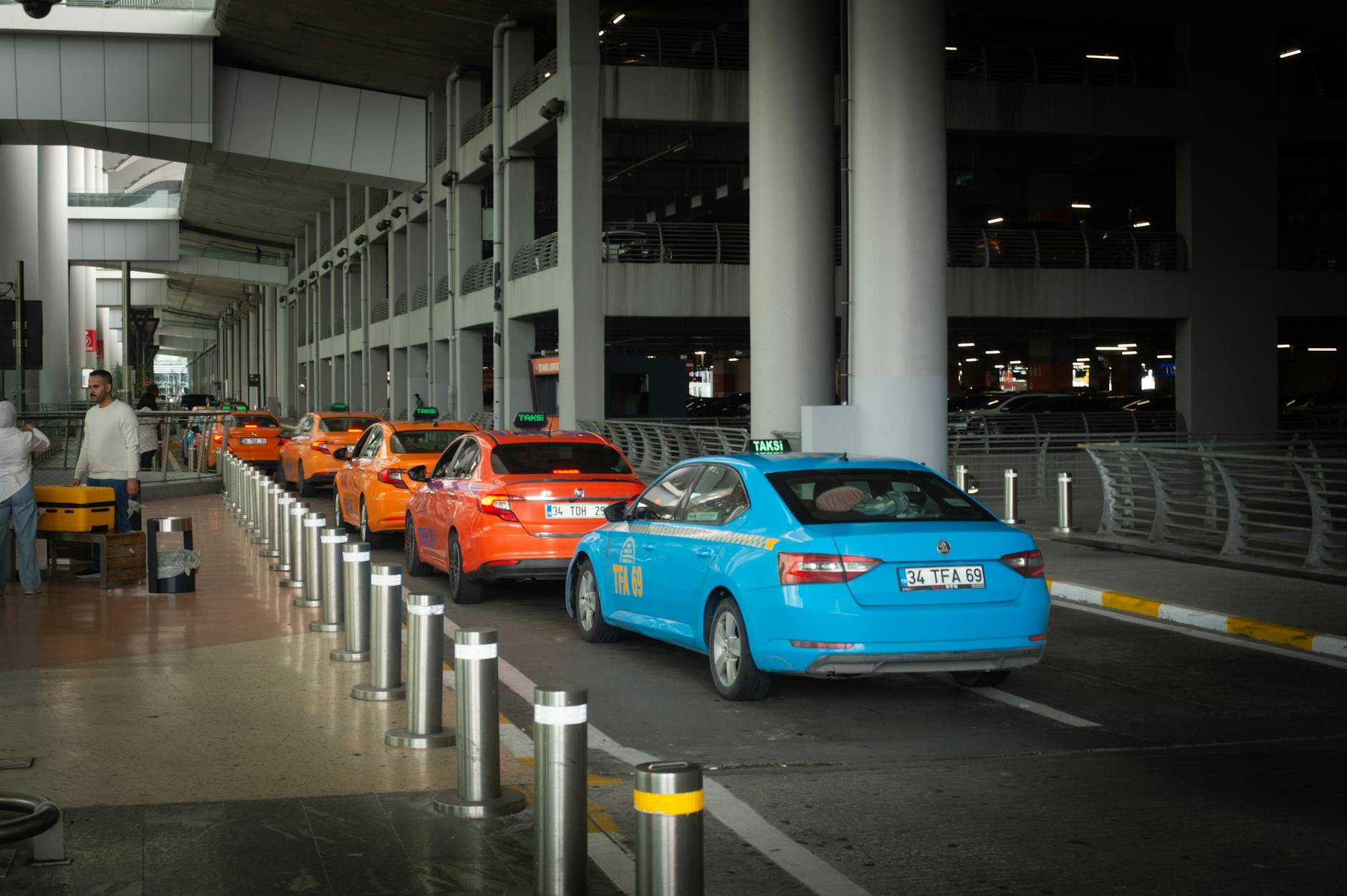
- Taxi. Miami operates posted flat rates from MIA to fixed zones, including the port. Ask for the flat rate at the dispatch podium before you get in, and confirm it applies to your terminal.
- Cruise line transfer. Sold as a per-person add-on at booking. Convenient, and the driver knows the terminal, but for a couple it usually costs more than a rideshare and involves waiting for the bus to fill.
- Shared shuttle. Around $12–$15 per person from the airport hotel cluster. Good value for solo travelers, slow if you are the first pick-up on the loop.
Our Miami airport guide covers terminal layout, the MIA Mover to the rental car center and where those ride-app zones actually are. If you are collecting a rental car for the days before your cruise, the Miami car rental guide explains why the airport location is rarely the cheapest one.
From Fort Lauderdale-Hollywood (FLL)
Plenty of people fly into FLL because the fare is cheaper, then discover the transfer eats the saving. It is 28 miles down I-95, which on a good day is forty minutes and on a Friday afternoon is an hour and a quarter. Rideshare works, and the cruise lines sell FLL transfers too. If the cheap flight is genuinely the only one, take it — but land the day before rather than the morning of, because I-95 does not care about your muster drill.
From Miami Beach and South Beach
This is the easy one. South Beach to the port is roughly four miles over the MacArthur Causeway and then either the tunnel or Port Boulevard, and it is often the fastest approach of all because you avoid the downtown grid entirely. Fifteen minutes, twenty at worst. If you are staying in South Beach for a few nights first, you can genuinely leave the hotel at 11:30 for a noon boarding slot and not feel rushed.
Public transport
Here is the honest answer: there is no rail or people-mover service into the cruise terminals. The free Metromover circles downtown, and its closest stations — College/Bayside and Bayfront Park — sit on the mainland side of Port Boulevard, a bridge crossing away from Dodge Island with no pedestrian route worth attempting while dragging a suitcase. Metrorail terminates further inland still, at Government Center. Whatever your transit instincts are elsewhere in the world, arriving at PortMiami means a vehicle. Our Miami transportation guide is honest about where the system does and does not go.
Parking at PortMiami
PortMiami’s parking is unusually civilized by cruise-port standards: the garages sit directly beside the terminals, so there is no remote lot and no shuttle bus with your luggage on it. You drive in, park a few floors up, and walk across.
- Rates run roughly $20 to $35 per day depending on terminal. Royal Caribbean’s Terminal A garage was $25 per night for sailings of six nights or more and $28 per day for five nights or fewer when checked in September 2026.
- You pay on exit, at the exit plaza when you come home — not on arrival.
- The exit booths take major credit cards and cash. They do not take debit cards. This catches people out every single week, and it is the most useful sentence on this page.
- Royal Caribbean and Norwegian garages accept advance online reservations. The others are first-come.
- Oversized vehicles, RVs and trailers use Lot 2 near Terminal E. Anything over about twenty feet counts as oversized and may be charged accordingly.
- Accessible spaces exist in every garage, close to the terminal walkways.
Allow about thirty minutes between reaching the port entrance and being ready to board if you are self-parking, and more on a day when several mega-ships turn around at once. For a seven-night sailing, port parking lands somewhere around $175–$200, which is why the pre-cruise hotel packages that bundle a room, a shuttle and free parking for the week are worth pricing against it rather than dismissing out of hand. For parking anywhere else in the city, our Miami parking guide covers the garages, the apps and the neighborhoods where street parking is a trap.
Where to Stay the Night Before
Flying in the same morning as your sailing is the single most common way people miss a ship. A delayed connection out of Chicago in February does not care about your itinerary, and the ship will leave without you. Almost everyone who cruises regularly out of Miami arrives the day before, and there are three sensible places to do it.
Downtown and Brickell
The closest beds to the terminals, and the option that lets you have a proper evening rather than an airport-hotel one. From a downtown hotel you are ten minutes from the terminal on embarkation morning and within walking distance of restaurants that are not attached to a lobby. Brickell is a short ride further south and has the better dining by a wide margin. Our downtown and Brickell hotels guide breaks down which buildings actually have bay views and which sell you a parking-garage outlook at the same price.
The airport hotel cluster
Unglamorous, cheap, and genuinely practical if you are landing late or leaving before dawn. Several of these hotels run their own port shuttles, which is the real reason to book them rather than the rooms:
- Comfort Suites Miami Airport North — free one-way shuttle to the port, return around $10 adult and $5 child, and free overnight parking for the length of your cruise.
- Embassy Suites MIA — shared shuttle around $12 per person.
- Clarion Inn & Suites MIA — around $12 per person.
- La Quinta MIA East — around $15 per person, free parking.
Do the arithmetic before you assume this is automatically the budget option. A family of four paying $12 each way is $96 in shuttles, against a rideshare that would have been about a third of that. The free week-long parking is usually where the actual saving sits.
Miami Beach
The choice if the pre-cruise night is part of the holiday rather than a logistics problem. You are fifteen minutes from the terminal, you get an ocean instead of a runway, and you can spend the afternoon somewhere worth being. It costs more, and on a January weekend it costs considerably more. Our full where to stay in Miami guide compares the neighborhoods properly.

Embarkation Day, Hour by Hour
Modern embarkation at PortMiami is slot-based. You choose or are assigned an arrival window when you complete online check-in, and the terminals are staffed around those windows. Turning up two hours early does not get you on the ship two hours early; it gets you a chair in a holding area with no windows.
- Before you leave home: complete online check-in, download the line’s app, and upload your passport photo page and security photo. Terminals A and B both run facial-recognition boarding for US citizens, which is genuinely fast if your documents are already in the system.
- 10:30–11:30: earliest arrivals. Suite and loyalty-tier guests, and anyone holding the first slot. The terminal is calm.
- 11:30–13:30: the crush. This is when most windows fall and when the Port Boulevard bridge backs up. If you have a choice, avoid it.
- 13:30–15:30: the quiet second half. Shorter queues, you walk straight on, and your cabin is ready rather than being held until 13:00. For most people this is the better slot, and almost nobody chooses it.
- Porters: hand your checked bags to a porter at the curb. Tipping is expected — a few dollars a bag. Keep medication, travel documents and anything you need before dinner in your carry-on, because checked bags can take until early evening to reach the cabin.
- Muster drill: now largely done through the app before sailing, with a brief in-person check at your muster station. Do it early; ships will hold departure over stragglers, and everyone on board will know why.
Coming Home: Disembarkation
Disembarkation is faster than it used to be and slower than people expect. Ships typically clear customs and begin releasing passengers around 07:00, with the terminal empty by about 10:30. There are two routes through it.
- Self-assist walk-off. You carry your own luggage off, usually from about 07:00. Easily the fastest way out — often through the terminal in twenty minutes. Only workable if you can genuinely manage your bags down several decks of stairs and crowded lifts.
- Assigned luggage groups. Bags go out the night before and you collect them in the terminal hall. More civilized, and roughly an hour later.
US Customs at PortMiami now uses facial comparison for most arriving passengers, which has turned what used to be a forty-minute queue into a walk-past. It is still a federal inspection, and it can still stop you.
Do not book a flight out of MIA before noon. Even a smooth walk-off plus a twenty-five-minute drive plus airport security leaves no margin if the ship is held for medical or immigration reasons, which happens more often than the cruise lines advertise. Early afternoon is safe. If your only option is a morning flight, plan an extra night in Miami instead and spend the morning on something worth doing.
What Actually Sails From Miami
Miami’s itinerary mix is the widest of any port in the world, and it splits fairly cleanly into four groups.
Short Bahamas sailings — 3 and 4 nights
The volume business, and the reason so many first-time cruisers start here. Three or four nights to Nassau and a cruise line’s private island — Royal Caribbean’s Perfect Day at CocoCay, MSC’s Ocean Cay marine reserve, Carnival’s Celebration Key and Half Moon Cay, Norwegian’s Great Stirrup Cay, Virgin’s Bimini Beach Club. These sail Friday and Monday, they are heavily discounted outside peak weeks, and they are the cheapest way to find out whether you actually like cruising at all. They are also nothing like a day trip — if what you want is the Bahamas and back inside a day, our Bahamas day trip guide covers the fast ferry to Bimini instead.
Eastern Caribbean — 7 nights
San Juan, St Thomas, St Maarten, sometimes Tortola or Antigua. More sea days than the Western route, better beaches, and the itinerary most affected by hurricane-season rerouting between August and October.
Western Caribbean — 7 nights
Cozumel, Grand Cayman, Roatán, Costa Maya, Ocho Rios. Ruins, cenotes and reef diving rather than beach bars, and generally the better choice if you want to actually do something ashore rather than lie down near it. Cozumel is a deep-water berth with no tendering, which matters more than it sounds when you have a six-hour port call.
Long-haul and repositioning
Ten- and eleven-night Southern Caribbean loops, Panama Canal transits, and transatlantic repositioning sailings in April and November when the ships move to and from Europe. Repositioning fares are the best value in cruising and the worst possible fit for anyone who dislikes sea days.
If you are not cruising at all and simply want to be on the water for an afternoon, Miami has a whole separate world of boat tours and sunset cruises leaving from Bayside and the marinas along the bay, and Biscayne National Park is ninety-five percent water and almost entirely overlooked by visitors.
When to Sail From Miami
Miami sails year-round, which is unusual, and the calendar breaks into three seasons that behave very differently on price.
| Season | Months | What to expect |
|---|---|---|
| Wave season | January to March | Best weather, highest fares, fullest ships, worst port traffic. Book far ahead. |
| Shoulder | April–May and November–early December | The sweet spot. Warm, quieter, noticeably cheaper, and low storm risk in spring. |
| Hurricane season | June to November, peak mid-August to mid-October | Cheapest fares by a distance. Itineraries get rerouted; sailings are rarely cancelled outright. |
The thing worth understanding about hurricane season is that cruise ships move. A storm heading for the Eastern Caribbean means your ship sails west instead, and you find out about it two days before. You will still get a cruise; you may not get the cruise you booked. If one specific port is the whole reason you are going, do not book August to October. If you simply want to be on a ship in warm water for very little money, it is the best value on the board — and travel insurance stops being optional. Our best time to visit Miami and month-by-month weather guides go into the land side of the same question.
What It Costs
Ballpark figures for the port-side elements of a cruise, checked September 2026 and excluding the fare itself.
| Item | Typical 2026 cost |
|---|---|
| Port garage parking, per day | $20–$35 |
| Port parking, 7-night sailing | $175–$200 |
| Rideshare, MIA to terminal | $25–$45 depending on surge |
| Shared shuttle, airport hotel to port | $10–$15 per person |
| Cruise line airport transfer | $20–$35 per person each way |
| Pre-cruise hotel, downtown, midweek | $180–$300 |
| Pre-cruise hotel, airport cluster | $110–$180, often with free week-long parking |
| Porter tip | $2–$5 per checked bag |
For the wider picture of what a Miami trip costs before you even board, our Miami vacation cost breakdown and budget tips are more use than any cruise-line brochure.
Honest Verdicts
A few things around the port that guides tend to be polite about, and should not be.
- Bayside Marketplace sits right at the mainland end of Port Boulevard and is the default recommendation for pre-cruise hours to kill. It is a generic waterfront mall with chain restaurants and a busking pitch. The view of the ships from the seawall is genuinely good and costs nothing; everything else there is not worth your afternoon. Walk twenty minutes into downtown instead, or ride the Metromover loop, which is also free.
- Cruise line airport transfers are sold as insurance against missing the ship. For a couple they cost more than a rideshare and save nothing, because the bus waits for a full load anyway. For a family of five with a lot of luggage the arithmetic flips completely.
- “Port view” hotel rooms. Several downtown hotels charge a premium for a view of the terminals. On a Saturday afternoon that view is spectacular. On a Tuesday you are paying extra to look at container cranes.
- Arriving at 10:30 for a 13:00 window. It does not work, it has not worked since the slot system came in, and you will spend two hours sitting in a hall waiting for your number.
- Terminal food. There is essentially none worth eating. Eat before you arrive; lunch is included the moment you are on board anyway.
Frequently Asked Questions
How early should I arrive at the Port of Miami before my cruise?
Arrive inside the window printed on your boarding pass, and aim for the start of it. Roughly ninety minutes before your window closes is comfortable. If you are self-parking, add thirty minutes on top for the garage and the walk across.
Can I walk to the cruise terminals from downtown Miami?
No, and you should not try. Port Boulevard is a road bridge with no meaningful pedestrian provision, and the terminals are spread across a two-mile island. Take a vehicle.
Do the parking garages take debit cards?
No. The exit booths accept major credit cards and cash but not debit cards. Have a credit card with you when you come home, or the barrier will not open.
Which terminal will my ship use?
It is on your boarding pass and your luggage tags. Broadly: Royal Caribbean at A, MSC at AA/AAA, Norwegian at B, Celebrity at C, Carnival at D, E and F, Virgin at V, and the small-ship luxury lines at J. Assignments shift while the new terminal is under construction, so trust the pass rather than the pattern.
Is the PortMiami tunnel faster than the bridge?
Usually yes, especially from Miami Beach, I-95 or MIA, because it skips the downtown grid entirely. From a hotel on Biscayne Boulevard the bridge is more direct. Neither is tolled for cars.
What time should I book my flight home?
Nothing out of MIA before noon, and early afternoon is safer. Out of Fort Lauderdale, add another hour. If you have to fly early, spend a final night in Miami rather than gambling on a 09:00 departure.
Is there anything to do near the port on a pre-cruise day?
Plenty, though almost none of it on the island itself. Downtown, Brickell and the Metromover loop are on your doorstep, South Beach is fifteen minutes away, and Little Havana and Wynwood are both under twenty. See our first-time visitor guide for a sensible half-day.
Can I leave my car at the port for a two-week cruise?
Yes — the garages have no maximum stay, and you pay the accumulated daily rate on exit. At roughly $25 a day, two weeks approaches $350, at which point an airport hotel package with free parking and a shuttle is usually cheaper.
Do I need a passport to cruise from Miami?
For a closed-loop sailing that starts and ends in Miami, US citizens can in principle use a birth certificate and government photo ID. In practice, take the passport. Without one you cannot fly home from a foreign port if you miss the ship, and that is precisely the situation it exists for.
Parking is the part of a PortMiami sailing that quietly costs the most, and the numbers are worth doing before you drive onto the island: $22 to $35 a day in the port garages against $8 to $16 at the off-site lots a few minutes away. Our Port of Miami cruise parking guide has the rates terminal by terminal, the oversized-vehicle rules and the point at which the shuttle stops being worth avoiding.
Choosing where to sleep the night before is the decision that most often goes wrong, and the four candidate areas — downtown, Brickell, the airport cluster and Miami Beach — differ by more than distance. One of them includes parking for your entire sailing. Our guide to hotels near the Port of Miami compares them on rate, transfer time and what you actually get.
Nine miles separate MIA from the terminals, and the price of covering them ranges from about $12 to well over $150 depending on choices made before you land — including the rideshare pickup point on level 4 of the garages that catches almost everybody out. Our guide to getting from Miami airport to the cruise port compares every option on price and time.
The terminal letter on your boarding pass matters more than the ship’s name, because the nine buildings are spread across two miles of island and there is no shuttle between them. Our PortMiami terminal guide covers which line uses which, what each building is like inside, and what to do if a driver drops you at the wrong one.
Choosing between nine cruise lines and everything from a three-night Bahamas run to a Panama Canal transit is a bigger decision than any of the logistics on this page. Our guide to cruises from Miami compares the lines, the itineraries and the private islands — and works out what a cruise actually costs once the advertised fare stops being the price.
Related Miami Guides
- Getting Around Miami: Transportation Guide — Metrorail, Metromover, buses, rideshare and where the system stops being useful.
- Miami International Airport Guide — terminals, the MIA Mover, and getting out of the building efficiently.
- Where to Stay in Miami — the neighborhoods compared, honestly.
- Parking in Miami — garages, apps and the streets to avoid.
- Bahamas Day Trip from Miami — the same-day fast ferry alternative to a short cruise.
- Key West Day Trip — the other classic escape that needs no cabin.
- Miami Boat Tours — what to do on the water without booking a sailing.
- First-Time Visitor’s Guide to Miami — the orientation to read before your pre-cruise day.
Photo Credits
MSC Seaside outbound through Government Cut: MSC Seaside Leaving Port of Miami by Yanjipy, CC BY-SA 4.0, via Wikimedia Commons.
MSC Seaside alongside her terminal and garage: MSC Seaside (ship, 2017) docked in Miami (February 2026) by Jack Adamenko, CC0, via Wikimedia Commons.
Remaining photographs from the miamitourism.org library.