Miami Outdoors, Nature & Wildlife Guide
This article contains advertising. Our booking links are routed through a partner that adds commission tracking automatically, so if you book through one we earn a commission from the provider, at no extra cost to you. It never affects what we recommend. Affiliate disclosure
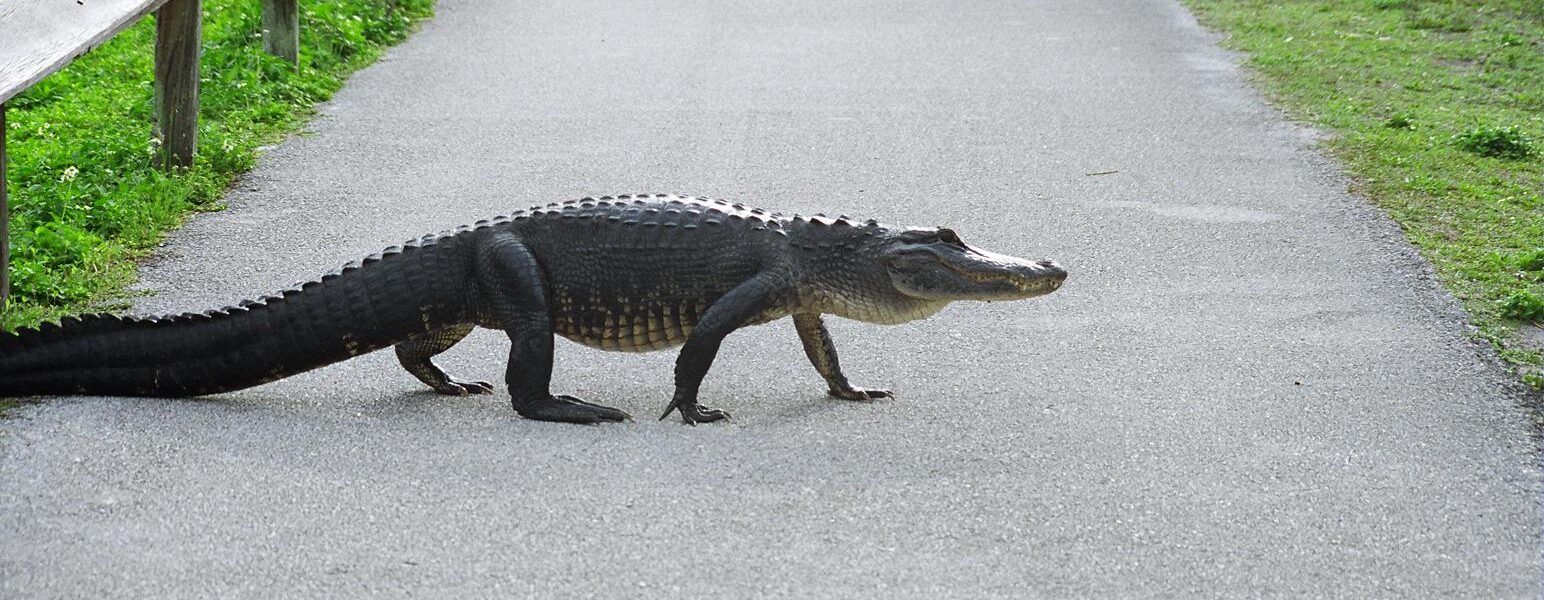
Forty minutes from a Brickell high-rise there is a paved trail where alligators sun themselves beside the path and walk across it when they feel like moving. That gap — between the city Miami sells and the subtropical wetland it was built on — is the whole point of this page. The best outdoor things to do in Miami are not the ones on the beach; they are in the parks, gardens, mangrove creeks and sawgrass a short drive inland, and most of them cost less than a cocktail on Ocean Drive.
This guide covers the nature side of Miami: two national parks, three state parks, the botanic gardens, the county parks worth the drive, where you can reliably see alligators, manatees and dolphins, and which trails are worth your morning. If it is adrenaline you want — jet skis, skydiving, airboats, kiteboarding — that lives in our outdoor adventures guide instead. Everything here was checked in September 2026; park fees are set annually, so treat them as close rather than exact.
At a Glance: Where to Go and What It Costs
| Place | Drive from downtown | Cost | Go for |
|---|---|---|---|
| Everglades — Shark Valley | 50 minutes west | Park entry per vehicle, plus tram fare | Alligators, the 15-mile loop, the observation tower |
| Everglades — Royal Palm / Anhinga Trail | 60 minutes southwest | Park entry per vehicle | The most reliable free wildlife walk in Florida |
| Biscayne National Park | 50 minutes south | Free to enter; boat trips extra | Reef, islands and a park that is 95% water |
| Oleta River State Park | 30 minutes north | $6 per vehicle | Mountain biking, kayaking, mangroves |
| Bill Baggs Cape Florida | 25 minutes east | $8 per vehicle | Lighthouse, quiet beach, coastal hammock |
| Fairchild Tropical Botanic Garden | 30 minutes south | $24.95 adult | 83 acres of tropical planting, free tram |
| Deering Estate | 35 minutes south | Admission charged | Manatees in the boat basin, historic grounds |
| Matheson Hammock Park | 25 minutes south | Flat fee per car | Atoll pool, shade, toddlers |
| Virginia Key North Point | 15 minutes east | Free | Mountain bike trails by the sea |
| The Underline | Downtown southward | Free | A linear park under the Metrorail |
The Everglades
Everglades National Park is not a swamp you look at from a boardwalk in an afternoon; it is 1.5 million acres of slow-moving freshwater river, and Miami sits on its eastern edge. There are three entrances, and only two of them matter if you are based in the city.
Shark Valley — the closest entrance
Straight west along the Tamiami Trail, about fifty minutes from downtown. The centerpiece is a fifteen-mile paved loop into the sawgrass with a 45-foot observation tower at the halfway point. You have three ways round it: the narrated tram, which takes about two hours and is the easy option; a rented bicycle, which takes two to three hours and is much better; or on foot, which almost nobody completes and nobody should attempt in summer.
Alligators line the canal beside the first mile of the loop in numbers that visitors find genuinely startling. They are wild, unfenced and entirely uninterested in you, and the rule is simple: stay on the path, keep well back, and never get between one and the water.
Royal Palm and the Anhinga Trail — the better wildlife walk
Through the main Homestead entrance, about an hour southwest. The Anhinga Trail is a half-mile paved-and-boardwalk loop over a slough, and it is the single most reliable place in South Florida to see alligators, anhingas, herons, turtles and, in winter, an extraordinary density of wading birds — all for the price of park admission and no tour. The neighboring Gumbo Limbo Trail runs through hardwood hammock and takes ten minutes.
Go early. Wildlife is active at dawn and dusk and hides in the middle of the day, and the parking area at Royal Palm fills by mid-morning in the dry season.
Airboats, and where they actually are
The airboat operators clustered along the Tamiami Trail are mostly on tribal land or private property just outside the national park, because airboats are largely restricted within it. That does not make them bad — they are loud, fast and fun — but it is worth knowing that an airboat ride and a visit to Everglades National Park are two different outings. Our Everglades airboat tours guide covers the operators, and the broader Everglades tour guide compares the ways in.
Biscayne National Park
The least-visited national park in Florida, and the reason is simple: ninety-five percent of it is underwater. From the Dante Fascell Visitor Center at Homestead — free to enter, about fifty minutes south — you look out at a bay, a chain of barrier islands and the northern end of the Florida Reef, none of which you can reach without a boat.
That is either a disappointment or the appeal. If you have a few hours, the visitor center, the shoreline boardwalk and the jetty are pleasant and cost nothing. If you have a day, book a boat trip — glass-bottom, snorkeling, or an island drop-off — and you get a genuinely remote experience half an hour from a suburb. Our Biscayne National Park guide covers what runs and when, and snorkeling near Miami covers the reef itself.
The State Parks
Oleta River State Park
Florida’s largest urban state park, in North Miami Beach just inland from Sunny Isles, and the best single answer to “somewhere green, near the city, with something to do.” Entry is $6 per vehicle for up to eight people, $4 for a single occupant or motorcycle, and $2 on foot or by bike.
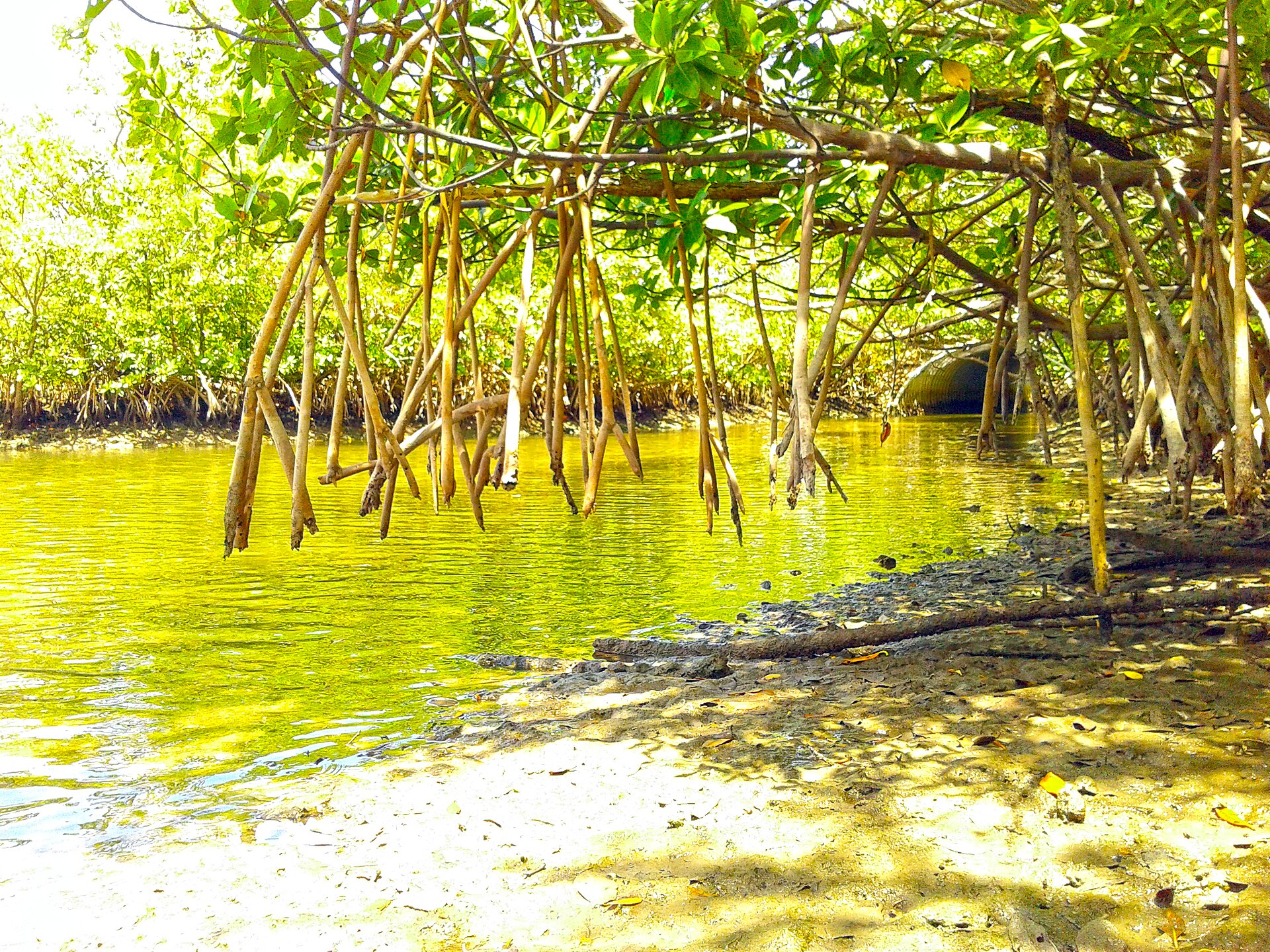
- Mountain biking: more than ten miles of intermediate and advanced singletrack through mangrove and hammock, plus four miles of novice trail and three miles of paved path. This is the real draw and it is genuinely good — tight, rooty, and flat, which suits riders who are fit but not brave.
- Paddling: the Oleta River Outdoor Center rents single and tandem kayaks, canoes and paddleboards, and runs guided trips. The mangrove creeks off the main channel are the point.
- Also on site: a small swimming beach on the lagoon, picnic pavilions, cabins you can rent overnight, and a fishing pier.
Bill Baggs Cape Florida State Park
The southern tip of Key Biscayne, $8 per vehicle, and the most complete day out on this list: a mile of quiet beach, a boardwalk through coastal hammock, the 1825 Cape Florida Lighthouse — the oldest standing structure in Miami-Dade — and a restaurant on the sand. Our Key Biscayne guide covers the island, and the Miami beaches guide covers the sand itself.
Gardens
Fairchild Tropical Botanic Garden
Eighty-three acres in Coral Gables, founded in 1938 by the plant explorer David Fairchild, holding more than 3,400 species. Open daily 10:00 to 17:00. Admission is $24.95 for adults, $17.95 for seniors and $11.95 for children aged three to eleven, with under-threes free — and buying online or at a kiosk rather than at the window saves $5 a ticket, which is worth thirty seconds of your time.
The free narrated tram tour is included and is the right way to start: it gives you the shape of the place in forty minutes, after which you walk back to whatever you want to see properly. The palm and cycad collections are internationally significant; the rainforest section and the butterfly conservatory are what most people remember. It is the best-value paid attraction in Miami, and it is not close.
The Kampong
David Fairchild’s own home and garden in Coconut Grove, nine acres on Biscayne Bay, now part of the National Tropical Botanical Garden. Visits are by advance booking and small-group only, which keeps it quiet and makes it the opposite experience to Fairchild. Worth arranging if gardens are your reason for coming. Our Coconut Grove guide covers the neighborhood around it.
Pinecrest Gardens
The former Parrot Jungle site, now a twenty-acre botanic garden and community park with a cypress slough boardwalk, a petting zoo, a splash pad and a Sunday farmers market. Cheap, unpretentious and entirely aimed at families — see things to do with kids and our farmers markets guide.
County Parks Worth the Drive
- Deering Estate, Palmetto Bay — a historic waterfront estate with pine rockland, hardwood hammock and a boat basin on Biscayne Bay that is one of the best manatee-viewing spots in Miami. It also runs guided canoe trips and natural-history walks that go well beyond the house tour.
- Matheson Hammock Park, Coral Gables — the man-made tidal atoll pool, shade trees, a marina and no waves. The answer if you are managing small children.
- Crandon Park, Key Biscayne — beyond the beach there is a nature center, a restored coastal dune system and kayak rental at the south end.
- Greynolds Park, North Miami Beach — an old rock-quarry park with a bird rookery that fills with herons, egrets and cormorants in spring.
- Amelia Earhart Park, Hialeah — a working barnyard, fishing lakes and one of the better mountain bike trail networks in the county.
- Tropical Park, Westchester — where Miami actually exercises: running paths, lakes, courts and a sizeable equestrian center.
- Black Point Park and Marina, Cutler Bay — no beach, but reliably good manatee sightings along the docks in cooler months.
Wildlife: Where You Will Actually See What
Miami has genuinely wild animals in genuinely accessible places, which is unusual for a US city of its size. Here is where each one is a realistic prospect rather than a lucky break.
Alligators
The Anhinga Trail at Royal Palm, first, and the Shark Valley loop second. Both are near-certainties in the dry season, when receding water concentrates everything into the remaining pools. They also turn up in canals and golf-course ponds across suburban Miami-Dade, where the correct response is to leave them alone and call the state’s nuisance line rather than approach.
Manatees
The Deering Estate boat basin and Black Point Marina are the two most reliable spots, both best from November through March when manatees move into warmer, sheltered water. Marinas generally are the place to look — they gather around freshwater outflows and warm discharges. They are slow, enormous, entirely harmless and protected by law; do not swim toward one.
Dolphins
Common in Biscayne Bay and regularly seen from boat tours, fishing charters and the Rickenbacker Causeway bridges. Our boat tours guide and fishing charters guide both cover trips where sightings are routine rather than promised.
Birds
Winter is the season. Herons, egrets, ibis, roseate spoonbills, wood storks and anhingas across the Everglades and the coastal parks; Greynolds Park’s rookery in spring; and frigatebirds over the bay year-round. Miami sits on a migratory route and the county parks fill accordingly between October and April.
The introduced ones
Green iguanas are everywhere along canals and seawalls and are not native. Peacocks roam parts of Coconut Grove and Pinecrest freely, to the delight of visitors and the irritation of residents. Burmese pythons are established in the Everglades and you will not see one. Coral Gables and Coconut Grove also have thriving populations of escaped parrots — listen for them at dusk.
Trails: Walking, Running and Riding
- The Underline — a linear park being built beneath the elevated Metrorail from Brickell southward, with a paved path, planting and public art. The finished northern section is the best urban walk in Miami and it costs nothing.
- The Rickenbacker Causeway — the city’s default hard bike ride, with open water on both sides and the skyline behind you. Busy with fast club riders early on weekends; go before 08:00 and be visible.
- Virginia Key North Point — free mountain bike trails on a spit of land in the bay, with ocean views from the singletrack. Sandy, technical in places, and unlike anything else this close to a downtown.
- The Commodore Trail — from Coconut Grove south along South Bayshore Drive, shaded by banyans, the pleasantest flat ride in the city.
- The Miami Beach Boardwalk — behind the dunes from 21st Street north, the default easy run. See the beaches guide.
- Oleta and Amelia Earhart — the two proper mountain bike networks, covered above.
What Miami does not have is hiking in any elevation-gaining sense. The highest natural point in the county is a few feet above sea level. Trails here are about what is beside them, not what they climb.
Paddling
Kayaking and paddleboarding are the best way to see the parts of Miami that roads do not reach, and there are four obvious launches.
- Oleta River State Park — mangrove creeks, rental on site, sheltered water. The easiest first outing.
- Matheson Hammock — calm bay water, shade, and a short paddle to open views of the skyline.
- No Name Harbor, Bill Baggs — a natural harbor at the tip of Key Biscayne with mangrove trails leading off it.
- Deering Estate — guided trips only, out into the bay and its islands, and the most interesting of the four.
Go in the morning. Afternoon wind on Biscayne Bay is real and paddling back into it is unpleasant. Our water sports guide covers rentals and prices in full.
Animals in Enclosures: The Honest Version
Miami has three well-known places to see animals that are not wild, and they are not interchangeable.
Zoo Miami is the serious one — the largest zoo in Florida, laid out cageless with moats and berms, and heavily involved in conservation breeding for species that no longer have anywhere else to go. It is also enormous and almost entirely unshaded, so it is a winter-morning outing rather than a July one. Our Zoo Miami guide covers how to do it without walking twelve miles.
Jungle Island on Watson Island is smaller, closer and more of an attraction than a zoo, and it works best as an hour or two with young children rather than a day. See our Jungle Island guide.
The Miami Seaquarium is the difficult one. It has a long and contested history around marine mammal welfare, it has been the subject of repeated regulatory scrutiny, and a lot of visitors come away uncomfortable. We cover it in our Miami Seaquarium guide because people ask about it, and the honest recommendation is that if seeing marine life is the goal, a bay boat trip or a snorkel over the reef at Biscayne will give you wild dolphins, rays and turtles instead.
Staying Out Overnight
You can camp within reach of Miami, though almost nobody does, and the options are limited enough to list.
- Oleta River State Park rents simple cabins — no plumbing, shared bathhouse — half an hour from downtown. The only realistic way to sleep in a state park inside the metropolitan area.
- Everglades National Park has drive-in campgrounds at Long Pine Key and Flamingo, plus backcountry sites reachable only by boat or canoe. Winter only, in any sane reading: summer camping in the Everglades is a test rather than a holiday.
- Biscayne National Park has campgrounds on Elliott Key and Boca Chita Key, both accessible only by boat, both extraordinary, and both requiring you to carry in everything including water.
All of it books up between December and March, which is precisely when it is worth doing. Reserve well ahead through the state and federal reservation systems rather than turning up.
Staying Safe Outdoors
Nothing here is dangerous if you behave sensibly, but a few Florida-specific points catch visitors out.
- Heat is the real hazard, not the wildlife. Between May and October, the combination of temperature and humidity does more damage than anything with teeth. Start early, carry water, and stop when you feel unwell rather than pushing on.
- Afternoon lightning is frequent and genuinely dangerous. Florida leads the country for lightning strikes and open sawgrass is the worst place to be under a storm. If you hear thunder, get to the car.
- Never feed an alligator, and never assume a still one is asleep. Feeding them is illegal in Florida because it teaches them to associate people with food, which is how an animal that would ignore you becomes one that does not.
- Stay on the boardwalks in the Everglades. Water depth is deceptive and the limestone underneath is full of holes.
- Check for ticks after hammock trails, and watch for fire ant mounds, which are common on sandy ground and unpleasant to stand in.
Seasons: When to Do This
| Season | Months | What it means outdoors |
|---|---|---|
| Dry season | November–April | The good one. Low humidity, few mosquitoes, wildlife concentrated at remaining water, birds at their peak. |
| Transition | May, October | Warming or cooling, showers building or fading. Still very workable early in the day. |
| Wet season | June–September | Hot, humid, daily afternoon storms, and mosquitoes in the Everglades that are not an exaggeration. |
This is the one part of Miami tourism where the season genuinely changes what is possible. A January morning on the Anhinga Trail and a July afternoon on the same trail are not the same activity. If your trip is in summer, do everything outdoors before 10:00 and treat the afternoon as pool or museum time — our rainy day activities guide exists for exactly that. The month-by-month weather guide has the numbers.
What to Bring
- Insect repellent with DEET for anywhere inland, any time of year, and doubly from June to October. Everglades mosquitoes have a reputation and it is earned.
- More water than you think. There is no shade on the Shark Valley loop and no water beyond the trailhead.
- Sun protection. Hat, long sleeves and reef-safe sunscreen. The UV index sits at extreme most of the year.
- Closed shoes for trails. Sandals and limestone rock do not mix, and fire ants are common.
- Binoculars, if birds are any part of the reason you are going. They transform the Everglades.
- Cash or a card for park entry. State and county parks charge at the gate; the national parks accept the America the Beautiful annual pass.
What a Day Outdoors Costs
| Item | Typical 2026 cost |
|---|---|
| Everglades National Park, per vehicle | Around $30, valid seven days |
| Shark Valley tram tour | Roughly $32 adult |
| Shark Valley bike rental | Around $28 for the loop |
| Biscayne National Park entry | Free; boat trips from about $45 |
| Oleta River State Park | $6 per vehicle, $2 on foot or bike |
| Bill Baggs Cape Florida | $8 per vehicle |
| Fairchild admission, adult | $24.95, or $19.95 booked online |
| Kayak rental, two hours | $35–$50 |
| County park beach parking | $7 per car |
A full outdoor day in Miami — park entry, a rental and lunch from a supermarket — comes in under $50 a head, which makes it comfortably the cheapest way to spend a day in this city. See free things to do in Miami for the version that costs nothing at all.
Honest Verdicts
- Do the Anhinga Trail before the airboat. If you only have one Everglades morning, half a mile of boardwalk at Royal Palm will show you more wildlife than an hour on a loud boat. Do the airboat because it is fun, not because it is the way to see the Everglades.
- Fairchild is worth full price. Rare praise on this site. Book online for the $5 saving.
- Biscayne National Park without a boat is a visitor center and a view. Pleasant, free, and not a day out. Either book a trip or go somewhere else.
- Shark Valley by bike beats the tram, unless heat or mobility rules it out. You stop where you want, and the tram’s commentary is not the reason you came.
- Skip the roadside “wildlife parks” on the Tamiami Trail. Some are legitimate rescues; several are grim. The national park is right there and full of the same animals living freely.
- Do not go inland at midday in August. It is genuinely unpleasant and occasionally dangerous. Nobody’s holiday photographs are worth heat exhaustion in a sawgrass prairie.
Frequently Asked Questions
What are the best outdoor things to do in Miami if I only have one day?
Anhinga Trail at dawn, then either Shark Valley by bike or Fairchild in the afternoon depending on how much driving you want. All three are within an hour of downtown.
Where can I see alligators near Miami for free?
Nothing is quite free — you pay to enter Everglades National Park — but the Anhinga Trail at Royal Palm needs no tour, no guide and no boat, and sightings are close to guaranteed in the dry season.
When is the best time of year for outdoor activities in Miami?
November to April. Lower humidity, far fewer mosquitoes, and wildlife concentrated around shrinking water. Summer is hot, stormy and buggy inland.
Is Oleta River State Park worth it for beginners on a mountain bike?
Yes. There are four miles of novice trail and three miles of paved path alongside the harder singletrack, so a mixed-ability group can all ride.
Where do I go to see manatees?
The Deering Estate boat basin and Black Point Marina, best between November and March. Marinas in general are the place to look.
Can I hike in Miami?
You can walk long distances on flat trails, which is not quite the same thing. There is no elevation in Miami-Dade. Big Cypress and the Everglades backcountry offer real distance if you want it.
Do I need a car for any of this?
For most of it, yes. The Underline, the Rickenbacker Causeway and the Miami Beach Boardwalk are reachable without one; the Everglades, Biscayne, Oleta and Fairchild are not, in any practical sense. See our transportation guide.
Are the mosquitoes really that bad?
In the Everglades between June and October, yes. In the coastal parks in winter, barely noticeable. Carry repellent either way.
Related Miami Guides
- Miami Outdoor Adventures — the adrenaline side: jet skis, skydiving, airboats and kiteboarding.
- Everglades Tours from Miami — comparing the ways into the park.
- Biscayne National Park — the boat trips that make it worth the drive.
- Key Biscayne Guide — Bill Baggs, Crandon and the causeway.
- Day Trips from Miami — where else a car gets you in a day.
- Free Things to Do in Miami — including a good deal of this list.
- Miami Hidden Gems — the quieter corners of the same city.
- Miami Water Sports — kayak, paddleboard and snorkel rentals and prices.
Photo Credits
Alligator crossing the Anhinga Trail: Alligator on Anhinga Trail, NPSPhoto, D.Harris (9101437344) by Everglades NPS from Homestead, Florida, United States, Public domain, via Wikimedia Commons.
Mangroves at Oleta River State Park: Oleta River State Park – Mangroves by Daniel Di Palma, CC BY-SA 4.0, via Wikimedia Commons.
Remaining photographs from the miamitourism.org library.