Miami Beaches: The Complete Guide
This article contains advertising. Our booking links are routed through a partner that adds commission tracking automatically, so if you book through one we earn a commission from the provider, at no extra cost to you. It never affects what we recommend. Affiliate disclosure
The first thing worth knowing is that most of the sand people mean when they say Miami is not in Miami at all. It is in Miami Beach, Surfside, Bal Harbour, Sunny Isles and Key Biscayne — separate municipalities across the bay, with their own parking rules, their own fees and their own rules about what you can carry onto the sand. The Miami beaches are a chain of very different places running roughly eighteen miles up the coast, and picking the wrong one is the most common way a beach day goes flat.
This is the practical guide to all of them: where each stretch actually is, what it costs to park, what the water is like, which have lifeguards and restrooms and shade, which allow dogs, and which are worth the drive. It is deliberately not a ranking — if you want the opinionated version, our best beaches in Miami guide argues for twelve of them in order. Everything here was checked in September 2026; parking rates in particular change with the fiscal year, so treat them as the right order of magnitude.
At a Glance: Parking, Fees and Conditions
| Beach | Parking | Lifeguards | Best for |
|---|---|---|---|
| South Pointe Park | Municipal garage and meters, roughly $4/hr | Yes | Ship-watching, a walkable park, jetty fishing |
| South Beach (1st–15th) | Meters and garages, $4/hr and up | Yes, dense | People-watching, rentals, everything open late |
| Mid-Beach (21st–46th) | Meters, easier than South Beach | Yes | The Boardwalk, quieter sand, hotel day passes |
| North Beach / Ocean Terrace | Meters and small lots | Yes | Locals, families, actual parking |
| Surfside | Metered streets | Yes | Low-rise, calm, genuinely uncommercial |
| Bal Harbour | Limited; use the shops garage | Limited | A short, tidy stretch beside the mall |
| Haulover Park | $7 Mon–Thu, $10 weekends and holidays | Yes, year-round | Surf, dogs, clothing-optional, kites |
| Sunny Isles | Metered streets and garages | Yes | Wide sand under high-rises, fishing pier |
| Crandon Park, Key Biscayne | $7 per car | Yes | Calm shallow water, families, shade |
| Bill Baggs Cape Florida | $8 per vehicle | Seasonal | Lighthouse, quiet sand, a proper day out |
| Virginia Key Beach Park | Flat fee per car | Yes | History, calm bay water, picnics |
| Matheson Hammock | Flat fee per car | Yes at the atoll | Toddlers — a tidal pool, not surf |
How to Choose: Four Questions
Almost every disappointing beach day in Miami traces back to picking a beach for the wrong reason. Four questions sort it out faster than any list.
Are you driving, or walking from a hotel?
If you are staying in South Beach or Mid-Beach, the sand is at the end of your street and parking is irrelevant. If you are staying downtown, in Brickell, in Coral Gables or near the airport, you are driving or riding, and the beaches with flat-fee lots — Crandon, Haulover, Virginia Key, Bill Baggs — become far more attractive than the ones where you will circle Collins Avenue looking for a meter. Our Miami parking guide covers the apps and the zones.
Do you want waves, or no waves?
Miami’s Atlantic shore is generally gentle by ocean standards, but there is a real difference between the ocean-facing beaches and the bay-facing ones. Haulover is the only place in Miami-Dade with waves worth calling surf. Crandon, Virginia Key, Hobie Island and Matheson Hammock face into Biscayne Bay or sit behind a shallow shelf, and are correspondingly flat.
Is anyone in your group under six or over seventy?
Then shade, restrooms, shallow entry and a short walk from the car matter more than anything else, which pushes you firmly toward Key Biscayne or Matheson Hammock rather than the middle of South Beach. Our family beaches guide goes into which have playgrounds and which have changing rooms.
What time is it?
Miami beaches are morning places. Arrive before 10:00 and you get parking, cooler sand and calmer water; arrive at 13:00 in March and you will spend forty minutes looking for a space. Afternoon thunderstorms between June and September are near-daily and usually brief — see our month-by-month weather guide for what to expect when.
The Miami Beach Strip, South to North
Miami Beach is a barrier island city about seven miles long, and its beach is technically continuous. In practice it behaves as four or five distinct places.
South Pointe Park
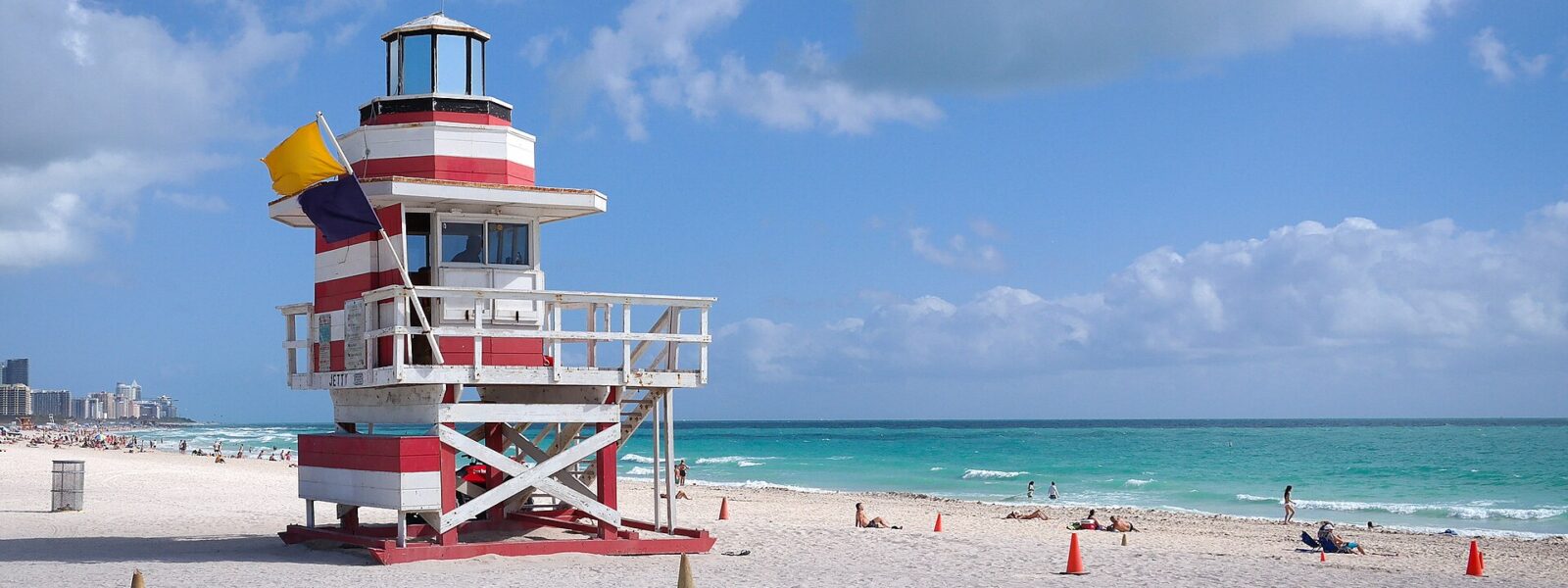
The southern tip, where the island runs out at Government Cut. It is a park first and a beach second: lawns, a pier walk out along the jetty, a playground with motion-activated water features, and a small dog run on the western side. The reason to come is the ships — this is the closest you can legally stand to a cruise ship leaving PortMiami, and on a Saturday afternoon they pass a few hundred feet away. Swimming here is fine but the current near the jetty is real; stay between the flags. Umbrella and chair rental on the sand.
South Beach — 1st to 15th Street
The famous stretch, backed by Lummus Park and the Art Deco hotels on Ocean Drive. The sand is wide, pale and raked daily, the lifeguard towers are the pastel ones on every postcard, and there is a rental concession roughly every two blocks. It is also the busiest, loudest and most expensive place to be, and the amenities immediately behind it are where visitors get taken. See our South Beach guide for how to eat and drink there without paying an automatic twenty percent for the privilege.
Worth knowing: the beach itself is public, free and open to everyone, no matter how many attendants in branded polo shirts imply otherwise. The rows of blue loungers belong to hotels and beach clubs and cost money; the sand in front of and between them does not.
Mid-Beach — 21st to 46th Street
Where the crowd thins and the buildings get taller. The Miami Beach Boardwalk runs behind the dunes from 21st Street north, a proper walking and jogging route with the sea on one side and the backs of the big resorts on the other. Metered parking is noticeably easier than in South Beach. Several hotels sell day passes here, which is a reasonable way to get a pool, a towel and a lounger without booking a room.
North Beach and Ocean Terrace — 73rd to 87th Street
The locals’ end. Lower buildings, a Latin American neighborhood feel, and North Shore Open Space Park behind the dunes with shaded picnic tables and a genuine sea-grape canopy — the best free shade on Miami Beach. Parking is metered but you can usually find some. If you want the Miami Beach experience without the Miami Beach prices, this is it.
North of Miami Beach: Surfside to Sunny Isles
Surfside — 88th to 96th Street
A separate small town with a two-story skyline and a beach that feels like Florida in about 1975. Metered street parking, a community center with a pool, and a short main street of restaurants on Harding Avenue. Nothing here is a spectacle, which is precisely the appeal. Our North Beach and Surfside guide covers where to eat.
Bal Harbour
A short, immaculate stretch behind the Bal Harbour Shops. There is a public beach access and a paved oceanfront path, but very little public parking — most people park in the shops garage, which is expensive unless you are validating a purchase. Pleasant for a walk, awkward for a full beach day.
Haulover Park
The most interesting beach in Miami-Dade, and the one that most rewards understanding before you arrive. It runs about a mile and a half between Bal Harbour and Sunny Isles, with the ocean on one side and Bill Bird Marina on the other.
- Parking: $7 Monday to Thursday, $10 on weekends and holidays. The North Lot carries a small surcharge at $8 on weekdays. Buses and RVs $15. Lots open sunrise to one hour before sunset — that closing time is enforced.
- Clothing-optional section: between lifeguard towers 12 and 16, at the northern end. It is Florida’s oldest officially recognized clothing-optional beach, it is signposted, it is lifeguarded, and it is far calmer and more ordinary than its reputation. Photography is prohibited there and taken seriously.
- Dog beach: between towers 2 and 3, plus a fenced Bark Park with a small separate vehicle fee.
- Surf: the only reliably surfable waves in Miami-Dade, thanks to the way the shoreline sits. Nobody is flying to Miami to surf, but on a north swell there is something to ride.
- Also on site: a free skate park and pump track, a nine-hole golf course, a tennis center, e-bike rental and a kite shop. Lifeguards year-round.
Sunny Isles Beach
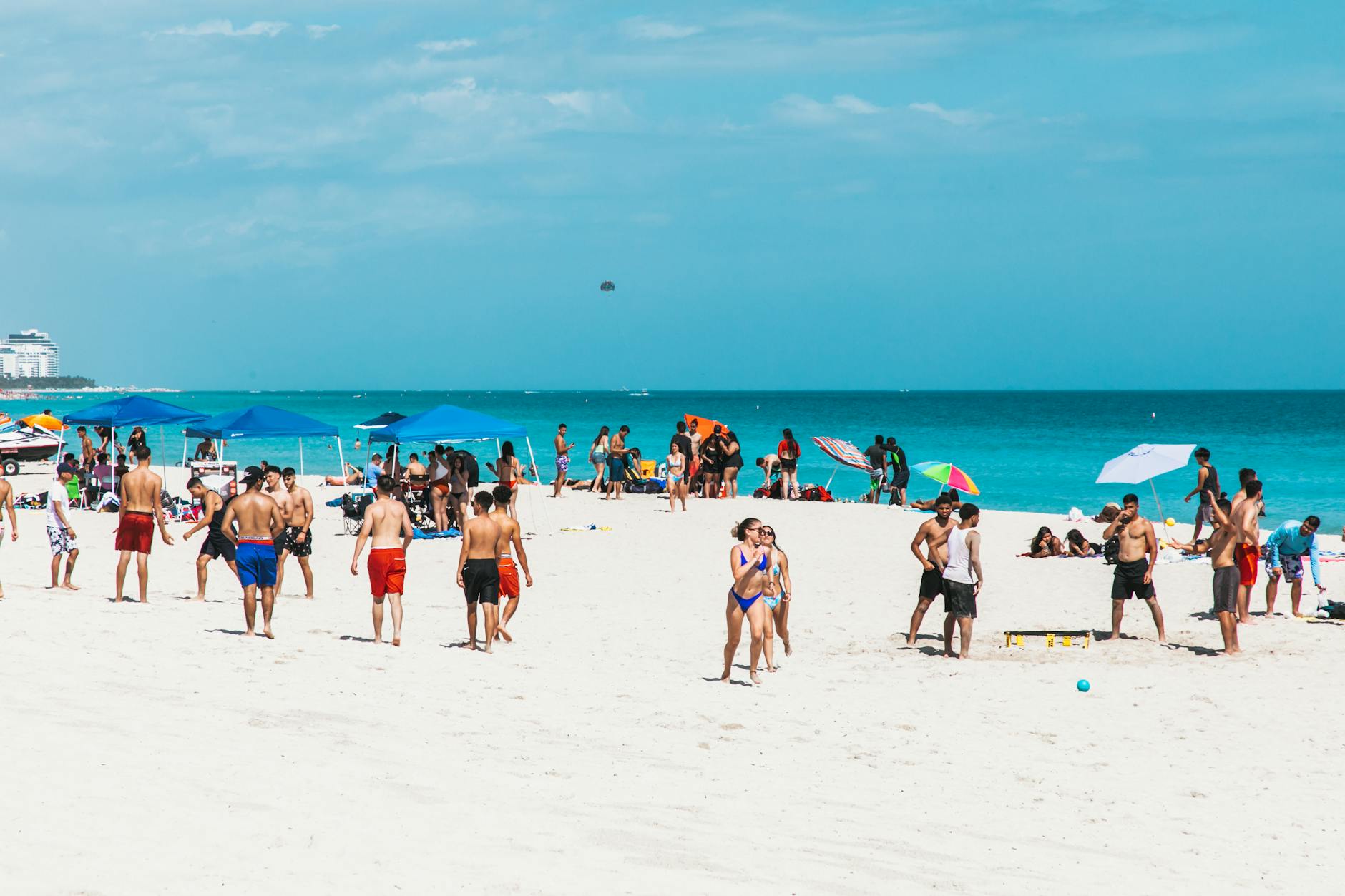
Wide, clean sand under a wall of condominium towers, with a fishing pier at Newport and public access points every few blocks. The towers put the beach in shade by late afternoon, which is either a bonus or a disappointment depending on your plans. Metered street parking and garages; easier midweek.
Key Biscayne and the Bay Beaches
Cross the Rickenbacker Causeway from Brickell — a toll road, and a spectacular drive — and you reach a completely different set of beaches. These face south and west into calmer water, they sit inside parks with flat-fee parking, and they are where Miami families actually go. Our Key Biscayne guide covers the island in full.
Crandon Park
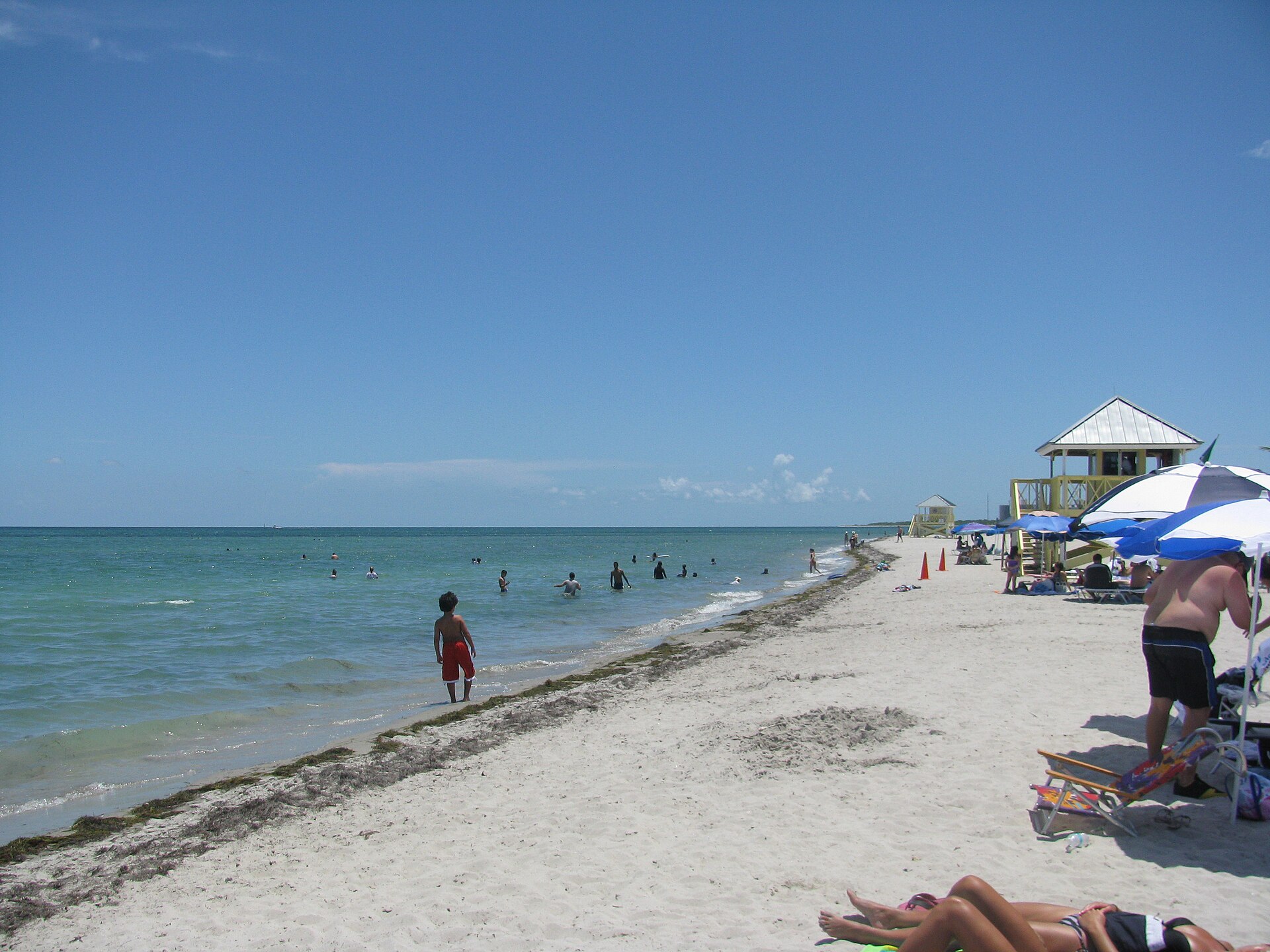
Two miles of palm-backed sand on the ocean side of Key Biscayne, with water so shallow you can wade out a long way before it reaches your waist. That is the whole point: it is the safest swimming in the county for small children. Picnic pavilions, a nature center, kayak and paddleboard rental at the south-end concession, and $7 per car. It is also the beach where you are most likely to meet sargassum, the brown seaweed that washes ashore in ribbons — see below.
Bill Baggs Cape Florida State Park
The southern tip of the island, $8 per vehicle, and the best-value day out on this list. A mile of quiet beach, a boardwalk through coastal hammock, the 1825 Cape Florida Lighthouse — the oldest standing structure in Miami-Dade — and a restaurant on the sand at the northern end. Far fewer people than Crandon, and the water is clear. Bring food; the concessions are limited.
Virginia Key Beach Park
Halfway across the causeway, and historically important: it was designated as Miami’s beach for Black residents during segregation, and the restored park now tells that story properly. Calm bay-side water, picnic grounds, a carousel and a miniature railroad, and a flat parking fee. Quiet on weekdays.
Hobie Island — “Windsurfer Beach”
The narrow strip on the causeway itself, free to park along, dog-friendly, and the launch point for kiteboarding and windsurfing because of the way the wind funnels down the bay. Not a swimming beach — the water is shallow and busy with boards — but the best free stretch of sand in the county and a genuinely good spot to watch. Our Miami water sports guide covers the operators.
Matheson Hammock Park
South in Coral Gables, and the odd one out: its swimming area is a man-made tidal atoll pool that fills and flushes with Biscayne Bay. No waves, no drop-off, lifeguards, shade trees and a marina. If you are managing a two-year-old, this is the answer. If you want the ocean, it is not.
Conditions: Flags, Rips, Seaweed and Stingers
The flag system
Every lifeguarded beach in Miami-Dade flies the same colors, and they mean exactly what they say.
| Flag | Meaning |
|---|---|
| Green | Calm conditions. Still watch children. |
| Yellow | Moderate surf or current — the most common flag flown here. |
| Red | High hazard. Strong surf or rip currents. |
| Double red | Water closed. Not a suggestion. |
| Purple | Dangerous marine life — usually jellyfish or man o’ war, occasionally otherwise. |
Rip currents are the genuine risk on the ocean beaches, and they are strongest near the jetties at South Pointe and Government Cut. If you are caught in one, swim parallel to the shore rather than against it. Swim between the flags, at a lifeguarded beach, and the risk drops close to nothing.
Sargassum
The brown seaweed that arrives in mats along the tide line, heaviest roughly April to August, worst on the ocean-facing and southern-facing beaches. It is harmless, it smells of sulphur as it dries, and Miami Beach rakes its city beaches most mornings. Miami-Dade’s park beaches are cleaned less aggressively, so Crandon and Virginia Key will sometimes have a fringe of it. If a photograph of empty white sand is the point of your day, come in winter.
Jellyfish and man o’ war
Portuguese man o’ war blow ashore on strong easterly winds, mostly between December and March. They sting after they are beached and after they look dead. If the purple flag is up, stay out; if you see blue bladders on the sand, keep shoes on.
Water temperature
Miami’s water is swimmable every month of the year — roughly the low 70s °F in January and February, high 80s from July to September. Nobody needs a wetsuit here. The limiting factor in winter is wind, not water.
The Rules Nobody Reads
- Alcohol is banned on Miami Beach city beaches, year-round. So is smoking, including vaping. This is enforced with actual citations, not warnings.
- Glass is banned everywhere. Take cans or plastic.
- Dogs are prohibited on almost every beach in the county. The exceptions are Haulover between towers 2 and 3, the Bark Park at Haulover, and Hobie Island on the causeway.
- Tents and large canopies are restricted on Miami Beach, particularly in March. A standard beach umbrella is fine.
- Sea turtle nesting season runs May to October. Marked nests must be left alone, lights facing the beach are shielded, and you should not use flash photography near the dunes at night.
- Drones are prohibited over Miami Beach parks and beaches without a permit.
- Nothing on the dunes. The sea oats hold the island together and walking through them carries a fine.
Beaches South of the City
Almost nobody visiting Miami goes south for a beach, and for the most part they are right not to — the coastline below Coral Gables turns to mangrove and shallow bay rather than sand. There are two exceptions worth knowing about.
Homestead Bayfront Park sits beside Biscayne National Park headquarters, about forty minutes south of downtown. Like Matheson Hammock it has an atoll pool rather than surf, plus a marina, a boat ramp and picnic grounds. It is where you end up if you are already heading to the Keys or to Biscayne National Park and want somewhere to swim on the way. Quiet on weekdays, busy with local families on Sundays.
Black Point Park and Marina, further north in Cutler Bay, has no swimming beach at all but is one of the more reliable places in the county to see manatees along the docks, particularly in cooler months. Mentioned here because people search for it as a beach and it is not one.
Going the other way, the beaches immediately north of the county line are genuinely different in character. Hollywood Beach has a two-and-a-half-mile paved Broadwalk lined with cheap Latin American and Caribbean restaurants and a much older crowd; Fort Lauderdale’s beach is wider and considerably calmer than South Beach. Both are under an hour up I-95 or on the train — see our Fort Lauderdale from Miami guide and the wider day trips roundup.
Which Month, and Why It Matters
Miami’s beach year is not evenly good, and the differences are bigger than the temperature suggests.
- December to March is peak season: clear water, no seaweed to speak of, low humidity, and the highest prices and crowds of the year. Occasional cold fronts drop daytime highs into the 60s °F for a day or two and bring man o’ war onto the sand.
- March specifically is spring break, which reshapes South Beach. Rules on tents, coolers and vehicle access on the peak weekends change every year and are announced late — check before you plan a March beach day on Ocean Drive, and consider going north to Surfside instead.
- April and May are the quiet sweet spot. Warm water, thinning crowds, prices dropping, and the sargassum only starting.
- June to September is hot, humid and cheap, with near-daily afternoon thunderstorms that usually clear inside an hour. Water is at its warmest. This is also hurricane season, which in practice means watching a forecast rather than cancelling a trip.
- October and November are underrated: the water is still warm, the crowds have gone, and the storms have mostly stopped. If you can only pick on price and pleasantness, come now.
Our best time to visit Miami guide takes the same question across the whole city rather than just the sand.
What to Bring
Miami beaches are well served but not evenly so. South Beach has a rental concession and a cafe every couple of blocks; Bill Baggs and Virginia Key expect you to have come prepared.
- Shade. The single most useful thing to carry. There is essentially no natural shade on the Miami Beach strip; North Shore Open Space Park and Crandon’s palms are the exceptions.
- Reef-safe sunscreen, reapplied. The UV index sits at extreme for most of the year and the sea breeze hides how much sun you are getting.
- Cash or a card for parking. County lots take both; Miami Beach meters are app-based and the app wants setting up before you are standing in the sun.
- Water. Drinking fountains exist at the park beaches and are scarce on the strip.
- Something for your feet. The sand gets genuinely too hot to cross barefoot between noon and four in summer.
- A cover-up. Miami Beach ordinances require you to be dressed once you leave the sand, and restaurants enforce it. See what to wear in Miami.
Getting There Without a Car
You can reach the Miami Beach strip on public transport reasonably well and Key Biscayne poorly. The buses across the MacArthur and Julia Tuttle causeways run frequently and drop you within a block or two of the sand anywhere between 1st and 87th Street. Key Biscayne is served, but infrequently, and the causeway is a long way to walk if you misjudge it — for Crandon or Bill Baggs, drive or take a rideshare. The full picture is in our Miami transportation guide.
One thing worth doing at least once regardless of how you travel: the Rickenbacker Causeway on a bike. It is the only place in Miami where you get open water on both sides and the whole skyline behind you.
What a Beach Day Costs
| Item | Typical 2026 cost |
|---|---|
| Miami-Dade park beach parking, per car | $7, or $10 at Haulover on weekends |
| Bill Baggs Cape Florida, per vehicle | $8 |
| Miami Beach metered street parking | Around $4 per hour |
| Miami Beach municipal garage, all day | $20–$30 |
| Two loungers and an umbrella | $40–$70 on South Beach, less further north |
| Hotel beach club day pass | $50–$150 depending on the hotel and the day |
| Paddleboard or kayak rental, one hour | $25–$40 |
| Rickenbacker Causeway toll | Tolled by plate — expect a small charge on the rental bill |
The honest summary: a beach day in Miami can cost you $7 and a packed lunch, or it can cost you $200 before you have eaten. The sand is identical.
Honest Verdicts
- Lummus Park, mid-afternoon in March. The sand is good and the scene is genuinely fun once. It is also the most crowded, most hustled stretch of coast in Florida, and the beach vendors and Ocean Drive restaurants behind it operate accordingly. Come early, or go north.
- Bal Harbour beach. Lovely, and almost impossible to park at without spending money in the mall. Skip it unless you are already there.
- Paid “beach clubs” on public sand. You are renting a lounger and a towel service on a beach you could sit on for free. Sometimes that is worth it. It is never necessary.
- Downtown and Brickell “beaches.” There are none. Brickell has a bay, a promenade and no sand at all, and Bayside Marketplace has neither. If a listing offers you a downtown Miami beach hotel, it means a hotel with a pool.
- Driving to Key Biscayne on a Sunday after 11:00. The causeway backs up and Crandon’s lots fill. Go early or go Tuesday.
- Chasing “the best” beach. Within Miami-Dade the sand quality barely varies. What varies is parking, crowds, shade and water conditions — which is why this page is organized the way it is.
Beach Guides for Specific Trips
- Want it argued and ranked? Best Beaches in Miami.
- Traveling with children? Family Beaches in Miami and Things to Do With Kids.
- On the water rather than beside it? Water Sports and Snorkeling Near Miami.
- Free days out? Free Things to Do in Miami.
- Still working out where to base yourself? Miami Beach vs South Beach settles the naming confusion.
Frequently Asked Questions
Are Miami beaches free?
The sand is public and free everywhere in Miami-Dade. What you pay for is parking — a flat $7 to $10 per car at the county park beaches, or metered street parking and garages on Miami Beach.
Which beach has the calmest water?
Crandon Park on Key Biscayne, where the shallow shelf keeps the water shin-deep a long way out. Matheson Hammock’s atoll pool is calmer still, though it is a tidal pool rather than open ocean.
Can I drink alcohol on the beach in Miami?
Not on Miami Beach city beaches — alcohol and smoking are prohibited year-round and enforced. Rules vary in the county parks, but assume no.
When does the seaweed arrive?
Sargassum is heaviest roughly April through August and lands mainly on ocean-facing beaches. Miami Beach rakes its sand most mornings; the county park beaches are cleaned less often.
Where can I take a dog on the beach?
Haulover Park between lifeguard towers 2 and 3, the fenced Bark Park at Haulover, and Hobie Island on the Rickenbacker Causeway. Everywhere else in the county, no.
Is there a nude beach in Miami?
Yes — the clothing-optional section of Haulover Beach, between towers 12 and 16, is Florida’s oldest officially recognized one. It is signposted, lifeguarded and photography is prohibited.
Do I need to worry about sharks?
Not meaningfully. Bites are extremely rare in Miami-Dade, and the practical hazards are rip currents and, in winter, man o’ war. Swim between the flags.
Which beach is best for a sunrise?
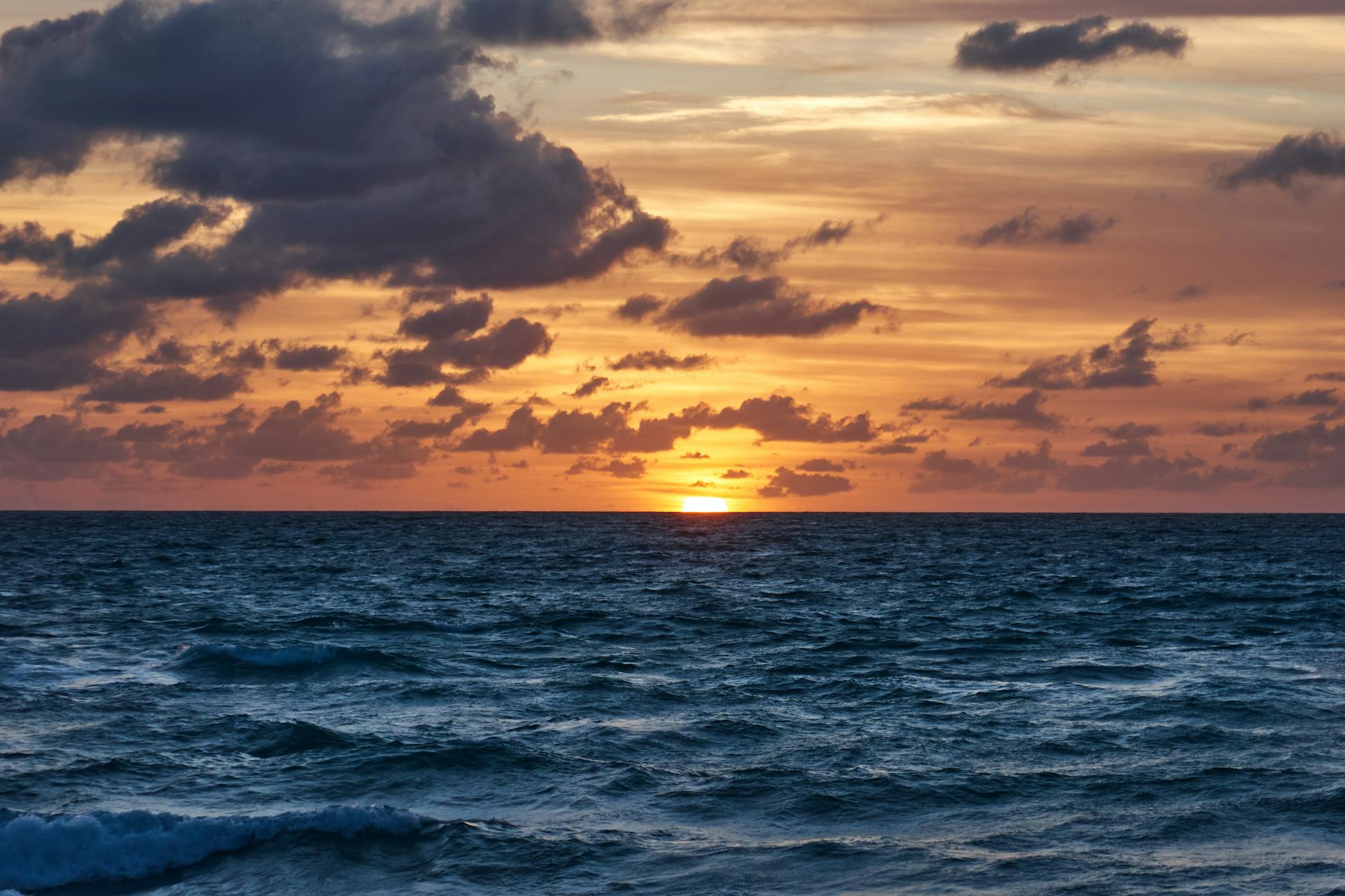
Anywhere on the ocean side facing east, but Key Biscayne and South Pointe have the least development behind them and the cleanest horizon. You will have the sand nearly to yourself.
Related Miami Guides
- Best Beaches in Miami — the ranked, opinionated companion to this page.
- Family Beaches in Miami — shade, shallow water and restrooms, beach by beach.
- Key Biscayne Guide — the island in full, beyond its two beaches.
- North Beach and Surfside — where locals go when South Beach is too much.
- South Beach Guide — the neighborhood behind the most famous sand.
- Miami Water Sports — paddleboards, kiteboarding, jet skis and what they cost.
- Biscayne National Park — the national park just south that is almost entirely water.
- What to Wear in Miami — including what is and is not acceptable off the sand.
Photo Credits
Lifeguard tower at South Pointe: Lifeguard Tower (South Pointe Beach) by Visitor7, CC BY-SA 3.0, via Wikimedia Commons.
Crandon Park beach: Crandon Beach by Mathieu Plourde, CC BY 2.0, via Wikimedia Commons.
Remaining photographs from the miamitourism.org library.